If you do one cultural stop in Canberra, make it the National Gallery of Australia in Parkes. It is the country’s national art collection, it sits right on the shores of Lake Burley Griffin, and general entry is free. You will find more than 155,000 works inside, from the world’s largest collection of Aboriginal and Torres Strait Islander art to one of the most argued-about modern paintings on earth. I have been three times now, and each visit has surprised me. Here is how to plan yours, what to see, and the practical stuff the official site buries in fine print.
Why the National Gallery Is Worth Your Time
Most national galleries feel formal. This one does not. The building is concrete and angular, a bit rough on the outside, but inside it feels open and easy to wander. You do not need to know anything about art to enjoy it, and you do not need to spend money. Walk in, grab a map, and you are set.
The collection punches above its weight. Jackson Pollock’s Blue Poles hangs here, Sidney Nolan’s Ned Kelly paintings hang here, and the Aboriginal Memorial is one of the most moving things I have seen in any museum in Australia. Canberra does free well: between this place, the free things to do around the city, and the Australian War Memorial, you can fill days without buying a single ticket.
The Must-See Works and Collections
The Gallery is big, so head for these first. They are the pieces people talk about after their visit, and they cover the full sweep of the collection.
The Aboriginal Memorial
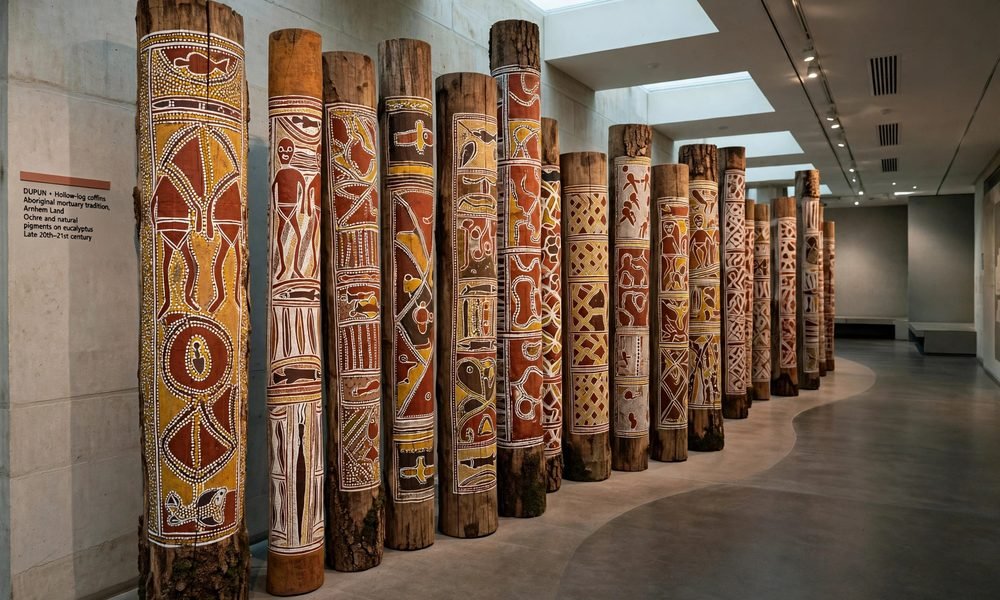
Start here. Two hundred dupun, hollow log coffins, stand in a winding path at the centre of the building. They were made by artists from Ramingining in Central Arnhem Land for the 1988 Bicentenary, one log for each year since British settlement began, and they honour the First Nations people who lost their lives defending their land. The Gallery calls it the heart of the building, and that is accurate. Walk through slowly. It is quiet, and it stays with you.
Blue Poles by Jackson Pollock
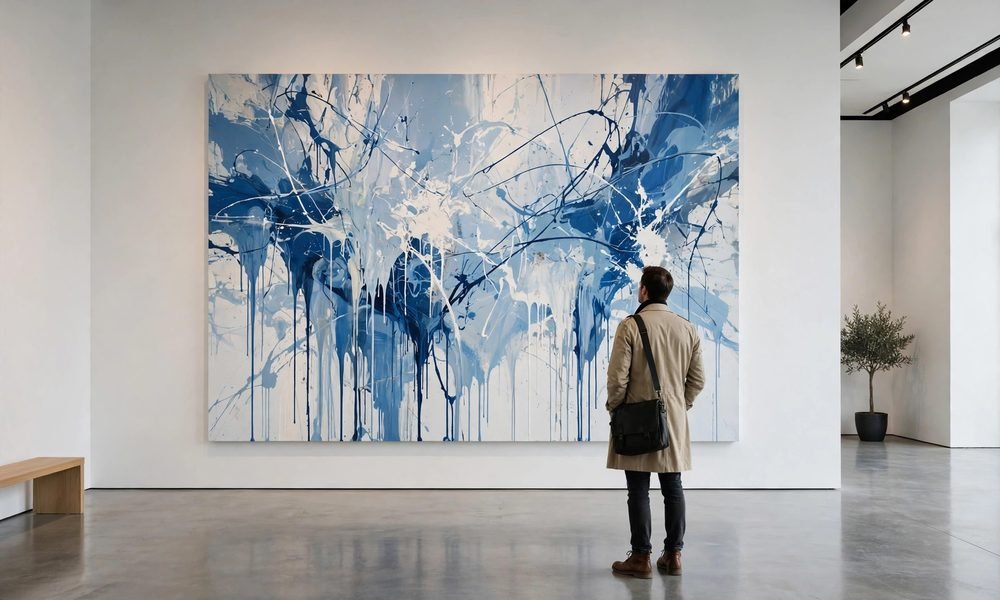
Blue Poles (1952) is the most famous painting in the building, and possibly the most debated art purchase in Australian history. The Gallery bought it in 1973 and the public was outraged at the price. Decades later, it is a national treasure. It is about four metres wide, so stand back first, then move in close to see the layers of dripped paint, glass shards, and aluminium. Come at opening time or in the last hour of the day if you want it to yourself. The Gallery runs a research project on the painting called Action/Reaction if you want to go deeper.
Sidney Nolan’s Ned Kelly Series
Nolan painted his bushranger series in the late 1940s, and the stark black helmet against empty landscapes has become one of Australia’s best-known images. Even if you have seen the helmet reproduced a thousand times, the real paintings land differently. They are blunt, dark, and oddly funny in places. Give them ten minutes. Kids tend to like these more than anything else inside.
The Sculpture Garden
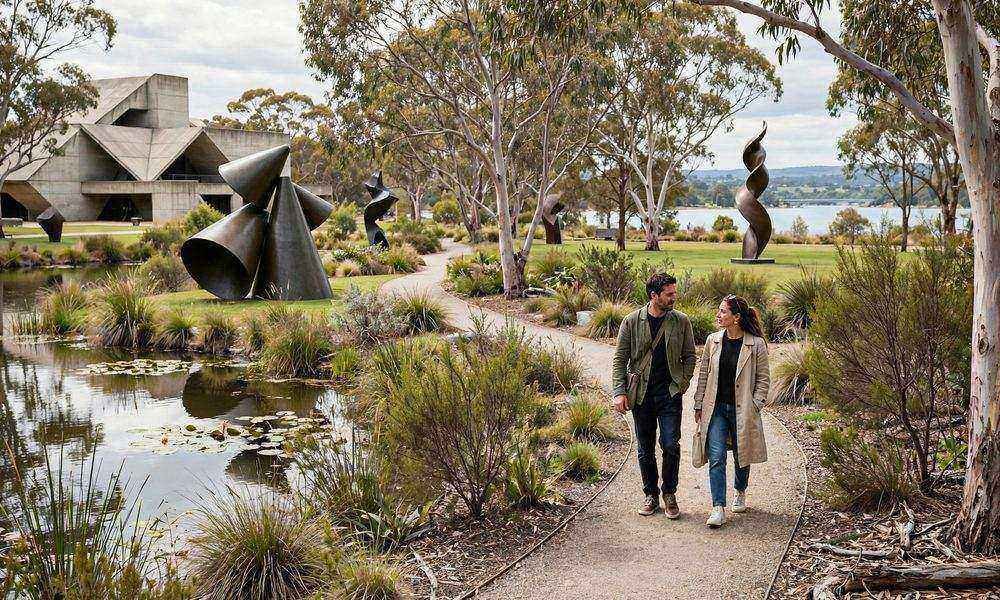
The garden sits between the building and the lake, and it is worth an hour on its own. Sculptures by Australian and international artists sit among native trees and water features. Fujiko Nakaya’s fog sculpture, Foggy wake in a desert, used to drift through the trees when it ran. Heads up for 2026: the Gallery’s big capital works program is underway, and the fog sculpture is closed for maintenance until around mid-2027, with some other garden works off display too. Check the current closures page before you go so you know what is up. Even with the closures, the garden is a lovely walk.
First Nations and Australian Art
This is the deepest collection in the building. The Gallery holds the world’s largest collection of Aboriginal and Torres Strait Islander art, with more than 7,500 works on display at any time. Look for bark paintings from Yirrkala in northeast Arnhem Land, which carry law and land stories, not decoration. The Clifford Possum Tjapaltjarri painting Warlugulong (1977) is one of the most important Indigenous paintings ever made, though it is not always on show. The photography collection is strong too, with staged, film-like works by Tracey Moffatt.
International and Asian Art
The Gallery does not lead with its European art, but it is better than most visitors expect. There are works by Monet, Degas, Cezanne, and Picasso, plus Russian avant-garde, Dada, and Surrealist pieces. The Asian and Pacific collection adds another layer that many people walk past too quickly. If you like modern art, the international galleries are where Blue Poles sits, so you will end up here anyway.
The Building Itself
The Gallery was designed by architect Col Madigan and opened in 1982. It is late-20th-century Brutalism: big concrete forms, angular geometry, and galleries that spiral across three floors from soaring cathedral-like rooms down to small intimate spaces. You do not need to love concrete to enjoy it, but look up now and then. The light in the central spaces is genuinely good. It is heritage listed, which is partly why the current building works are happening.
Opening Hours and Tickets
The Gallery opens every day from 10am to 5pm. It closes only on Christmas Day. General admission is free, and that includes the Sculpture Garden. Major special exhibitions are ticketed and priced separately, so check what is on and book ahead, especially for big summer shows. If you want to dodge the crowds at a blockbuster, skip the first week and the last two weeks of the run. Those are always the busiest.
How Long to Spend and Smart Routes
Give yourself at least two hours for the highlights, and three to four if you like reading labels. Half a day lets you do the garden too. Here is how I would split it:
- One hour, greatest hits: Aboriginal Memorial, quick pass through the Australian galleries, Blue Poles, then a short loop of the Sculpture Garden.
- Two to three hours, the full sweep: add the international galleries, the photography and First Nations rooms, and the current special exhibition if one is on.
- Half a day, precinct day: morning in the Gallery, lunch, then walk along the lake to the National Portrait Gallery next door or across to the High Court. All of it is free and within easy walking distance.
Quieter times are usually mid-morning on weekdays and the last hour before closing. The Gallery’s own FAQs list the quieter periods, so have a look before you pick your day.
Getting There and Parking
The address is Parkes Place East, Parkes ACT 2600, in the Parliamentary Triangle between the National Portrait Gallery and the High Court. Driving is easy: the main underground car park (P1) opens off Parkes Place from King Edward Terrace. It has a 2-metre height limit and you pay by card only. Rates as listed by the Gallery: $4 for up to an hour, $8 for one to two hours, $12 for two to three, rising to $32 for a full day. Weekends and public holidays are a $5 flat rate, and weekday parking is free after 5pm. Rates can change, so check the official visit page before you go. There is extra above-ground parking off Bowen Drive on weekends.
Bus routes 2 and 6 run from the city via Barton. Hop off at the John Gorton Building stop on Parkes Place and walk about six minutes. Cycling is easy too, with bike racks near the main entrance and the lake paths running right past the garden. If you are coming from Parliament House, it is a flat 15 to 20-minute lakeside walk past the High Court. Taxis and rideshares drop you at the main entrance.
Where to Eat and Drink
Food options at the Gallery have been shifting during the building works, so treat this as a starting point and check the dining page before you visit. The Street Cafe serves salads, sandwiches, and coffee, and the Dining Room does a sit-down lunch menu. My honest tip: the lakefront lawns are made for picnics. Grab supplies in Civic or at the Kingston foreshore and eat outside between galleries. There is no food or drink allowed in the gallery spaces themselves, though bottled water is fine in the foyer areas. The Gallery is contactless payment only.
Visiting With Kids
This is one of the better Canberra stops for families. Entry is free, the galleries are wide and pram friendly, and the kids’ programs run during peak seasons with hands-on activities. Pick up a family trail from the Family Desk on arrival. There is a Parents and Carers Room on Level 1 with comfortable seating, a microwave, and baby change facilities. Nursing is welcome anywhere in the building, and strollers are free to borrow from the Concierge desk. Children under 12 need an adult with them at all times. The Ned Kelly helmets and the Sculpture Garden are usually the biggest hits with young ones.
Free Tours and Programs
Free collection tours run daily, usually at 10:30am and 2pm on weekdays, led by Gallery guides. The voluntary guides also run informal Art Chats in the galleries and one-hour deep dives into exhibitions and collection displays. These are free and genuinely good: the guides know the stories behind the works. For school groups, bookings are essential and need to be made at least four weeks ahead through Book Canberra Excursions. The Gallery also runs public programs, lectures, and workshops through the year, plus free access programs designed with and for visitors with disability.
Entry Rules and Practical Details
A few rules worth knowing so you do not get caught out at the door:
- Personal photography is welcome in most of the collection, but no flash, tripods, selfie sticks, or extra lighting. Some exhibitions ban photography completely, so follow the signs.
- Bags or items bigger than a 30cm cube must be cloaked. Use the free self-service lockers in the Art Store. Smaller bags go under your arm or in front of you.
- Stay at least one metre from the art, and do not touch anything. Even clean hands damage surfaces.
- No smoking or vaping anywhere on the premises, including the garden.
- Wheelchairs, motorised scooters, walkers, and canes are free to borrow from the Concierge desk. Book ahead by phone or email if you can.
- Braille brochures with tactile maps are available for the Gallery and the Sculpture Garden. The Gallery is a Sunflower-friendly venue for visitors with non-visible disabilities, and assistance animals are welcome.
- Free Wi-Fi runs throughout the building.
FAQs About Visiting the National Gallery
Is entry to the National Gallery of Australia really free? Yes. The permanent collection and the Sculpture Garden are free for everyone. Only some major special exhibitions charge, and those prices change with each show.
What is the most famous artwork there? Jackson Pollock’s Blue Poles is the international showpiece. Among Australian works, Sidney Nolan’s Ned Kelly series is the most culturally significant, and the Aboriginal Memorial is the most affecting.
Is the Skyspace open? James Turrell’s Within Without has been closed for maintenance. The Gallery also has works closed during the 2026 to 2030 capital works, including the Nakaya fog sculpture until mid-2027. Always check the current closures before visiting.
Can I visit more than once in a day? Of course. Your entry is free, so come for a morning session, walk the lake at lunch, and come back. That is the perk of a free national collection.
Is the National Gallery of Australia Worth Visiting?
Yes, without hesitation. It is free, it holds the country’s best art collection, and it sits in one of the prettiest spots in Canberra. The Aboriginal Memorial alone justifies the trip, Blue Poles is worth seeing in person at least once, and the garden gives you a reason to slow down. Allow two to four hours, pair it with a lake walk and the neighbouring galleries, and you have one of the best free days in the capital. Put it at the top of your Canberra list.