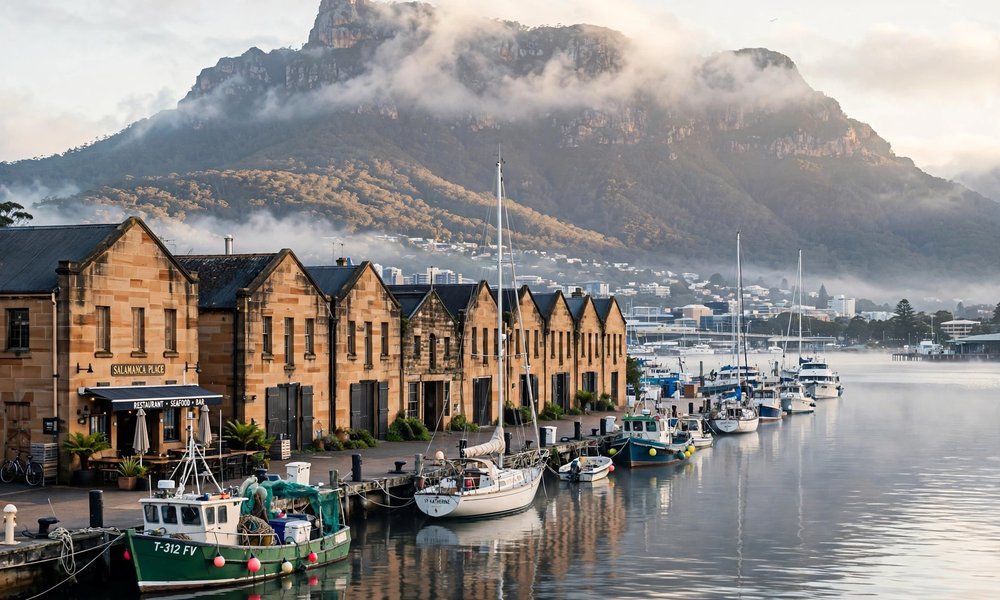

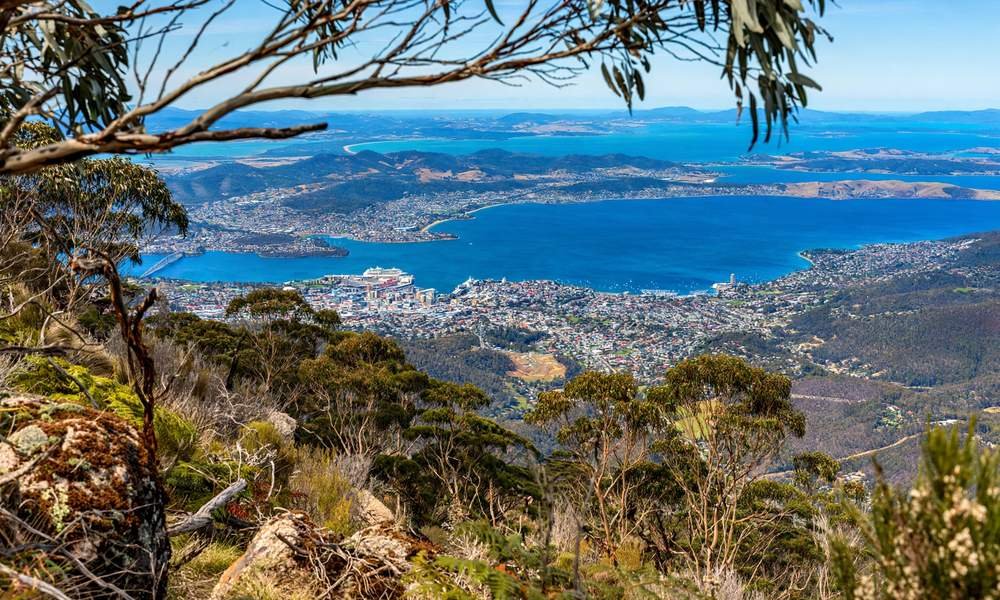
Hobart is a small city that punches above its weight. The harbour, the sandstone streets, the Salamanca crowds on a Saturday morning and kunanyi / Mount Wellington looming over everything give it a feel that is all its own. But where you sleep in Hobart matters more than you might expect. The city is hilly, the suburbs are spread out in a handful of distinct pockets, and pick the wrong area and you will spend your trip walking uphill or waiting for a bus.
Short on time? The waterfront and Sullivans Cove is the best area for a first visit. You can walk to Salamanca Place, the CBD, Battery Point and the MONA ferry in minutes, and most of Hobart’s best restaurants and bars sit within a few blocks. This guide walks you through every area worth considering, matches the right suburb to your travel style, and covers the practical details like parking, seasons, airport transfers and booking timing that other guides skip.
Hobart’s Areas at a Glance
Hobart is compact, but its character changes street by street. Most visitors stay in one of a few pockets around the harbour and city centre. Here is how they compare, so you can pick with confidence instead of guessing.
Sullivans Cove and the Waterfront
The working harbour is where most travellers spend their time in Hobart. Elizabeth Street Pier, the docks, Victoria Dock and the row of pubs and restaurants along the water draw most first-timers here. This is the best-connected part of town: the city centre is a flat walk away, Salamanca Place starts just around the point, and the MONA ferry leaves from nearby.
Who it suits: first-time visitors, anyone staying two or three nights, travellers without a car. Trade-offs: it is the priciest part of Hobart, and dockside rooms on weekends and in summer book out fast. Waterfront apartments work well here if you want a kitchen and a view over the masts.
Hobart CBD
The city centre sits just uphill from the docks and holds the biggest concentration of chain hotels and mid-range properties in Hobart. If you want an international-brand hotel, a big lobby, room service and reliable parking, this is where you will find it. You can walk to most things, but be ready for a slope in every direction.
Who it suits: business travellers, anyone who wants hotel-chain comforts, travellers who value being central without waterfront prices. Trade-offs: it feels like any Australian city centre. You trade charm for convenience.
Salamanca Place and Salamanca
The Georgian sandstone warehouses of Salamanca Place now hold bars, restaurants, galleries and pubs, and the Salamanca Market takes over the whole strip every Saturday. Staying here means you are inside the postcard. On Saturday morning you can roll out of bed and be among the stalls before the crowds.
Who it suits: food and market lovers, couples on a weekend trip, anyone who wants to be in the thick of it. Trade-offs: Saturday mornings and weekend nights can be noisy. Parking is scarce, so this suits travellers who arrive without a car or are happy to use paid parking.
Battery Point
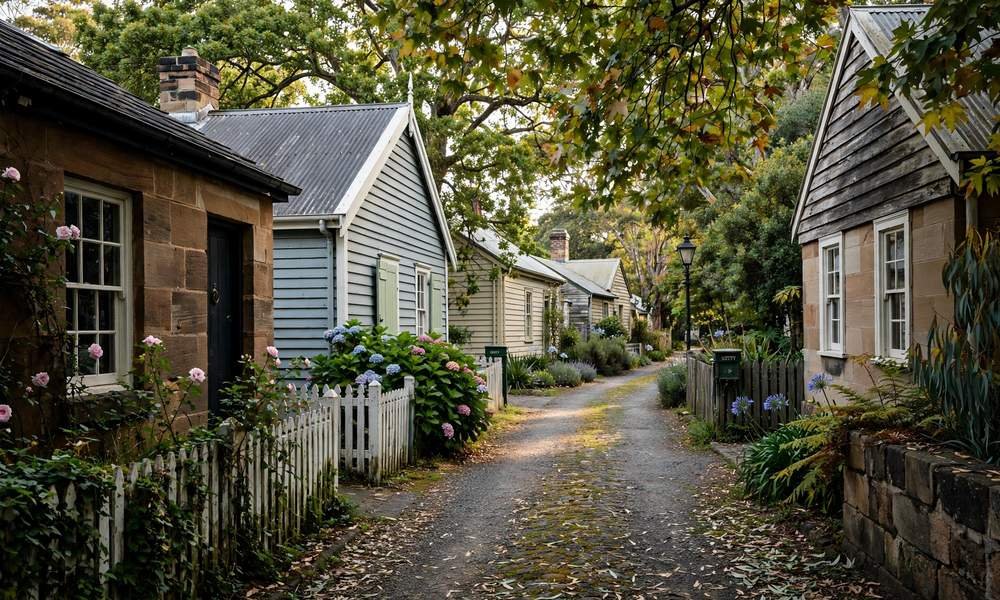
Just past Salamanca, Battery Point is Hobart’s prettiest suburb: quiet streets of sandstone and weatherboard cottages, narrow lanes, and pubs that feel like they have been there forever. It is mostly B&Bs, boutique guesthouses and self-contained cottages rather than big hotels.
Who it suits: couples, quiet-seekers, anyone who loves heritage streets. Trade-offs: it is steep. Dragging a suitcase up Kelly Street is a workout, and the cottage prices reflect the charm. Stay here if you are okay with hills and want Hobart at its prettiest.
Sandy Bay
South of Battery Point along the river, Sandy Bay is Hobart’s leafy university suburb. It has a beach, parks, the university campus and a string of motels and apartments along Sandy Bay Road. Rooms here often cost less than the waterfront for similar quality.
Who it suits: families, university visitors, travellers with a car who want space and quiet. Trade-offs: it is spread out. Unless you stay close to the shops, you will want a car or be happy with the bus to get into the centre.
North Hobart
North Hobart is where locals eat. Elizabeth Street’s restaurant and bar strip runs through the middle, and the area has a steady supply of mid-range hotels, apartments and character guesthouses. It is a bit further from the harbour, but the food scene makes up for the walk.
Who it suits: food-focused travellers, couples, anyone who wants a neighbourhood feel. Trade-offs: the walk back from the waterfront is uphill. Check how far your stay sits from the Elizabeth Street strip before you book.
South Hobart
South Hobart stretches from the edge of the CBD toward the mountain. It is residential and quiet, with a couple of standout boutique stays hidden in it. The biggest draw is position: you sit between the city and the kunanyi / Mount Wellington trails.
Who it suits: hikers, quiet-seekers, travellers with a car. Trade-offs: limited dining and no real strip of its own. You will lean on the car or walk down to the city and bus back up.
West Hobart
West Hobart sits on the slopes above the CBD and holds a mix of guesthouses, studios and well-priced apartments with views over the city. The views are the selling point: many places look straight down over the rooftops to the harbour.
Who it suits: view-seekers, budget-conscious travellers, anyone happy with a walk or short drive to dinner. Trade-offs: everything is on a hill. West Hobart suits travellers with a car more than those on foot.
Glebe and Lenah Valley
These fringe suburbs get little attention from other guides, which is a shame. Glebe sits just north of the CBD with some lovely character homes turned guesthouses, and Lenah Valley is a quiet, family-heavy suburb with good-value rentals and cabins. Both are minutes from the centre by car but feel like a different world.
Who it suits: families, self-catering travellers, anyone who wants value and quiet. Trade-offs: you will need a car. There is no buzzing strip in either suburb, so plan your dinners in the city or North Hobart.
The MONA Corridor: Berriedale and Glenorchy
If the Museum of Old and New Art is the reason you are coming, consider staying north of the city. The MONA ferry runs from the waterfront, but staying closer to Berriedale puts the museum, its pavilions and winery on your doorstep. Glenorchy is practical rather than pretty, but it is cheap and well connected by bus.
Who it suits: art lovers doing MONA properly, budget travellers, anyone spending several days in the northern suburbs. Trade-offs: you are away from Hobart’s restaurants and nightlife. Fine if MONA is your focus; less fun if you want evenings on the waterfront.
The Eastern Shore
Across the Derwent, suburbs like Bellerive and Howrah offer quiet waterfront of their own, and the MONA ferry actually runs from Bellerive too. The Eastern Shore feels like a separate town, with lower prices and local beaches.
Who it suits: travellers with a car who want quiet and value. Trade-offs: you cross the Tasman Bridge for the city. In peak-hour traffic that drive can test your patience, so this is a car-only choice.
The Quick Answer: Best Area for Your Trip
If you want the short version, here it is. First-time visitors should stay at the waterfront or in Salamanca, where everything is walkable and the harbour views do the selling. Couples who want quiet and charm should pick Battery Point. Families do well in Sandy Bay or in an apartment anywhere central. Budget travellers get the best deal in North Hobart, West Hobart or Glenorchy. And if your trip is built around MONA, staying near Berriedale saves you a commute.
Where to Stay in Hobart by Traveller Type
Area matters, but so does matching the stay to how you travel. Here is how the pieces fit together.
First-time visitors
Stay central and walkable: the waterfront, Salamanca or the CBD. You will see more in two or three days on foot than you would driving in from the suburbs, and the evening restaurant choice is unbeatable. An apartment on the waterfront gives you a kitchen for breakfast and a balcony over the harbour, while a Salamanca guesthouse puts you inside Hobart’s most atmospheric street.
Couples
Battery Point is made for couples: quiet cottages, heritage B&Bs and pubs with fireplaces. For a splurge, the luxury waterfront hotels around Sullivans Cove offer harbour views and serious comfort. South Hobart’s boutique stays also work for a romantic, tucked-away weekend.
Families
Apartments win for families: a kitchen, a washing machine and separate bedrooms make a huge difference over three nights. Sandy Bay and Lenah Valley have good-value apartment and motel options, and the waterfront apartments suit families who want to walk everywhere. The Old Woolstore Apartment Hotel is one of the well-known family-friendly apartment picks in the city centre, with parking and a handy location.
Budget travellers and backpackers
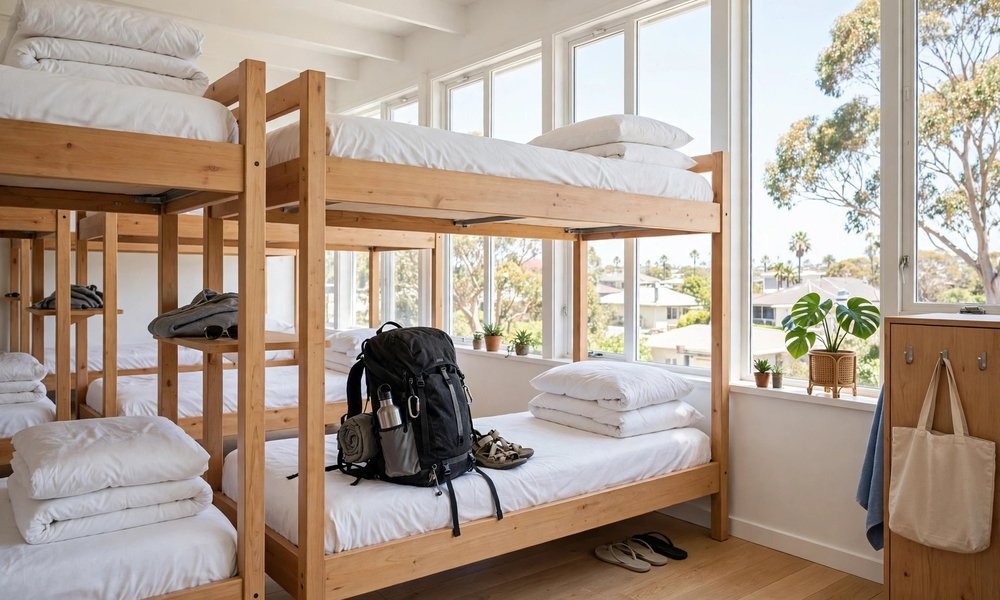
Hobart has a solid hostel scene if you look for it. Montacute Boutique Bunkhouse is a popular pick with dorm beds, private rooms and free parking. The Alabama Hotel is an adults-only budget option, though shared bathrooms come with the territory. Staying in North Hobart or Glenorchy keeps nightly costs down, and shoulder-season travel stretches your dollar much further than summer.
Luxury travellers
Hobart’s luxury scene is small but excellent. MACq 01 on the waterfront is the headline act with harbour-facing suites. The Tasman, a Luxury Collection property, brings big-city polish. The Henry Jones Art Hotel sets its rooms inside an old jam factory with a strong art collection, and the MONA Pavilions offer an over-the-top art-and-wine experience near the museum. Moss Hotel and Islington Hotel round out the boutique luxury picks. Book these well ahead for summer and event weekends.
Campervans, caravans and motorhomes
Most guides skip this, but plenty of travellers roll into Hobart on wheels. Discovery Parks Hobart on the eastern shore is the main caravan park near the city, with powered sites and family cabins. Caravan-park cabins can be a smart backup in peak season when hotels sell out or prices spike. Book powered sites ahead in summer, and check each park’s rules on vehicle size before you commit.
Self-catering and design-led stays
Hobart has a strong short-stay rental scene, with options ranging from Salamanca lofts to character cottages in Glebe and Lenah Valley. Serviced apartments around the waterfront, like the Sullivans Cove Apartments and Salamanca Dockside, give you a kitchen and a washing machine with hotel-style service. If you are staying five nights or more, self-catering usually beats hotels on value and comfort.
Hobart Accommodation Types Explained
Knowing what the labels mean helps you book the right thing.
Hotels
The big hotel brands cluster in the CBD, with the Grand Chancellor among the well-known names. Expect standard rooms, restaurants, bars and parking (often paid). The best harbour-view rooms sit on the waterfront and cost accordingly.
Apartments and aparthotels
Studios, one-bedroom and two-bedroom apartments with kitchens and laundries. These suit stays of three nights or more, families, and anyone who likes making breakfast at home. The Old Woolstore Apartment Hotel and Somerset on the Pier are among the established picks.
Boutique hotels and B&Bs
Battery Point, Salamanca and South Hobart hold most of the boutique properties: small, character-filled and often run by the owners. The Customs House Hotel near the waterfront is one example of a classic Hobart pub-style stay. Expect personal service and quirks instead of uniformity.
Hostels and budget hotels
Dorm beds, private rooms and no-frills hotels. Fine for a short stay if your room is clean and the location is right. Shared bathrooms are common at the cheapest end.
Caravan parks and cabins
Powered sites for vans, plus self-contained cabins that work as cheap motel alternatives. Most sit outside the centre, so a car is essential.
How Many Days Do You Need in Hobart?
Two full days covers the waterfront, Salamanca, Battery Point and the city centre at a relaxed pace. Three days lets you add MONA (a full day by itself) or kunanyi / Mount Wellington. Four or five days gives you a day trip to Port Arthur or Bruny Island without rushing. Staying fewer than two days means skipping something good, so plan at least a weekend.
Best Time to Visit, and When to Book
Hobart has four real seasons and changeable weather, so timing affects both your trip and your room rate.
Summer (December to February)
Warm, long days and the busiest season. This is when Hobart shines, but it is also when rooms cost the most and sell out. The Sydney to Hobart Yacht Race arrives around New Year, Taste of Tasmania fills the waterfront with food stalls, and accommodation can be scarce for weeks around these events.
Autumn and spring (March to May, September to November)
The shoulder seasons are the sweet spot for most travellers. Rates drop, crowds thin out, and the weather stays pleasant enough for walking and day trips. If you want good value and a good time, aim for these months.
Winter (June to August)
Winter is Hobart’s cheapest season and its most atmospheric: crisp air, snow on the mountain, cosy pubs. Dark Mofo in midwinter draws crowds to the city and pushes some rates up, but most winter nights are the cheapest of the year. Pack warm layers and a rain shell.
When to book your room
For summer trips and event weekends, book months ahead. Hotels around the waterfront can sell out well before December. For shoulder season, a few weeks is usually enough. For winter, you can often book days ahead and snag the best rates. Wherever you stay, check the events calendar before you book: race week, Dark Mofo and Taste of Tasmania can double rates or fill the city entirely.
Getting to Hobart and Getting Around
Hobart Airport sits east of the city, roughly a 20 to 40 minute drive from the centre depending on traffic and where you are staying. The SkyBus airport shuttle runs between the airport and the city, which suits travellers staying central without a car. Taxis and rideshares are available too, though pre-booking helps at busy times.
Once you are here, the centre is very walkable if you are fine with hills. Battery Point and West Hobart are the steepest walks; the waterfront and CBD are mostly flat. Metro Tasmania buses cover the suburbs, and the Red Decker hop-on hop-off bus is a handy way to get your bearings on day one. If you plan day trips to Port Arthur, Bruny Island or the Huon Valley, a car is the easiest option, and booking it early matters in summer.
Parking in Hobart: what to know
This is the detail most guides skip, and it matters. On-street parking in the centre and Salamanca is limited and often time-restricted. Many central hotels charge for parking, so check before you book rather than assuming. Staying at the waterfront or in Salamanca without a car is easy; staying there with a car means factoring in parking costs or picking a hotel with its own car park. Apartment stays and suburban motels usually include parking, which is one reason families and self-drive travellers favour them.
Using Hobart as a Base for Day Trips
Where you stay shapes your day-trip strategy. Port Arthur is a full-day drive from the city, so an early start matters and a central stay keeps the morning simple. Bruny Island needs a drive plus a ferry, so pick a day with good weather and allow the whole day. MONA is easiest: the ferry leaves from the waterfront, so a Salamanca or waterfront stay puts you on the boat in minutes. kunanyi / Mount Wellington is a short drive from South Hobart, which is one reason hikers like the area. If you are doing several day trips, a car-based stay in Sandy Bay or Lenah Valley with free parking often works better than a pricey waterfront room.
The Salamanca Market Timing Trick
Salamanca Market runs every Saturday in Salamanca Place, and it transforms the whole area. If your trip can include a Saturday, stay near Salamanca and you will wander the stalls before the day-trippers arrive. Saturday night in Salamanca has a great buzz too. The flip side: Saturday is the busiest and priciest night in town, so book early if your dates are fixed around it. If you are only in Hobart midweek, you will miss the market entirely, so plan your dates with that in mind.

What to Book First: A Practical Order
Book in this order and you will avoid the common mistakes. First, lock in your room, especially for summer or event weekends, because everything else depends on where you sleep. Second, decide on the car: book a rental if you want day trips, or commit to the bus-and-walk plan if you are staying central. Third, book MONA entry and any tours, since popular time slots go early in peak season. Last, plan your restaurants and market timing around the dates you have. Getting the order wrong usually means a great room in the wrong suburb for your plans.
FAQs About Where to Stay in Hobart
Is Hobart expensive for accommodation?
It depends on when you come. Summer and event weekends are expensive and sell out, with waterfront rooms at the top of the range. Winter and shoulder-season rates are much kinder, and suburban apartments and motels can be genuinely good value year-round.
Do you need a car in Hobart?
Not for the city itself. If you stay at the waterfront, in Salamanca or in the CBD, you can walk to the main sights and catch the MONA ferry on foot. You will want a car for Bruny Island, Port Arthur, the Huon Valley and most mountain walks, and for stays in the outer suburbs.
Is Hobart very hilly?
Yes, and it catches visitors by surprise. The waterfront and CBD are manageable, but Battery Point, West Hobart and the streets climbing from the docks are steep. If hills are a problem, pick a flat waterfront or CBD stay, or make sure your accommodation sits near a bus route.
Where should families stay in Hobart?
In an apartment or a suburban motel with parking: Sandy Bay, Lenah Valley and the waterfront apartment blocks all work well. A kitchen and a washing machine matter more than a harbour view when you travel with kids.
Can you visit MONA without staying nearby?
Yes. The MONA ferry leaves from the Hobart waterfront, so any central stay works. Staying near Berriedale only makes sense if MONA is the centrepiece of your trip or you want the full pavilions experience.
Is winter too cold to visit Hobart?
Not if you dress for it. Winter days are cool and the air is crisp, the mountain often wears snow, and pubs and restaurants are at their cosiest. You will get the cheapest room rates of the year and far fewer crowds.
Final Thoughts on Where to Stay in Hobart
Hobart rewards travellers who choose their base carefully. For a first visit, the waterfront and Salamanca give you the most Hobart per step: the harbour, the market, the restaurants and the MONA ferry all within an easy walk. Couples should look to Battery Point, families to apartments in Sandy Bay or the waterfront, and budget travellers to North Hobart or the outer suburbs. Whatever you pick, book early for summer, check the events calendar, and plan your Saturday around Salamanca Market. For more Tasmanian travel ideas, Australia City Guide has the full picture.