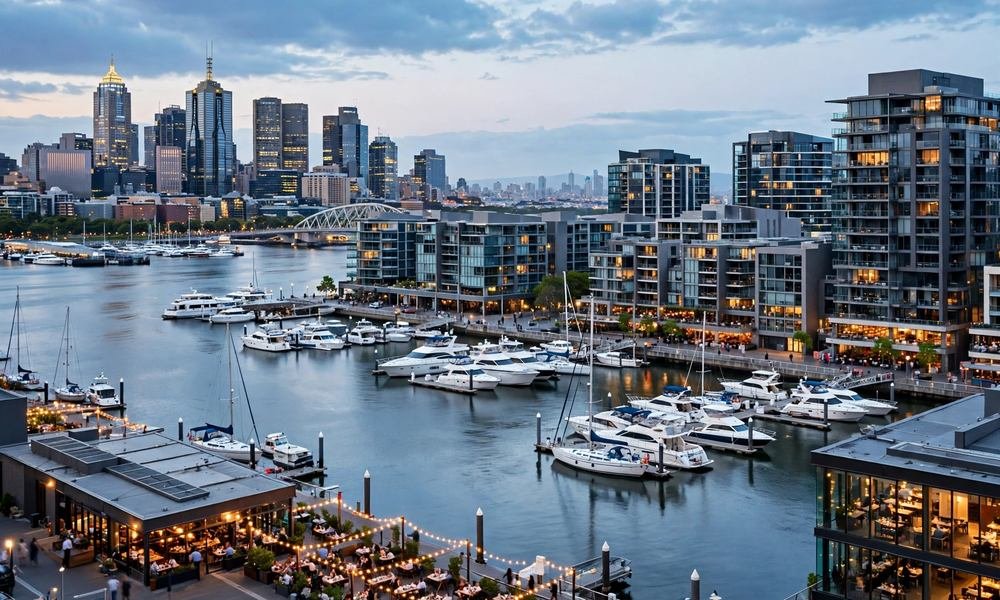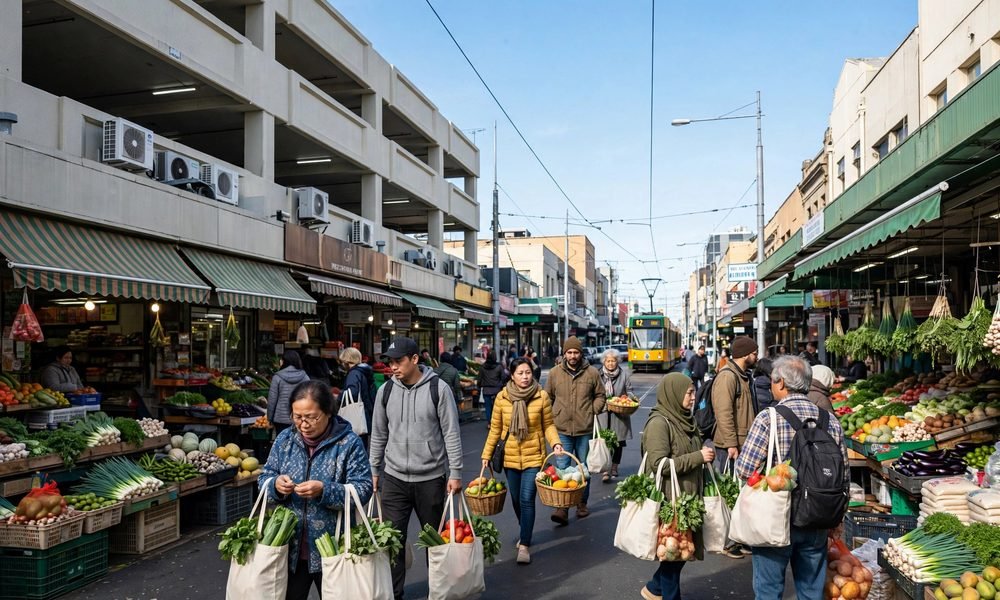

Footscray Melbourne is the city’s food-first suburb, about 5 km west of the CBD. It packs Vietnamese pho houses, Ethiopian cafes, a working produce market and a riverside arts centre into a few walkable streets. Come for lunch, stay for the river walk, and you will see a side of Melbourne the CBD never shows.
Details checked on the official site, November 2026
- Location: Footscray, about 5 km west of the Melbourne CBD, in the City of Maribyrnong.
- Cost: free to wander. Market entry is free, and the Heavenly Queen Temple is free to enter.
- Time needed: half a day covers the market, lunch and the river walk. Allow a full day if you add the arts centre and Footscray Park.
- How to get there: train to Footscray Station, about 10 minutes from Southern Cross. Tram 82 runs along Barkly Street.
How to Get to Footscray Melbourne
Footscray sits in Melbourne‘s inner west, and the train is the easy way in. Footscray Station takes Sunbury, Werribee and Williamstown line trains, plus V/Line services to Ballarat, Bendigo and Geelong. The station is in Zone 1, and an express train from Southern Cross takes about 10 minutes. All-stops services take longer, so check the indicator board before you board. You can check live times on the PTV site.
Tram 82 runs along Barkly Street through the middle of Footscray. Buses 402, 404, 406, 223 and 216 also serve the station area. The market lists these routes on its own site, so they are current.
Driving is possible, but the train is simpler. The market has more than 800 undercover car parks, with entry from Irving Street. Park and Shop rates are $1 for one hour, $2 for two hours, $4 for three hours, $6 for four hours and $10 all day, according to the market’s own site. Once you arrive, the centre is small enough to cover on foot. The market, the food streets and the station sit within a few blocks of each other.
Footscray Market
Footscray Market is the first stop for most visitors, and it sets the tone for the suburb. It is a large indoor market with more than 75 stores, on the corner of Hopkins Street and Leeds Street, directly opposite Footscray Station. Inside you will find fresh produce, meat, poultry and seafood, plus grocers selling herbs, spices and ingredients from many cultures. It is a working market for local shoppers, not a tourist display, so go early for the full atmosphere.
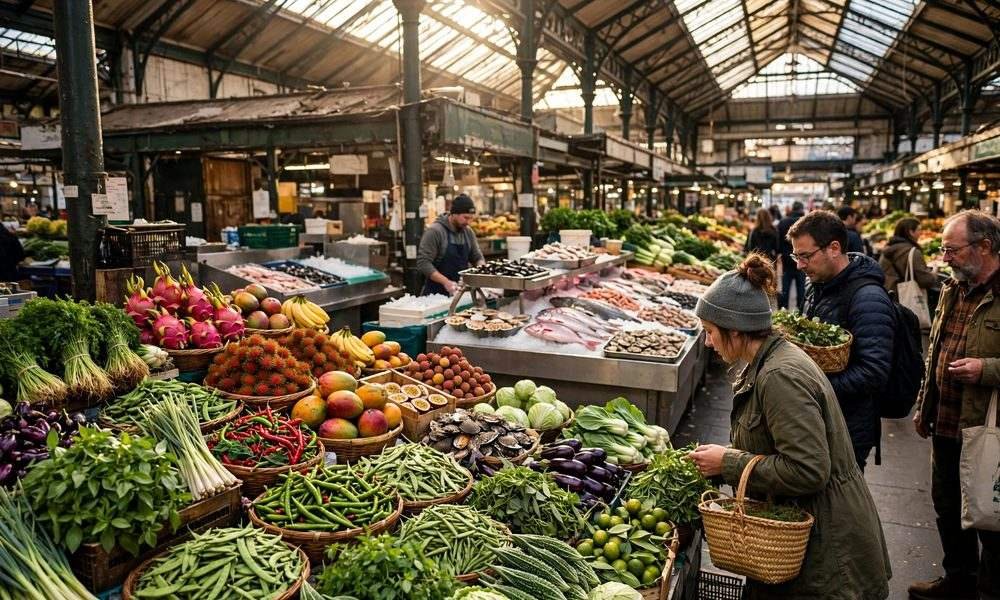
The market trades Tuesday and Wednesday from 7am to 4pm, and Thursday to Saturday from 7am to 5pm. It is closed on Sunday and Monday, so do not plan a Sunday market visit. These hours come from the market’s own website, checked today. Several older guides list different hours, and at least one suggests a Sunday visit, so trust the market’s own page before you travel.
Footscray Market is one of the best markets in Melbourne for Asian groceries. The seafood section is a draw in its own right, and the food court stalls serve pho, banh mi and Vietnamese coffee. Arrive before 9am on a Saturday, when the stalls are fully stocked, and bring a bag if you plan to buy before walking to the river.
Where to Eat in Footscray
Food is the main reason to visit Footscray. The suburb has more than 130 restaurants across Vietnamese, Ethiopian, Indian, Chinese, Thai, Turkish and other cuisines. Hopkins Street and Barkly Street are the two main strips, with Nicholson Street holding the African restaurants. Prices stay low across most of the suburb, and many places are cash friendly, so carry some notes as well as a card.
Vietnamese Food on Hopkins Street
Hopkins Street is lined with Vietnamese restaurants, bakeries and grocers. Pho is the dish most people come for, and nearly every shop has its own loyal following. Banh mi is the other staple, sold from bakeries along Hopkins Street and Barkly Street, where queues form before lunch. Nhu Lan Bakery on Hopkins Street is one of the long-running names, known for crisp rolls with house-made pate. For a sit-down meal, look for broken rice with grilled pork chop, a southern Vietnamese classic served across the suburb.
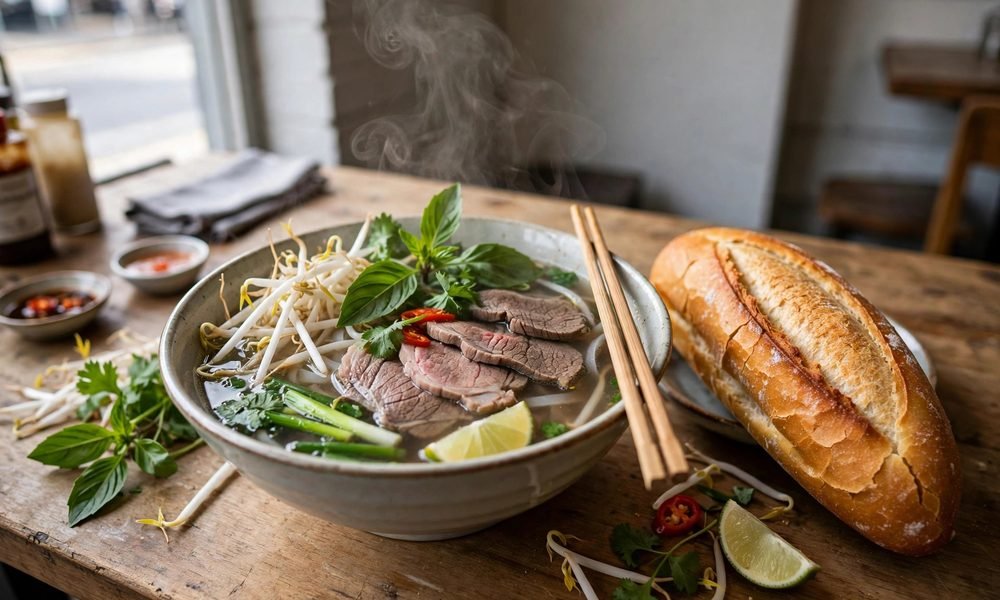
If you want a wider list before you choose, see our guide to the best restaurants in Melbourne. In Footscray itself, the smart move is to walk the strip, read a few menus and pick what appeals. A single list cannot capture the choice here.
Ethiopian and East African Food
Nicholson Street and the streets around it hold Footscray’s East African restaurants, mostly serving Ethiopian and Eritrean food. Meals centre on injera, the spongy flat bread, with stews and curries served on top for sharing. Cafe Lalibela on Irving Street is a long-standing pick, and Ras Dashen on Barkly Street serves generous sharing platters. Portions are large and prices are low, so order one platter between two people if you are unsure how much to get.
Cafes and Brunch
Footscray’s cafe scene is as distinct as its restaurants. Rudimentary on Barkly Street sits in upcycled shipping containers and pours a reliable coffee. Footscray Milking Station on Bunbury Street is a converted milk bar with house-baked bread and a seasonal brunch menu, and it fills up on weekends, so arrive early. T. Cavallaro and Sons is a family-run pasticceria that has made Sicilian cannoli in Footscray since 1956, according to Visit Victoria. Footscray’s brunch spots also feature in our guide to the best cafes in Melbourne.
Cheap Eats and Bakeries
Cheap eats are part of Footscray’s character. A banh mi, a bowl of pho or a plate of broken rice each cost far less than a comparable meal in the CBD. Little Saigon Market, a second market a short walk from the main one, sells tropical fruit and Asian produce at low prices. West Footscray has its own village strip with Indian and Nepali food, including masala dosa and momos. If you are watching the budget, eat your main meal here and save the city prices for another day.
Bars and Breweries in Footscray
Footscray’s bar scene has grown fast in recent years, and it suits a low-key evening. Hop Nation Brewing Co works from a former factory and pours its own brews across many taps, with pizza from the in-house pizzeria. Back Alley Sally’s sits in a converted warehouse, Mr West is a two-storey bar and bottle shop, and Bar Josephine pours natural wine. The Station Hotel on Hopkins Street is the pick for a pub meal, and Visit Victoria points to it for steak. Most bars sit within a short walk of the station, so the train home is easy.
Footscray Community Arts Centre
Footscray Community Arts sits on the banks of the Maribyrnong River at 45 Moreland Street. It is a community arts centre with galleries, performance spaces, a bar and a cafe, and its program runs from exhibitions and theatre to workshops and live music. The centre is open Tuesday to Friday from 9:30am to 5pm, according to its own visit page. It is a 12-minute walk from Footscray Station, or take bus 402 to the corner of Moreland Street and Dynon Road and walk five minutes down Moreland Street.
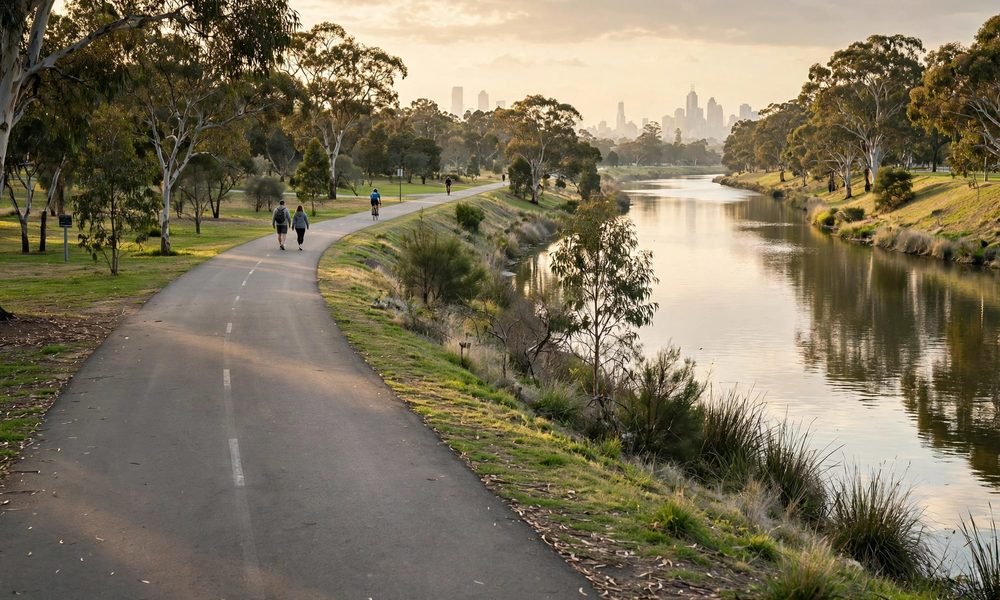
Check the program before you go. A gallery visit is a short stop, while a performance is a full evening, and the two need different plans. In summer, outdoor film screenings run on the lawns by the river. The centre is also the base for the suburb’s experimental theatre company, Snuff Puppets, which performs at the Footscray Drill Hall.
Maribyrnong River Walk
The Maribyrnong River runs along Footscray’s eastern edge, and the paved path beside it is the suburb’s calm counterpoint to the busy food streets. Walk north from the Footscray bridge toward Pipemakers Park for a quieter stretch with views back to the city skyline. The path is flat and suits walking, running or cycling, and it links to a wider trail network that runs south toward Williamstown and north toward Avondale Heights.
Do not try to squeeze the river into a short lunch break. It is a separate leg from the station area, and the walk to the arts centre and back is a plan in itself. Bring water in summer, as shade is patchy along the open stretches. The river also has boat launching spots and picnic areas, and the path is popular with local cyclists, so keep to one side.
Footscray Park
Footscray Park is a 15-hectare Edwardian garden on the south bank of the Maribyrnong River, between the river and Ballarat Road. It was reserved as a public park in 1911 and was the first garden placed on the Victorian Heritage Register. The park holds ornamental ponds, stone pergolas, a lookout shelter, drinking fountains and a war memorial, plus wide lawns and a dog off-lead area.
The park hosts the Saltwater Festival and the Vietnamese Festival each year, and it is the venue for the St Jerome’s Laneway Festival. It also gives one of the clearest views across the river to Flemington Racecourse, and it features in our guide to the best parks in Melbourne.
Heavenly Queen Temple
The Heavenly Queen Temple stands at 20 Joseph Road, a short walk from the river. It is a Taoist temple dedicated to Mazu, the Chinese goddess of the sea and protector of sailors and fishermen. Visit Victoria calls it the biggest Chinese temple in Australia, and its gold statue of Mazu is visible from the train line. The temple is open 365 days a year, Monday to Friday from 9:30am to 3:30pm and Saturday and Sunday from 9:30am to 4pm, according to the temple’s own site. Entry is free.
Visit on a weekday morning for the quietest experience. Weekends are busier, so arrive at the 9:30am opening if you want space to look around. Mazu’s birthday, on the 23rd day of the third lunar month, is the temple’s biggest day of the year, and the Tet Lunar New Year Festival brings fireworks to the suburb. Dress modestly, keep voices low inside the halls, and check the temple’s site for festival dates before you plan around one.
Whitten Oval and the Western Bulldogs
Whitten Oval on Barkly Street is the home of the Western Bulldogs, the Australian Football League team once known as the Footscray Football Club. The club’s bulldog mascot comes from local lore: a stray bulldog is said to have run onto the field during a game in 1928 and led the players out, and the crowd took to it at once. You can walk past the ground and see the murals and club history displays from the street. On training days, fans gather outside to watch. The Bulldogs Museum at the ground covers the club’s history for supporters who want more.
A Short History of Footscray
Footscray stands on the traditional lands of the Kulin nation, where the Yalukit-willan, Marin-balluk and Wurundjeri peoples met at the junction of the Maribyrnong and Yarra rivers. The first European to visit was Charles Grimes in 1803. A punt crossed the Maribyrnong in 1839, and it was the only link between Melbourne and Geelong, Ballarat and Bendigo. Footscray became a municipality in 1859, and its name comes from Foots Cray, a place on the River Cray in Kent, England.
The suburb grew as an industrial zone in the second half of the 1800s, with factories and warehouses along the river and the docks. Manufacturing declined from the 1960s, and the old industrial sites are now turning into housing. Migration shaped the suburb at every stage. Greek, Italian and former Yugoslav families came first, then Vietnamese families from the 1970s, then East African communities. That history is why the food streets look the way they do today.
Festivals and Events in Footscray
Footscray’s calendar is worth checking before you travel. The Tet Lunar New Year Festival fills the central streets with dancing dragons, live music and food stalls, with fireworks at night. The St Jerome’s Laneway Festival takes over Footscray Park each year with local and international acts. The Saltwater Festival and the Vietnamese Festival also use the park. Dates change each year, so check the City of Maribyrnong events page before you plan a trip around a festival. A festival day is a different visit from a normal Saturday, with bigger crowds and closed streets.
A Half Day in Footscray
A good half day starts at the market. Arrive at Footscray Station on a Tuesday to Saturday morning, walk straight across to Footscray Market, and browse the produce and seafood aisles. Pick up a banh mi and a Vietnamese coffee from a stall inside for breakfast. Then walk Hopkins Street and Nicholson Street, reading menus and picking a lunch spot. Pho, broken rice or an Ethiopian sharing platter all work, and lunch is the main cost of the day.
After lunch, walk down to the Maribyrnong River and the arts centre on Moreland Street. Check what is on at Footscray Community Arts, then take the river path for a short walk. If you have a full day, add Footscray Park and the Heavenly Queen Temple in the afternoon. The whole day costs very little beyond lunch and transport, since the market, the temple, the river walk and the park are all free to enter. Parking is $10 for the full day if you drive, and the train from the city takes about 10 minutes each way.
Final Thoughts on Visiting Footscray
Footscray rewards a slow visit built around food. Come hungry, bring cash for the small stalls, and let the market set the plan for the day. It is one of the few Melbourne suburbs where a half day still feels like a proper trip. See more Melbourne guides on Australia City Guide.
Frequently Asked Questions About Footscray
Can I visit Footscray and Yarraville in one day?
Yes. Walk south from Footscray to Seddon, then on to Yarraville, or catch one train stop. Yarraville has its own village strip along Williamstown Road, and the Sun Theatre is a heritage art-deco cinema worth an afternoon film. The three suburbs together make an easy full day on foot.
Do I need to book for Footscray Community Arts?
It depends on the event. Gallery visits are casual, but performances and workshops can be ticketed, so check the program on the centre’s site before you go. Some shows sell out, and evening events run past the daytime opening hours.
Where should I stay to visit Footscray?
Footscray has a small number of hotels and serviced apartments near the station, but most visitors stay in the CBD and ride the train in. The trip takes about 10 minutes, so a city base works well for a Footscray day. Staying in Footscray suits travellers who want the food scene on their doorstep.
When is the Tet Festival in Footscray?
Tet, the Lunar New Year festival, falls in late January or February, and the date changes each year. Check the City of Maribyrnong events page for the current year’s date before you plan around it. The festival brings food stalls, performances and fireworks to the central streets.