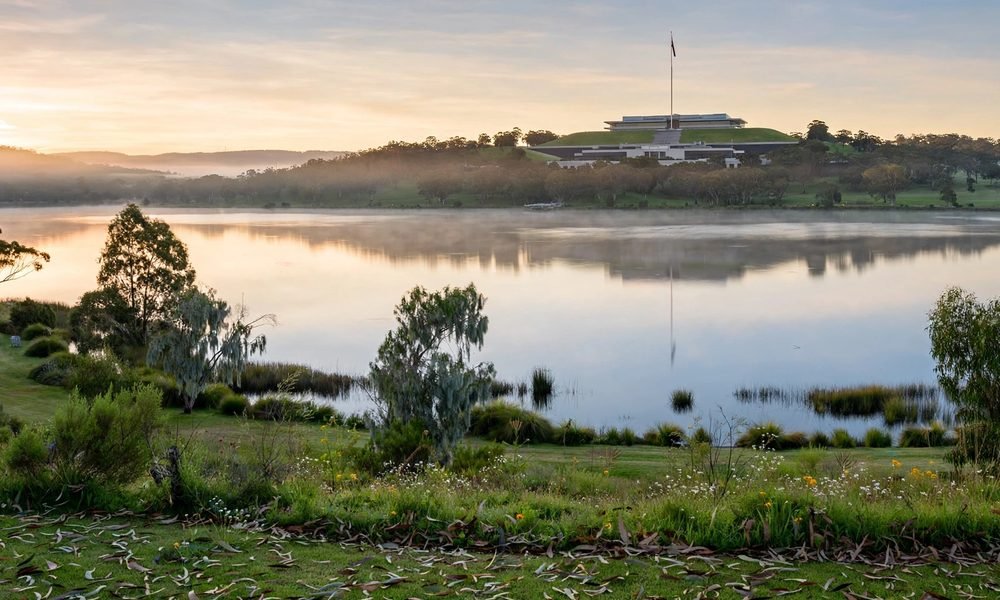

Lake Burley Griffin is the centrepiece of Canberra, and locals simply call it “The Lake”. This long artificial lake sits at the middle of the national capital, with the country’s most important buildings and museums around its shores. On any sunny day you will see rowers on the calm water, walkers on the lakeside paths, and families spread out on the grass with a picnic. If you are visiting Canberra for the first time, start here. This guide covers the best things to do on and around the water, the best time to visit, where to stay nearby, and the practical tips that make your day easier. For the rest of your trip, the team at Australia City Guide has the whole Australian Capital Territory covered.
You do not need long here. A half day covers the highlights, and a full day lets you walk the famous loop, get out on the water, and visit an institution or two. Keep reading and we will help you plan it.
The Story Behind the Lake
Before there was a lake, there was a river. For more than 25,000 years the Ngunnawal people lived along the Molonglo River, the same river that now flows into the lake. They managed the land with fire and care for thousands of years, long before Canberra existed, and their connection to this country continues today.
The lake itself is artificial. When the site of Canberra was chosen as the national capital in 1908, the surveyor Charles Scrivener liked the spot partly because the Molonglo River could be dammed to create an ornamental lake. In 1912, the American architect Walter Burley Griffin won the international competition to design the city, together with his wife and design partner Marion Griffin, and a central lake was the core of their winning plan.
It took decades to actually build. The Scrivener Dam was finished in September 1963, and water filled the basin over the months that followed. Prime Minister Sir Robert Menzies officially opened the lake on 17 October 1964. More than 60 years later, it is still the place where the whole city comes to walk, play, celebrate, and slow down.
Getting Out on the Water
The lake is calm and sheltered, which makes it a perfect playground for water activities. You do not need to be an expert to join in. Most operators welcome complete beginners and provide all the gear.

Paddleboarding, kayaking and sailing
Stand-up paddleboarding is one of the best ways to experience the lake, especially early in the morning when the water is glassy. Local operators run group lessons for beginners, and you can hire a board and explore on your own once you know the basics. Kayak hire is also easy to find through the warmer months, generally from October to April.
If you want to join a group, look for the women’s paddleboarding sessions that run in summer. They are friendly, social, and a fun way to see the sunrise from the water. For the more serious sailors, the local yacht club runs windsurfing and sailing, and you will often see small sailing boats dotting the lake on weekend afternoons.
Cruises and boat hire
Several cruise operators run sightseeing trips on the lake, which is a relaxing way to see the shoreline landmarks without walking a step. The cruises pass the big sights like the Captain Cook Memorial and the National Carillon, and most include commentary about the city.
For something more personal, hire an electric picnic boat. These slow, quiet boats let you be your own skipper, and most carry up to eight people, so they are ideal for families and groups. Bring your own food and drinks and putter around the lake at your own pace.
The classic pedal boats are still going strong. They run from three spots around the lake: Regatta Point, Commonwealth Place, and Kingston Foreshore. Kids love them, and the price is gentle. Over in Kingston you can also hire small model boats to steer by remote control on the water near the footbridge, and the profits support a local charity.
Swimming spots and the aqua park
Yes, people swim in the lake, and in summer it is one of the best free ways to cool off. The most popular swimming coves sit on the eastern side of Weston Park, where you will find shallow spots that suit toddlers and pontoons to swim out to. The water is tested weekly through the swimming season, and results are posted online and at the beach, so check before you go.
For something louder, the Canberra Aqua Park sets up a giant inflatable obstacle course on the lake in the warmer months. It is all bouncing, sliding, and falling off, and it is a huge hit with teenagers. Book online ahead on hot weekends, because sessions sell out.
Walking and Cycling the Shoreline
The paths around the lake are flat, wide, and shared by walkers, runners, and cyclists. You can walk a short stretch or ride the whole shoreline. Either way, you will be surprised how quickly you leave the city noise behind.

The bridge-to-bridge walk
The most famous walk in Canberra runs between Commonwealth Avenue Bridge and Kings Avenue Bridge, a distance of about five kilometres. Locals do it at lunchtime, before work, and on lazy Sunday afternoons. Allow about an hour and a half at an easy pace, with stops.
The route passes some of the city’s best-known sights: Commonwealth Park, the National Capital Exhibition, the Captain Cook Memorial, Rond Terrace, the National Carillon, and the Australian of the Year Walk, where plaques name every winner since the award began. There are cafes along the way for a mid-walk coffee, and plenty of benches when your legs need a rest.
If five kilometres sounds like too much, try the shorter RG Menzies Walk. It runs about two kilometres along the northern side between Commonwealth Avenue Bridge and Kings Park, and it still gives you the lake views and the memorials.
Cycling loops and e-scooters
Cyclists are spoiled here. Three signed loops circle different parts of the lake, and you can join them anywhere along the path. The Central Loop is about five kilometres and passes the National Gallery of Australia sculpture garden, the National Portrait Gallery, the High Court, Questacon, Reconciliation Place, and the National Library.
The Western Loop runs about 16 kilometres and takes you past the National Arboretum and the National Zoo and Aquarium. The East Loop is about nine kilometres and covers the Jerrabomberra Wetlands, Commonwealth Park, and the Old Bus Depot Markets. The full lap of the entire lake is around 30 kilometres if you want a proper workout.
Bike hire is easy to arrange in the city, and you will spot the little Chinese welcome gate in Lennox Gardens along the way, a quiet corner many riders miss. If pedalling is not your thing, e-scooters are scattered around the lake. Hire one through the app, wear the helmet, and stick to the cycle lane.
Landmarks and Sights Around the Lake
One of the best things about the lake is how many free sights sit right on its edge. You can string them together on the bridge-to-bridge walk or pick the ones that interest you most.

Captain Cook Memorial and the National Carillon
The Captain Cook Memorial is the one you will spot from across the water. A powerful water jet shoots high into the air from a globe sculpture, commemorating Captain Cook’s voyage to Australia’s east coast in 1770. On a still day the jet is clearly visible from most of the central basin, and it is a favourite photo stop.
A short walk away on Aspen Island sits the National Carillon. This tall white bell tower was a gift from the British Government, and its 57 bells ring out across the water when the carillonist plays. Free recitals run regularly, so check the schedule and time your walk to catch one. Hearing the bells drift over the lake is one of Canberra’s small pleasures.
Parks, memorials and gardens
Commonwealth Park is the big green space on the northern shore. It covers more than 34 hectares and was designed in the 1960s as the city’s central garden. It hosts festivals through the year, and you may spot grey-headed flying foxes roosting in the trees at dusk. They are harmless and fascinating to watch.
Regatta Point sits at the western end of Commonwealth Park and has one of the best views of the lake, with Parliament House rising on the hill across the water. The National Capital Exhibition here is worth a look if you want the full story of how Canberra was planned.
Walk east along the shore and you will pass a string of memorials, each with its own story. Rond Terrace marks the central axis of Griffin’s design. Gallipoli Reach mirrors the shape of Anzac Cove in Turkey. Kings Park holds the Australian of the Year Walk. Reconciliation Place, between the National Library and the High Court, uses public art to tell stories of shared history and connection to country.
History buffs should look out for Blundells Cottage, a small stone cottage from the 1860s that survived the building of the capital. It sits quietly near the water, a reminder that people farmed this land long before the lake existed.
Across the water on the southern shore, Parliament House dominates the skyline from its hilltop, and the National Gallery of Australia sits right on the lakeside with its sculpture garden open to the water. The Australian War Memorial is a short drive north of the lake, at the far end of Anzac Parade.
Where to Eat and Drink by the Water
The lake has a proper food scene now, covering morning coffee, lazy long lunches, and special dinners. Most of the best spots sit right on the shoreline, so you barely have to leave the water.
Cafes and brunch spots
Walter Cafe at Regatta Point is named after Walter Burley Griffin, the man behind the lake, and it has one of the best views of any cafe in Canberra. Grab a table on the deck and watch the rowers go past. The brunch menu covers all the classics: bacon and egg rolls, waffles, and proper coffee.
Local Press Cafe is another lakeside favourite for coffee and breakfast, and it sits close to the Kingston Foreshore paths. If you are walking the southern shore in the morning, it makes a natural first stop.
Dinner and drinks with a view
The Boat House is the classic special-occasion pick on the lake. It sits right on the water with views back across to the city, and the menu is modern Australian. In the warmer months, its outdoor bar is one of the best sunset spots in Canberra.
Waters Edge is another fine-dining option on the shore, known for its degustation menus and its glass dining domes on the lawn, which make a fun booking for a celebration. Over in Kingston, the foreshore precinct has a cluster of bars and restaurants, including Walt & Burley and The Dock, all within a short stroll of the water. For something casual, grab fish and chips in Yarralumla and eat them on the grass.
The Little Burley Market
On Saturday mornings, the Little Burley Market sets up on the shore at Queen Elizabeth Terrace, near Commonwealth Place. Expect gourmet food stalls, fresh produce, pastries, coffee, and locally made gifts. It is dog-friendly, it is right on the water, and it pairs perfectly with a morning walk. Get there early on sunny Saturdays, because the good stuff sells out.
How Long You Need: Half-Day, One-Day and Weekend Itineraries
The lake suits any schedule, but it helps to know what fits into each block of time. Here is how we would split it.
Half day (3 to 4 hours). Walk the bridge-to-bridge route, stopping at the Captain Cook Memorial and the National Carillon. Finish with lunch or coffee at a lakeside cafe. This covers the essentials and is plenty if you are short on time.
Full day. Start with a morning paddleboard session or a lake cruise, then walk the bridge-to-bridge loop. Have lunch at the Little Burley Market if it is Saturday, or at the Kingston Foreshore. Spend the afternoon in one of the lakeside institutions, like the National Gallery of Australia or the National Library, then finish with sunset drinks at an outdoor bar on the water.
Weekend. Add a full cycling loop on day one and a hot air balloon flight at dawn on day two. Yes, the balloon flights leave very early, but floating over the lake as the city wakes up is worth the alarm. In March, time your trip for the Canberra Balloon Spectacular, when dozens of balloons fill the sky over the water.
Best Time to Visit, Season by Season
Canberra has proper seasons, and the lake feels different in each one. Pick your season to match what you want to do.
Spring (September to November). This is one of the best times. The days are mild, the gardens are in flower, and the lake paths are at their prettiest. Floriade, the city’s big flower festival, runs in Commonwealth Park in spring and turns the northern shore into a carpet of colour.
Summer (December to February). Hot days make the lake the centre of everything. Swimming coves fill up, the aqua park is open, and the long evenings are made for sunset picnics. Book boat hire and balloon flights ahead, because this is peak season.
Autumn (March to May). The other sweet spot. The weather is settled and warm without the heat, the crowds thin out, and the trees around the lake turn gold. March also brings the Canberra Balloon Spectacular, when the sky over the lake fills with hot air balloons at dawn.
Winter (June to August). Canberra winters are cold, and frosty mornings are normal. But a clear winter day on the lake is a quiet kind of lovely, with mist on the water and hardly anyone on the paths. Rug up, walk the bridge-to-bridge loop, and warm up with coffee at a lakeside cafe. Water activities mostly pause in winter, so plan around walking, cycling, and the institutions instead.
Where to Stay Near the Lake
You do not need to stay far from the water. Several suburbs sit within easy walking or a short drive of the lake, and they suit different budgets and trip styles.
Parkes and Barton. These inner suburbs sit on the southern shore, close to Parliament House and the national institutions. They are the handiest base for a sightseeing trip, with several hotels and serviced apartments. You can walk to the lake in minutes.
Kingston. On the eastern shore, Kingston has a lively foreshore with restaurants, bars, and cafes. It is a good pick if you want evening options within walking distance. The East Basin paths start right here.
Yarralumla. A leafy suburb on the western side of the lake, close to Weston Park and the zoo. It suits families and anyone who wants a quieter base with easy lake access.
Civic (the city centre). A short drive or bus ride north of the lake, Civic has the widest choice of hotels and the best public transport links. It is the practical choice if you are also exploring the rest of Canberra.
Wherever you stay, check how close you are to a lake path. Being able to walk or ride straight to the water in the morning is half the pleasure of a Canberra trip.
Getting There and Getting Around
Canberra Airport is a short drive from the lake, and the drive into the city is straightforward. If you are driving in from Sydney, allow about three hours; from Melbourne, about seven. Once you are in Canberra, the lake is impossible to miss, it sits at the centre of everything.
Parking is easy on weekdays but fills up fast on sunny weekends at the popular spots like Commonwealth Park, Regatta Point, and the Kingston Foreshore. Arrive before 10am on weekends if you want a good spot, or park a little further out and walk in along the path.
The local bus network reaches most lake access points, and the paths themselves are the best transport of all. If your accommodation is near the water, you may not need a car for your lake days at all. A bike or e-scooter covers the shoreline faster than driving between car parks.
Practical Tips Before You Go
Most of the lake is free. Walking, cycling, swimming, picnics, and the memorials cost nothing. You only pay for boat hire, lessons, cruises, balloon flights, and food. It is one of the best free days out in Canberra, and our free things to do in Canberra guide has more ideas.
Dogs are welcome on much of the shoreline. Many sections of the lake path are dog-friendly, and the bridge-to-bridge walk is popular with dog owners. Keep your dog on a lead where signs require it, and carry water, as there is little shade on some stretches.
Anglers fish here too. Murray cod and golden perch live in the lake, and you will see locals casting a line from the shore, especially early and late in the day. Check the current fishing rules before you go, as they can change.
Mornings are the calmest. If you want glassy water for paddleboarding or the best light for photos, get to the lake early. The wind often picks up in the afternoon, which suits sailors but not swimmers.
Bring sun protection. The paths are exposed in places, and the Australian sun is strong even on mild days. Sunscreen, a hat, and water are non-negotiable in summer.
Picnic spots are everywhere. Commonwealth Park, Weston Park, Lennox Gardens, and the lawns near Rond Terrace all have shady spots and barbecues. Grab supplies from the Kingston shops or the Saturday market and claim a patch of grass.
FAQs About Visiting the Lake
Can you swim in the lake? Yes. The swimming coves on the eastern side of Weston Park are the most popular spots, and the water is tested weekly through the swimming season. Check the latest results before you swim, and stick to the marked areas.
How long is the walk around the lake? The famous bridge-to-bridge walk is about five kilometres and takes around an hour and a half. A full lap of the entire lake is about 30 kilometres, which most people do by bike rather than on foot.
Is the lake natural? No, it is artificial. It was created by damming the Molonglo River, and it filled for the first time in 1963 and 1964.
When does the Captain Cook Memorial jet run? The memorial jet usually runs during the day. Timings can change for maintenance or events, so check locally on the day if seeing it is important to you.
Can you take dogs to the lake? Yes, on much of the shoreline. Many sections are dog-friendly, though some areas require leads. Look for the signs at each access point.
Do you need to book boat hire in advance? On summer weekends, yes. GoBoats, pedal boats, and the aqua park all sell out on hot days. Book ahead online to avoid missing out.
Final Thoughts on Visiting Lake Burley Griffin
The lake is Canberra at its best: free, open, and made for slow days. Walk the bridges, get on the water, eat by the shore, and let the institutions wait for tomorrow if the sun is out. It is the one place in the capital that belongs equally to tourists and locals, and that shared feeling is what makes it special. Plan your visit around the season, arrive early on weekends, and give the water at least a full day. You will leave understanding why Canberrans just call it “The Lake”.