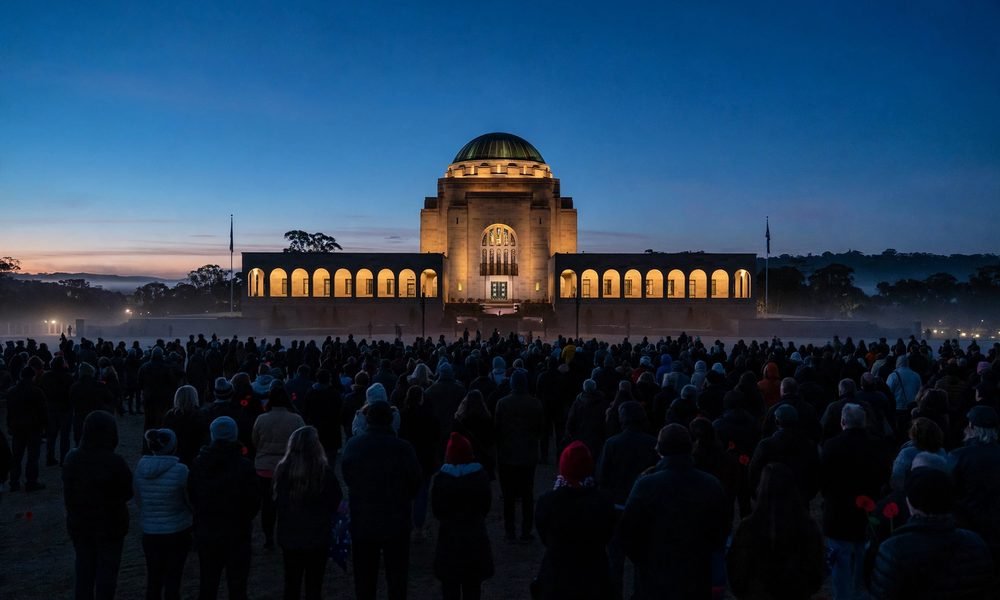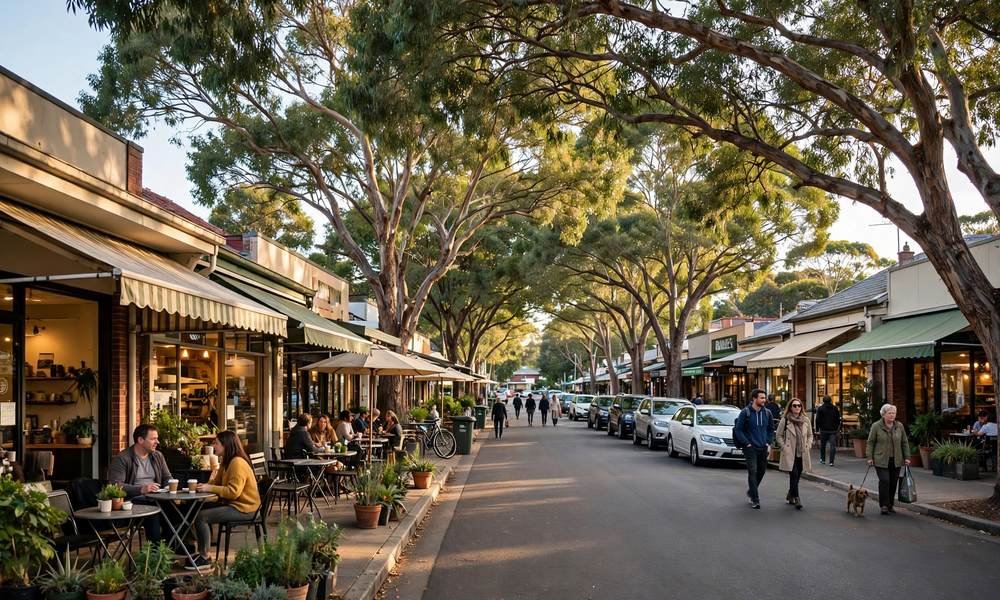

Dickson Canberra is the suburb Canberra locals point to when someone asks where to eat well without spending much. It sits four kilometres north of the city centre, and its main street, Woolley Street, holds the biggest cluster of Asian restaurants in the capital. Most of the rooms are plain, the menus are long, and the food is the reason people keep coming back. This guide covers the food first, then the rest of the suburb: its history, its walks, its wetlands, and how to plan a visit. If you are putting together a wider trip, our things to do in Canberra guide is a good place to start.
Why Visit Dickson?
Dickson is not a suburb people visit for one big sight. They visit it for a feeling. The streets are leafy and quiet, the shops are low and old-fashioned, and then you turn onto Woolley Street and find a whole food precinct packed into a few blocks. It is the kind of place where a family-run noodle house can sit next to a wine bar, and both can be full on the same night.
Three things make Dickson worth your time. First, the food. Chinese, Vietnamese, Korean, Thai, Japanese and Indian kitchens sit side by side, and many of them have been run by the same families for decades. Second, the ease of it. The light rail stops right at Dickson Interchange, and you can be eating ten minutes after you leave the city centre. Third, the price. A filling lunch here costs about the same as a sandwich and coffee in Civic, and you will leave full.
Dickson also works well as a base for a slow morning. You can walk the wetlands, browse the shops at Dickson Centre, then settle in for a long lunch. It is a suburb that rewards people who take their time, not people who rush through a checklist.
Woolley Street: Canberra’s Chinatown
Woolley Street is the centre of Dickson life. The street runs through the Dickson Centre shopping area, and most of the restaurants sit along it or in the small lanes off it. Locals call it Canberra’s Chinatown, and the name fits. The shopfronts are modest, the signs are a mix of English and Chinese, Vietnamese and Korean, and at weekend lunch the footpath fills with people waiting for a table.
The food story here goes back a long way. Asian dining in Dickson began with the Golden Phoenix in 1965. Ruby Chinese opened in 1982, The Scholar opened at 23 Woolley Street in 1984, and Dickson Asian Noodle House followed in 1993. That long history is why the street feels settled rather than trendy. These are kitchens that have fed the same neighbourhood for thirty years or more, and they cook for regulars, not for passing trade.
Come hungry and come ready to share. Most dishes are made for the table, not for one person, and a group of four can try far more than a couple can. If you are on your own, a noodle soup is the easy choice. It is a full meal in one bowl, and it costs about $20.
Chinese Roast Meats and Classic Dishes
The Cantonese roast meat houses are the backbone of Woolley Street. Duck, barbecued pork and crisp pork belly hang in the window, and the cook chops them to order over rice. It is simple food done well, and it has been the lunch of choice here for decades. Go at lunch, point at what looks good, and you will eat well.
Tak Kee Roast Inn is one of the long-running names for roast meats, and Ruby Chinese has been serving the street since 1982. Jimmy’s Place is another old favourite on Woolley Street. The Scholar, at 23 Woolley Street, is the place for yum cha and seafood, and it has held its spot since 1984. These rooms are plain, the service is quick, and nobody minds if you share a table with strangers at a busy lunch.
If you have never had yum cha, Dickson is a good place to try it. Small plates come around on trolleys or to order, and you pick what you like: steamed dumplings, rice rolls, chicken feet if you are keen, and custard tarts to finish. Go with a group, order too much, and treat it as the main event of the day.
Vietnamese Pho and Noodle Soups
Vietnamese food is the other pillar of Woolley Street. Pho Phu Quoc, at 5 Badham Street, is a family-run favourite that locals rate as one of the best bowls of pho in Canberra. The broth is light and fragrant, the beef pho is the dish most people order, and the room is big, busy and welcoming. It is also a good pick for families: the staff are quick and friendly with kids, and the bowls come fast.
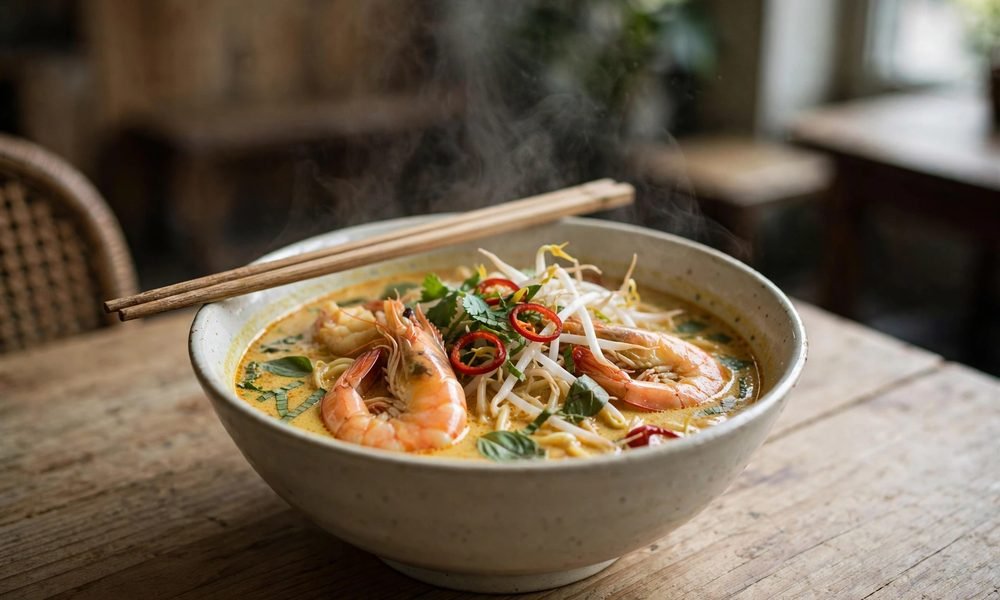
Pho is not the only soup worth your time. Laksa is everywhere in Dickson, and one Woolley Street noodle house has been serving its laksa since about 1994. A large bowl of coconut curry laksa, wonton noodles or pho costs about $20, and it is a meal on its own. Order it when you want something warm, fast and filling, and add chilli to taste rather than all at once.
Dickson Asian Noodle House, open since 1993, is another long-running noodle spot on the street. The menus in these houses are long, so if you feel stuck, ask the staff what they recommend. They will point you to the dish the kitchen is proudest of, and that is usually the right call.
Dumplings, Yum Cha and Big Group Meals
Dickson is a dumpling suburb. Dickson Dumpling House, at 2 Cape Street, serves a huge menu: dumplings and noodles, Sichuan dishes, Malaysian fried rice and Peking duck. It is the kind of place where a group can order a table full of plates and still spend less per person than a single main course in the city.
Dumplings work best as a shared meal. Order a few plates between the table, add a noodle dish and a vegetable dish, and let everyone pick at everything. The Scholar’s yum cha is the other group option, and it suits a slow weekend lunch when nobody is in a hurry.
Groups should book ahead on weekends if the restaurant takes bookings. Many of the older houses do not, and the queue is part of the deal. Arrive before noon or after 1.30 pm and the wait is usually short.
Thai, Korean and Japanese
Beyond the Chinese and Vietnamese kitchens, Woolley Street and its lanes hold Thai, Korean and Japanese options too. Kinn Thai serves Thai dishes, and Japanese food shows up in a few forms: sushi bars, teppanyaki and small Japanese kitchens. Wasabi is known for teppanyaki, where the chef cooks on a hot plate in front of you, and it is a hit with kids who like watching their dinner being made.
Korean food is part of the mix as well, and the street’s Asian supermarkets and butcher make it easy to see how deep the food culture runs here. This is not a street with one or two Asian restaurants. It is a whole precinct where Asian food is the everyday food, and that is what makes it different from anywhere else in Canberra.
If you are after a specific dish, walk the street first. Menus are often posted in the window, and a five-minute walk will show you more choice than any list. Pick the place with a queue of locals, not the place with the flashiest sign.
Indian Food and Other Flavours
Indian food has a solid place in Dickson too. 7 Village Indian Restaurant, at 2 Cape Street, serves Hyderabadi biryani, butter chicken, dosa and lamb chops, and locals rate it as some of the best Indian food in Canberra. It is family-friendly, the portions are generous, and takeaway is easy if you would rather eat at home.
There are other flavours on the street as well. Mr Pasta serves Italian-style pasta dishes from Dickson Place, and Hello Harry, a burger chain, opened on Woolley Street with loaded burgers, house-made sauces and plant-based and gluten-free options. El Pan Tokyo and Baby Su add Japanese and fusion choices to the mix.
The point is simple: you do not need to decide what you want before you arrive. Walk Woolley Street, see what smells good, and follow your nose. That is how locals do it, and it works.
Cafes and Coffee in Dickson
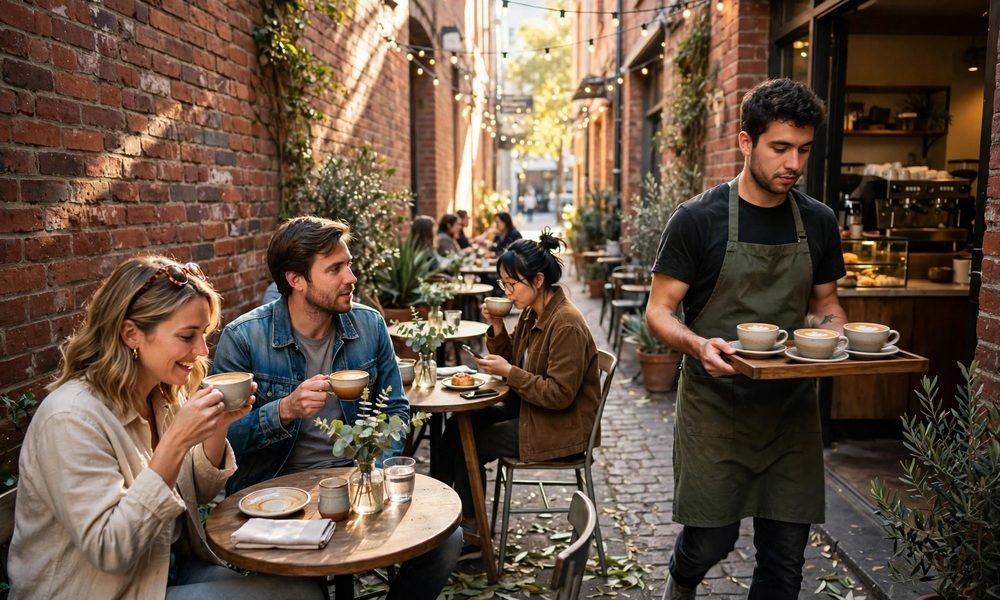
Dickson does coffee well, and the cafe scene has grown up around the food precinct rather than apart from it. Most cafes open early, serve a proper breakfast and lunch, and close by mid-afternoon. That suits the suburb. People come for a morning coffee, do their shopping, and then stay for lunch.
A flat white in Canberra costs about $5, and Dickson is no different. What you get for it is good. Canberra takes coffee seriously, and the Inner North has some of the city’s best roasters and baristas. If you want to compare the city’s cafe streets, our best cafes in Canberra guide covers the wider scene.
Highroad on Woolley Street
Highroad sits at 1 Woolley Street, on the corner of Cape Street and Woolley Street, one block from the Dickson bus interchange and light rail stop. It is a bright, airy all-day cafe run with ONA Coffee, one of Canberra’s best-known specialty roasters. The menu is modern Australian, the food is built on local produce, and the room is calm and open.
Highroad is the easy first stop in Dickson. Get a coffee, sit for a while, and plan the rest of your visit from the table. It works just as well as a second-coffee stop in the afternoon, when you are walking back from the wetlands or the shops.
Tilley’s Devine Cafe Gallery
Tilley’s Devine Cafe Gallery is one of Dickson’s long-running cafes, and it doubles as a gallery space. It is the kind of place locals meet for a long breakfast or a lazy lunch, and it has been part of the suburb’s cafe life for years. The food is cafe-style and generous, and the atmosphere is relaxed rather than rushed.
Between Highroad and Tilley’s, plus the smaller cafes tucked into the Dickson Centre, you will not struggle to find a good coffee in Dickson. The cafe scene is smaller than Braddon’s, but it is calmer, and the tables are easier to get on a weekend morning.
Drinks in Dickson: Pubs, Bars and Craft Beer
Dickson is not just a lunch suburb. The drinks scene has grown with the food, and there are now good options for an afternoon beer or an evening drink. The best of them sit within a short walk of Woolley Street, so you can eat and drink without moving the car.
Dickson Taphouse
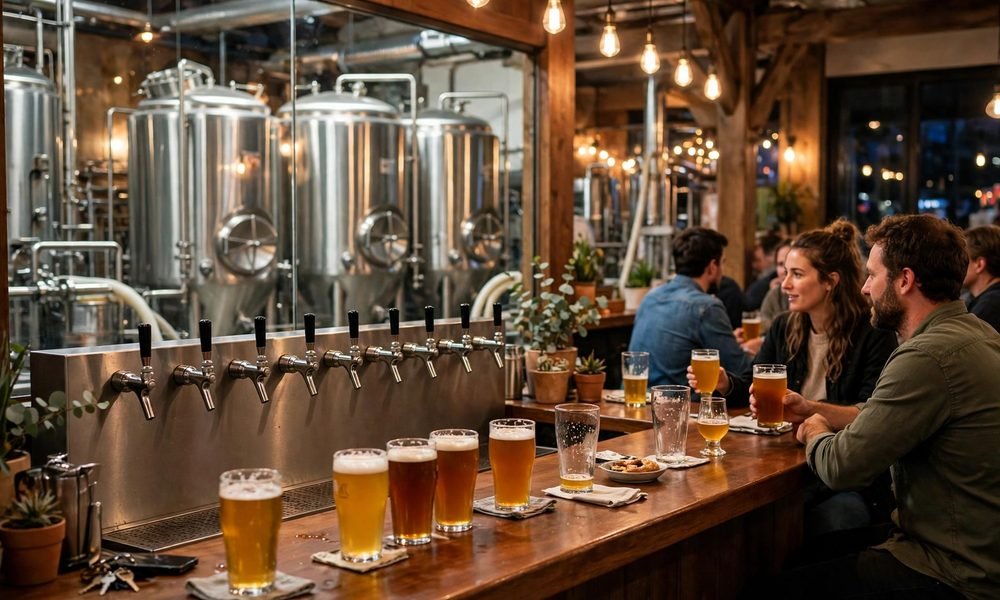
Dickson Taphouse is the suburb’s craft beer pub. It has up to 18 rotating taps, many of them pouring local Canberra beers, and an easygoing pub feel. It is the natural stop for a mid-afternoon drink after lunch, and it sits close enough to Dickson Interchange that you can walk straight from the light rail.
If you like craft beer, ask what is new on tap. The list changes often, and the staff know the local breweries well. For a wider look at the region’s beer and spirits scene, our Canberra wineries guide covers the wine country just outside the city, which pairs well with a Dickson food day.
Wine Bars and Evening Drinks
The Canberra Wine House, on Woolley Street, is a wine bar for people who want a quieter drink with their dinner. Ducks Nuts Bar and Grill adds a pub-style option to the street, and Good Brother is another local bar in the precinct. None of these are loud late-night venues. They are neighbourhood bars, and that fits Dickson.
For a bigger night out, the light rail runs south to Civic and Braddon, where the wine bars and late venues cluster. Dickson is the place to eat and have a relaxed drink. Braddon is the place to keep going. Our Braddon guide covers that side of the Inner North in detail.
A Short History of Dickson
Dickson is one of Canberra’s older suburbs, and its history is stranger than most visitors expect. It was an airport before it was a suburb, a farm research station before it was a neighbourhood, and a car-and-motor precinct before it became a food hub. Knowing a little of that story makes the streets more interesting to walk.
Canberra’s First Airport
Between March 1924 and November 1926, Canberra’s original aerodrome sat on what is now Dickson. The landing ground covered the area around today’s Dickson Library and playing fields, and it was marked by whitewashed rocks, a windsock and a large concrete ring that pilots could see from the air. It was used by RAAF and civilian flights.
The aerodrome’s story ended badly. On 11 February 1926, Canberra’s first air crash took place here, when a RAAF plane stalled while coming in to land and crashed near where the library now stands. The pilot, Philip Mackenzie Pitt, was killed on impact, and the observer died later that evening. Within a year the aerodrome had moved to the Majura Valley, where the airport sits today. The Dickson Residents Group runs an Aerodrome Walk that traces this history through the suburb.
How the Experiment Station Became a Suburb
Dickson was gazetted as a suburb on 28 September 1928, and it was named after Sir James R. Dickson, a Queensland advocate of Federation and one of the founders of the Australian Constitution. For years, though, most of the land was not houses at all. In 1940 a 25-year lease was granted for the Dickson Experiment Station, a CSIR research farm that covered 640 acres across what is now Dickson and Downer.
During the Second World War the station trialled crops to help the war effort, including opium, rubber and pyrethrum, with help from the Women’s Land Army. After the war it turned to soils, pasture and food crops, and it kept working until 1962. The first houses in the suburb were built near Braddon in 1958, and the Dickson Centre shopping area opened in 1964. The centre turned 60 in 2024, and its low, open 1960s design is still easy to see today.
How Woolley Street Became Chinatown
The food story started small. The Golden Phoenix opened in 1965, and it was the first Asian restaurant in the precinct. Ruby Chinese followed in 1982, The Scholar opened across the road at 23 Woolley Street in 1984, and Dickson Asian Noodle House arrived in 1993. Each new kitchen brought more customers, and more customers brought more kitchens.
There was also a practical reason the precinct grew here. Woolley Street follows the line of a surveyed railway to Yass that was never built, and the Dickson Centre gave the restaurants a ready-made hub with parking, shops and a library next door. Over thirty years, a handful of restaurants became a whole food precinct, and Dickson became the place Canberra goes for Asian food. The Confucius statue on the corner of Cape Street, a gift to the people of Canberra, marks the start of the Chinatown Walk, a short 20-minute loop that tells this story on the street itself.
Things to Do in Dickson Beyond Eating
Food is the main reason to visit Dickson, but it is not the only reason. The suburb has a wetlands walk, a pool, big playing fields, a library with a striking modern design, and a shopping centre that is worth a wander. Put together, they make a pleasant half-day without leaving the suburb.
Dickson Wetlands Walk
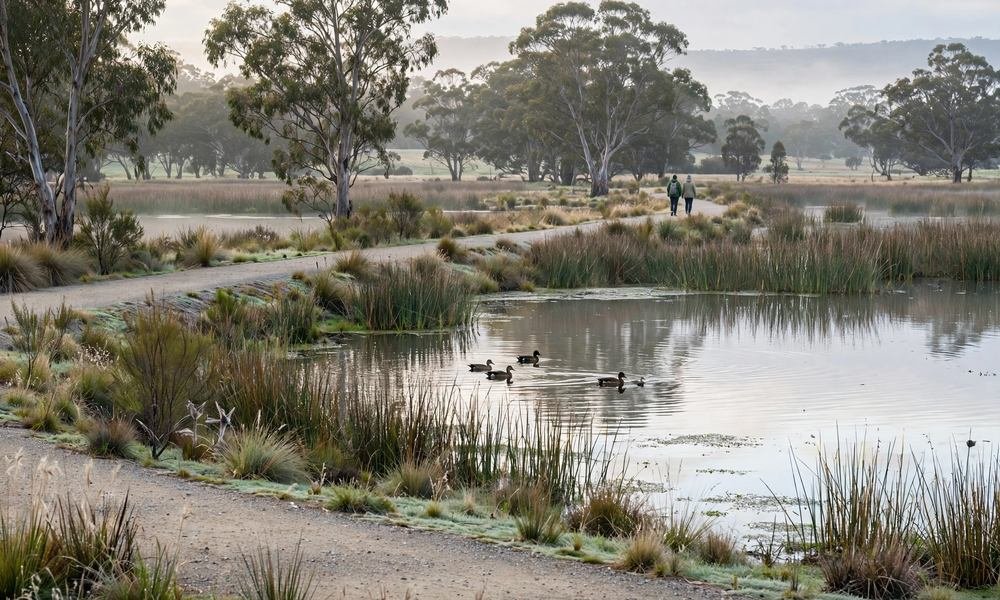
The Dickson Wetlands sit on the south side of Sullivans Creek, near Hawdon Street, and they were finished in December 2011. A walking track runs through them, and the area is good for birdwatching. It is a quiet, green break from the shops, and it is an easy walk from Woolley Street.
The wetlands are also part of the suburb’s drainage story. A tributary of Sullivans Creek runs through the middle of Dickson, and the wetlands slow and clean that water. For visitors, the practical point is simple: after a big lunch, a slow loop through the wetlands is the best way to walk it off. The paths are flat, since Dickson has no hills, and the walk suits all fitness levels.
Dickson Aquatic Centre and Dickson Oval
Dickson Aquatic Centre is the suburb’s public pool, and it sits near the wetlands and the playing fields. It is a local facility rather than a tourist attraction, but if you are staying nearby with kids on a hot day, it is a handy option.
Dickson Oval is the big playing field in the suburb, and it is home to local soccer and athletics clubs, including Majura Junior Soccer Club and Corroboree Little Athletics. On weekends the ovals fill with school carnivals and weekend sport. From the oval you can see Mount Majura and Mount Ainslie in the background, and the view is a reminder of how close the bush is to this part of Canberra.
Dickson Library and the Heritage Walks
Dickson Library sits on Antill Street, and its modernist design has helped define the character of the centre since the 1960s. It is a working public library, part of Libraries ACT, and it is a good place to sit, read and cool down on a hot day.
The Dickson Residents Group has put together a set of short heritage walks that start around the library and the shops. The Chinatown Walk takes about 20 minutes and covers 550 metres return, starting at the Confucius statue on the corner of Cape Street. The Sixties Classic Hub Walk tours the shopping centre’s 1960s design, the Aerodrome Walk traces the old airport, and the Discovery walk runs about 45 minutes and 1.6 kilometres through parkland. Pick one walk, follow the signs, and you will see a side of Dickson most visitors miss.
Shopping at Dickson Centre
Dickson Centre is the suburb’s main shopping area, and it is one of the biggest group centres in Canberra’s Inner North. It holds a Woolworths supermarket that once had the highest turnover in Australia, plus a Coles in the adjacent Dickson Village complex. Around them sit Asian supermarkets, a specialty Asian butcher, bakeries, banks, a post office and the Dickson Baptist Church.
The Asian supermarkets are worth a look even if you are not cooking. They stock ingredients you will not find in a regular supermarket, and they are part of what makes the food precinct feel real rather than put on for tourists. The covered walkways and generous shop windows are pure 1960s Canberra, and the centre is a good example of how the city’s older suburbs were planned.
How to Get to Dickson
Dickson Canberra is one of the easiest suburbs in the city to reach without a car. The light rail runs straight through it on Northbourne Avenue, and the bus interchange connects to most parts of Canberra. Driving is easy too, and parking is far simpler than in Civic.
Light Rail and Bus
Dickson has two light rail stops: Macarthur Avenue, near the ABC studios in the middle of Northbourne Avenue, and Dickson Interchange, across the road from the bus interchange. Dickson is four light-rail stops north of Civic, and the trip takes about seven minutes. The light rail runs from early morning until late, and until 1 am on Saturdays.
Dickson Interchange is also a major bus hub, with lines 18, 30, 31, 50, 51, 53 and R9. Buses connect Dickson to Gungahlin, Belconnen, the city and the southern suburbs. If you are planning a car-free day, our getting around Canberra guide explains the light rail, buses and the MyWay+ card in detail.

Driving and Parking
By car, Dickson is a short drive north from Civic along Northbourne Avenue, or across from Braddon and Ainslie. The suburb is bounded by Northbourne Avenue, Antill Street, Phillip Avenue, Majura Avenue and Wakefield Avenue, so it is hard to miss and easy to find your way around.
Parking is much easier than in the city centre. There is parking around the Dickson Centre and the Dickson Village complex, plus street parking on the quieter streets nearby. On a busy Saturday lunch, the car parks near Woolley Street fill up, so arrive a little early or park a street or two away and walk in.
Walking and Cycling
Dickson is flat, compact and easy to walk. The whole food precinct is walkable in a few minutes, and the wetlands, library and shops are all within a short stroll of each other. A walking track lined with pine, oak and gum trees runs from the playing fields to the shopping centre.
Cycling is easy too. Bike paths connect Dickson to the wider Canberra network, and the ride south to Civic along Northbourne Avenue is flat and direct. If you are staying in Braddon or the city centre, walking to Dickson takes about 30 to 40 minutes, and the light rail covers the same trip in seven.
How Long to Spend in Dickson
Half a day is the right amount of time for Dickson. That gives you a slow morning coffee, a walk through the wetlands or a heritage walk, some browsing at the shops, and a long lunch on Woolley Street. If you are short on time, two hours is enough for a focused food visit: arrive, walk the street, eat, and leave happy.
An evening visit works too, especially if you pair dinner with a drink at Dickson Taphouse or the Canberra Wine House. Dickson is not a full-day destination on its own, and that is fine. It pairs well with a morning at the Australian War Memorial or the National Gallery, or an afternoon in Braddon. Think of it as the food stop in a bigger Canberra day, not the whole day itself.
Where to Stay Near Dickson
There are no hotels in Dickson itself, and that is worth knowing before you plan. The closest places to stay are in Civic and Braddon, a seven-minute light rail ride south, where you will find hotels, apartments and hostels for every budget. Adina serviced apartments sit on Dooring Street near Wakefield Avenue, on the edge of the suburb, and they are the closest serviced option.
Staying in Civic or Braddon and visiting Dickson for lunch is the simplest plan. You get the city centre’s accommodation choice and Dickson’s food within one light rail trip. Our where to stay in Canberra guide compares the areas in detail, and the Canberra City Centre guide covers what is around the Civic end of the line.
A Half-Day in Dickson: A Simple Plan
Here is a simple half-day that covers the best of Dickson without rushing. It works on a Saturday, when the suburb is at its liveliest, but it suits any day of the week.
- 9.30 am: Coffee at Highroad. Start at 1 Woolley Street with a flat white and a slow breakfast. Sit outside if the weather is kind.
- 10.30 am: Wetlands walk. Walk south to the Dickson Wetlands for a flat, easy loop. Look for waterbirds, and enjoy the quiet after the shops.
- 11.30 am: Heritage walk and shops. Do the Chinatown Walk from the Confucius statue on Cape Street, then browse the Dickson Centre and the Asian supermarkets.
- 12.30 pm: Lunch on Woolley Street. Pick a restaurant by the queue, not the sign. Order roast meats, a noodle soup or dumplings to share.
- 2.00 pm: A drink at Dickson Taphouse. Finish with a local beer on tap, then catch the light rail from Dickson Interchange back to the city.
If you have a full day, add a morning at the Australian War Memorial or a trip to the Capital Region Farmers Market at Exhibition Park, north of Dickson on the light rail, on a Saturday from 7 to 11.30 am. The market is where the region’s growers sell their produce, and it is a great start to a food-focused day.
Tips for Visiting Dickson
A few practical tips will make your visit smoother. Weekend lunch is the busiest time on Woolley Street, and the popular rooms fill fast. Arrive before noon or after 1.30 pm if you do not want to queue. Many of the older restaurants do not take bookings, so a short wait is normal, and it is usually a good sign.
Share your food. The menus are built for groups, and a table of four can try twice as much as a table of two. Order a mix: a roast meat dish, a noodle soup, dumplings and a vegetable dish. That covers the street’s strengths in one meal.
Bring the kids. Dickson is one of the most family-friendly food precincts in Canberra. The food is quick, the prices are fair, and the rooms are casual. HerCanberra readers pick Dickson Dumpling House, Wasabi for teppanyaki and Pho Phu Quoc as favourites for kids. For more family ideas across the city, see our Canberra with kids guide.
Pay attention to cash and cards. Most places take cards, but a few of the older houses prefer cash, and some add a card surcharge. It is worth having a little cash in your pocket. Prices are fair across the street: a noodle bowl costs about $20, a cafe breakfast or lunch runs $20 to $30, and a shared group meal works out to about the same per person.
Finally, walk the street before you choose. The menus are in the windows, the roast meats are on display, and the queues tell you where the locals eat. Trust the queue.
FAQs About Dickson Canberra
Where is Dickson in Canberra?
Dickson is an Inner North suburb, four kilometres north of the Canberra CBD on Northbourne Avenue. Its postcode is 2602, and it sits between Lyneham, Downer, Braddon and Ainslie.
What is Dickson famous for?
Dickson is famous for its food. Woolley Street holds Canberra’s biggest cluster of Asian restaurants, and locals call it the city’s Chinatown. Chinese, Vietnamese, Korean, Thai, Japanese and Indian kitchens have fed the suburb for more than thirty years.
How do I get to Dickson by public transport?
Take the light rail to Dickson Interchange or Macarthur Avenue station. Dickson is four stops north of Civic, and the trip takes about seven minutes. Dickson Interchange is also a bus hub with lines 18, 30, 31, 50, 51, 53 and R9.
Is Dickson good for families?
Yes. The restaurants are casual, the food comes fast, and the prices are fair. Dumpling House, Wasabi and Pho Phu Quoc are popular with families, and the wetlands walk and the pool give kids something to do after lunch.
When is the best time to visit Dickson?
Weekday lunch is calmest, and Saturday lunch is the liveliest. Weekend mornings suit a coffee and a wetlands walk. Evenings are quieter, and they suit a relaxed dinner and a drink at the Taphouse.
Are there hotels in Dickson?
No, there are no hotels inside Dickson itself. Stay in Civic or Braddon, seven minutes south by light rail, and visit Dickson for lunch or dinner. Adina serviced apartments on Dooring Street are the closest serviced option.
Final Thoughts on Visiting Dickson
Dickson is not the suburb with the big landmark or the famous view. It is the suburb with the best lunch in Canberra, and that is a better reason to visit. Woolley Street has fed this city for more than thirty years, and the kitchens there cook for regulars, not for tourists. That shows in the food and in the prices.
Come for the noodles and the roast duck, stay for the wetlands walk and the heritage signs, and finish with a local beer at the Taphouse. It is a half-day well spent, and it is one of the easiest trips you can make from the city centre. For the rest of your Canberra planning, Australia City Guide has guides to the city’s museums, suburbs and food streets, and Dickson fits neatly into any of them.
Keep exploring:
- Things to Do in Canberra: Complete Guide
- Best Restaurants in Canberra
- Best Cafes in Canberra
- Braddon Canberra: Food & Culture Guide
- Manuka Canberra: Suburb Guide
- Canberra City Centre (Civic): Complete Guide
- Getting Around Canberra: Transport Guide
- Where to Stay in Canberra: Best Areas & Hotels
- Best Day Trips from Canberra
- Canberra with Kids: Family Guide
- Old Bus Depot Markets: Complete Guide
- Australian Capital Territory