The Yarra River Melbourne locals love is the city’s front porch. It runs right through the centre of town, past Flinders Street Station, Federation Square and Southbank, then keeps going for about 242 kilometres from the Yarra Ranges to Port Phillip Bay. Its Wurundjeri name is Birrarung, which means river of mists, and it has mattered to the Wurundjeri Woi-wurrung people for thousands of years. Today it is where Melbourne walks, eats, rides, paddles and watches the sun go down. This guide from Australia City Guide covers the best walks, cruises, places to eat and day trips along the river, plus the practical tips that help you enjoy it without wasting time.
The Yarra River at a Glance
The Yarra starts as a small stream in the Yarra Ranges, east of Melbourne. It picks up speed and size as it flows through the Yarra Valley wine country, then through leafy suburbs like Warrandyte, Kew and Abbotsford, and finally through the city centre before it meets the bay near Williamstown. Each stretch feels different. In the city it is all bridges, promenades and skyline views. A few kilometres upstream it turns green, with bushland, boathouses and quiet walking tracks. Further out it becomes wine country and mountain forest.
That split is the key to planning your visit. If you only have an hour, stay in the city centre. If you have half a day, add the Main Yarra Trail or Yarra Bend Park. If you have a full day or a weekend, head up to the Yarra Valley. The sections below follow that same order, so you can pick the part that fits the time you have.
One more thing to know before you start: the river is free to enjoy. The walks, the bridges, the parks and the views cost nothing. You only pay for cruises, boat hire, food and the odd museum ticket. That makes the Yarra one of the best value days out in Melbourne, and one of the easiest to plan on the fly.
Walk the Central River: Princes Bridge to Southbank
The best place to start is Princes Bridge, right in front of Flinders Street Station. Stand on the bridge and you get the classic Melbourne view in one look: the station’s yellow facade on one side, the towers of the city behind you, and the river curving away toward Southbank. It is also the spot where the two sides of the river meet, and choosing a side is the first small decision of the day.
The north bank takes you to Birrarung Marr, a park that celebrates the river’s First Nations story, and then on toward the sports precinct and the Melbourne Cricket Ground. The south bank takes you into Southbank, with its restaurants, bars and the arts precinct. Both are good. If you can only do one, take the south bank first, because it has more places to stop for food and a drink.
The Easy Loop: Princes Bridge and Sandridge Bridge
Here is a simple loop that takes about 45 minutes at a slow pace, with plenty of stops built in. Start at Princes Bridge and walk west along Southbank Promenade, past the restaurants and the floating bars. Keep going until you reach Sandridge Bridge, the old rail bridge with the Travellers sculptures of people walking across it. Cross there, then walk back east along the north bank, past the rowing sheds and Birrarung Marr, until you are back at Princes Bridge.
The loop is flat the whole way, and the path is wide and sealed, so it suits prams, wheelchairs and anyone who wants an easy walk. You will pass buskers, people fishing off the promenade, rowers out on the water in the early morning, and plenty of benches if you just want to sit and watch the river go by. In the evening the city lights come on and the whole loop feels different again, so it is worth doing twice if you have the time.
East Along the Rowing Sheds
If you walk east from Princes Bridge instead, the mood changes fast. The crowds thin out, the buildings give way to trees, and you pass the old rowing sheds where Melbourne’s rowing clubs have trained for generations. Keep going and you reach Alexandra Gardens, with its wide lawns and shady trees, and then the Royal Botanic Gardens just a little further on.
This is the quiet side of the central river, and it is the best part for a morning walk or a run. The path is part of the Capital City Trail, a 29-kilometre loop that circles the city, so you can keep going as far as you like and turn back whenever you are ready. There are drinking fountains and toilets along the way, and the gardens make a good picnic stop if you bring food with you.
Birrarung Marr and Alexandra Gardens
Birrarung Marr sits on the north bank, just east of Federation Square. It is a park with a purpose: it marks the river’s cultural importance to the Wurundjeri people, and it hosts festivals and events through the year. There is open lawn for picnics, public art to look at, and a good view back across the river to Southbank. Free fitness and yoga classes run here on weekends, and it is a handy meeting point if your group splits up.
Across the river, Alexandra Gardens offers the same kind of green pause on the south side. It has lawns that slope down to the water, big old trees for shade, and paths that link through to the Botanic Gardens. Between the two parks you get the full picture of how the river works as Melbourne’s backyard: a place to walk the dog, kick a ball, eat lunch outside, or just sit by the water for half an hour.

Southbank Promenade: Eating and Drinking by the Water
Southbank is Melbourne’s best-known riverside dining strip, with more than 60 restaurants, cafes and bars along one stretch of promenade. You can eat here at any budget. There are casual cafes and pubs at one end and fine dining at the other, and most places have outdoor tables where you can watch the boats go past. If you want a table with a river view on a Friday or Saturday night, book ahead. Walk-ins work fine on weekdays and for lunch.
Start at the eastern end near Princes Bridge and work your way west. You will pass Arbory Bar and Eatery, which sits on an old railway platform right by the water, and Riverland Bar, tucked under the bridge with views across to the Botanic Gardens. Further along, Ponyfish Island floats on a pylon under the Evan Walker Bridge, and it is one of the smallest and quirkiest bars in the city. Keep walking and you reach the floating restaurants Afloat and Yarra Botanica, which sit on the river itself.
For a bigger night out, Crown Melbourne sits just back from the river at the western end of Southbank. It has a casino, theatres, live music and a long list of restaurants, including Bistro Guillaume. Out the front, the fire show at Crown sends balls of flame into the sky in the evening, and it draws a crowd every time. Check the current show times when you arrive, as they change through the year.
If you would rather eat well without spending much, grab takeaway from one of the Southbank cafes and eat it on the steps by the river. It is free, the view is the same, and on a warm evening it is hard to beat. Our guide to the best restaurants in Melbourne has more options across the city if you want to plan a full food day around your river walk.
South Wharf and Docklands: The River’s West End
West of Southbank, the river changes again. South Wharf is the newer part of the waterfront, with a wide promenade, the Melbourne Convention and Exhibition Centre, and the historic ship Polly Woodside. The Polly Woodside dates back to 1885 and sits in a dry dock beside the promenade. You can walk around it for free and step aboard on open days, so check the National Trust website before you go if you want to see inside.
Keep walking west and you reach Docklands, where the river meets the harbour. This is the modern end of Melbourne: glass towers, the NewQuay Promenade with its yachts and waterfront restaurants, and Marvel Stadium, which hosts AFL matches and big concerts. The District Docklands has shops, a cinema, an ice rink and family attractions like ArtVo, a trick-art gallery where the murals are made for photos.
Docklands also has one of the best free walks in the city. The public art walk covers 36 outdoor artworks along the promenades, including the giant Cow Up a Tree sculpture, which is exactly what it sounds like. The whole area is flat and open, so it suits an evening stroll, and the sunsets over the harbour are some of the best in Melbourne. If you are short on time, you can skip Docklands and stick to Southbank, but if you have a full day, the walk from Princes Bridge to Docklands and back is a great way to see how the river connects the old city to the new.
The Arts Precinct and the Gardens
The Yarra runs right past Melbourne’s arts precinct, and you can build a whole day around it. Start at Federation Square, on the north bank at Princes Bridge. It is home to ACMI, the Australian Centre for the Moving Image, and the Koorie Heritage Trust, which tells the story of Aboriginal Victoria through art and exhibitions. The square itself is a good meeting point, with cafes and a big open space where events run through the year.
Cross the river and you are at the National Gallery of Victoria, or NGV International, on St Kilda Road. It is Australia’s oldest and most visited art museum, with a huge collection of European, contemporary Australian and First Nations art. Entry to the main collection is free, and you only pay for special exhibitions. Next door, Arts Centre Melbourne and Hamer Hall host concerts, theatre, ballet and opera most nights of the week.
From the arts precinct it is a short walk to the Royal Botanic Gardens, 38 hectares of lawns, lakes and garden beds just south of the river. It is free to enter, and it is the calmest place in the city centre. Walk the lake, look for black swans, or just find a shady tree and rest your legs after the morning’s walking. The gardens link back to the river at Alexandra Gardens, so you can loop back to Southbank without retracing your steps. If you want more ideas for the area, our guide to the best museums in Melbourne covers the city’s top collections in one place.
See the River From the Water
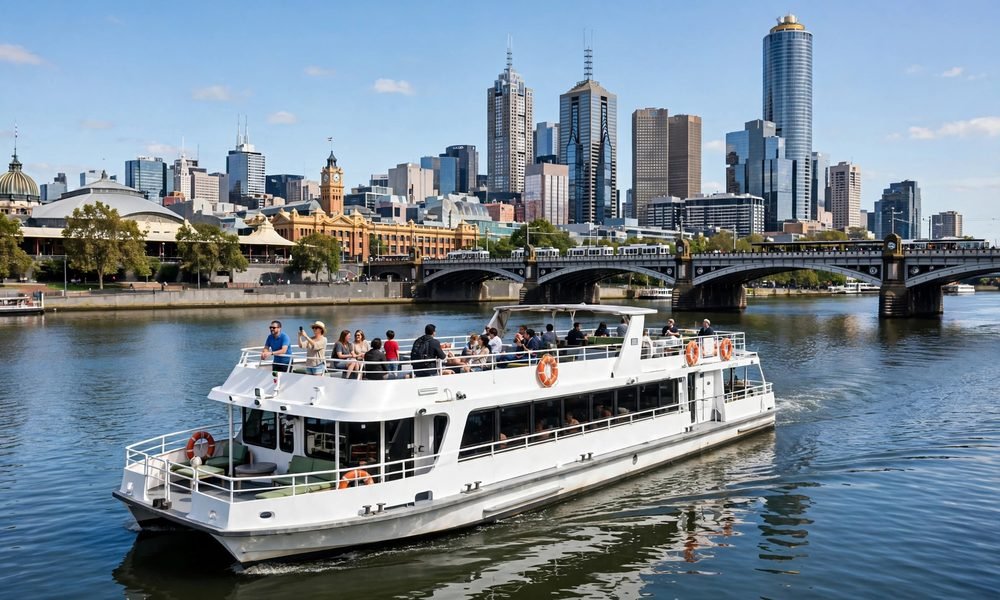
Walking the river is free and easy, but seeing it from the water gives you a different view of the city. The bridges look bigger from below, the skyline lines up in a new way, and you cover more ground without tiring your legs. There are four main ways to get on the water, and they suit different budgets and moods.
Sightseeing Cruises
Sightseeing cruises are the simplest option. They run through the day from Southbank and Federation Wharf, and most take about an hour. You sit back while the commentary points out the landmarks: Princes Bridge, the MCG, the Botanic Gardens, the arts precinct and Docklands. Melbourne River Cruises runs hourly services, and Classic Steamboat Cruises offers the same route on a real steamboat, which is a slower and more relaxed trip. Check departure times and prices on the operator’s website before you go, and arrive a few minutes early so you find the right berth. The berths are spread along the promenade, and it is easy to end up at the wrong one.
Dinner and Drinks Cruises
If you want a night out, book a dinner cruise. The Spirit of Melbourne runs multi-course dinner cruises with drinks, and there are also bottomless brunch and cocktail cruises on weekends. These cost more than a sightseeing trip, but they combine the cruise and the meal into one booking, which suits a special occasion. Book ahead, especially on Friday and Saturday nights, as the popular sailings sell out. Dress is smart casual, and the boats are enclosed and heated, so they run in all weather.
GoBoat and Waterbikes: Drive It Yourself
If you would rather be the captain, GoBoat hires out small electric picnic boats that you drive yourself. No licence is needed, and the boats are slow and easy to steer, so they suit families and first-timers. You can bring your own food and drinks, and the boats fit up to eight people, which makes them good value for a group. Waterbikes Australia offers a quirkier option: giant floating bikes that you pedal along the river. Both are a fun change from sitting on a tour boat, and they run from berths near Southbank.
Kayaking on the Yarra
Kayak Melbourne runs guided kayak tours past the city landmarks, including Flinders Street Station and Federation Square. The evening tours are the pick of the bunch: the Moonlight Kayak paddles under the city lights, and the City Sundowner times the trip for sunset. You do not need experience, and the guides look after beginners, but you will get wet, so wear clothes you do not mind splashing. Book ahead, as the small-group tours fill up fast in summer. If you have never kayaked before, this is a good first trip, because the river is calm in the city stretch and the guides keep the group together.
The Main Yarra Trail and Yarra Bend Park
Once you leave the city centre, the Yarra turns green fast. The Main Yarra Trail follows the river for more than 30 kilometres through the eastern suburbs, linking Southbank with Richmond, Abbotsford, Kew, Fairfield and Yarra Bend Park. The path is mostly sealed and shared between walkers and cyclists, and you can join it at many points, so you do not need to walk the whole thing. Pick a section, walk or ride it, and catch a train or tram back.
Yarra Bend Park is the highlight of the middle river. It sits only a few kilometres from the CBD, but it feels a world away, with steep river banks, open woodland and walking tracks through the bush. It is Melbourne’s largest area of natural bushland, and it is a good place to spot flying foxes, waterbirds and, if you are very lucky, a platypus. The Dights Falls loop walk is the best short walk in the park, and it passes the site of an old asylum, which gives the walk a spooky edge that kids love.
Further upstream, the river keeps rewarding slow travel. Abbotsford Convent sits on a scenic bend of the river, with galleries, artists’ studios, cafes and markets in the old convent buildings. It is a relaxed place to spend an afternoon, and the riverside paths around it are some of the prettiest in the inner suburbs. Studley Park Boathouse, just upstream, has served breakfast and lunch by the river for more than a century, and you can hire a rowboat there and paddle the calm stretch of river yourself. Fairfield Boathouse, a little further on, offers the same mix of cafe, rowboats and riverside walks.
Herring Island is one of the river’s best-kept secrets. It sits in the middle of the Yarra near South Yarra, and you can only reach it by a seasonal punt service. The island has native bushland, outdoor sculptures, walking tracks and quiet picnic spots, and it feels a long way from the city even though it is only a few minutes away. Check the punt season before you plan a visit, as it does not run all year.
Como House and Garden, in South Yarra, is another good stop on the middle river. The 19th-century mansion sits on the river bank with elegant gardens around it, and guided tours explain the lives of the families who lived there. Further upstream again, the Heide Museum of Modern Art in Bulleen pairs contemporary Australian art with sculpture gardens and parkland overlooking the river. Both are easy to reach by car or bus, and both make a good half-day trip from the city.

Yarra River With Kids
The river works well for families, because most of it is free, flat and outdoors. Younger kids will enjoy the loop walk from Princes Bridge, the rowboats at Studley Park Boathouse, and the open lawns at Birrarung Marr, where there is room to run and free weekend fitness classes to join in with. The river itself is the entertainment: watching the boats, the rowers and the ducks is enough for most small children.
For a bigger family day, head to Collingwood Children’s Farm, beside the river in Abbotsford. It is a working community farm where kids can meet cows, sheep, goats and chickens, and there are walking paths and picnic areas around it. Pair it with Abbotsford Convent next door and you have a full morning sorted. Older kids will enjoy GoBoat, where they can help steer, and the ArtVo trick-art gallery in Docklands, which is made for photos.
If you have a car, Healesville Sanctuary in the Yarra Valley is the best family day trip on the river. It is home to koalas, kangaroos, wombats and platypus, with keeper talks through the day. Combine it with a winery lunch for the adults and a stop in Healesville town, and you have a full day that suits every age. Our Melbourne with kids guide has more family ideas across the city.
The Best Photo Spots on the Yarra
The Yarra is one of the most photographed places in Melbourne, and a few spots stand out. Princes Bridge at sunset is the classic shot: the station on one side, the towers on the other, and the river running down the middle. Get there about half an hour before sunset so you can pick a spot on the bridge before the crowds arrive.
Evan Walker Bridge, the pedestrian bridge near Southbank, gives you a lower angle with the river in the foreground and the skyline behind it. It is also the best place to photograph Ponyfish Island, the tiny bar floating below the bridge. Birrarung Marr, on the north bank, gives you the reverse view back toward Southbank, which works well in the morning when the light is on the city side.
For something different, head to the rowing sheds at sunrise, when the mist sits on the water and the rowers are out training. That is where the river’s Wurundjeri name, Birrarung, or river of mists, makes sense. Bring a zoom lens if you have one, as the rowers and the birds are the best subjects on the quiet stretches, and keep your camera dry if you are out on a boat.
River Events Through the Year
The Yarra hosts some of Melbourne’s biggest events, and timing your visit to match one can make a good trip great. The Moomba Festival runs each March along the river, with a parade, fireworks, live music and river activities. It is one of Australia’s biggest free community festivals, and it draws big crowds, so arrive early if you want a good spot by the water.
In winter, the Firelight Festival lights up the river with flame shows, music and food stalls, and it is a good reason to visit in the colder months. In summer, the Night Noodle Markets set up along the river with food stalls and lights, and they are a fun evening out. Check the What’s On Melbourne website before you travel to see what is running during your visit, and book accommodation early if you are coming for a big festival weekend.
How Much Time Do You Need?
How long you need depends on how much of the river you want to see. Here is a simple way to plan it.
One hour is enough for the central loop from Princes Bridge, with a coffee on Southbank. You will see the skyline, the bridges and the promenade, and you will get a good feel for the river. It is the right choice if you are passing through Melbourne on a short stop.
Half a day lets you add a cruise or a kayak trip, lunch on Southbank, and a walk through the Botanic Gardens or the arts precinct. This is the best option for most visitors, because it covers the highlights without rushing.
A full day lets you add the middle river as well: the Main Yarra Trail to Yarra Bend Park, lunch at Studley Park Boathouse, and an afternoon at Abbotsford Convent or Herring Island. You will need a car or a bike for the middle river, as the distances are too far to walk from the city and back in one day.
A weekend opens up the Yarra Valley. Spend one day in the city and one day up the river, with wineries, Healesville Sanctuary and Warburton. That is the full Yarra experience: city skyline one day, mountain forest the next.
Best Time to Visit the Yarra River
The river is good all year, but the warmer months from November to March are the best time to visit. The days are long, the cafes put their tables outside, and the evening light lasts well into the night. Summer is also when the cruises, kayak tours and festivals run at full pace. If you visit in summer, bring sunscreen and a hat, and drink plenty of water on longer walks.
Autumn is a good second choice. The crowds thin out, the light is softer for photos, and the riverside parks are at their best. Winter is quieter still, and the Firelight Festival gives you a reason to rug up and head out in the evening. Spring brings wildflowers to the parks and warmer days, but it is also snake season along the river, so stick to the paths and keep an eye on where you step.
For the best light, go at sunset. The sun drops behind the city towers and the river turns gold, and the promenade fills with people out for an evening walk. Sunrise is quieter and better for photos of the mist on the water, especially near the rowing sheds. Midday is the worst time for photos, as the light is harsh and the shadows are short, but it is fine for a cruise or a long lunch. For more on Melbourne’s seasons, see our guide to the best time to visit Melbourne.
Where to Stay by the River
Staying by the river puts you in the middle of everything, and Southbank is the obvious choice. The hotels along the promenade have river views from the upper floors, and you can walk to Federation Square, the arts precinct and the Botanic Gardens in minutes. The Langham and Crown Towers are the big names on the river, and there are serviced apartments along Southbank and South Wharf that suit families and longer stays.
If you would rather stay in the city centre, the hotels around Flinders Street Station and Collins Street are a short walk from Princes Bridge, and they are often better value than the riverfront rooms. Docklands is another option, with modern apartments and hotels near the water, and it is quieter at night than Southbank. Wherever you stay, ask for a river view when you book, as the upper floors cost more but the view is worth it for a special trip. Our guides to the best hotels in Melbourne and where to stay in Melbourne compare the areas in detail.
Getting to the Yarra River
Getting to the river is easy, because it runs through the middle of the city. Flinders Street Station sits right on the north bank at Princes Bridge, and it is the busiest station in Melbourne, with trains from all over the city and the suburbs. Southern Cross Station is a short walk west, and it connects to regional trains and the airport bus.
Trams are the other easy option. The free City Circle tram runs around the CBD and stops near the river, and regular trams run down St Kilda Road and across the bridges to Southbank. Our guide to Melbourne trams explains the free tram zone and how to pay outside it. If you are driving, there is paid parking under Southbank and at Crown, but the trams are easier and cheaper than parking in the city.
Once you are there, the best way to get around is on foot. The central river is compact, and everything from Docklands to the Botanic Gardens is within an hour’s walk. For the middle river and the Yarra Valley, you will need a car, a bike or a train to the outer suburbs, as the distances are too far to walk.
A Simple One-Day Yarra River Itinerary
Here is a relaxed one-day plan that covers the best of the river without rushing.
Start at 9 am at Flinders Street Station and walk across Princes Bridge to Southbank for coffee. Spend the morning walking the central loop, crossing at Sandridge Bridge and coming back along the north bank through Birrarung Marr. Stop at Federation Square and pop into ACMI or the Koorie Heritage Trust if something catches your eye.
At midday, catch a sightseeing cruise from Southbank. An hour on the water gives you the city from a new angle and rests your legs before lunch. Eat on Southbank afterwards, or walk across to the Botanic Gardens with takeaway food and eat on the lawns.
Spend the afternoon in the arts precinct or the gardens, then head back to Southbank as the sun goes down. Find a table at one of the floating bars, order a drink, and watch the city light up. If you have the energy, finish the day with a dinner cruise, or walk west to Docklands for a look at the harbour lights before catching a tram home.
This plan uses only the free and easy parts of the river, plus one cruise and one meal, so it works on a modest budget. If you want to add more, swap the afternoon gardens visit for a kayak tour, or add a morning trip to Yarra Bend Park before the city walk.
Beyond the City: A Yarra Valley Day Trip
If you have a spare day, follow the river upstream to the Yarra Valley. It is about an hour’s drive from the city, and it is one of Australia’s best-known cool-climate wine regions. The wineries here are known for Chardonnay, Pinot Noir and sparkling wine, and many have restaurants with vineyard views. Spend the day visiting cellar doors, and add the TarraWarra Museum of Art for a cultural stop among the vines.
Healesville is the valley’s main town, and it is a good base for the day. Visit Healesville Sanctuary in the morning to see koalas, kangaroos and platypus, then browse the town’s shops and cafes before an afternoon at the wineries. If you would rather not drive, book a wine tour from the city, as the tours handle the driving and the bookings for you.
Further east, Warburton sits beside the river at the edge of the mountain forest. It is a quiet town with cafes, a pub and riverside walks, and the Lilydale to Warburton Rail Trail runs through it for walkers and cyclists. It is the best place to see the upper Yarra as a mountain stream, a long way from the city promenades where your trip began. Our guide to day trips from Melbourne has more options if you want to plan a full weekend away.
What to Know Before You Visit the Yarra River
A few practical points will save you trouble on the day.
Do Not Swim in the City Stretch
Swimming is not allowed in the city stretch of the river. The water looks calm, but the currents, boat traffic and water quality make it unsafe. If you want to swim, head to the bay beaches at St Kilda instead, or to a patrolled beach further out. Paddling and kayaking are fine, but only with a proper operator and a lifejacket.
Watch for Snakes in the Warmer Months
Snakes live along the Yarra, and they are most active in spring and summer. They are shy and will move away if you give them space, but stay on the marked paths, keep dogs on a lead, and do not reach into long grass or under logs. If you see a snake, back away slowly and let it move on. Do not try to touch it or take a close photo.
Check Your Cruise Berth Before You Book
Cruises leave from several berths along Southbank and Federation Wharf, and each operator uses its own spot. Check the exact departure point on your booking, and arrive ten minutes early. There is no single river ticket, and sightseeing, dining and self-drive boats are separate products, so compare the route and the duration before you pay.
The Paths Are Flat and Easy
The central river paths are flat, sealed and wide, so they suit prams, wheelchairs and anyone with sore knees. The Main Yarra Trail is also mostly sealed, but it has some steeper sections and shared use with cyclists, so keep left and listen for bike bells. In the parks, the paths can be gravel or dirt, and they can get muddy after rain, so wear sensible shoes if you plan to walk the bush tracks.
Check Conditions Before You Go
River conditions can change fast after rain, and some paths and boat services close in bad weather. Check the operator’s website before you book a cruise or a kayak trip, and check the VicEmergency app if you are heading into the Yarra Valley or the bush parks in summer, when fire danger ratings apply. Parks Victoria runs the river parks and can be reached on 13 1963 if you need current information.
FAQs About the Yarra River Melbourne
Where is the best place to start a Yarra River walk?
Princes Bridge, in front of Flinders Street Station, is the best starting point. It puts you between Birrarung Marr on the north bank and Southbank on the south bank, and the easy loop across Sandridge Bridge takes about 45 minutes. From there you can walk east to the rowing sheds and the Botanic Gardens, or west to South Wharf and Docklands.
Is walking along the Yarra River free?
Yes. The promenades, bridges, parks and trails are all free to use. You only pay for cruises, boat hire, food and museum tickets. The Botanic Gardens, the NGV’s main collection and Federation Square are also free, so a full day by the river can cost very little.
How long is the Yarra River?
The river runs for about 242 kilometres, from the Yarra Ranges east of Melbourne to Port Phillip Bay. The city stretch is only a small part of it. The Main Yarra Trail follows the river for more than 30 kilometres through the eastern suburbs, and a proposed long-distance trail would one day link the bay to the river’s source.
Can you swim in the Yarra River?
No, not in the city stretch. Swimming is not allowed there, and the currents and boat traffic make it unsafe. If you want to swim, head to a patrolled bay beach like St Kilda instead. Kayaking and boating are fine with a proper operator and a lifejacket.
What is Birrarung?
Birrarung is the Wurundjeri name for the Yarra River, and it means river of mists. It reflects the river’s deep cultural importance to the Wurundjeri Woi-wurrung people, who have lived along it for thousands of years. The Yalinguth App offers a self-guided cultural walk that shares First Nations stories as you walk the river, and Birrarung Marr park is named for it.
How do I choose a Yarra River cruise?
Compare the departure berth, the route and the duration before you book. A one-hour sightseeing cruise suits a first visit, while a dinner cruise suits a special night out. Self-drive GoBoats suit groups who want to steer themselves, and guided kayak tours suit people who want to be active. There is no universal river ticket, so book with the operator that runs the trip you want.
Final Thoughts on the Yarra River Melbourne
The Yarra River experience is simple: walk it, eat beside it, and get out on it at least once. The central loop from Princes Bridge gives you the skyline and the promenades in under an hour, a cruise shows you the city from a new angle, and the middle river and the Yarra Valley show you what the river becomes when it leaves the city behind. It is free to walk, easy to reach by train or tram, and good in every season, with sunset the best time of day to be there.
If you only do one thing, do the central loop at sunset, then find a table on Southbank and stay for dinner. That single evening captures what the river means to Melbourne: a place where the city slows down, meets the water, and enjoys itself. For more ideas to build around your river day, start with our things to do in Melbourne guide, and plan the rest of your trip from there.