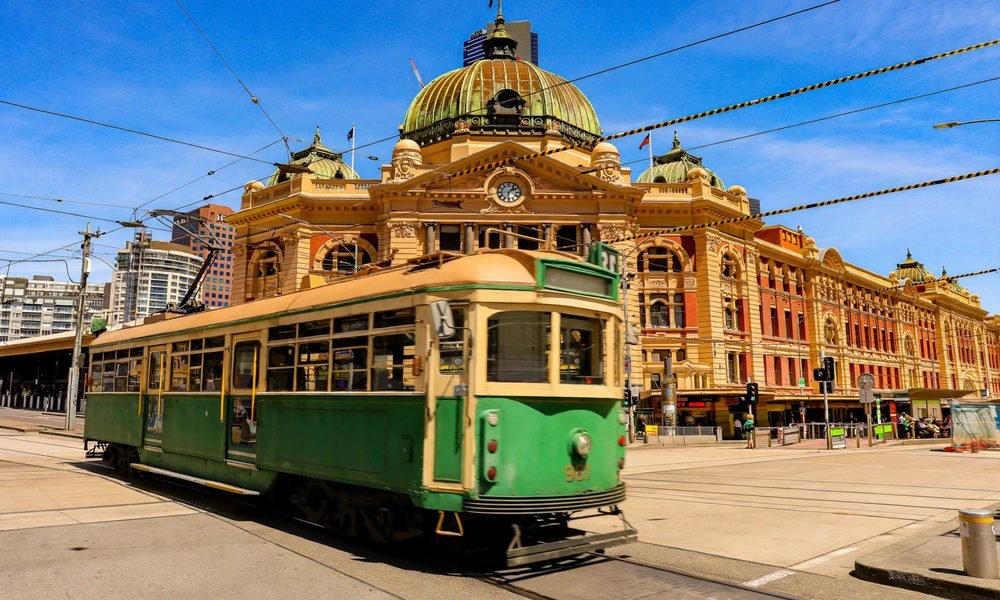

Melbourne trams are the easiest way to get around the city, and they are part of the fun too. The green and yellow cars rattle down Swanston Street, glide past the gardens on St Kilda Road, and roll all the way to the sand at St Kilda Beach. You can ride them for free across the whole city centre, hop on a heritage tram from the 1920s, and reach most of the places on your list without ever booking a taxi. This guide explains how the network works, which routes suit visitors best, what a myki card costs, and the small rules that save you from a fine. If you are planning what to see first, start with our guide to things to do in Melbourne, then use this page to work out how to get between them.
Melbourne runs the largest tram network in the world. It has about 250 kilometres of double track, 24 routes, and more than 1,600 stops. Around 500 trams run on a normal weekday. Yarra Trams operates the network for Public Transport Victoria, known as PTV. PTV sets the fares, the timetables, and the rules. For a visitor, that size is good news. Trams go to the beach, the markets, the gardens, the sports grounds, and most inner suburbs, often in a nicer way than any other form of transport.
Melbourne Trams at a Glance
The network is easy to read once you know a few basics. Every tram shows its route number and its destination on the front. You board at a marked tram stop, tap your myki card if you are travelling outside the free zone, and press the button or pull the cord when you want to get off. Trams run often through the day, every few minutes on the busy central routes, and keep running into the evening. On Friday and Saturday nights, the Night Network keeps some routes running into the early hours.
Two things make the network simple for visitors. First, the Free Tram Zone covers the whole city centre and Docklands, so short trips in the middle of town cost nothing and need no ticket at all. Second, the daily fare cap means you can never overspend in a day, no matter how many trips you take. Buy a myki card, keep it topped up, and the system looks after the rest.
The numbers that matter
Here are the figures worth keeping in your head. The network covers about 250 kilometres of track. It runs 24 routes. There are more than 1,600 stops across the inner city and suburbs. On a weekday, around 500 trams are out on the streets. The City Circle tram, route 35, carries about three million passengers a year, and it is free.
Those numbers add up to a system you can lean on. You rarely wait long for a tram in the centre. If you miss one, the next is usually minutes away. And because the network is so dense, you can often reach a place by tram that would take two buses or a long walk anywhere else.
A quick bit of history
Melbourne has run trams since the 1880s. Most cities tore their tram networks up in the middle of the 1900s and replaced them with cars and buses. Melbourne kept its trams and grew the system instead. That choice shapes the city today. The trams are a working part of daily life and a living piece of history at the same time.
The heritage W-class trams are the best-known part of that story. They were built at the Preston Workshops between 1923 and 1956. In total, 752 were built across 12 sub-classes. Today the restored W8 versions run the City Circle route, and they are the last W-class trams in regular service on the network. Step inside one and you will see varnished timber walls, leather hand straps, and bench seats. It feels like a different century, and it is still a normal tram ride.
The Free Tram Zone: Free Rides in the City Centre
The Free Tram Zone is the single most useful thing for a visitor to understand. Inside a set boundary in the city centre and Docklands, every tram is free. No ticket, no myki tap, no fare. Just step on, ride a few stops, and step off. It runs 24 hours a day. The zone opened on 1 January 2015, and it has stayed free ever since.
The zone turns the whole central city into a free transit network on top of an area that is already easy to walk. It covers most of the sights a first-time visitor wants to see. That makes it the best way to start your first day. You can scout the city for free, then pay only when you head further out.
Where the free zone starts and ends
The zone is roughly a rectangle around the central grid, with two extra arms. The edges are easy to remember. The north edge runs along La Trobe Street. The south edge runs along Flinders Street, beside the Yarra River. The east edge runs along Spring Street, past Parliament House. The west edge runs along Spencer Street, past Southern Cross Station, and out through all of Docklands.
There is also a northern arm that runs up Elizabeth Street and William Street to Queen Victoria Market on Victoria Street. Routes 19, 57, and 59 along Elizabeth Street are free as far as the market. On routes 30, 86, and 96, the free stops run east to Nicholson Street. Stops at the edge of the zone carry signs that read “Free Tram Zone, last free stop”, so you can see where free travel ends.
Once you cross the boundary in any direction, the trip becomes paid. That is the rule that catches visitors out. A tram that is free for ten stops can become a paid trip one stop later. Check the signs, and tap on with your myki before you cross the line if your trip goes further.
Which trams run inside the zone
Every tram route that passes through the boundary serves the zone. The most useful ones for visitors are easy to learn. Route 35, the City Circle, runs a loop entirely inside the zone. Route 11 runs along Collins Street between Victoria Harbour in Docklands and West Preston. Route 12 runs along Collins Street between Victoria Gardens in Richmond and St Kilda. Route 30 runs along La Trobe Street between St Vincent’s Plaza and Central Pier in Docklands.
Routes 48, 109, 86, and 96 pass through the zone on their way between the inner suburbs and the city. They are free while they are inside the boundary and paid once they leave it. The trams down Swanston Street and St Kilda Road work the same way. They are free inside the zone, then paid once they head south past Flinders Street. Route 19 runs along Elizabeth Street and is handy for Queen Victoria Market.
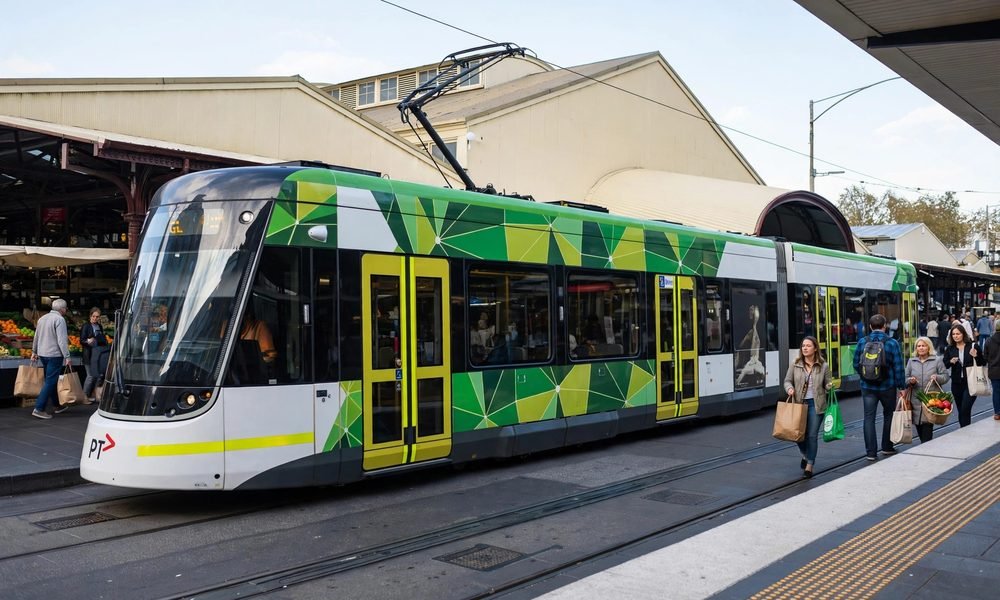
The tap rule that catches visitors out
The tap rule is simple once you know it, and it is the cause of most visitor fines. If your whole trip stays inside the Free Tram Zone, do not tap your myki. Board, ride, and get off. Tapping on for a trip that stays inside the zone charges you a fare for nothing.
If your trip starts inside the zone but ends outside it, tap on with your myki when you board, even at the stop inside the zone. If your trip starts outside the zone and ends inside it, tap on at the start. You will not be charged for the part inside the zone, but the trip as a whole is paid. The golden rule is this: if any part of your trip leaves the zone, tap on at the start.
Authorised Officers, the plain-clothes officers who check fares, do board trams inside and outside the zone. Inside the zone they have nothing to check, because no ticket is needed. Outside the zone, they check that you tapped on. Riding past the boundary without a valid myki is fare evasion, and the fine for an adult is $314 under the schedule in force from 1 July 2026. If the matter goes to court, the court can set a penalty higher or lower than that figure.
What is inside the zone
Almost every central attraction sits inside the free zone. Federation Square, Flinders Street Station, Hosier Lane, the State Library of Victoria, Melbourne Central, Bourke Street Mall, the Block Arcade and the Royal Arcade, Chinatown, Parliament House, the Old Treasury Building, Queen Victoria Market, Southern Cross Station, the Docklands waterfront, and Marvel Stadium are all in it. The Yarra riverbank from Princes Bridge to Southern Cross is in it too.
That is most of a first-time visitor’s list, all reachable for free. If you are staying in the city centre, you may not need a myki at all for your first day or two. Our guide to free things to do in Melbourne pairs well with this, because many of the free sights sit right on the free tram routes.
The City Circle Tram (Route 35): Melbourne’s Free Heritage Loop
Route 35, the City Circle Tram, is the best free ride in Melbourne. It is a heritage tram that loops around the edges of the city centre and Docklands, past Parliament House, the Old Treasury Building, the Docklands waterfront, and Flinders Street Station. It costs nothing, needs no ticket, and comes with a recorded commentary that points out landmarks as you pass them. For a first-time visitor, it is the fastest way to get your bearings.
The service started on 29 April 1994. It was built to give visitors a free and simple way to reach the city’s main attractions. A short stretch of new track along Spring Street closed the loop around the city grid. A spur out to Waterfront City in Docklands was added on 30 May 2009. Yarra Trams runs it from the Southbank depot.
What the ride is like
The City Circle uses restored W-class trams, the W8 rebuilds. They wear the classic green and cream colours of the old Melbourne and Metropolitan Tramways Board. Inside, the timber is varnished, the seats are wooden benches, and leather straps hang from the ceiling. There is no air conditioning, so the open windows are the cooling system. The tram rocks gently as it picks up speed, and the trolley pole hums on the overhead wire.
These trams are nearly a century old in places. They get pulled from service for maintenance without warning. On those days, a modern tram may run the route instead. You still get the loop, just without the wooden interior. The commentary runs in seven languages: English, French, German, Italian, Spanish, Mandarin, and Japanese.
Since 30 October 2023, the City Circle runs clockwise only. It used to run in both directions. Now it follows one path: Flinders Street, Spencer Street, Docklands, La Trobe Street, Victoria Parade, Spring Street, and back to Flinders Street. Trams come about every 12 minutes. A full loop takes 55 to 60 minutes. It runs daily from 9.30am to 5pm, except on Good Friday and Christmas Day.
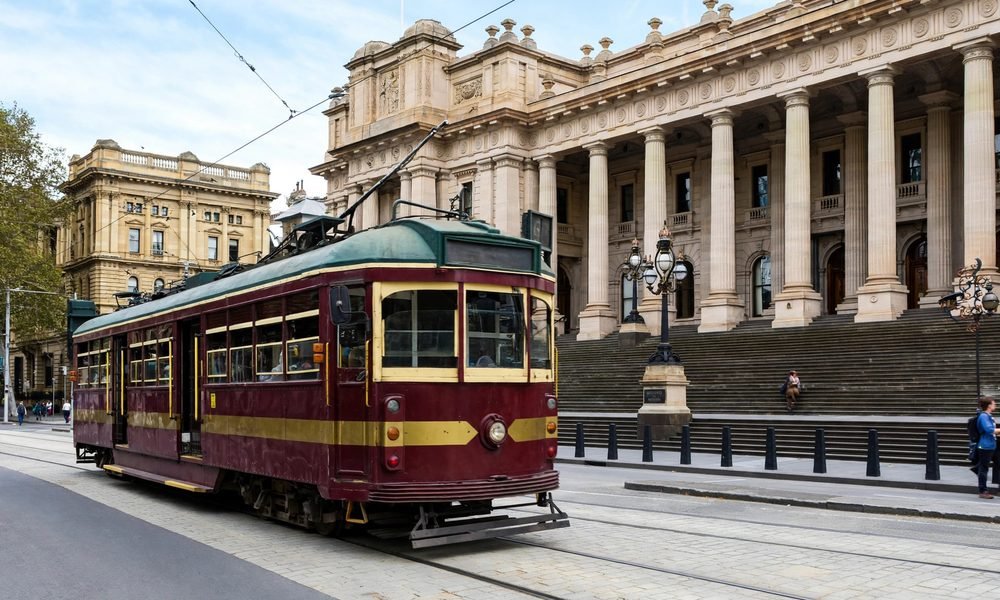
Stop by stop: where to hop off
There are 27 stops on the loop. You can board at any of them and hop off wherever you like. These are the stops worth planning around. Start at Flinders Street Station if you only board once. The station’s yellow facade and clocks sit at the busiest tram junction in the world, and Federation Square is right across the road.
At Federation Square and Russell Street, step off for Hosier Lane, the city’s most photographed street art lane, and for ACMI, the moving image museum. At Spencer Street and Flinders Street, Southern Cross Station is a short walk north, and the Immigration Museum and SEA LIFE Melbourne Aquarium are close by. In Docklands, the tram loops past Marvel Stadium, Central Pier, and the Harbour Esplanade waterfront. The dining strip at NewQuay and the Harbour Town shops are here too.
Back in the city on La Trobe Street, the Flagstaff stop is a short walk from Flagstaff Gardens, Melbourne’s oldest public park. The Melbourne Central and State Library stop is one of the best places to get off. The State Library is free to enter, and its domed La Trobe Reading Room is worth a look. Melbourne Central’s glass cone sits across the road, and the shops of Emporium Melbourne are a short walk south.
At Nicholson Street and Victoria Parade, you are within a five to ten minute walk of the Royal Exhibition Building, Carlton Gardens, Melbourne Museum, Fitzroy Gardens, and Cook’s Cottage. That cluster alone can fill a full day. Our guide to the best museums in Melbourne will help you pick which ones to visit.
The last stretch is the prettiest. On Spring Street, you roll past Parliament House, the Old Treasury Building, Treasury Gardens, and the Princess Theatre in under five minutes. The tram clips the top of Collins Street, past the Hotel Windsor and the grand plane trees, then turns back to Flinders Street Station to finish the loop.
Is it worth it?
Yes, with the right expectations. Ride it once, early in your trip, for the vehicle and the orientation. A full loop gives you a mental map of the grid, the river, and Docklands in under an hour. Then walk the laneways or catch a modern tram for anywhere you actually need to go.
Be honest about the limits. It is slow. It does not run down Collins Street or Bourke Street, and it does not go through the laneways, which is where much of the real Melbourne sits. There is no air conditioning, so a packed tram on a hot day is hard work. It is not wheelchair accessible, and prams are hard to lift aboard. It only runs from 9.30am to 5pm. And because it runs clockwise only, if you miss your stop, you ride the rest of the loop to get back.
Two local tips make the ride better. First, sit on the right-hand side. Clockwise means the best views, the Docklands water and the Spring Street buildings, sit to your right. Second, board early or late in the day. Just after 9.30am or after 3.30pm, you have the best chance of a seat and a quieter commentary. Midday on weekends and school holidays can mean standing room only.
The Best Tram Routes for Visitors
The City Circle is the free loop, but the best sightseeing rides run on the normal routes. A few routes are worth learning by number. They connect the city to the beach, the markets, the gardens, and the inner suburbs, and each one is a small tour in itself.
Route 96 to St Kilda Beach
Route 96 is the tourist favourite. It runs from East Brunswick through Fitzroy and the city, then down to St Kilda Beach. Along the way it passes Queen Victoria Market, Bourke Street Mall, Southern Cross Station, Crown, and Albert Park. It is the one route to ride at least once.
Stay on to the end for the beach, the pier, and Luna Park. St Kilda has a seaside feel that the city centre does not, with palm trees, cake shops on Acland Street, and sunset views over the bay. Our guide to the beaches in Melbourne covers what to do once you get there. Remember that the free zone ends at Flinders Street, so tap on with your myki before the tram heads south.

Route 86 up Smith Street
Route 86 runs from Bundoora RMIT through Preston, Thornbury, and Northcote, then up Smith Street through Collingwood and Fitzroy to Docklands. Smith Street is one of Melbourne’s best food and shopping streets. It is full of cafes, small bars, and independent shops. Fitzroy and Collingwood are the city’s creative heart, and the tram drops you right in the middle of it.
This route is also useful at night. Routes 86 and 96 are part of the Night Network, so they keep running into the early hours on Friday and Saturday nights. That makes Smith Street an easy night out without worrying about the trip home.
Route 11 down Brunswick Street
Route 11 runs from West Preston through Thornbury and Northcote, then down Brunswick Street in Fitzroy and into the city along Collins Street to Victoria Harbour in Docklands. Brunswick Street is Fitzroy’s main strip, with bookshops, record stores, cafes, and pubs. It is a good route for a slow afternoon of wandering.
Inside the city, route 11 runs along Collins Street, which is the grandest street in Melbourne. The Paris End at the top of Collins Street has old hotels, plane trees, and the city’s original luxury shopping blocks. It is a short walk from there to Parliament House and the top of the laneways.
Route 6 down St Kilda Road
Route 6 runs from Moreland through Brunswick and the city, then down St Kilda Road to Glen Iris. St Kilda Road is the city’s ceremonial boulevard. It is lined with trees, gardens, and grand buildings. The tram passes NGV International, the Arts Centre, and the Shrine of Remembrance. The Royal Botanic Gardens sit just off the road too.
Routes 3, 5, 16, 64, 67, and 72 run down the same stretch, so you will rarely wait long. Get off at the Shrine stop for the war memorial and its views back to the city. Get off at the NGV stop for the gallery and the Arts Centre. This is the easiest way to see the arts precinct without walking the whole road.
Route 109 to Richmond and Port Melbourne
Route 109 runs from Box Hill through Balwyn, Kew, and Richmond, then through the city to Port Melbourne. In Richmond it runs along Victoria Street, known as Little Saigon for its Vietnamese restaurants and grocers. It is one of the best cheap eats in the city. At the other end, Port Melbourne has a beach, a pier, and a relaxed bayside feel.
Route 12 covers part of the same ground, running from Victoria Gardens in Richmond through the city along Collins Street to St Kilda. Between them, routes 109 and 12 link three very different parts of Melbourne: the food streets of Richmond, the grand blocks of Collins Street, and the beach at St Kilda.
Routes 70 and 75 to the MCG and the sports precinct
If you are going to a game or a concert, routes 70 and 75 are the ones to know. They run from the eastern suburbs through Richmond and Jolimont to the city and Docklands, passing the Melbourne Cricket Ground and the sports precinct. On event days, extra trams run and the stops near the ground get very busy.
Allow extra time on event days, and expect crowds after the final whistle. The walk from the city to the MCG is also pleasant on a fine day, along the river through Birrarung Marr. If the weather is good and you have time, walk one way and tram the other.
Fares and Myki: What You Will Actually Pay
Outside the Free Tram Zone, you need a myki card. Myki is the smartcard for all of Melbourne’s public transport: trams, trains, and buses. You tap it on a reader when you board a tram. You do not tap off on trams. That is a common point of confusion. Tapping off only applies to trains. On a tram, one tap at the start is all it takes.
Fares are currently half price. The Victorian Government cut all public transport fares by half from 1 June, and the discount runs until 1 January 2027. After that date, check the current fares before you travel, because the half-price rates will no longer apply.
The myki card
A blank adult myki card costs $6. You can buy one at any 7-Eleven, at staffed train stations, and from PTV vending machines at major tram stops. You top it up from $10. Load $20 to $30 for a two or three day stay, and you will have plenty.
You can also use a mobile myki on your phone. Android users set it up through Google Wallet, and iPhone users through Apple Pay. Tap your phone on the reader the same way you would tap a card. One warning: contactless bank cards are not yet accepted on the trams as of 2026. A tap of your Visa or Mastercard on a tram reader will do nothing. Bring a myki, physical or mobile, or you will be travelling without a valid ticket by accident.
Children need a myki too if they travel outside the free zone, and child fares are half the adult fare. If you are only travelling inside the Free Tram Zone, you do not need a myki at all, for adults or children.
Fares and the daily cap
At the half-price rates, a two-hour Zone 1 and 2 fare costs $2.85 for an adult. That fare covers unlimited travel across trams, trains, and buses for two hours, including a connecting trip or a return trip that starts before the two hours run out. The daily cap is $5.70 on weekdays. On weekends and public holidays, the daily cap is $4.00. Once you hit the cap, you ride free for the rest of the day.
Most sightseeing stays inside Zone 1 and 2, which covers central Melbourne and the inner suburbs. You only need to think about zones when you travel well out into the outer suburbs. For a normal visitor’s day, a topped-up myki and the daily cap have you covered.
What happens if you do not tap on
If you ride outside the free zone without tapping on, you are fare evading. Authorised Officers check trams regularly, and they do work the trams. The fine for an adult without a valid ticket is $314 under the schedule in force from 1 July 2026. If the matter goes to court, the court can set the penalty higher or lower.
The fine is easy to avoid. Tap on when you board outside the zone. Do not tap on for a trip that stays inside the zone. And if your trip crosses the boundary, tap on at the start, before you cross it. That is all there is to it.
How to Catch a Tram: Your First Ride, Step by Step
Catching a tram is simple once you have done it once. Here is the whole process, step by step.
First, find your stop. Tram stops are marked with a sign that shows the stop number and the routes that stop there. Many stops in the city are raised platforms called superstops, with level access and shelters. Others are simple roadside stops where you board from the kerb. Take care crossing to a road-level stop, and always check for traffic.
Next, check the tram as it comes in. The front of the tram shows its route number and its destination. Match the number to the route you want, and check the destination is going your way. There is no need to hail the tram. Just stand where the driver can see you.
Board through any door. If you are travelling outside the Free Tram Zone, tap your myki on a reader near the door as soon as you board. If your trip stays inside the zone, do not tap. Move down inside the tram so others can board behind you. If you have luggage or a pram, head for the middle section where there is more space.
Watch for your stop. The next stop is usually shown on a display inside the tram and announced over the speaker. Press the button or pull the cord in good time to tell the driver you want to get off. Doors open automatically at stops. Let passengers off before you board, and check for traffic before you step onto the road at a road-level stop.
For live times, download the TramTracker app or use Google Maps. Both show exactly when the next tram is due, and they are invaluable when you are new to the network. The PTV app has a journey planner that tells you which route to take and whether your trip sits inside the Free Tram Zone.
A Perfect Day in Melbourne by Tram
Here is a simple day that uses the trams well. It starts free, adds one paid ride to the beach, and finishes back in the city for dinner. It works in any season, and you can swap stops to suit your own list.
Start the morning at Flinders Street Station. Board the City Circle tram, route 35, just after 9.30am, when it is quiet. Ride the full loop, about an hour, and sit on the right-hand side for the best views. You will pass the Docklands waterfront, the State Library, Parliament House, and the Spring Street buildings. By the end of the loop, you will have a mental map of the city.
Hop off at Nicholson Street and Victoria Parade. Walk to the Royal Exhibition Building and Carlton Gardens, then visit Melbourne Museum. That cluster can fill the rest of the morning. For lunch, catch route 86 west along Bourke Street to the city, or walk back through the gardens and the laneways.
In the afternoon, catch route 96 from Bourke Street to St Kilda Beach. The ride takes you through South Melbourne and Albert Park, and it is a pleasant trip in itself. Spend the afternoon at the beach and the pier, walk along Acland Street, and watch the sunset over the bay. Catch route 96 back to the city for dinner. The whole day costs one daily fare cap at most, and the morning loop was free.
If you want more ideas for the day, our guide to the best time to visit Melbourne will help you plan around the seasons, and our day trips from Melbourne guide covers what to do when you want to leave the city for a day.
Where to Stay for Easy Tram Travel
Where you stay shapes how much you use the trams. Stay in the city centre and the Free Tram Zone does most of the work for you. You can reach the main sights for free, and you only pay when you head out to the beach or the inner suburbs. Stay near Southern Cross Station or Flinders Street Station and you have trams, trains, and the SkyBus to the airport all in one place.
Stay in Southbank, just across the river, and you are a short walk from the free zone and the St Kilda Road trams. Stay in Fitzroy or Collingwood and routes 86 and 11 run right past your door. Stay in St Kilda and route 96 takes you to the city in about half an hour. Each area has a different feel, so pick the one that suits your trip.
Our guide to where to stay in Melbourne breaks down the main areas, and our best hotels in Melbourne guide lists named picks by budget and area. Both will help you match your hotel to the tram routes you will use most.
Night Trams: Getting Home After Dark
Trams run into the evening on most routes, but frequencies drop late at night and early in the morning. Check the timetable or the TramTracker app before you head out late. The City Circle stops at 5pm, so it is a daytime ride only.
On Friday and Saturday nights, the Night Network keeps routes 86 and 96 running through the early hours. That covers Smith Street, Fitzroy, Collingwood, and the run to St Kilda Beach. If you are out late in those areas, you can usually tram home. For other areas, check whether a night bus or a train runs, or plan for a taxi or rideshare.
Central routes can get crowded on weekday peak hours, so for a relaxed ride, travel mid-morning or early afternoon. Late evening trams are usually quiet, and the city looks good from a tram window at night.
Trams with Kids, Prams and Wheelchairs
Modern trams are low-floor, with level boarding at raised superstops. They work well for wheelchairs, prams, and anyone with limited mobility. The older high-floor trams and roadside stops are harder. If step-free access matters to you, check the PTV website or app before you travel. It flags which services and stops are accessible.
The City Circle is the exception to plan around. Its heritage W-class trams have two or three steps to board, no ramp, and no wheelchair space inside. You will need a second adult to lift a pram aboard. If you need step-free travel, use a modern tram on another route instead. All modern trams on other routes are fully accessible, and they are free inside the Free Tram Zone too.
Travelling with kids is easy on the trams. The free zone means short city hops cost nothing, and the daily fare cap keeps longer days cheap. Children enjoy the ride itself, especially the heritage tram and the run to St Kilda Beach. Keep a hand on small children at road-level stops, and hold on tight when the tram pulls away. Our guide to Melbourne with kids has more family ideas for the city.
The Colonial Tramcar Restaurant: Dinner on Rails
For something different, Melbourne has a dining tram. The Colonial Tramcar Restaurant is a restored heritage tram that has been turned into a moving restaurant. It trundles through the city and down St Kilda Road while you eat a multi-course meal. It is popular for birthdays, anniversaries, and special nights out.
It is not cheap, and it is not everyday transport. Book ahead, because it sells out, especially on weekends. Dress for a nice dinner, not a tram ride. It is a fun way to see the city by night and have dinner at the same time, and it sums up Melbourne’s affection for its trams in one ride.
Tram Etiquette and Staying Safe
A few unwritten rules will help you travel like a local. Let passengers off before you board. Move down inside the tram instead of crowding the doors. Offer your seat to someone who needs it more. Have your myki ready to tap on quickly so you are not holding up the queue. Keep bags off seats when the tram is busy.
Safety matters most at road-level stops. Trams share the road with cars across much of Melbourne. When a tram stops to let passengers off at a road-level stop, cars are legally required to stop too, but never assume they will. Always check for traffic before you step onto the road. Use the raised superstops where you can, because they are safer and step-free.
As a pedestrian, watch for trams when you cross the tracks. Trams are quieter than you expect, and they cannot stop quickly. Never try to beat one across the road. If you are driving, learn the hook turn rule before you drive in the city centre. At some intersections, right turns are made from the left lane so that trams can pass. It is famous, it is confusing, and it is worth reading about before you get behind the wheel.
Mistakes First-Timers Make
Most tram mistakes are small, but a few cost money or waste time. Here are the ones to dodge.
Do not tap off on trams. Only trains need a tap off. Tapping off does nothing on a tram, and tapping on inside the free zone for a trip that stays inside it wastes a fare. Do not assume buses and trains are free too. Only trams are free inside the zone. A bus or a train in the same area is paid as normal.
Do not tap on too late. If your trip leaves the zone, tap on as you board, not after you have crossed the boundary. Do not stand too close to the doors and block other passengers. And do not forget to signal your stop. Press the button or pull the cord in advance, or the tram may sail straight past.
Do not rely on the City Circle for Queen Victoria Market. The closest stop is Elizabeth Street and La Trobe Street, and the market is a five to seven minute walk north from there. A tram on route 19 or 57 drops you closer. And do not expect the City Circle to show you the laneways. It runs around the edge of the grid, not through it. For the laneways, walk, or catch a modern tram down Bourke Street and get off in the middle of the city.
Finally, do not assume a tram is the fastest way to travel a short distance in the city centre. Trams stop often and crawl through traffic. For a few blocks in the middle of the city, walking is often faster. Save the trams for longer trips: out to St Kilda, up to Fitzroy, or down St Kilda Road to the gardens. When your feet are tired, the free zone means a city-centre ride costs nothing, so hop on without thinking twice.
FAQs About Riding the Trams
Are the trams free?
Trams are free inside the city-centre Free Tram Zone, which covers the CBD and Docklands. You do not even need to tap on. The heritage City Circle tram, route 35, is also free, because its whole loop sits inside the zone. Beyond the zone, you need a myki card and the fare is deducted when you tap on.
Do you tap on and off the trams?
You tap on with your myki when you board a tram outside the Free Tram Zone. You do not need to tap off on trams. Tapping off only applies to trains. Inside the Free Tram Zone, no tapping is needed at all. If your trip starts inside the zone but ends outside it, tap on when you board.
What is the best tram route for tourists in Melbourne?
Route 96 is the best scenic route. It runs from East Brunswick through the city to St Kilda Beach, past Queen Victoria Market, Bourke Street Mall, and Albert Park. The free City Circle tram, route 35, is the best ride for a sightseeing loop of the city centre.
How do I know which tram to catch?
Each tram shows its route number and destination on the front. Use the TramTracker app or Google Maps to plan your trip and see live arrival times, then board at the stop. There is no need to hail a tram. Just stand where the driver can see you.
Can I pay with a bank card on a Melbourne tram?
No, not reliably. Contactless bank cards are not yet accepted on the trams as of 2026. You need a myki card or a mobile myki on your phone. A myki card costs $6, and you top it up from $10 at 7-Eleven stores, staffed train stations, and PTV vending machines.
Do trams run to Melbourne Airport?
No tram runs to the airport. The usual way in is the SkyBus from Southern Cross Station, which sits inside the Free Tram Zone, so you can tram there for free and catch the bus from the station. Our Melbourne Airport guide covers the trip in detail, including SkyBus times and fares.
Are the trams wheelchair accessible?
Modern low-floor trams are accessible, and the raised superstops give level boarding. The heritage City Circle trams are not accessible, because they have steps and no ramp. Check the PTV app for accessible services and stops before you travel.
Final Thoughts on Riding Melbourne Trams
Melbourne’s trams are one of the great pleasures of visiting the city. They are frequent, scenic, and free in the centre. They take you to the beach, the markets, the gardens, and the inner suburbs, and they do it with more character than a bus or a train ever could. The heritage City Circle gives you a free hour of history and a map of the city in your head. Route 96 gives you the sea. The free zone gives you the whole centre for nothing.
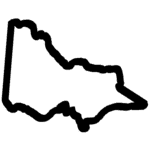
Get a myki card for trips beyond the free zone, download TramTracker, and learn a few route numbers. Ride the City Circle on your first morning to get your bearings, ride route 96 to the beach at least once, and walk the short hops in the middle of the city. Once you have ridden a few routes, you will wonder why every city does not keep its trams. At Australia City Guide, we reckon the tram is the best way to see Melbourne, and the journey is half the fun. The city sits in Victoria, and its trams are the easiest way to explore it.
Keep exploring:
- Things to Do in Melbourne
- Free Things to Do in Melbourne
- Best Time to Visit Melbourne
- Melbourne Airport Guide
- Melbourne with Kids
- Day Trips from Melbourne
- Best Hotels in Melbourne
- Where to Stay in Melbourne
- Best Museums in Melbourne
- Melbourne Museum
- NGV International
- Beaches in Melbourne
- Great Ocean Road Itinerary