
You can walk into one of the best art galleries in the country and pay nothing. NGV International sits on St Kilda Road in Melbourne’s Arts Precinct, and its permanent collection is completely free. Give it two or three hours and you will see European masters, Asian art, fashion, design and one of the most talked-about ceilings in Australia. This guide covers what to see, how to get there, the best time to visit, and the small details that make the day easier. It is written by Australia City Guide as part of our Melbourne coverage.
Why NGV International Is Worth Your Time
The National Gallery of Victoria is Australia’s oldest public art gallery. It was founded in 1861, and the St Kilda Road building opened in 1968. Today the collection holds more than 75,000 works, and this building keeps the international half of it.
Here is the bit that matters for planning: NGV International is not the whole NGV. The Australian collection, including First Nations art, lives at The Ian Potter Centre in Federation Square across the river. This guide is about the St Kilda Road building only. Do not buy a ticket for the wrong building by mistake. Check the venue name before you travel.
The other thing to know is that the entry fee is zero for the permanent collection. That changes how you plan. You do not need to squeeze the whole building into one visit to get your money’s worth. Come for an hour between other stops, or come for most of a day. It costs you nothing either way.
The Building Is Part of the Experience
Sir Roy Grounds designed this building, and it shows. A long bluestone wall runs along St Kilda Road, set behind water. The building itself is listed as heritage, and locals treat it as a Melbourne landmark, not just a container for art.
The Water Wall Entrance
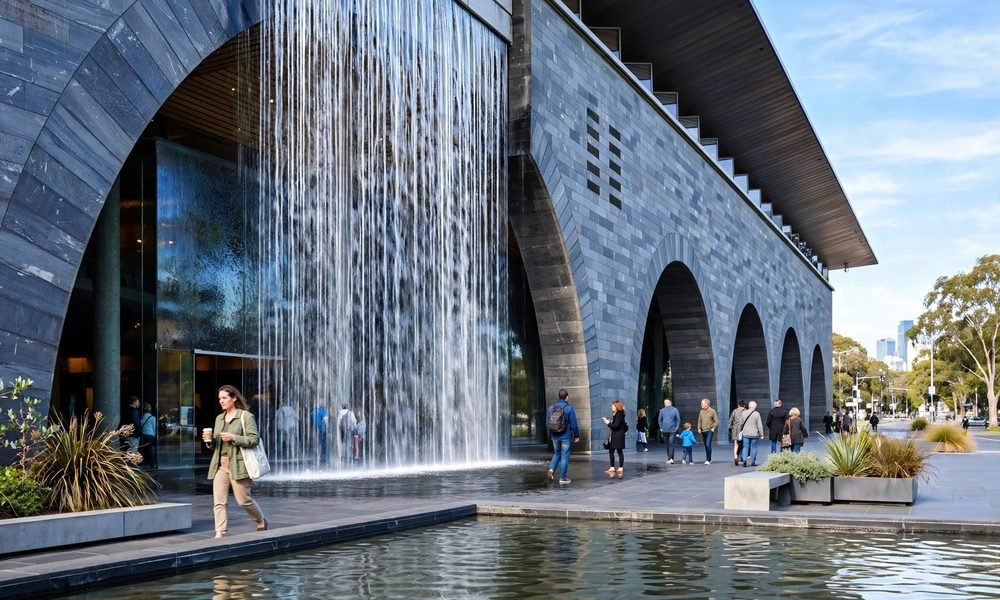
You enter through a sheet of water running down a glass wall. It is one of the most photographed gallery entrances in the country, and plenty of Melburnians stop to trail a hand through it on the way in. Kids love running their fingers through the water.
The Water Wall also works as a meeting point. If you are coming with friends, agree to meet there. Everyone finds it.
The Great Hall Ceiling
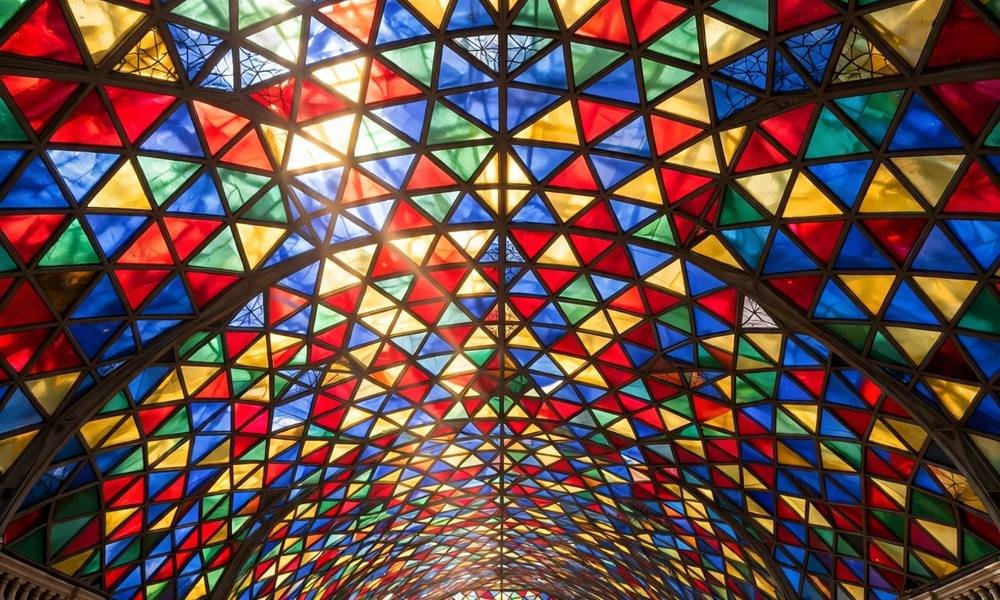
Past the entrance sits the Great Hall, a large carpeted room under a stained-glass ceiling by Leonard French. The ceiling runs about 61 metres, and French himself said lying on your back was the best way to see it. Thousands of pieces of glass sit in triangular steel frames above you, and the coloured light moves across the carpet as the day goes on.
Go on a sunny day if you can. The light does the heavy lifting. Then lie down in the middle of the room like a local. If the floor looks crowded, come back later. The hall is also used for events and programs, so it is not always open for lying down. A quick check at the information desk saves you a wasted trip.
The NGV Garden
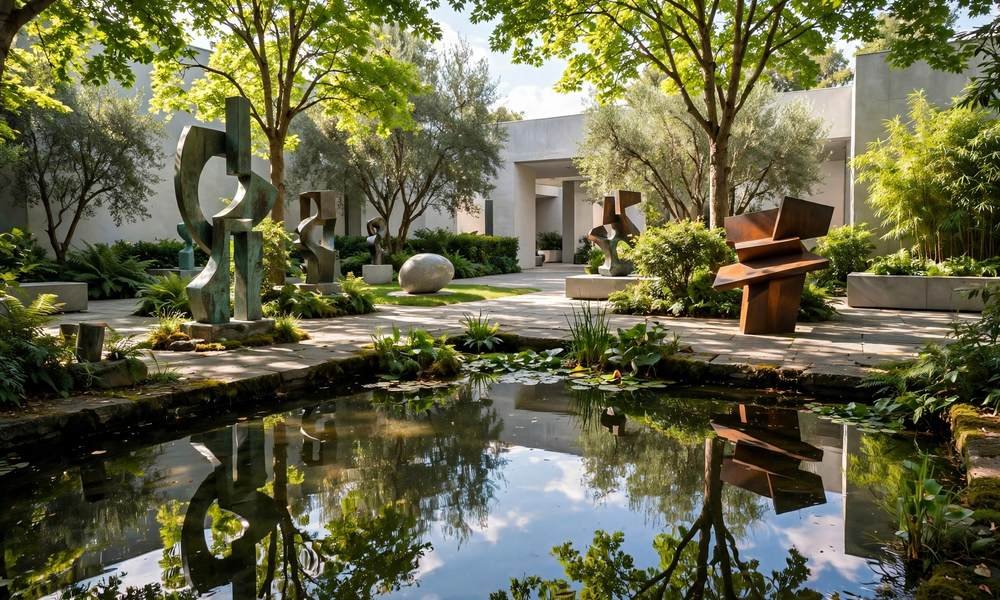
Step outside and you will find the NGV Garden, with sculptures among the trees and a pond that catches the sky. It is a good spot when you need air and quiet halfway through a visit. Bring your coffee out here if the weather is kind.
What to See Inside
The collection is too big to see properly in one visit. Do not try. Pick two or three areas that interest you and spend real time there instead of speed-walking every floor.
European Masters on Level 2
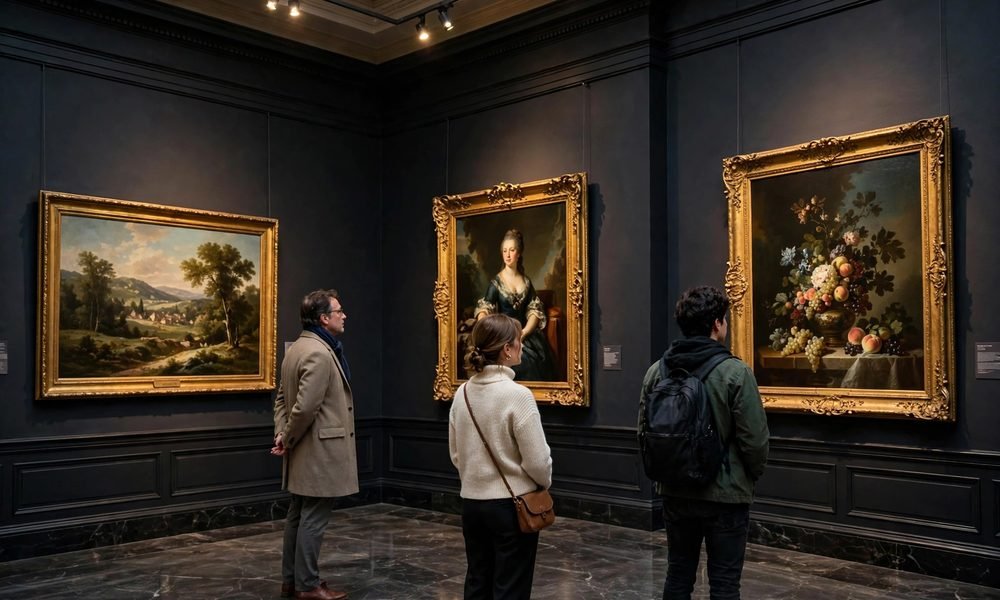
The European galleries are the main draw for many visitors. The standout is Tiepolo’s The Banquet of Cleopatra, a huge canvas more than three metres wide. You will also find Rembrandt’s Two old men disputing, Monet’s Vetheuil, and Picasso’s Weeping woman.
Weeping woman carries the gallery’s best story. In 1986 it was stolen from this very building by a group calling itself the Australian Cultural Terrorists, who demanded an arts prize for young Australians and better arts funding. Seventeen days later the painting turned up in a locker at Spencer Street Station. The theft was never solved. The painting hangs here today.
Asian Art on Level 1
Asian art fills much of the first level, and it deserves as much time as the European rooms. Look at materials and surfaces rather than rushing past. Ceramics, textiles and sculpture reward a slower look. Displays change, and rooms can close for installation or conservation, so if one particular work is the whole reason for your trip, check it is on display before you leave home.
Fashion, Design and Decorative Arts
The fashion and textile galleries show haute couture, jewellery, furniture, ceramics and decorative arts. These rooms surprise people who only came for the paintings. The objects are often the things visitors talk about afterwards.
Contemporary Art and Special Exhibitions
Alongside the permanent collection, NGV International runs large temporary exhibitions through the year. These are the shows that sell out on weekends and school holidays. If an exhibition is the main reason for your visit, book a timed ticket before you arrive and allow extra time on top of the free collection.
The Big Exhibition Seasons
Two programs shape the calendar here, and it helps to know about both before you plan.
Melbourne Winter Masterpieces
Every winter the gallery stages a major international exhibition under the Melbourne Winter Masterpieces banner. These are the blockbuster ticketed shows, the ones with timed entry and queues. Book well ahead, especially for weekends.
The Free NGV Triennial
The NGV Triennial takes over the building with new art and design from around the world. The next edition runs from 13 December 2026 to 11 April 2027, and entry is free. The first Triennial drew more than 1.23 million visitors, so expect crowds in the school holidays. Go early on a weekday if you want space to breathe.
One warning: when a huge show is being installed, some rooms at NGV International can close. Check the gallery’s website or call 03 8620 2222 before you travel if there is one room or artwork you have your heart set on.
How Much Time You Need
There is no single right answer, so plan around your energy rather than a checklist.
- A quick visit (one to one and a half hours): the Water Wall, the Great Hall ceiling, and two or three gallery rooms. Perfect if you are fitting the NGV between other stops.
- A standard visit (two to three hours): the building highlights plus a proper look at two collection areas and a coffee break.
- The full visit (three to five hours): permanent collection, a ticketed exhibition, and lunch. Leave time to sit in the Garden between rounds.
Because general entry is free, you can also just come twice. A short first visit to find your favourite rooms, then a longer return trip, beats one exhausting marathon.
The Best Time to Visit
The gallery is open every day from 10am to 5pm, with a 1pm opening on Anzac Day. It closes on Christmas Day.
Weekday mornings are the quietest. The galleries are calmer, the Great Hall is easier to enjoy, and you will not fight for space at popular works. Late afternoons also tend to be gentler. Weekends, school holidays and blockbuster exhibitions bring the crowds, especially around midday.
If you are visiting in December, January or February, expect the Triennial to pull big numbers. Arrive close to 10am and work from the far end of the building back toward the entrance.
Getting to NGV International
The address is 180 St Kilda Road, Melbourne, in the Arts Precinct just south of the river.
By Tram
Plenty of trams stop at the Arts Precinct stop right outside the gallery, including routes 1, 3, 5, 6, 16, 64, 67 and 72. One thing to know: this stop sits just outside the Free Tram Zone. Even the short ride across the river needs a valid fare, so touch on before you board.
On Foot from the City
From Flinders Street Station, walk across Princes Bridge and keep going past the Arts Centre. The gallery is about 500 metres from the station, a walk of ten to fifteen minutes. You will see the long bluestone wall on your left. If you arrive via the Metro Tunnel, Town Hall Station connects through to the Flinders Street area for the same walk.
Parking and Drop-Offs
Driving is the harder option. There is paid parking at Arts Centre Melbourne with a lift route toward the gallery entrance, but precinct construction can affect access, so allow extra time. Taxi and rideshare set down outside Arts Centre Melbourne, roughly a two-minute walk from the NGV entrance. Public transport is the easier choice on busy exhibition days.
A Simple Half-Day Route
If it is your first visit, this order works well and avoids backtracking.
- 10:00: Arrive at opening. Go straight to the European galleries on Level 2 while they are quiet.
- 11:00: Join the free International Collection Highlights tour at 11am. No booking needed, and it runs about 50 minutes. It gives you a way into a collection that is too big to tackle blind.
- 11:50: Cross to the Asian art galleries on Level 1 while the morning crowd is still thin.
- 12:30: Lie down in the Great Hall for ten minutes. By now the sun is doing its best work on the ceiling.
- 12:45: Walk through the Water Wall on your way out, then loop through the Garden on your way to lunch.
- 1:00: Lunch at the Gallery Kitchen or in the Garden with something from the cafe.
Swap in a ticketed exhibition if one is running, and give it a full hour on its own. Do not try to stack it on top of the whole route without dropping something.
Best Photo Spots Inside
Three spots cover nearly every photo you will want. The Water Wall at the entrance, with water streaming down the glass. The Great Hall, looking straight up at the ceiling from the carpet. And the Garden pond, which catches reflections on a calm day. Skip the flash everywhere. The gallery allows photography in most areas, but flash, tripods and selfie sticks are not allowed, and some exhibitions ban photography outright. Watch the signs in each room and follow staff directions.
Visiting with Kids
The NGV is one of the easiest cultural stops in Melbourne with children, mainly because it is free. You can leave without guilt if it is not working. The short-visit recipe works well: the Water Wall at the door, a lie-down under the Great Hall ceiling, then one or two visually strong rooms. That is a full outing for younger kids.
The gallery runs children’s programs through the year, including hands-on exhibitions made for kids. During the Triennial, the dedicated children’s exhibition Mika Rottenberg for Kids runs alongside the main show. Prams are welcome on the accessible gallery routes, and baby-change facilities are on the ground floor.
Free Tours, Talks and Audio Guides
You do not need to wander alone. The free International Collection Highlights tour leaves at 11am daily and needs no booking. A free Women in Art and Design tour runs at 1pm. Audio guides are available for selected exhibitions, and the gallery hosts talks, workshops and family activities through the year. Check the day’s schedule on the NGV website before you visit so you do not miss something by an hour.
Where to Eat and What to Buy
You do not need to leave the building to eat well.
Gallery Kitchen
The Gallery Kitchen on the ground floor is the casual option. It suits a quick lunch, a snack or a takeaway coffee between galleries. This is the default choice for a mid-visit break.
The Tea Room
The Tea Room on Level 1 does light lunches, sweets and high tea. High tea books out on weekends, so reserve a table if that is your plan rather than hoping for a walk-in.
The Garden Restaurant
The Garden Restaurant is the sit-down option with a seasonal menu. It works for a proper meal after a long morning in the galleries. Like the Tea Room, it pays to book ahead on busy days.
The NGV Design Store
The Design Store sells art books, exhibition merchandise, jewellery, homewares and gifts. It is dangerous for your wallet in the best way. Note the gallery is cashless for purchases, so bring a card.
Rules Worth Knowing Before You Go
A few practical rules will save you an awkward moment at the door.
- Backpacks, large bags and umbrellas must be left at the free cloakroom before you enter the galleries.
- Do not touch the artworks or the display cases. Staff will remind you, and it is better to hear it here first.
- No food or drinks inside the gallery spaces.
- Photography is fine in most permanent galleries, but no flash, no tripods and no selfie sticks.
- Keep children with you. This is a working gallery, not a playground.
Accessibility at the Gallery
The entrance is at street level with automatic doors, and lifts connect all gallery floors. Wheelchairs can be borrowed free from the information desk, and there is also a motorised scooter, but book ahead because they can be out during busy exhibitions. Accessible toilets are inside the gallery, and baby-change rooms are on the ground floor.
For selected exhibitions the gallery offers sensory maps, relaxed sessions, audio description, large-print labels and Auslan tours. Check what is available for your visit and arrange support before you travel. If you need mobility equipment for the trip itself, Travellers Aid at Flinders Street Station can help.
Pair It with the Neighbourhood
The NGV sits in the middle of Melbourne’s Arts Precinct, which makes pairing easy. Across the road is Arts Centre Melbourne, home to theatres and concerts. A ten-minute walk takes you to Federation Square, where The Ian Potter Centre holds the Australian half of the NGV collection. The Royal Botanic Gardens are about fifteen minutes on foot for a green breather after the galleries, and Southbank’s riverside promenade is close for dinner.
A good full day: NGV International in the morning, lunch in the Arts Precinct, then the walk across Princes Bridge to The Ian Potter Centre for the Australian collection. That is both halves of the gallery in one day, with the river in between. For more ideas across the state, browse our Victoria guides.
FAQs About Visiting NGV International
Is entry really free?
Yes. The permanent collection at NGV International is free, every day. You only pay for selected temporary exhibitions and special events.
How long should I allow?
Two to three hours covers the building highlights and two or three collection areas at a relaxed pace. Add one to two hours if you are seeing a ticketed exhibition.
What is the difference between NGV International and NGV Australia?
NGV International on St Kilda Road holds the international collection: European, Asian, ancient and contemporary art from around the world. The Ian Potter Centre at Federation Square is NGV Australia, with Australian and First Nations art. Always check which building your exhibition is in before you travel.
Can I rely on a famous artwork being on display?
Not always. Displays rotate, and works can be lent out, conserved or moved for exhibitions. If one artwork is the whole reason for your trip, check the current display details on the NGV website or call the gallery before you go.
Is the gallery wheelchair accessible?
Yes. The entrance is step-free, lifts reach the galleries, and wheelchairs and a scooter are available to borrow free from the information desk. Book ahead if you depend on loan equipment.
What is the best time to visit?
Weekday mornings are the quietest. Avoid midday on weekends and school holidays if you can, and arrive at 10am during blockbuster exhibitions.
Can I take photos inside?
Mostly, yes. Photography is allowed in most permanent galleries without flash, tripods or selfie sticks. Some exhibitions ban photography, so check the signs in each room.
Is NGV worth visiting if I am not into art?
Yes. Plenty of visitors come for the building alone: the Water Wall entrance, the Great Hall ceiling and the Garden. The free entry means you can treat it as a beautiful hour in the Arts Precinct without any pressure to be an art person.
Is NGV International Worth Visiting?
Yes, and it is one of the easiest recommendations in Melbourne to make. The entry is free, the building is an experience on its own, and the collection covers enough ground that anyone will find something. My advice: arrive at 10am on a weekday, take the free 11am tour, lie down in the Great Hall, and finish with lunch in the Arts Precinct. That is a perfect half day, and it costs you nothing but the coffee.