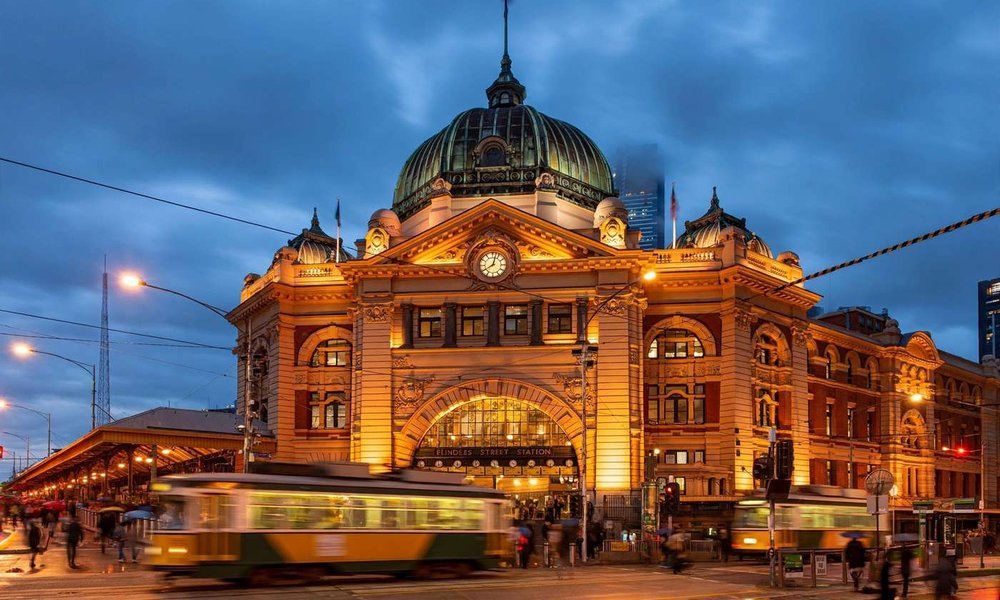
The Great Ocean Road runs 243 kilometres along Victoria’s southern coast, from Torquay in the east to Allansford near Warrnambool. It was built by returned soldiers between 1919 and 1932 and is dedicated to those who served in World War I, which makes it the world’s largest war memorial. Most people drive it west from Melbourne, and we at Australia City Guide reckon three days is the sweet spot: one night in Apollo Bay and one night in Port Campbell. You can do it in two, but you’ll miss the quiet moments that make this road special.
Torquay and Bells Beach: Where the Surf Coast Begins
The road really begins at Torquay, the home of Australian surf culture. Rip Curl and Quiksilver both started here, and the town wears its surf history proudly. Start your day with breakfast on the esplanade and a walk along Torquay’s beaches before the drive proper starts.
Bells Beach
Just south of Torquay, Bells Beach is Australia’s most famous surf break. The Rip Curl Pro has been held here at Easter for decades. You don’t have to surf to enjoy it. The cliff-top viewing platforms look down on an amphitheatre of rock and rolling surf, and the short walks around the headland are easy and free. On a big day the waves are something to watch.
Memorial Arch and the Cliffs
A few minutes past Bells Beach you’ll spot the Memorial Arch across the road. It’s a photo stop rather than a long visit, but it marks the official start of the Great Ocean Road as a memorial. From here the road gets narrow and bendy, hugging the cliffs all the way to Lorne. Take it slow and use the lookout pull-offs.
Lorne to Apollo Bay: Two Classic Beach Towns
The stretch from Lorne to Apollo Bay is where the road earns its fame. It curves around headlands and bays, with ocean views around almost every corner. This is the section where you should stop often rather than rush through.
Lorne
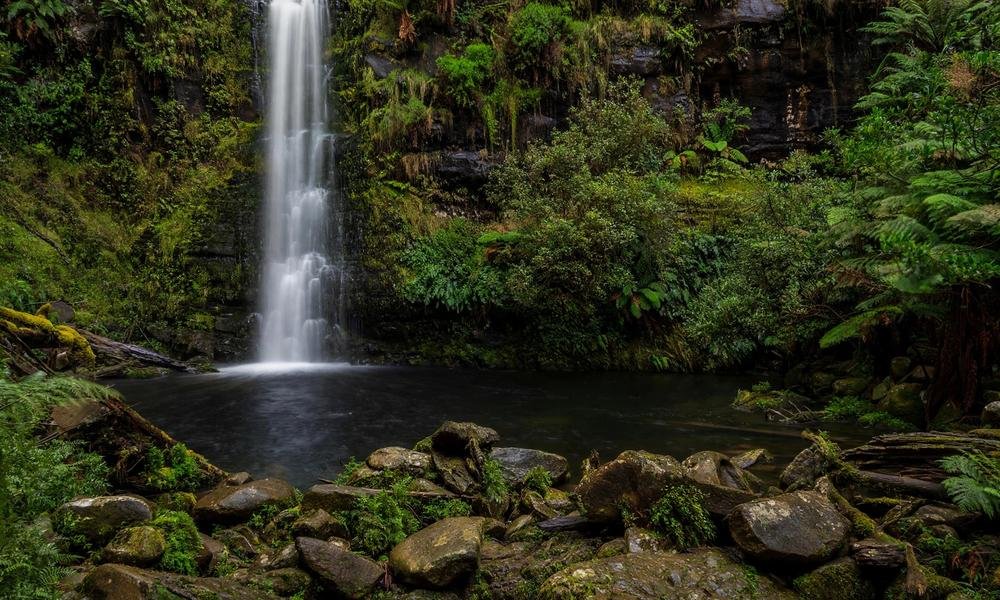
Lorne is the polished, upmarket stop: good cafes, a busy main street, and a long beach backed by forested hills. Behind the town, the Otway Range drops a string of waterfalls within easy reach of the highway. If you only stop at one, make it Erskine Falls, a 30-metre cascade about a 10-minute drive from town, with a short walk down to the base.
Kennett River Koala Walk
About 20 minutes west of Lorne, Kennett River is a tiny settlement with one big claim: wild koalas. A short nature walk along the river winds through eucalyptus trees where koalas doze in the forks most mornings. Go early, look up, and keep quiet. There are often king parrots and kookaburras around too. It’s a quick stop, rarely more than half an hour.

Apollo Bay
Apollo Bay is the gentlest of the Great Ocean Road towns: a wide, calm beach, fish and chips on the foreshore, and a relaxed feel that makes people linger. It’s also the halfway point of the drive, so it’s a natural first-night stop. Watch the sunset from the beach, and you’ll understand why so many travellers rate this stretch as their favourite.
The Otways: Rainforest Behind the Coastline
Behind the coast road sits the Great Otway National Park, a pocket of cool temperate rainforest that feels like another country. Tall mountain ash, giant tree ferns, and quiet walking tracks are all within a short detour of the highway. Our guide to the best national parks in Australia ranks the Otways among the finest forest walks in the country, and for good reason.
Cape Otway Lightstation
At the southern tip of the Otways stands the Cape Otway Lightstation, one of the oldest surviving lighthouses in mainland Australia. The drive out is scenic, winding through forest and past grazing land, and the lighthouse gives you a sense of how dangerous this stretch of coast was for ships. The cliffs here are wild and exposed.
Maits Rest and Triplet Falls
Maits Rest is an easy 800-metre boardwalk loop through ancient rainforest, right beside the Great Ocean Road near Apollo Bay. It takes about 30 minutes and works well even on a short stop. Triplet Falls, further inland, is a longer walk through three cascades in deep fern gullies. Both are free and make a great leg stretch between the coast towns.
The Shipwreck Coast: Twelve Apostles and Port Campbell
East of Port Campbell, the coastline changes character. The soft beaches give way to limestone cliffs, and this is the section with the famous stacks. More than 200 ships were wrecked along this coast in the 1800s, which is how it earned its name.
Twelve Apostles
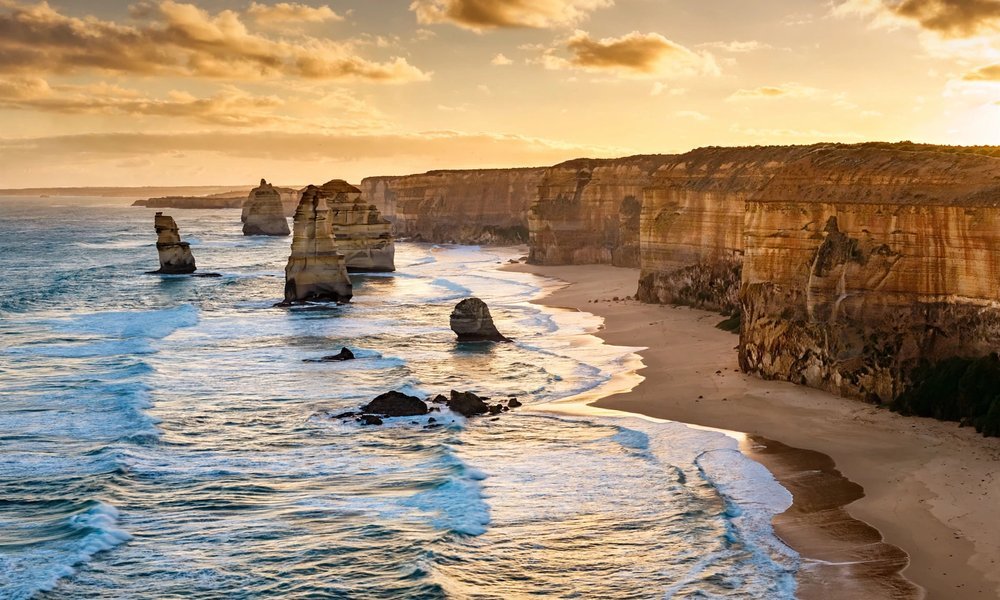
The Twelve Apostles are the headline act: limestone stacks rising out of the Southern Ocean. The name is a slight fib (there are only eight left standing, and there were never twelve), but at sunrise or sunset they’re genuinely special. Go at dawn or late afternoon. The midday crowds from Melbourne day tours fill the boardwalks between late morning and mid-afternoon, so time your visit around them if you can.
Gibson Steps
A couple of kilometres down the road, Gibson Steps gives you something the Apostles lookout doesn’t: beach access. Eighty-six steps descend the cliff face to the sand, where you walk right up to two of the stacks. Check tide times and don’t linger too long on the beach if the tide is coming in.
Loch Ard Gorge and Port Campbell
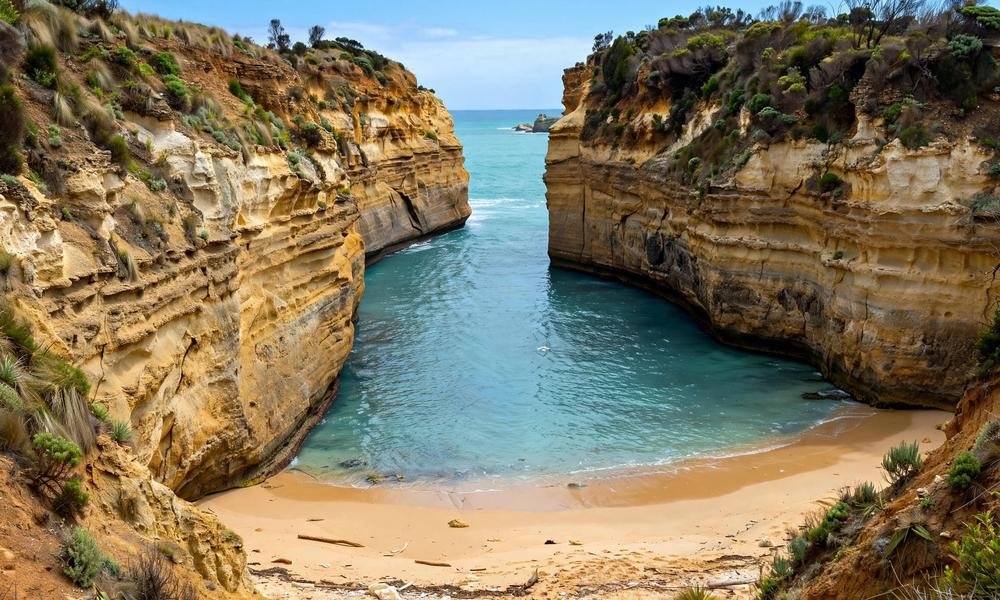
Loch Ard Gorge is named for a clipper that wrecked here in 1878 with the loss of most of its crew. The gorge itself is a narrow sandy cove walled in by cliffs, with Island Arch and the Razorback nearby. Port Campbell, ten minutes away, is the town that services all of this: motels, a main street of cafes, and a pretty little beach of its own. Stay the night here and you’ll catch both the sunset and the sunrise at the Apostles.
Past Port Campbell: Bay of Islands to Port Fairy
If you have a third or fourth day, keep driving west. The Bay of Islands Coastal Park has more stacks and bays with almost no crowds. Then come Tower Hill Wildlife Reserve, set inside a dormant volcano crater, and Warrnambool, where southern right whales rest close to Logan’s Beach from June to September. Port Fairy, a little further on, is a historic fishing village with a lovely grid of old stone buildings. This whole western section is quieter than the famous middle, and many travellers say they liked it best.
How Many Days Do You Need for the Great Ocean Road?
The honest answer depends on how much stopping you want to do. The road itself is 243 kilometres, and you could drive the lot in five hours. That would be a waste. Here’s what each trip length actually buys you.
Two days: the fast version
Drive to Lorne or Apollo Bay on day one, overnight there, then the Twelve Apostles and back to Melbourne on day two. You’ll see the highlights but you’ll skip the Otways, most waterfalls, and the west. It works as a long weekend from Melbourne, but it’s rushed.
Three days: the sweet spot
Day one to Apollo Bay, day two through the Otways to Port Campbell, day three past the Apostles to Warrnambool or Port Fairy and back to Melbourne via the inland highway. This is the version most travellers should aim for. You get the koalas, the rainforest, the Apostles at sunset, and time to breathe.
Four to five days: the slow version
Everything above, plus a full day in the Otways, the far west to Portland, whale watching in season, and maybe a detour to Phillip Island on the way home. Choose this if you like lingering. Photographers and nature lovers never regret the extra days.
The Best Time of Year to Drive the Great Ocean Road
November to April is the classic season: warmer weather, longer days, and calmer conditions for swimming. Summer in Lorne and Apollo Bay is busy, and accommodation books out weeks ahead in school holidays, so plan early if you’re going in January.
Winter has its own charm. The waterfalls run harder, the crowds vanish, and storm waves make the cliffs dramatic. You’ll need a jacket and a flexible plan, but you’ll have the lookouts to yourself. The shoulder months of October-November and March-April are the easy pick: mild weather and thinner crowds.
Where to Stay Along the Great Ocean Road
You don’t need to pre-plan every night in the off season, but in summer book ahead. Each main stop has a different feel.
Lorne
Good for comfort: hotels, holiday apartments, and restaurants a short walk from the beach. It suits couples and anyone who likes a bit of buzz. Prices peak in summer.
Apollo Bay
The relaxed middle option: motels, cottages, caravan parks, and a caravan-friendly foreshore. Great for families and anyone splitting the drive into thirds. Sunset over the bay is the free entertainment.
Port Campbell
The strategic pick: small town, motels and holiday units, and only ten minutes from the Apostles. This is the one to book early in summer, because everyone else has the same sunset plan. It also suits anyone extending west to Warrnambool.
Warrnambool and Port Fairy
Warrnambool is the biggest town on the road, with full services and whale watching in winter. Port Fairy is prettier, with historic streets and a working fishing harbour. Both are calm overnight bases if you’re doing the four-day version.
A Three-Day Great Ocean Road Itinerary, Day by Day
This is the plan we’d give a mate visiting for the first time. It’s full but not frantic.
Day 1: Melbourne to Apollo Bay
Leave Melbourne by 8am and aim for breakfast in Torquay. Detour to Bells Beach, pause at the Memorial Arch, and walk the cliffs. Stretch your legs in Lorne and visit Erskine Falls. Do the Kennett River koala walk mid-afternoon, then roll into Apollo Bay for the evening. Overnight: Apollo Bay.
Day 2: Apollo Bay to Port Campbell
Morning walk at Maits Rest, then the Cape Otway Lightstation detour. Drive on to the Twelve Apostles for the afternoon light, walk down Gibson Steps at low tide, then Loch Ard Gorge. Catch sunset at the Apostles boardwalk, then dinner in Port Campbell. Overnight: Port Campbell.
Day 3: Port Campbell to Warrnambool and Back to Melbourne
Sunrise at the Apostles if you’re keen, then west to the Bay of Islands and Tower Hill Wildlife Reserve. Have lunch in Warrnambool (whale watching in season), then take the direct inland highway back to Melbourne, about three hours. You’re home by evening.
Driving Tips for the Great Ocean Road
The road is fully sealed and any normal car handles it fine, but it demands attention. Drive west from Melbourne so you’re on the ocean side of the road, which makes the lookouts easier to pull into. Take the bends slowly and expect tour buses to stop suddenly.
Fill up before the long middle stretch. There are no petrol stations between Apollo Bay and Port Campbell, so don’t leave either town on half a tank. And plan your wildlife accordingly: kangaroos and wallabies are most active at dawn and dusk, which is exactly when you’re driving to see the Apostles. Slow down, especially in the Otways.
Mobile coverage is patchy between the towns. Download your maps offline before you leave Melbourne, and carry drinking water. The weather can turn fast on this coast, so pack layers even in summer.
Tours You Can Book on the Great Ocean Road
If you’d rather not drive, guided day tours run from Melbourne to the Twelve Apostles and back in a long day. It’s a lot of bus time, but it’s a good option if you’re short on days. Small-group multi-day tours cover the same route as this itinerary and let someone else handle the bends.
At the Apostles, helicopter flights run from the visitor area and give you the classic aerial view of the stacks. Bookable experiences like surf lessons in Torquay and guided walks in the Otways are easy to add into your days. If you love road trips generally, our Sydney to Brisbane road trip itinerary is another big coastal drive worth comparing.
Must-Knows Before You Go
A few practical points that trip up first-timers. Park entry for the lookouts and boardwalks is free; you’re only paying if you visit the Cape Otway Lightstation grounds or join a tour. The visitor facilities at the Apostles have toilets and a cafe, but there’s very little between the towns, so stock up on food and water in Apollo Bay.
Don’t swim at the cliff beaches unless they’re patrolled. The Southern Ocean is rough and the currents are dangerous, and most of the famous coves are not swimming spots. If you want a safe swim, stick to Lorne, Apollo Bay, or Port Campbell beaches.
Respect the wildlife closures. Some forest tracks and lookouts close after storms or during high fire danger days. Check Parks Victoria notices the morning of your Otways day. And if you’re visiting in the June to September whale season, Logan’s Beach at Warrnambool has viewing platforms where southern rights come close to shore.
FAQs About the Great Ocean Road Itinerary
Can I do the Great Ocean Road in one day?
You can, but we don’t recommend it. It’s roughly 10 to 12 hours of driving from Melbourne and back with almost no time to stop. You’d see the Apostles through a bus window and miss everything else. Two days is the minimum for it to feel like a trip rather than a commute.
Which direction should I drive the Great Ocean Road?
Drive west, from Melbourne toward Warrnambool. You sit on the ocean side of the road, which makes the views better and the lookout pull-offs easier and safer. Most itineraries and tours run this way.
Is the Great Ocean Road safe to drive?
Yes, it’s a sealed two-lane highway maintained for tourist traffic. The risks are the usual regional-road ones: sharp bends, tour buses, wildlife at dawn and dusk, and no street lights after dark. Drive to the conditions and you won’t have problems.
Do I need to book accommodation in advance?
In summer and school holidays, absolutely. Lorne, Apollo Bay, and Port Campbell fill up weeks ahead. In winter you can be more casual, but Port Campbell on a weekend can still book out, so a quick check before you leave Melbourne is smart.
What should I pack for the Great Ocean Road?
Layers, a rain jacket, comfortable walking shoes, sunscreen, and a camera. The weather changes fast on this coast, so dress for two seasons in one day. Download offline maps before you leave, because reception drops out between towns.
Final Thoughts on Driving the Great Ocean Road
The Great Ocean Road lives up to its reputation, but not for the reason most people expect. The Apostles are great, but the road is the point: the koalas dozing above Kennett River, the rainforest quiet at Maits Rest, fish and chips in Apollo Bay, and that moment the cliffs first appear after Lorne. Give it three days, drive west, stay in Port Campbell for the sunset, and you’ll come home with more than photos. For more ideas before you leave, browse our things to do in Melbourne guide to plan your city days at the start or end of the trip.
Keep exploring:
- Things to Do in Melbourne – plan your city days before or after the drive
- Sydney to Brisbane Road Trip Itinerary – another great Australian coastal drive
- Best National Parks in Australia – where the Great Otway National Park ranks