
Canberra has a reputation for being serious and pricey, all suits and official buildings. That reputation misses the best part. Some of the city’s biggest and most moving experiences cost nothing at all, from touring the actual Parliament House to standing at the War Memorial as the Last Post sounds across the courtyard.
This Australia City Guide to free things to do in Canberra covers the headline attractions, how to plan your days, the best time to visit, and the practical tips that keep a budget trip running smoothly. Everything below is free to enter and free to enjoy.
Tour Parliament House for Free
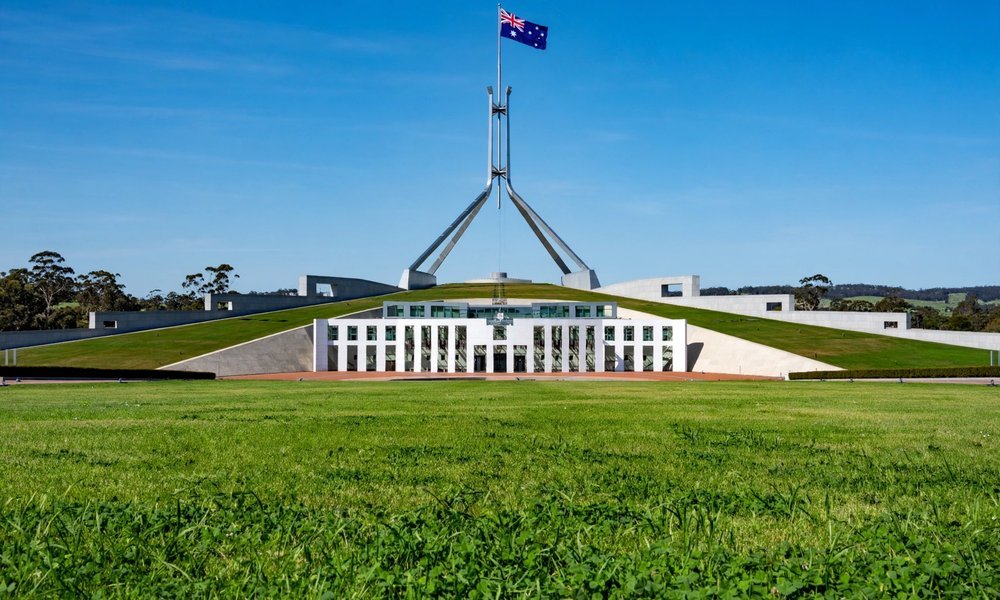
New Parliament House is one of the few national parliaments in the world you can walk into for free. The building sits under Capital Hill, with its grass roof sweeping up to the great flag mast, and the entry alone feels like an event.
Free guided tours run through the day and take you through the House of Representatives and Senate chambers, the Marble Foyer, and the Great Hall with its huge woven wall hanging. When parliament is sitting you can watch question time from the public galleries, which costs nothing and is far more gripping than it sounds. Book nothing in advance for the standard tour, just arrive and join the next one, but give yourself a couple of hours so you are not rushing the chambers.
Before you go inside, walk the grass roof. The path leads up over the building to the flagpole terrace, and the view runs straight down the land axis to Old Parliament House, the lake, and Mount Ainslie beyond. It is one of the best free lookouts in the city, and most visitors walk straight past it.
The Australian War Memorial and the Last Post Ceremony
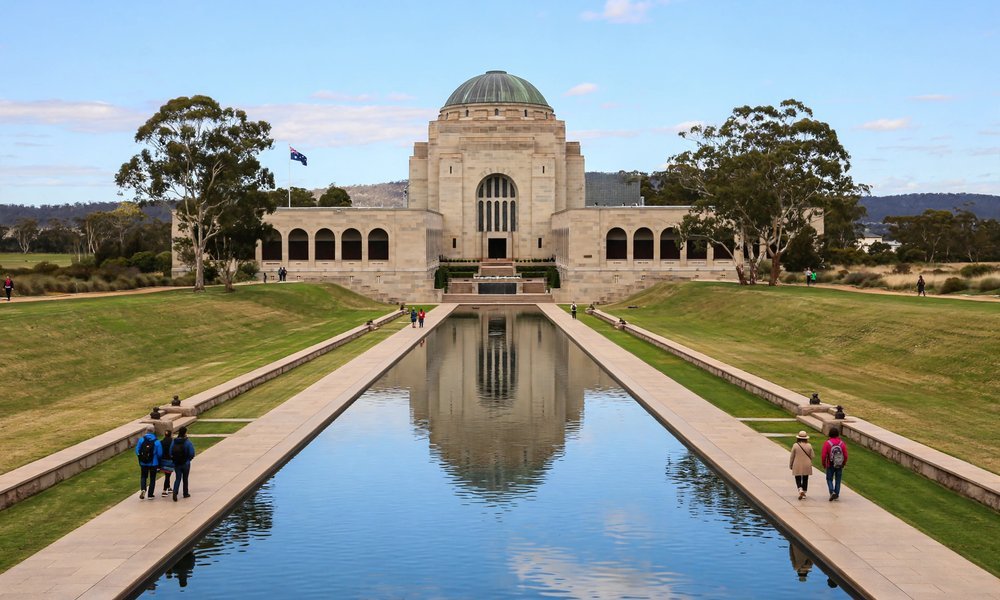
The Australian War Memorial is free to enter, and it earns every bit of its reputation as the country’s most important memorial. Give it half a day. The galleries move chronologically through Australia’s conflicts, and the Hall of Memory with its dome and Pool of Reflection stops most visitors in their tracks.
What makes it special is not just the displays. Time your visit for late afternoon and stay for the Last Post Ceremony, held every day at closing time in the Commemorative Area. A short service, a piper or bugler, and the reading of one name from the Roll of Honour. It runs for under an hour and costs nothing, and it is the single most memorable free experience in Canberra.
The memorial sits at the head of Anzac Parade, so pair your visit with a walk down the parade itself. The memorials along both sides are free to wander, and each one tells a different part of the story.
Walk the Lake Burley Griffin Central Basin Loop
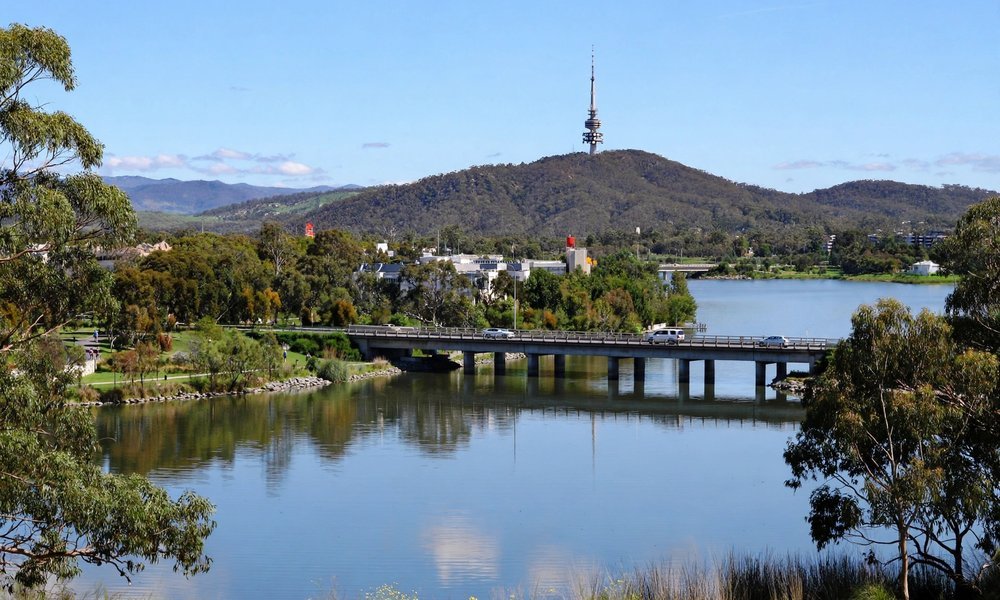
Lake Burley Griffin is Canberra’s front yard, and the walk around its central basin is the city’s best free outing. The full loop is about 5 kilometres on a flat, well-kept path, and it strings together the views the city was designed around.
Where the walk starts
Start at Commonwealth Park on the northern shore. The Captain Cook Memorial Jet shoots water high into the air from the lake, and the park’s lawns are the classic picnic spot. From there the path follows the shoreline west toward the bridges.
What you will see on the way
Crossing Commonwealth Avenue Bridge puts Parliament House, the National Library, and the High Court in a single sweeping view. On the southern shore you pass the gallery and museum precinct before the path turns back across Kings Avenue Bridge. Walk it early in the morning and you will share it with rowers and very serious-looking cyclists. Walk it at sunset and the light does all the work.
Mount Ainslie Lookout
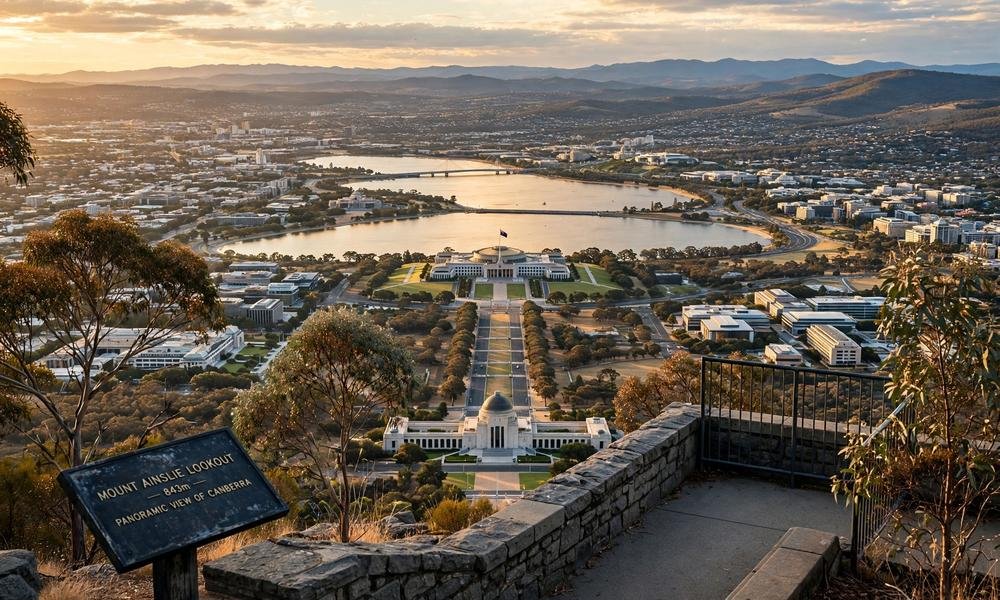
Every photo of Canberra’s postcard view is taken from Mount Ainslie. The lookout sits behind the War Memorial at the top of a winding road, and the panorama runs down the land axis: the memorial, Anzac Parade, the lake, both parliament houses, and the Brindabellas on a clear day.
You can drive up, or walk the 2.2 kilometre trail from the back of the War Memorial if your legs are willing. It is steep but short, and the reward-to-effort ratio is excellent. Go for sunrise or sunset if you can. Midday is fine too, but the low light turns the whole designed city into a diagram of itself, and you will finally understand why Canberra looks the way it does. Entry is free, and the car park at the top is free as well.
Free Galleries: the National Gallery and the National Museum
Canberra holds the country’s national collections, and the general galleries are free. Two are worth building a day around.
National Gallery of Australia
The National Gallery‘s permanent collection is free to enter, and it is far friendlier than most national galleries. The Aboriginal and Torres Strait Islander art galleries are the standout, and the sculpture garden outside is a free wander on its own. Special exhibitions are ticketed, so check what is on before you go, but the main collection alone fills two to three hours easily.
National Museum of Australia
Over at Acton Peninsula, the National Museum‘s general galleries are also free. The building itself is a talking point, all angles and bright colours, and inside it tells Australia’s story through objects rather than lectures. The First Australians gallery is the standout. Like the gallery, special exhibitions cost extra, but you will not feel short-changed by the free floors.
More Free-To-Visit Institutions in the Parliamentary Triangle
The National Gallery and the National Museum get most of the attention, but Canberra has more free-to-visit institutions close by. You can add several of these to a Parliamentary Triangle day without spending extra on entry. Check before you go, as special exhibitions may charge even where general entry is free.
Old Parliament House and the Museum of Australian Democracy
Old Parliament House now holds the Museum of Australian Democracy. You can walk through rooms where Australian leaders once debated and voted, and displays explain how voting and parliament work in plain terms. It pairs well with a visit to the new Parliament House, and it helps explain why Canberra became the capital. Check before you go, as special exhibitions may charge.
National Portrait Gallery
The National Portrait Gallery shows portraits of Australians from public life, sport, science, art, and everyday work. Some faces you will know at once, and others will spark a good chat about who shapes the country. It sits near the lake in the Parliamentary Triangle, so you can pair it with a lakeside walk. Check before you go, as special exhibitions may charge.
National Library of Australia
The National Library holds books, maps, photos, and records that tell Australian stories. You can browse exhibitions, sit in a reading room, or simply enjoy the building and its lake views. It suits a quiet hour between busier stops, and it works well on a hot or wet day. Check before you go, as special exhibitions may charge.
National Capital Exhibition
The National Capital Exhibition tells the story of how Canberra grew from a planned idea into a real city. Models and displays show the lake, the road layout, and the early plans in a way that is easy to follow. Visit it before you walk the lake loop, and the city around you will make more sense. Check before you go, as opening details can change.
Royal Australian Mint
The Royal Australian Mint makes Australian coins, and visitors can watch parts of the process and learn how coins move from raw metal to pocket change. Displays explain coin history and design, and kids often enjoy spotting coins they use at home. It is a free-to-visit attraction, but check before you go, as tours and special displays can change.
National Archives of Australia
The National Archives keeps records that shaped Australia, from letters and photos to official papers. Exhibitions pick out strong stories from the collection and present them in plain language. It suits visitors who like real documents and real voices from the past. Check before you go, as special exhibitions may charge.
National Film and Sound Archive
The National Film and Sound Archive keeps Australian film, television, radio, and recorded sound. Exhibitions and screenings draw on that collection, so you might see old clips, hear classic songs, or learn how Aussie screens changed over time. It is a free-to-visit attraction for general displays, but check before you go, as screenings and special exhibitions may charge.
Canberra Museum and Gallery
Canberra Museum and Gallery focuses on the city itself, with local art and stories about Canberra life. It gives you a local view that the big national collections do not, from neighbourhood history to work by Canberra artists. You will find it in the city centre, so it fits easily into a shopping or lunch stop. Check before you go, as special exhibitions may charge.
Geoscience Australia
Geoscience Australia studies rocks, land, water, and natural hazards across the country. Its public displays explain earth science in simple terms, with maps and models that show how Australia formed and how it keeps changing. It suits curious visitors and school age kids who like science. Check before you go, as public access and display times can change.
Wander the Australian National Botanic Gardens
On the lower slopes of Black Mountain, the Botanic Gardens hold the world’s largest collection of Australian native plants, and entry is free. This is not a stiff formal garden. The paths wind through rainforest gully, red centre garden, and eucalypt lawns, and the whole place feels like a condensed tour of the continent’s landscapes.
Free guided walks run on some days, led by volunteers who know the plants by name and story. Even without a walk, the Rainforest Gully boardwalk and the lookout over the gardens are worth the trip alone. It pairs neatly with a Mount Ainslie morning, since both sit on the same side of the lake.
Beyond the Lake: Arboretum, Stars and Bush Walks
The lake loop is a great walk, but Canberra has more outdoor space once you leave the shore. The spots below suit a second day, when you want fresh air, wide views, and room to move.
National Arboretum Canberra
The National Arboretum Canberra grows forests from around the world on a hill west of the city. Wide paths wind between young forests, open lawns, and lookout points, and the site suits picnics and slow walks. Kids can run on the lawns, and adults can enjoy the views back over the city and the lake. Check before you go, as events and site access can change.
Mount Stromlo Observatory
Mount Stromlo Observatory sits on a hill with wide views over Canberra and the surrounding ranges. You can learn how astronomers study the sky, and you can look at the old observatory buildings that survived bushfires and rebuilding. Public sky nights run at some times, so check before you go if you want to look through a telescope. Bring a warm layer, as hilltops get cold after dark.
Canberra Deep Space Communication Complex at Tidbinbilla
The Canberra Deep Space Communication Complex at Tidbinbilla tracks spacecraft far from Earth, and its visitor displays explain how signals travel across space. Huge dishes stand in the valley, and they make a striking sight even from the car park. It is a free-to-visit attraction, but check before you go, as access and display times can change.
Scenic Hiking Trails Beyond the Lake Loop
Canberra has bush trails on the hills around the city, and they give you a very different walk from the flat lake path. Black Mountain, Mount Taylor, and Mount Majura all have bush tracks with city views at the top. Wear sturdy shoes, carry water, and tell someone where you plan to walk. Check track conditions before you go, as tracks can close after rain or fire danger days.
Cotter Dam Walk
The Cotter Dam walk follows the river west of the city, with picnic spots and bush scenery along the way. It suits a relaxed half day out, especially if you pack lunch and take your time by the water. The dam wall itself makes a good photo stop, and the drive out shows you a quieter side of the capital region. Check conditions before you go, as river levels and site access can change.
How Many Days You Need in Canberra
Two full days cover the free highlights comfortably. Day one takes the Parliamentary Triangle: Parliament House, the lake loop, and the galleries. Day two takes the War Memorial, Anzac Parade, the Botanic Gardens, and Mount Ainslie.
A third day lets you slow down, revisit a favourite gallery, or add one of the free experiences below that you skipped. Canberra rewards a slower pace. The distances between sights look small on the map and feel bigger on foot, so padding your days beats sprinting between them.
Best Time to Visit Canberra for Free Activities
Spring and autumn are the sweet spots. September to November brings mild days and the city’s famous blossom season, while March to May brings crisp air and autumn colour around the lake. Both seasons suit long walks and lookouts.
Summer is warm and lively, with long evenings made for the lake loop, though midday walks get hot. Winter is cold, properly cold, with frosty mornings, but the galleries and Parliament House are indoors and free, and you will have the lookout car parks to yourself. If you are travelling with kids, check the ACT school holidays before you book anything, since the free tours fill up fastest in holiday weeks.
Where to Stay: Best Areas for a Budget Trip
Stay central and you will walk to half the sights on this list. Civic is the city centre, with the most transport links and the easiest access to the lake’s northern shore. Braddon, just north of Civic, has the cafes and the younger feel.
South of the lake, Barton and Kingston sit close to Parliament House and the gallery precinct, which suits a sightseeing-heavy trip. All of these areas keep you within a short bus ride or drive of everything free on this list, so pick by price and feel rather than worrying about the perfect spot. Most of Canberra’s free attractions cluster around the Australian Capital Territory‘s parliamentary heart, so a central base keeps transport costs down too.
Getting Around Canberra
Canberra is easier to get around than its spread-out reputation suggests. The central sights cluster around the lake and the Parliamentary Triangle, and much of it is walkable if you are happy with a few kilometres a day.
Buses cover the main corridors and reach every attraction on this list. Cycling is a genuine option here: the lake loop and the paths through the Triangle are flat, separated, and well signed, and bike hire is easy to find near the city centre. If you are driving, you will find Canberra one of the least stressful capitals to navigate, with straightforward roads and parking near most sights.
A 2-Day Free Canberra Itinerary
Here is how the free highlights fit together across two days, keeping the walking sensible and the order logical.
Day 1: the Parliamentary Triangle
Morning: join a free guided tour at Parliament House, then walk the grass roof to the flagpole terrace. Midday: picnic lunch on the lawns or in Commonwealth Park. Afternoon: the National Gallery’s free permanent collection and its sculpture garden. Evening: walk part of the lake loop as the light drops.
Day 2: memorials, gardens and lookouts
Morning: the Australian War Memorial galleries, then the walk down Anzac Parade. Midday: lunch in the city, then the Australian National Botanic Gardens. Late afternoon: drive or walk up Mount Ainslie for the lookout, and stay for sunset if the sky is playing along. If you time it right, you can catch the Last Post Ceremony at the memorial on your way back through.
Free Tours Worth Joining
The free guided tour at Parliament House is the standout. It runs several times a day, needs no booking for general visitors, and the guides explain the building’s symbolism as you walk it, which you would miss on your own. Arrive a little early in school holidays, when the groups fill.
The War Memorial’s volunteer-led tours are also free and run most days. They focus on highlights rather than the full collection, which suits a first visit. Beyond the big two, keep an eye out for the free walking tours that leave from the city centre in the warmer months. They cover the Triangle’s stories in a couple of hours and run on tips.
Free Markets, Festivals and Family Days Out
Canberra costs less when you time your visit around free community life. Markets, festivals, and family activities fill a day without entry fees, and they show you how locals spend their weekends.
Free Markets and Community Festivals
Weekend markets around Canberra offer fresh food, crafts, plants, and second hand finds, and browsing costs nothing. Community festivals through the year add live music, food stalls, kids activities, and local groups showing their work. Both suit a slow morning, and both give you a better feel for the city than a shopping centre can. Check market days and festival details before you go, as days and venues can change.
Floriade Festival
Floriade Festival runs in spring and fills Commonwealth Park with flower displays, garden beds, and outdoor events. You can wander the beds, take photos, and enjoy live entertainment and food stalls around the park. It draws big crowds, so arrive early if you want quiet paths. Check current dates and entry details before you go, as they can change from year to year.
Free Family-Friendly Activities
Families have plenty of free choices in Canberra. PlayUP at Old Parliament House gives kids hands-on play about fairness, voting, and speaking up, in a space built for young visitors. Galleries and museums run kids programs and school holiday activities at some times, so check what runs during your visit. Playgrounds around the lake, at the Arboretum, and in local parks give kids room to burn off energy between indoor stops. Pack snacks, hats, and water, and plan one indoor and one outdoor stop each day so kids stay happy.
Quirky and Unusual Spots: the Belconnen Owl
Canberra has a few quirky and unusual spots that make fun photo stops. The best known is the Belconnen Owl, a large owl sculpture in Belconnen that locals love and visitors stop to photograph. It sits in a shopping and business area, so you can pair it with lunch or a suburb wander. Look out for other unusual public art as you move around the city, from bold sculptures to painted walls. These small stops cost nothing, and they give your trip a few stories to tell at home.
Must-Knows Before You Go
A few practical notes that make a free Canberra trip smoother:
- Canberra’s weather turns fast. Bring layers even on a sunny morning, especially for Mount Ainslie and the lake loop.
- Distances look short on the map. The Triangle’s sights are walkable, but stringing them together adds up, so wear proper shoes.
- Most big sights are closed on Christmas Day and have shorter hours on public holidays. Check before a holiday-weekend trip.
- Free does not mean empty. Parliament House tours and the War Memorial are busiest between 10am and 2pm, so start early or go late.
- Carry water and snacks on the lake loop and the Mount Ainslie walk. Cafes cluster at the sights, not along the paths between them.
- Canberra was purpose-built as the nation’s capital, and why Canberra became the capital is a story worth knowing before you stand on Capital Hill.
FAQs About Free Things to Do in Canberra
Is Canberra worth visiting on a budget?
Yes, more than most capitals. The parliament, the War Memorial, the national gallery and museum collections, the Botanic Gardens, and the lake walks are all free, so a full sightseeing trip needs very little spending money beyond food and a place to sleep.
Is the Australian War Memorial really free?
Entry to the memorial is free, including the galleries and the daily Last Post Ceremony. Some special exhibitions may be ticketed, but the main experience costs nothing.
Is Parliament House free to visit?
Yes. Entry is free, the guided tours are free, and watching question time from the public galleries when parliament sits is free too.
How many days do you need in Canberra?
Two full days cover the free highlights well. Three days let you slow down and revisit favourites without rushing.
Is Canberra walkable?
The central sights around the lake and the Parliamentary Triangle are walkable, though the distances add up. Buses and the lakeside cycle paths fill the gaps easily.
Are all Canberra museums and galleries free?
Many are free to visit for their general displays, including the National Gallery, the National Museum, the War Memorial, and the Portrait Gallery. Special exhibitions may charge, so check before you go if one show matters to you. You can still fill days with free displays even if you skip every paid show.
What free things can kids do in Canberra?
Kids can enjoy PlayUP at Old Parliament House, playgrounds around the lake and the Arboretum, the Botanic Gardens paths, and kids programs at galleries and museums when they run. Mix one indoor stop with one outdoor stop each day, and pack snacks and water. Check ages and booking needs before you go, as some kids programs need a booking.
When is Floriade, and is it free?
Floriade runs in spring in Commonwealth Park. Check current dates and entry details before you go, as they can change from year to year. Arrive early for quieter paths, and pair the visit with a lake walk while you are in the area.
Final Thoughts on Free Canberra
Canberra’s free list reads like a greatest-hits of Australia: the parliament, the memorial, the national collections, and a lake the whole city was designed around. You could fill two days without spending a cent on sightseeing, and you would not feel you had missed the point of the place.
The trick is planning, not money. Start early, cluster your sights by side of the lake, and leave one sunset free for Mount Ainslie. Do that, and Canberra stops feeling like an official obligation and starts feeling like the bargain trip it actually is. And if the weather turns kind, the beaches near Canberra make a fine free bonus day.