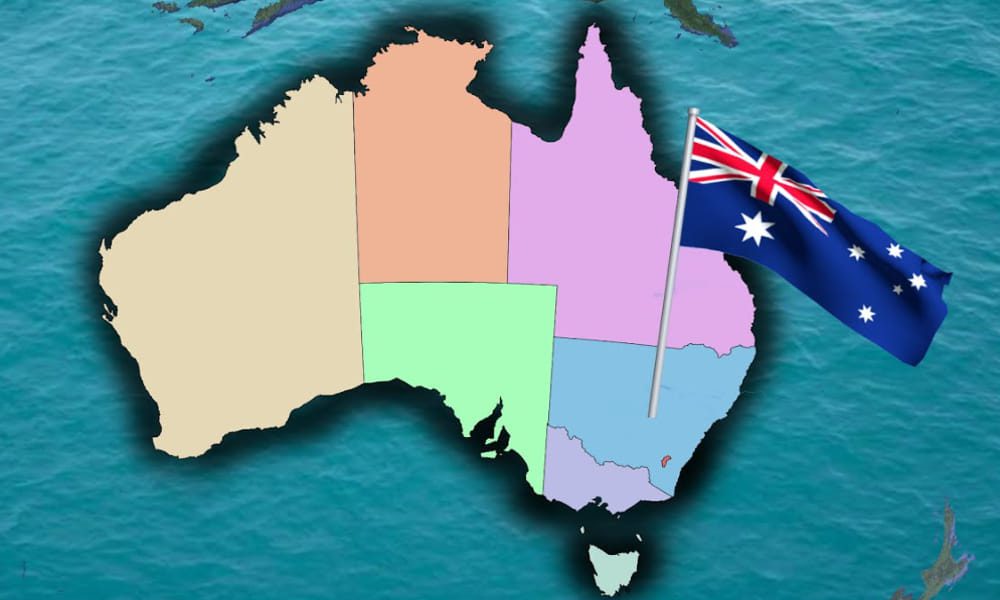

Many people wonder why Canberra became Australia’s capital instead of bigger cities like Sydney or Melbourne. The story behind this decision is quite interesting. It involves rivalry, compromise, and careful planning. Let’s explore how this unique city earned its place as the nation’s heart.
The Great City Rivalry
Sydney vs Melbourne: A Historic Competition
When Australia became a federation in 1901, a big problem arose. Both Sydney and Melbourne wanted to be the capital. Sydney was the oldest and largest city. Melbourne was the financial powerhouse and cultural centre.
Neither city would accept the other as the capital. The rivalry was intense. Politicians from both cities argued endlessly. This created a deadlock that needed a creative solution.
The Compromise Solution
Australian leaders made a smart decision. They agreed to build a completely new city in the Australian Capital Territory. This city would serve as neutral ground. No existing city would feel superior to the other.
The Constitution required specific conditions. The capital had to be in New South Wales. It needed to be at least 100 miles from Sydney. This would prevent Sydney from having too much influence over national matters.
Why Canberra Was Chosen
The Perfect Location
Canberra was selected as the capital in 1909 after careful consideration. Surveyors examined many potential sites across the region. They looked at climate, water supply, and geography.
The Limestone Plains area offered several advantages:
- Beautiful natural surroundings with mountains nearby
- Plenty of fresh water from rivers
- Good climate that wasn’t too hot or cold
- Enough flat land for building a major city
Strategic Middle Ground
The location served as a midpoint between Sydney and Melbourne. This geographic compromise satisfied both rival cities. Neither felt the capital was too close to their competitor.
The distance from the coast also provided security benefits. Military planners liked that it was inland. This made it harder for enemies to attack during wartime.
Building a Capital from Scratch
The Design Competition
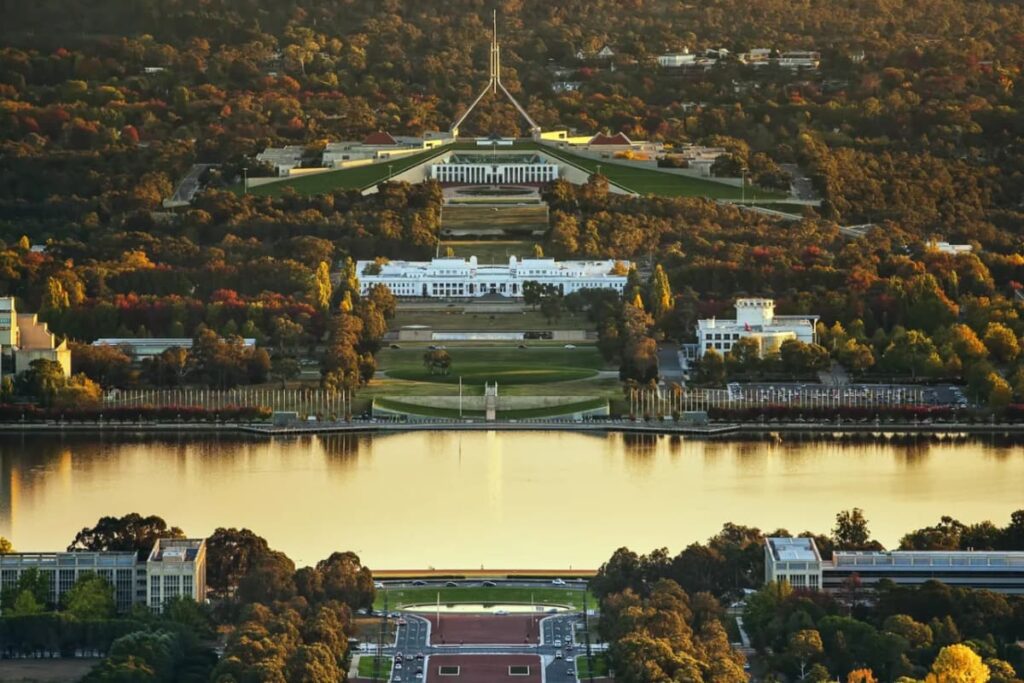
Australia held an international competition for the city’s design. American architect Walter Burley Griffin won. His vision included wide boulevards, circular patterns, and abundant green spaces.
Griffin designed Canberra around natural landscapes. He wanted the city to blend with mountains and lakes. His plan created one of the world’s most beautiful capital cities.
Slow but Steady Growth
Building Australia’s largest inland city took decades. Construction faced many challenges:
- Limited workers during World War I
- Budget constraints during the Great Depression
- Slow population growth in the early years
- Distance from major population centres
Parliament House didn’t open in Canberra until 1927. Even then, many government departments stayed in Melbourne for years. The city gradually grew into its role.
Canberra Today: More Than Politics
A Thriving Modern City
Canberra is not only the national capital but also a vibrant community. Today, over 400,000 people call it home. The city offers an excellent quality of life.
Modern Canberra features world-class museums, galleries, and restaurants. The National Gallery, National Museum, and War Memorial attract millions of visitors. These institutions preserve Australia’s history and culture.
Education Excellence
The city earned its reputation as Australia’s education capital through its outstanding universities. The Australian National University consistently ranks among the world’s best. The University of Canberra also provides excellent education.
Many research institutions chose Canberra as their base. CSIRO, the national science agency, has major facilities here. Students from around the world come to study in this academic hub.
Natural Beauty and Lifestyle
People love Canberra’s unique character. The city has more trees per person than almost anywhere else. Parks and nature reserves surround residential areas.
Lake Burley Griffin sits at the city’s heart. People enjoy sailing, kayaking, and walking around its shores. The nearby mountains offer skiing in winter and hiking in summer.
One common question involves beaches in Canberra – the city has none because it’s inland. However, stunning coastal beaches are just a few hours’ drive away. Many residents make weekend trips to the coast.
The Capital’s Role Today
Centre of Government
Australia’s capital houses all three branches of government. Parliament House sits atop Capitol Hill. The High Court and many government departments operate here.
Foreign embassies line the city’s streets. Diplomats from every nation work in Canberra. This makes it Australia’s window to the world.
National Identity
Canberra symbolises Australian unity. It represents compromise and fairness. The city belongs to all Australians, not just one state.
National celebrations happen here. Australia Day and Anzac Day ceremonies draw huge crowds. The city becomes the nation’s gathering place during important moments.
Frequently Asked Questions
Why Is Canberra the Capital of Australia and Not Sydney?
Sydney and Melbourne competed fiercely for capital status. Neither would accept the other winning. Australian leaders compromised by creating a neutral new city, preventing ongoing rivalry and resentment.
How Long Has Canberra Been the Capital of Australia?
Canberra officially became the capital when Parliament first met there in 1927. However, site selection occurred in 1908, and the name was announced in 1913, making it over 115 years old.
Why Did Canberra Become the Capital of Australia?
The Australian Constitution required a new capital city in New South Wales, at least 100 miles from Sydney. Canberra’s location, climate, water supply, and natural beauty made it the perfect choice.
Was Sydney Ever Australia’s Capital?
Sydney served as the colonial capital of New South Wales but never as Australia’s national capital. When federation occurred in 1901, Melbourne temporarily housed parliament until Canberra was ready in 1927.
Is Canberra Bigger Than Sydney or Melbourne?
No, Canberra is much smaller than both Sydney and Melbourne. With around 400,000 residents, it ranks as Australia’s eighth-largest city. However, it is the largest inland city in the country.
Conclusion
Canberra became the capital through compromise and vision. Leaders chose to build something new rather than favour existing cities. This decision created a unique capital that serves all Australians.
The city transformed from empty plains into a thriving metropolis. It houses government, education, and culture. While it may seem like an unusual choice, Canberra perfectly fulfills its role.
Today, Canberra stands as proof that thoughtful planning works. The capital continues growing and evolving. It remains a symbol of Australian democracy and national unity. For more information about Australia and its cities, visit Australia City Guide.