Sydney gets all the attention, but some of the best days you’ll have in New South Wales are south of it. The NSW South Coast runs from the Royal National Park all the way down to the Victorian border, and it packs in a bridge that floats over the ocean, beaches with sand so white it looks fake, blowholes that shoot water into the sky, and towns that are made for long lunches. This guide walks you through the highlights, then helps you plan the trip, pick your base, and book the experiences that are worth paying for. At Australia City Guide, this is the page we send anyone asking what lies south of Sydney.
The Sea Cliff Bridge and the Grand Pacific Drive
The Grand Pacific Drive is a 140 kilometre scenic route that runs from the Royal National Park down through Wollongong, Shellharbour and Kiama into the Shoalhaven. It’s one of the classic Australian road trips, and it works just as well as a slow day drive as it does spread over a weekend.
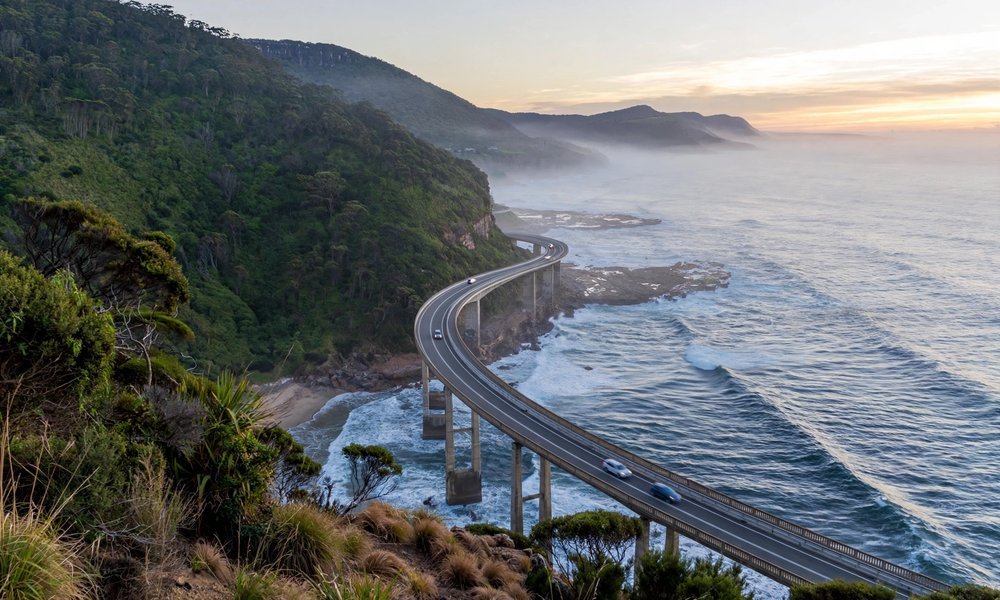
The headline act is the Sea Cliff Bridge near Clifton. It curves for 665 metres over the water, hugging the escarpment, and it genuinely feels like you’re driving across the ocean. Pull into the Bald Hill lookout at Stanwell Tops first: it’s the launch point for hang-gliders and paragliders, and on a clear day the view runs from the bridge right down the Illawarra coastline. There’s a pedestrian path along the bridge itself, so walk it if you have time.
Wollongong, the coast’s biggest city, sits just south of the bridge. It’s worth a stop for the harbour, the two lighthouses, and the beachfront cycle path that runs north toward Thirroul and Austinmer, where the old ocean baths make great swimming spots. If this drive has you wanting more national park coastline, our day trips from Sydney guide covers the Royal National Park end of the route in detail.
Kiama: Blowhole, Little Blowhole and the Coast Walk
Kiama is the town everyone stops in, and it earns the attention. The famous Kiama Blowhole sits on Blowhole Point, and when the swell is up it shoots spray high into the air. Check the viewing areas from behind the fence: the rocks here are slippery and the ocean doesn’t care about your photo. The Little Blowhole, a short drive south of town, is quieter and has a picnic area with barbecues.
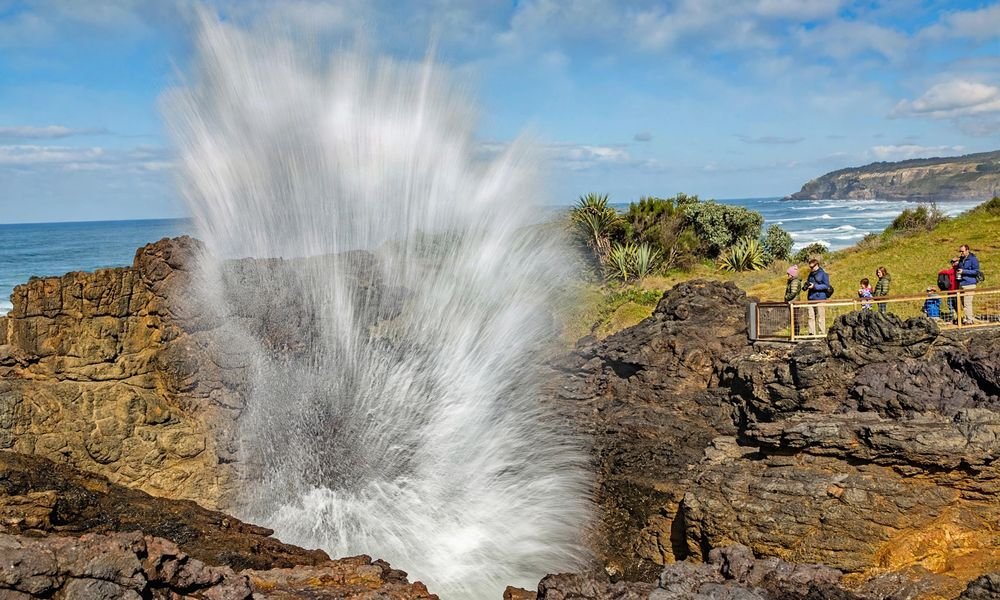
Behind the harbour runs the Kiama Coast Walk, a proper clifftop trail with ocean views most of the way. You can do the whole thing as a day walk or just the northern section from Kiama to the Little Blowhole for a couple of easy hours. The town itself is worth a wander: heritage pubs, cafes along Terralong Street, and a Saturday farmers market at the showground if your timing lines up.
South of Kiama, Gerringong and Gerroa are the quieter siblings, with Werri Beach giving surfers long rolling waves. If you’re here in winter, keep an eye on the ocean: migrating whales often pass close enough to spot from the headlands.
Jervis Bay: White Sand Beaches and Dolphins
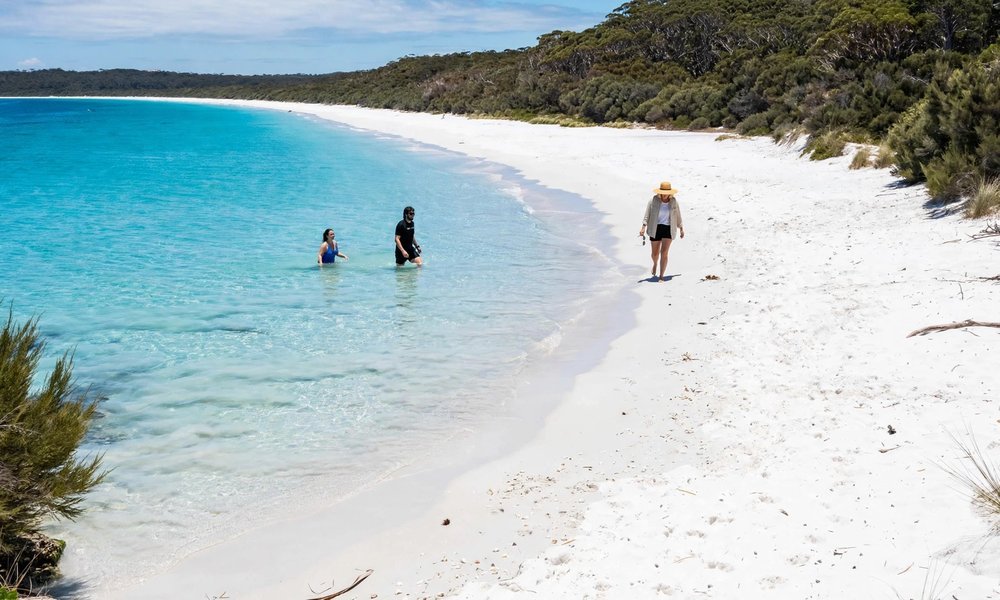
Jervis Bay is the jewel of the South Coast. The water is absurdly clear, the sand is blindingly white, and bottlenose dolphins live in the bay year round. The main town is Huskisson, with cafes, a marina, and the boats that run dolphin watch cruises out into the bay.
Hyams Beach and the White Sands Walk
Hyams Beach sits on the southern shore of the bay, and its sand is famous for being the whitest in the world. It looks edited in photos, but it’s just like that. Get there early in the morning on a sunny day: the beach is small and the car park fills fast in school holidays. The White Sands Walk runs along the shore past a string of small coves, and it’s flat and easy enough for kids.
Dolphins, Kangaroos and Booderee National Park
The dolphin watch cruises out of Huskisson run daily, and the success rate is high since the bay has a resident pod. In season, the same boats spot humpback whales too. Booderee National Park covers the southern headland of the bay, with camping, walking trails, and surf beaches like Cave Beach. The park is jointly managed with its traditional owners, and the entry fee supports its upkeep.
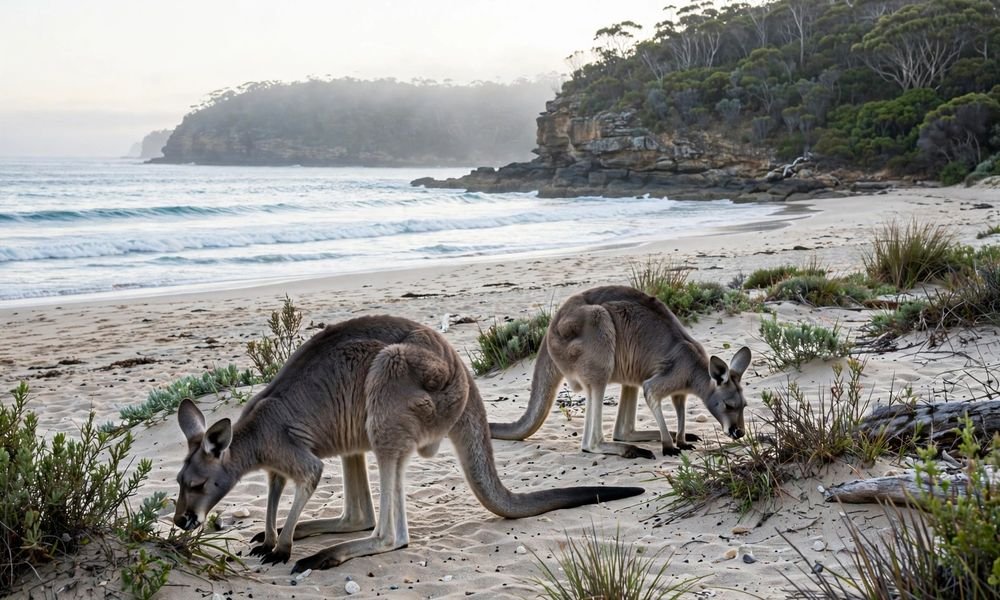
One of the bay’s quirks is the wildlife. Kangaroos graze on the lawns around Huskisson and at Green Patch in Booderee. Give them space and never feed them: they’re wild animals, even when they look like they want a selfie.
Berry and the Shoalhaven Hinterland
Behind the coast, the Shoalhaven hinterland is food country. Berry is the heritage town everyone talks about, with old shopfronts full of cafes, bookshops and galleries. The famous donut van rolls through town, and the line tells you everything you need to know. Berry also makes a good lunch stop on the way down to Jervis Bay.
Kangaroo Valley, inland from Berry, is a deep green valley with a historic suspension bridge, a slow river for kayaking, and pub lunches in a tiny village. Nowra, the Shoalhaven’s main town, is more practical than pretty, but it’s the gateway to the coast towns and has the best-value accommodation in the region.
The Sapphire Coast: Merimbula, Narooma and Eden
South of Jervis Bay the coast gets wilder and the crowds thin out. This stretch, often called the Sapphire Coast, runs from Batemans Bay down to Eden near the Victorian border. Murramarang National Park hugs the coast here, and Pebbly Beach is where kangaroos graze right on the sand at dawn.
Batemans Bay is the fishing town of the region, with oyster leases in the Clyde River and a waterfront full of fish and chip shops. Bermagui is prettier, with the Blue Pool, a natural rock pool carved into the headland, and game fishing boats heading out to the continental shelf. Merimbula suits families: calm lake beaches, a magic mountain theme park for kids, and easy ocean swims.
Eden, Whale Watching and Montague Island
Eden sits at the far south, and it’s whale country. The town has a whaling history, now told at the Killer Whale Museum, and from roughly May to November humpbacks migrate past the headlands. Ben Boyd National Park wraps around the town with clifftop walks and the striking red rocks of the Pinnacles.
Further north, Narooma is the departure point for boat trips to Montague Island, where fur seals haul out and little penguins nest. The tours are seasonal and numbers are capped, so this is one to book ahead if it’s on your list.
How Many Days You Need for the NSW South Coast
Honestly, the South Coast rewards whatever time you give it. Here’s how to match your trip to your days.
One day from Sydney
Drive the Grand Pacific Drive to Kiama and back. You’ll cross the Sea Cliff Bridge, see the blowhole, walk part of the coast walk, and be home for dinner. It’s a big day but an easy one.
A long weekend
Add Jervis Bay. Two nights in Huskisson or Vincentia gives you a full beach day at Hyams Beach, a dolphin cruise, and time for Booderee National Park. Stop in Berry on the way down or back for lunch.
A full week
Drive the whole coast to Eden. You’ll see the character change as you go south: busier and livelier up north, wilder and emptier down south. Base yourself in two or three towns and day-trip from each.
Best Time to Visit the South Coast
Autumn (March to May) is the sweet spot. The ocean is still warm from summer, the school holiday crowds are gone, and the days are mild and clear. This is the best all-round season.
Winter (June to August) is whale watching season, roughly May to November, and the headlands around Kiama, Jervis Bay and Eden are great land-based lookouts. The water is cold for swimming, but the coastal walks are at their best in crisp, clear weather.
Spring (September to November) brings warmer days and wildflowers in the national parks. It’s a good time for the coast walks and kayaking before the summer rush.
Summer (December to February) is beach season. The water is warm, the bays are at their clearest, and everything is open. Book accommodation well ahead in January, when the coast fills with Sydney holidaymakers.
Where to Stay on the South Coast
Pick your base by what you want to do. Kiama suits a romantic weekend, with heritage hotels and guesthouses near the harbour. Huskisson and Vincentia are the picks for Jervis Bay, with holiday rentals and motels a short walk from the water.
Nowra is the budget play: it’s cheaper than the beach towns and central enough to reach Kiama, Berry and Jervis Bay in under an hour. Further south, Batemans Bay and Merimbula both have plenty of caravan parks, motels and holiday homes that suit families.
In peak summer, book months ahead. Outside holidays, a weekend can be booked a week or two out, and midweek rates drop noticeably.
Getting Around the South Coast
A car is almost essential. Trains run from Sydney to Wollongong and Kiama, but beyond that you’re on buses, which are slow and infrequent. With your own wheels, the whole coast opens up.
The main road south is the Princes Highway, with the Grand Pacific Drive branching off along the coast through the Illawarra. Roads are sealed and easy the whole way to Eden. Sydney has toll roads, so check your route can pay tolls before you leave. Parking is free at most beaches and lookouts outside peak times.
Tours and Cruises Worth Booking
Jervis Bay dolphin watch cruises leave Huskisson daily. The bay’s resident dolphins make sightings reliable, and in season you’ll often see whales too. Morning departures are usually the calmest.
Grand Pacific Drive day tours from Sydney are a good option if you’d rather not drive. They cover the Sea Cliff Bridge, Kiama Blowhole and usually Hyams Beach in one long day.
Montague Island boat trips run from Narooma in season, with seal colonies and penguin nesting sites. Numbers are limited, so book well ahead.
Whale watching cruises operate from several ports, including Eden and Jervis Bay, during the migration season. The same stretch of coast gives you excellent land-based whale watching from the headlands for free.
Sea kayaking tours run in Jervis Bay and around Narooma, paddling along the coastline to spots you can’t reach by road. Half-day trips suit beginners.
Must-Knows Before You Go
- Respect the blowholes. Kiama’s blowholes have fences for a reason. Stay behind them: waves can surge without warning and the rocks are extremely slippery.
- Give kangaroos space. They’re everywhere on the South Coast, especially around Jervis Bay and Pebbly Beach. Never feed them and keep your distance.
- Swim between the flags. Patrolled beaches mark the safe zone with red and yellow flags. Surf beaches on the South Coast can have strong rips.
- Check the swell. Big swells make the Kiama Blowhole spectacular but close rock platforms and coastal tracks. Check conditions before heading out.
- Bring coins and cash for small towns. Most places take cards, but small markets and some country cafes are easier with cash.
- Fuel up before the far south. Petrol stations thin out past Narooma. Fill up in Batemans Bay or Merimbula before heading to Eden.
- Booderee charges a park entry fee. It’s good value for a full day, but bring your payment method sorted before you arrive.
- Summer parking fills early. At Hyams Beach and the popular surf beaches, aim to arrive before 10am in school holidays or you’ll park a long way from the sand.
FAQs About the NSW South Coast
How far is the NSW South Coast from Sydney?
Wollongong is about 90 minutes’ drive south of Sydney. Kiama is around two and a half hours, Jervis Bay about three, and Eden is a full day’s drive at roughly seven hours.
Can you do the South Coast as a day trip?
Yes, as far as Kiama. The Grand Pacific Drive, Sea Cliff Bridge and the blowhole all fit into one long day. Jervis Bay really needs at least one night to be worth the drive.
What is the best beach on the NSW South Coast?
Hyams Beach in Jervis Bay is the most famous, for its white sand and clear water. For surfing, Werri Beach near Gerringong is the pick. Families like the calm lake beaches at Merimbula.
When can you see whales on the South Coast?
Roughly May to November, when humpbacks migrate along the coast. Eden and the headlands around Jervis Bay and Kiama are the best vantage points.
Is Jervis Bay worth visiting?
Absolutely. The white sand beaches, the clearest water on the coast, dolphins year round, and Booderee National Park make it the standout stop south of Sydney.
Do I need a car on the South Coast?
For anything beyond Wollongong and Kiama, yes. Trains reach the northern towns, but the best beaches and national parks need a car.
Final Thoughts on Visiting the NSW South Coast
The NSW South Coast is one of those rare trips that suits almost everyone. Surfers, families, whale watchers, food lovers, walkers: everyone finds their corner. If you only have a day, do the Grand Pacific Drive to Kiama. If you have a weekend, add Jervis Bay and stay for the dolphins. And if you have a week, drive all the way to Eden and watch the coast turn wild.
My one strong opinion: don’t rush it. The South Coast’s whole appeal is the slow pace, and the best moments here are unplanned. A kangaroo on the beach at dawn, a pod of dolphins beside the boat, a bakery pie in a country town. Leave room in the day for those.