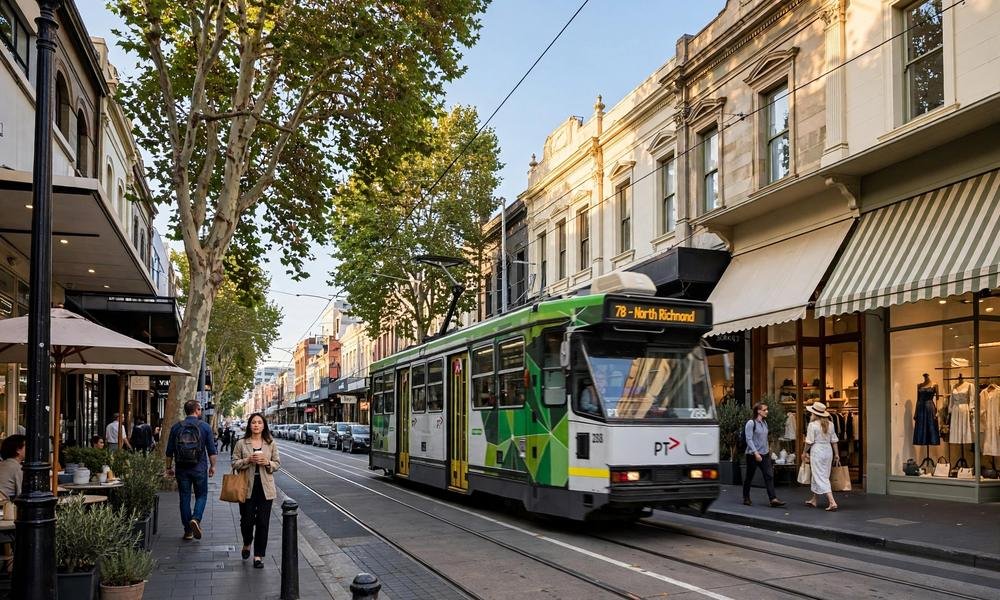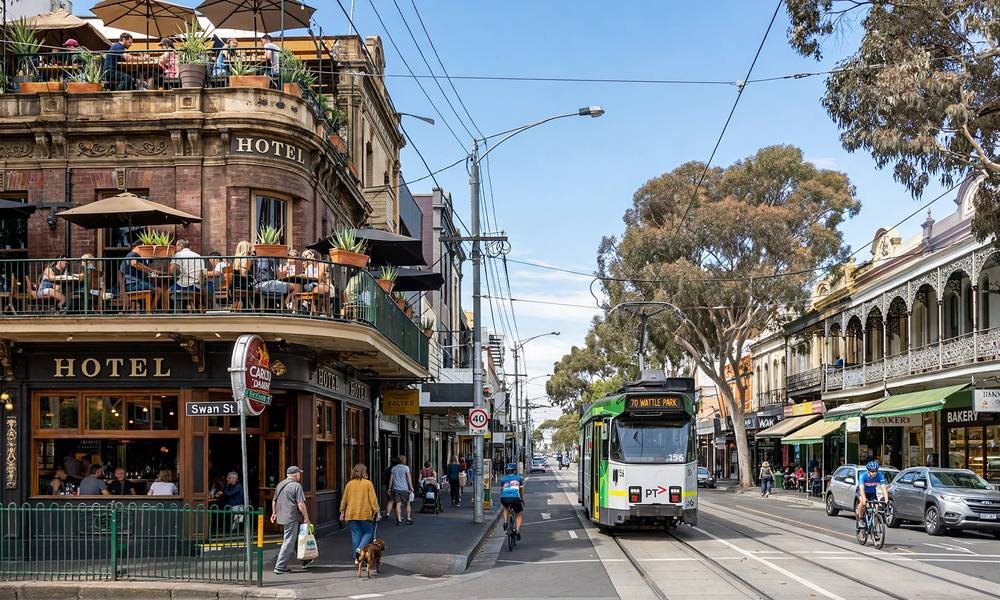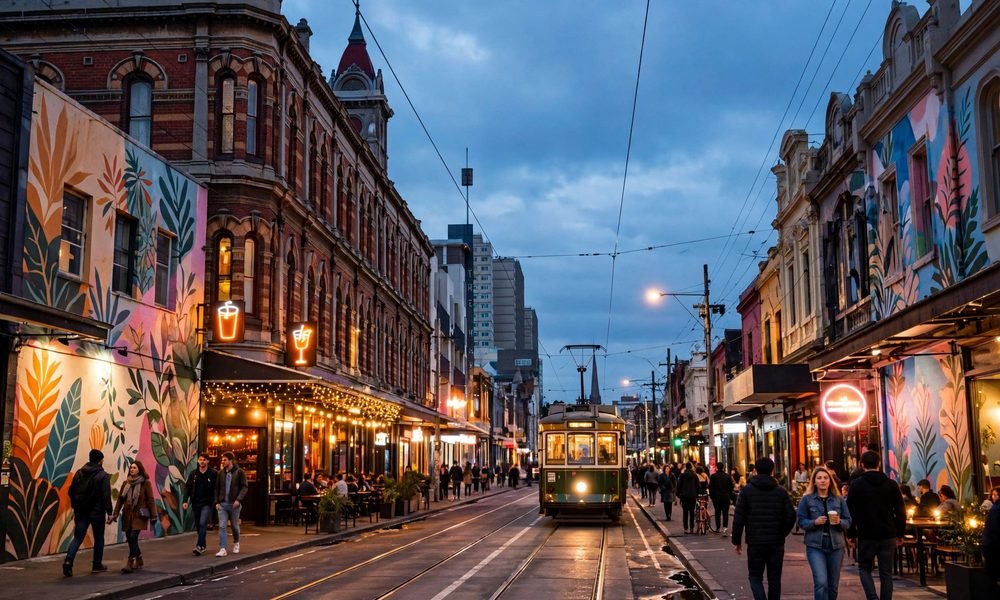

Fitzroy Melbourne is the city’s first suburb, and it still feels like the place where Melbourne works out who it is. Street art covers the laneways, vintage shops line Brunswick Street, and good restaurants sit a few doors from old corner pubs. You can walk the whole suburb in under half an hour, but you will want a full day to do it properly.
Details checked on the official site, November 2026
Quick facts
- Location: just north-east of the Melbourne CBD, in the City of Yarra. Postcode 3065.
- Cost: free to wander. The markets are free to browse, and the street art, galleries and Edinburgh Gardens cost nothing. You pay for food, drinks and guided walks.
- Time needed: half a day for the main streets and a market. A full day if you add dinner and live music.
- How to get there: tram 11 down Brunswick Street, tram 86 along Gertrude Street, or tram 96 along Nicholson Street. Fitzroy has no train station.
What is Fitzroy Melbourne known for
Fitzroy is known for three things: street art, food and independence. Walk Brunswick Street, Gertrude Street, Rose Street and the laneways between them and you will pass murals, paste-ups and stencils that change so often even locals spot something new. The suburb is barely a square kilometre in size, bounded by Nicholson Street, Alexandra Parade, Smith Street and Victoria Parade, and it is made for walking.
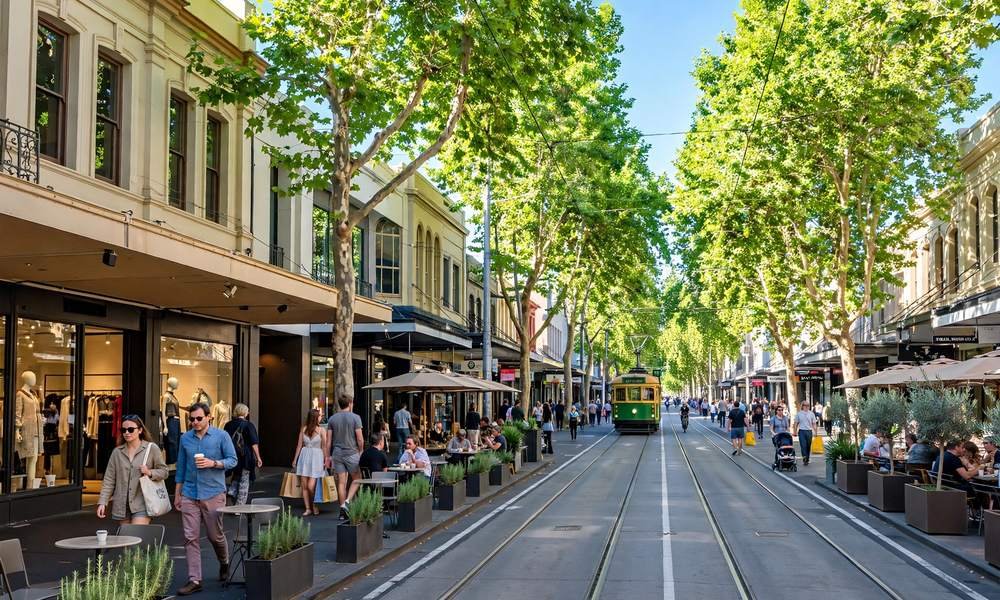
Two main streets set the tone, and they could hardly be more different. Brunswick Street is loud, scruffy and full of colour, and it has been the city’s bohemian high street since the 1980s. Gertrude Street, across its southern end, is quieter and more polished, with designer shops and serious restaurants in restored Victorian shopfronts. Between them sit terraces, bluestone lanes and old factories turned into galleries, studios and bars.
Fitzroy has changed a lot, and rents have pushed out many of the artists and musicians who made its name. Even so, it has held on to more of its character than most inner suburbs, helped by its pubs, its public housing and a stubborn independent streak. That mix is the reason to visit: art-school students, designers, musicians, young professionals and longtime locals share the same few blocks.
A short history of Fitzroy
Fitzroy stands on the Country of the Wurundjeri Woi-wurrung people of the Kulin Nation. Land here was first sold in 1839, only four years after Melbourne was founded, which made Fitzroy the city’s first suburb. Museums Victoria records that the area south of Alexandra Parade was subdivided into lots and offered for sale that year. Fitzroy became a municipality in its own right in 1858.
The southern end, close to town, drew wealthy residents, and rows like Royal Terrace on Nicholson Street survive from the 1850s. Further north, the blocks were cut into smaller lots and filled with workers’ cottages, boot factories, breweries and chocolate works. By the early 1900s Fitzroy was among the poorest and most crowded places in Australia. In the 1960s whole blocks were cleared and replaced by the tower blocks of the Atherton Gardens estate, which still stand.
From the 1920s, Aboriginal people from across Victoria and southern New South Wales moved to Fitzroy for work and community, and Gertrude Street became the meeting place. Pastor Doug Nicholls, later knighted and appointed Governor of South Australia, preached at a church in Gore Street. Some of the country’s first Aboriginal-run organisations were founded here in the 1970s, including a health service and a legal service. A signposted Aboriginal history trail marks the key sites, and it is worth following if you want to understand the suburb beyond its shops and bars.
Cheap rents brought migrants after the war, first from Italy, Greece and Spain, then from Vietnam. From the 1970s, students, artists and musicians followed. Brunswick Street filled with cafes, band venues and second-hand shops, and by the 1990s Fitzroy was the centre of Melbourne’s independent music and arts scene. That reputation still shapes the suburb today.
Brunswick Street: the main strip
Brunswick Street runs north from Victoria Parade for more than a kilometre. Between Gertrude Street and Alexandra Parade it is an almost unbroken run of cafes, bars, pubs, bookshops, record stores, vintage clothing shops and tattoo parlours. It is lively at any time of day and busy on Friday and Saturday nights, so come in daylight if you want to browse properly.
Look up as you walk. Painted shopfronts and mosaic-covered benches are the work of local artists, and the Victorian facades above the shopfronts are worth a look on their own. The Beswick Building, on the corner with Greeves Street, is a good example. The street rewards slow walking and unplanned stops, so pick a short stretch and step into the side streets rather than marching the whole road to finish it.
For cheap eats on this strip, Mukka at 366 Brunswick Street is the long-running local pick for curries and dosas. It has been feeding the street for years, and it is the sort of place that keeps a neighbourhood honest while the bars do the posing. The street also holds the suburb’s big vintage hunting ground, covered in the shopping section below.
Gertrude Street: galleries, design and fine dining
Gertrude Street brings galleries, design shops and dining into a short, walkable strip. It suits a visitor with only a few hours who wants to look carefully rather than cover Fitzroy block by block. Browse the smaller shops, step into a gallery when it is open, and leave time for a coffee or a meal before walking on to Brunswick Street.
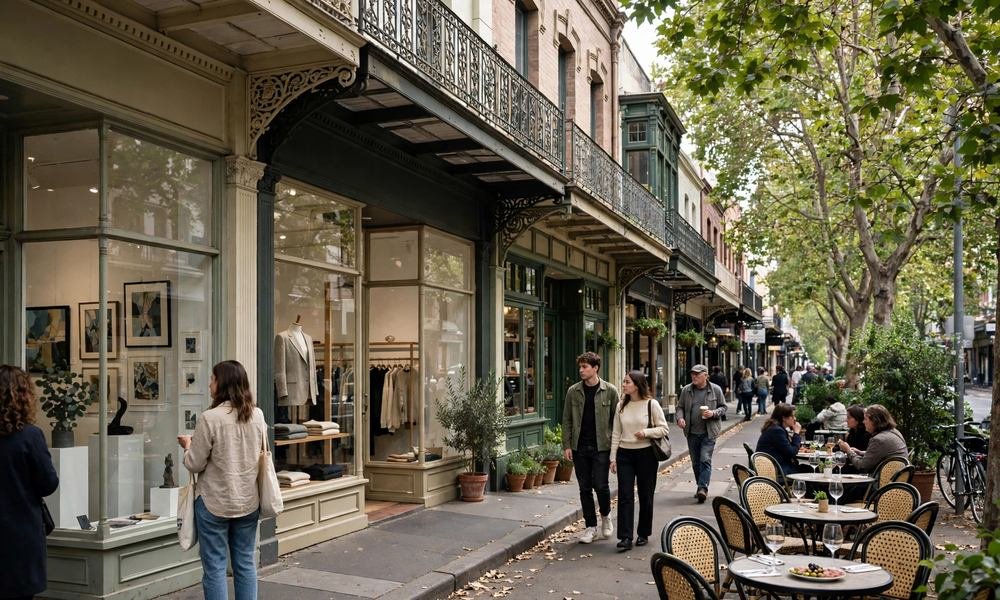
The dining here is serious. Cutler & Co, at 55-57 Gertrude Street, sits in a former metal works and runs an a la carte menu and a seasonal degustation. Next door, Marion at 51-53 Gertrude Street is the looser sibling: low-lit, wine-heavy, with grilled calamari, steak tartare and whole roast chicken on the table. A little further along, the Builders Arms Hotel keeps the pub side honest, with polished pub food and a proud place in the suburb’s Aboriginal history. Evie’s Disco Diner takes a different turn again, with 1980s New York comfort food, a nightclub soundsystem and drag nights.
Two more tables are worth knowing. Poodle Bar and Bistro, at 81-83 Gertrude Street, spreads over two floors of leather banquettes and velvet couches and dresses up hotel dining-room classics. Ladro Gertrude, at number 224, is a relaxed pizza restaurant with a long list of toppings. Book ahead for dinner on Gertrude Street, especially on Friday and Saturday nights.
Rose Street and the weekend markets
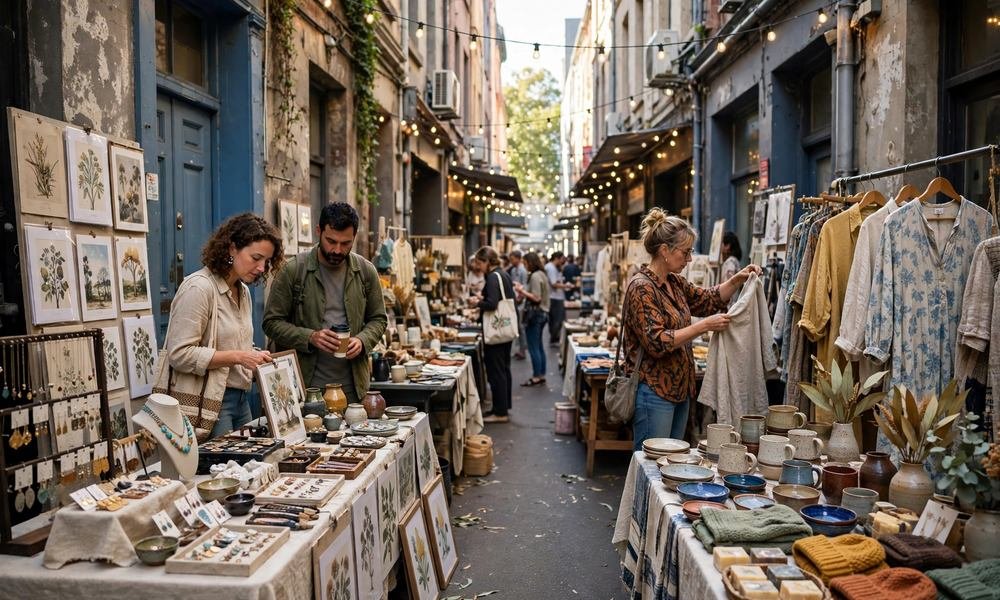
Rose Street, between Nicholson Street and Brunswick Street, is where Fitzroy does its weekend shopping. Two markets sit almost side by side here, and they are different enough to visit both.
The Rose Street Artists’ Market, at 60 Rose Street, runs every Saturday and Sunday from 10am to 4pm. It started in 2003 in a former junkyard, and more than 120 makers now sell handmade jewellery, clothing, prints, ceramics and homewares directly to shoppers. It is a good place to find a gift that did not come from a souvenir shop, and the makers are usually happy to talk about their work.
Next door, the Fitzroy Mills Market, at 75 Rose Street, runs every Saturday from 9am to 2pm. It is a weekly health and wellness market with local growers and makers selling artisan food, drink and products, mostly under cover, so it runs rain, hail or shine. Come early on a Saturday and do both markets before the crowds build, then walk south to Gertrude Street for lunch.
Rose Street also holds one of the suburb’s famous queues. Lune Croissanterie, on Rose Street, draws a line for its croissants most mornings, so arrive early or be ready to wait. Around the corner at 50 Rose Street, its sister shop Moon sells crullers, twisted rings of fried choux pastry.
Street art and laneways in Fitzroy
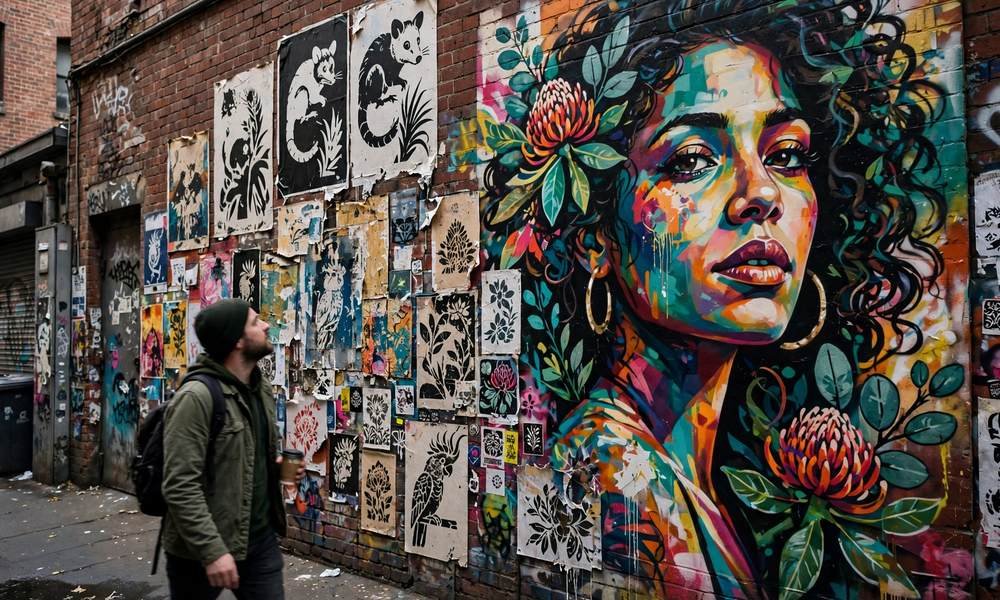
The lanes and side streets of Fitzroy are an open-air gallery. Large murals cover the walls around Rose Street, Johnston Street and the car parks behind Brunswick Street, and new work appears constantly. The value is in observing a living neighbourhood rather than chasing an outdated mural checklist, so set aside an hour and walk Brunswick, Gertrude, Rose and the connecting laneways at a slow pace.
A few spots are worth seeking out. Cecil Street, at the northern end of Fitzroy, holds a run of giant portraits by artists including Adnate, Rone and Sofles. Adnate has painted several murals in the area, including a woman with blue eyes on the corner of Johnston and Brunswick streets and a portrait of the Dalai Lama on Argyle Street. On Victoria Street, look for the praying mantis by Buzzard, and on Hertford Street, a woman’s face by Cam Scale. The Everfresh crew painted the mural on the facade of the Night Cat on Johnston Street.
Several operators run guided street art walks led by working artists, and a walk is the easiest way to learn who painted what and why. Check the operator’s site for current prices and times before you book. If you walk on your own, remember that murals vanish and get replaced, so treat any list of specific works as a starting point, not a promise.
The art does not stop at the suburb’s edge. Smith Street runs along the Fitzroy and Collingwood border, and a Keith Haring mural stands on Johnston Street just over the border in Collingwood. For more on the city’s painted lanes, see the guide to Melbourne laneways.
Galleries in Fitzroy
Fitzroy’s galleries keep the suburb from becoming a theme park for its own mythology. The Centre for Contemporary Photography, on the suburb’s edge, shows Australian and international photography across changing exhibitions, and entry is free. Gertrude Contemporary is an artist-run space showing emerging and mid-career work, with shows rotating every six to eight weeks. Brunswick Street Gallery stacks eight exhibition spaces over two levels for emerging artists.
Not every gallery opens on the same schedule. If a particular exhibition is your reason to come, check its dates before you travel. Otherwise, treat the galleries as part of a Gertrude Street walk and step in when a show catches your eye.
Where to eat in Fitzroy
The choice in Fitzroy is enormous, and standards are high at every price. For a wider look at the city’s dining scene, see the guide to restaurants in Melbourne.
Breakfast and coffee
Fitzroy takes coffee seriously, and you are rarely more than a few blocks from a good one. Industry Beans, at 70-76 Westgarth Street, is a warehouse specialty-coffee roastery with an inventive brunch menu. Archie’s All Day, at 189 Gertrude Street, draws a queue for coffee and all-day plates. Napier Quarter, at 359 Napier Street, is a Parisian-style espresso and wine bar, and its anchovy toast has fans well beyond the suburb. For more cafe picks across the city, see the guide to cafes in Melbourne.
Lunch on the run
Lunchtime is when Fitzroy’s multicultural roots show on the plate. Falco Bakery does chicken and egg salad sandwiches that locals queue for. Morning Market is a cafe-deli with a short, sharp menu. Stefanino Panino serves Italian-inspired sandwiches, and JollyGood is a Cali-style diner with burgers, Bloody Marys and bottomless filter coffee. Frankie’s Tortas and Tacos is a slick taqueria that often has a line out the door. If you want something quick and cheap, the bakeries and delis along Brunswick Street are the fastest option.
Dinner
Dinner splits two ways: the polished dining rooms of Gertrude Street, covered above, and the cheaper, louder tables of Brunswick Street and the side streets. The Vegie Bar has been a Brunswick Street fixture since the late 1980s, long before meat-free dining was fashionable. Carnation Canteen, at 165 Gore Street, cooks a menu that changes every week, with a whole King George whiting as the one constant. Fitzroy Oyster House, on George Street, shucks oysters to order alongside Martinis. El Columpio, upstairs at 52 Johnston Street, is a casual Mexican spot known for its pozole, a hominy soup that is hard to find in Melbourne.
Vegan and vegetarian food
Fitzroy is one of the easiest parts of Melbourne to eat plant-based, and it has been for decades. The Vegie Bar and Transformer, on Rose Street, are the two names that come up most, and Transformer takes bookings, so reserve ahead. Many of the suburb’s cafes and restaurants also run strong meat-free menus without making a fuss about it. For a full list, see the guide to vegan restaurants in Fitzroy.
Bars, pubs and live music in Fitzroy
Fitzroy has a long run of bars in the inner city, and you can walk the whole strip on foot. Black Pearl, at 304 Brunswick Street, is the benchmark: a dark, low-lit cocktail bar with The Attic hidden upstairs as a bookings-only speakeasy. You take the stairs at the back and ring the bell. Naked for Satan, at 285 Brunswick Street, is the louder cousin, pairing infused vodkas and bar food with Naked in the Sky, the rooftop above it, which gives you a clear view over the terraces to the city.
For something quieter, The Everleigh on Gertrude Street is a seated-only cocktail room above Belle’s Hot Chicken. It keeps to a 1920s-style format and takes the ritual seriously without making a sermon of it. Near & Far, on the Brunswick and Rose Street corner, is an indie craft-beer bar and bottle shop. The Elysian is a whisky specialist with more than 300 bottles. Bar Liberty, on Johnston Street, is a chef-hatted natural-wine bar with a strong line in pet-nats. For more drinking picks across the city, see the guide to bars in Melbourne.
The pubs are the social scaffolding underneath all of it. The Napier Hotel, on the corner of Napier and Moor streets, does a chicken parma that locals rate highly. The Marquis of Lorne is a heritage three-level corner pub with a rooftop. The Standard has a leafy beer garden with heaters for cooler days. Old corner pubs like these are the right call for a quieter beer and a meal.
Live music is less an activity in Fitzroy than a second language. The Night Cat, on Johnston Street, has been open since the 1990s and runs bands in the round on a 360-degree stage, with Latin nights on Sundays. The Old Bar keeps the sweatier, guitar-driven end of the scene alive most nights of the week. Bands play most nights of the week at venues along Brunswick and Johnston streets, and the suburb has launched the careers of many well-known Australian acts. If you want to understand Fitzroy, go where the bass is leaking through the floorboards.
Shopping in Fitzroy
Brunswick Street is a vintage hunter’s street. Lost and Found Market, upstairs at 288 Brunswick Street, is the heavyweight: a warehouse of around 60 stalls piled with vintage fashion, mid-century furniture, records, art and bric-a-brac, open seven days. Hunter Gatherer, at 274 Brunswick Street, is the charity-run option, good for second-hand fashion with a conscience. The rest of the street is dotted with one-off boutiques, bookshops and design stores that reward slow browsing over any specific target.
For new clothing, try Melbourne-born boutiques like Alpha60, Bul, Handsom and Kloke. For the home, Mud Australia sells handmade ceramics and Cibi is a Japanese lifestyle concept store and cafe. Music fans can go crate-digging at record stores along Smith and Gertrude streets, including Northside Records, Wah Wah, The Searchers and Plug Seven. Pick up a layered fragrance at boutique perfumery Flaner, or just browse: Fitzroy is not a suburb for people in a hurry.
For a wider look at the city’s shopping, including the big markets, see the guide to markets in Melbourne.
Edinburgh Gardens and green space
Fitzroy itself has little green space, which surprises first-time visitors. The fix is a short walk north. Edinburgh Gardens is a 24-hectare park in Fitzroy North, bounded by Brunswick Street, St Georges Road and Alfred Crescent. It has wide lawns, mature trees, public barbecues, a playground, a skate park, basketball and tennis courts, sports ovals and a heritage rotunda. It fills with picnickers on sunny afternoons, and parts of it are off-leash for dogs, so follow the signs on the day.
One name causes confusion. Despite the name, the famous Fitzroy Gardens are not in Fitzroy at all: they sit in East Melbourne, near Parliament. Carlton Gardens are closer, just across Nicholson Street, and they hold the Melbourne Museum and the Royal Exhibition Building. Yarra Bend Park is about two kilometres east. If you want a picnic spot after the markets, Edinburgh Gardens is the local pick.
Fitzroy Pool and Fitzroy Town Hall
Two landmarks on the suburb’s quieter streets are worth a detour. The outdoor Fitzroy Swimming Pool, on Alexandra Parade, is a local icon. Locals campaigned to save it from closure in the 1990s, and it is known for the sign painted on its wall that warns of deep water in Italian. It is a working public pool, so check the council site for current entry prices and hours before you plan a swim.
The grand Fitzroy Town Hall, on Napier Street, dates from the 1880s and speaks of the confidence of the boom years, with imposing columns and a bell tower. St Mark’s Anglican Church, on George Street, adds another piece to the suburb’s architectural story. Both sit on side streets, which is the point: Fitzroy rewards a detour one block off the main strips.
Johnston Street and the Smith Street edge
Johnston Street was once the centre of the Spanish community, and it still holds a few tapas bars and flamenco venues. It hosts a Hispanic street festival each February, and the Latin nights at the Night Cat keep that thread alive on Sundays. It is a good street for an evening that starts with food and ends with music.
Smith Street runs along the Fitzroy and Collingwood border, and it is easy to add to a walk. The mix of architectural styles is more varied here, with fine facades like the Patersons Building, a former furniture store built in 1911. One footpath is in Fitzroy and the other is in Collingwood, so give the street its own block of time rather than treating it as one short detour. The two suburbs are similar enough that it is hard to explore one without wandering into the other.
A half-day walking route in Fitzroy
Fitzroy rewards wandering more than planning, but a loose order helps. This route covers the main streets in half a day, with room to stop.
On a Saturday, start at the Rose Street markets when they open. Browse the makers’ stalls, then walk south down Brunswick Street for vintage shops and a coffee. Turn onto Gertrude Street for galleries and design shops, and stay for lunch. In the afternoon, walk the laneways for street art, then head north to Edinburgh Gardens for a breather. Come back to Brunswick Street or Gertrude Street for dinner, and finish with a bar or a gig.
On a weekday, reverse the focus. Start on Gertrude Street, where the galleries and shops are quieter, then explore Brunswick Street and finish with a booked meal. The markets are closed on weekdays, so the day is shorter and calmer. Either way, keep the route to a few adjoining blocks. Fitzroy is compact, and the pleasure is in the side streets, not in covering ground.
Where to stay in Fitzroy
Fitzroy suits travellers who want dining, bars and independent shops close to their room, especially repeat visitors who want a base outside the CBD. The StandardX, at 62 Rose Street, brought a boutique hotel to the suburb, with a Thai restaurant and a rooftop bar for guests. The Nunnery, on Nicholson Street opposite Carlton Gardens, is a hostel set in a former convent building, with dorms, private rooms and a separate guesthouse for families and groups. Serviced apartments are scattered through the suburb as well.
Two warnings apply. Fitzroy can be noisy at night, particularly near Brunswick Street, so light sleepers should choose a room on a side street. And the suburb has only a handful of hotels, so book early for weekends. The city centre, with far more accommodation, is a short tram ride away if you want a quieter base.
Getting to Fitzroy and getting around
Fitzroy has no train station, so the suburb runs on trams and legs. Route 11 runs down Brunswick Street from Collins Street in the city, with stops at Gertrude Street (stop 13) and Johnston Street (stop 16). Route 86 runs along Gertrude Street and up Smith Street. Route 96 follows Nicholson Street on the western edge. All three drop into the Free Tram Zone once they reach the CBD, but Fitzroy itself sits outside that zone, so you need a valid myki for the Fitzroy stops. Check PTV for current fares and times.
The suburb itself suits walking. The grid of Brunswick, Gertrude, Johnston and Rose streets is walkable in well under half an hour end to end, and the walk from central Fitzroy to the top of the CBD takes about 20 to 25 minutes on the flat, through Carlton Gardens or along Victoria Parade. Fitzroy is also one of Melbourne’s more bike-friendly areas if you would rather pedal. Leave the car behind: parking is scarce and tightly restricted.
For Melbourne Airport, take a taxi or rideshare, or catch the SkyBus from the CBD. There is no direct rail link, so allow extra time in peak hour.
How much does a day in Fitzroy cost
Fitzroy is kind to a tight budget. The street art, the markets, the galleries and Edinburgh Gardens cost nothing to enjoy, and a full day of wandering can cost you nothing but a coffee. The money goes on food and drink, and that is where the suburb earns its reputation: a cafe breakfast, a market lunch and a couple of drinks in the evening will cost about the same as anywhere in inner Melbourne.
Two things are worth paying for. A guided street art walk, led by a working artist, will show you work you would walk past on your own. And a booked dinner on Gertrude Street is the one splurge that makes sense here, since the dining rooms are the reason many visitors come. Check the operator’s site for current prices before you book either one.
When to visit Fitzroy
Saturday morning is the sweet spot. The markets are open, the shops are staffed, and the streets have energy without the Friday night crush. Sunday is similar, with the Rose Street market running again from 10am. Weekdays are quieter, which suits gallery visits and slow browsing, but the markets are closed and some smaller shops open later.
Friday and Saturday nights are the loudest time in Fitzroy. The bars and band rooms fill up, and Brunswick Street stays busy late. If you are staying in the suburb, that is part of the appeal, but light sleepers should pick a side street. Summer evenings suit the rooftops and beer gardens, while winter suits the low-lit wine bars and dining rooms. There is no bad season, only a different Fitzroy.
Final thoughts on visiting Fitzroy
Fitzroy is Melbourne at its most itself: a small grid where art, food, music and old pubs share the same blocks. Come on a Saturday, start at the markets, and let the streets set the pace. For more ideas across the city, Australia City Guide covers the rest of Melbourne the same way.
Frequently asked questions about Fitzroy
Is Fitzroy safe at night?
Fitzroy is generally safe and in line with comparable inner-Melbourne suburbs. The main strips are busy and well-lit on Friday and Saturday nights, which helps. Use usual big-city care late at night around the Brunswick Street bar strip, stick to the main streets when walking back, and take a tram rather than a long walk home after midnight.
Is Fitzroy good for families with kids?
Yes, in the daytime. The Rose Street markets, Edinburgh Gardens playground and the street art walk all suit kids, and many cafes welcome families. Evenings are a different story: the bars and band rooms are adult spaces, so plan a daytime visit and head back before the nightlife takes over.
Can I bring my dog to Fitzroy?
Yes. Edinburgh Gardens has off-leash areas, and many cafes with outdoor seating welcome dogs. Dogs must stay on a lead near playgrounds and sports grounds, and they are not allowed on the sports ovals, so check the signs in the park before you let yours off.
How do I pay for the tram in Fitzroy?
You need a myki card or a mobile myki on your phone. Fitzroy sits outside the Free Tram Zone, so touch on before you board, even for a short ride. The Free Tram Zone only covers the city centre, so your ride back into the city is free once the tram crosses into the zone, but the Fitzroy leg is not. Check the PTV site for current fares.
Can I walk from Fitzroy to the CBD?
Yes, and it is a pleasant walk. From central Fitzroy to the top of the CBD takes about 20 to 25 minutes on flat ground. The nicest route runs south through Carlton Gardens, past the Melbourne Museum and the Royal Exhibition Building, then down to Parliament. Victoria Parade is the more direct option if you are in a hurry.