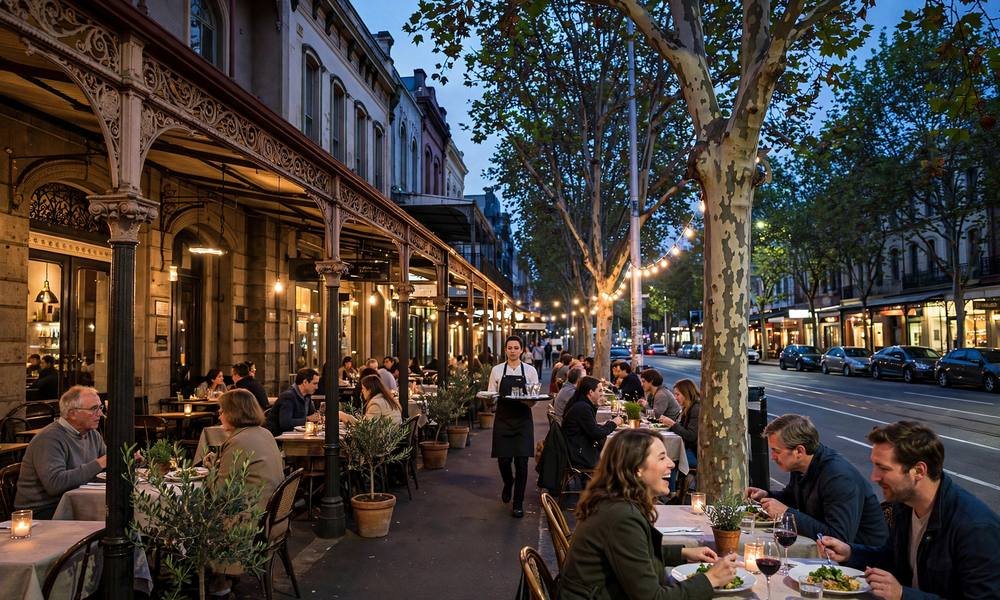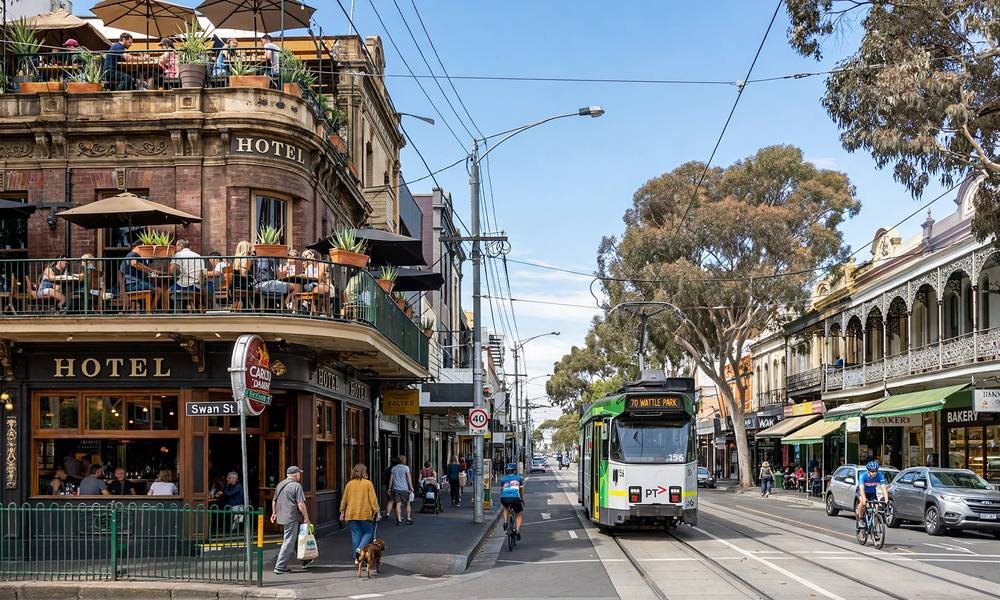

Richmond Melbourne is the inner-east suburb where Vietnamese food, factory-outlet shopping, live music and the MCG all sit within a short walk of each other. It lies about 3 km east of the Melbourne CBD, just past the MCG and Yarra Park, and it works as a half-day trip on its own or as the start and end of a match day. This guide covers the three main streets, the market, the parks, the sports precinct and how to get there, so you can plan your visit without missing the parts that make Richmond what it is.
Details checked on the official site, November 2026
Quick facts
- Location: About 3 km east of the Melbourne CBD, in Victoria, just south of Yarra Park
- Cost: Free to walk around; a meal on Victoria Street often costs less than a CBD restaurant meal
- Time needed: Half a day for the main streets; a full day if you add the MCG tour and the Saturday market
- How to get there: Train to Richmond station, or tram 70 along Swan Street and tram 109 along Bridge Road
Where is Richmond Melbourne and how to get there
Richmond sits on the Country of the Wurundjeri Woi-wurrung people of the Kulin Nation, on the south bank of the Yarra River. The suburb is a tight grid of narrow streets, workers cottages, corner pubs and red-brick warehouses, and three long shopping streets run through it from west to east. Victoria Street forms the northern edge, Bridge Road runs through the middle, and Swan Street runs along the south. Each street has a character of its own, which is why most visitors end up walking all three.
The train is the easiest way in. Richmond station is the first stop out of the city from Flinders Street, and the trip takes about 10 minutes. Six lines stop there: Alamein, Belgrave, Frankston, Glen Waverley, Lilydale and Sandringham. East Richmond station suits the eastern end of Bridge Road, North Richmond station suits Victoria Street, and West Richmond station suits the western end of the suburb. Plan your trip on the PTV journey planner before you go, and check for weekend works.
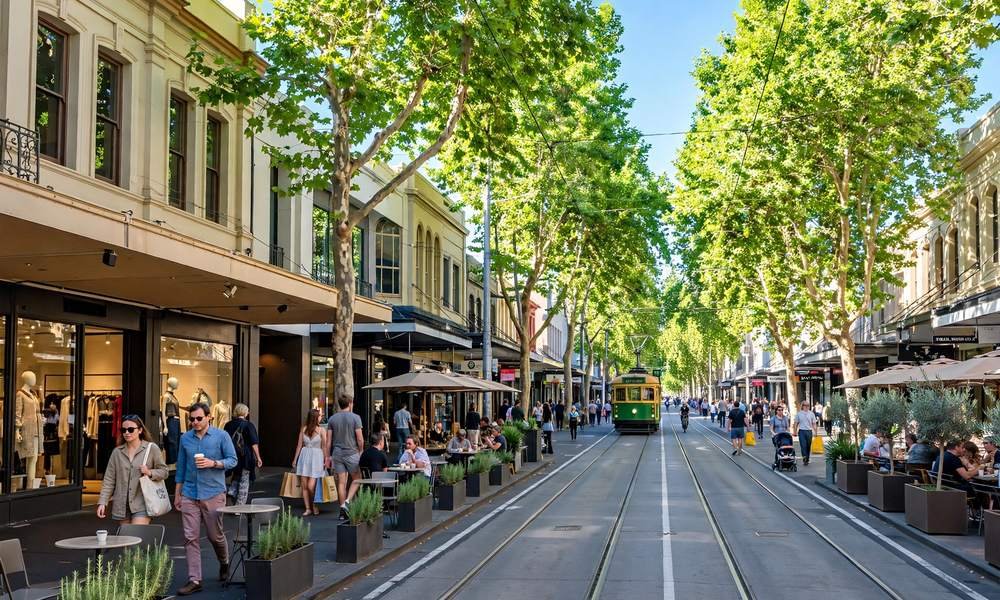
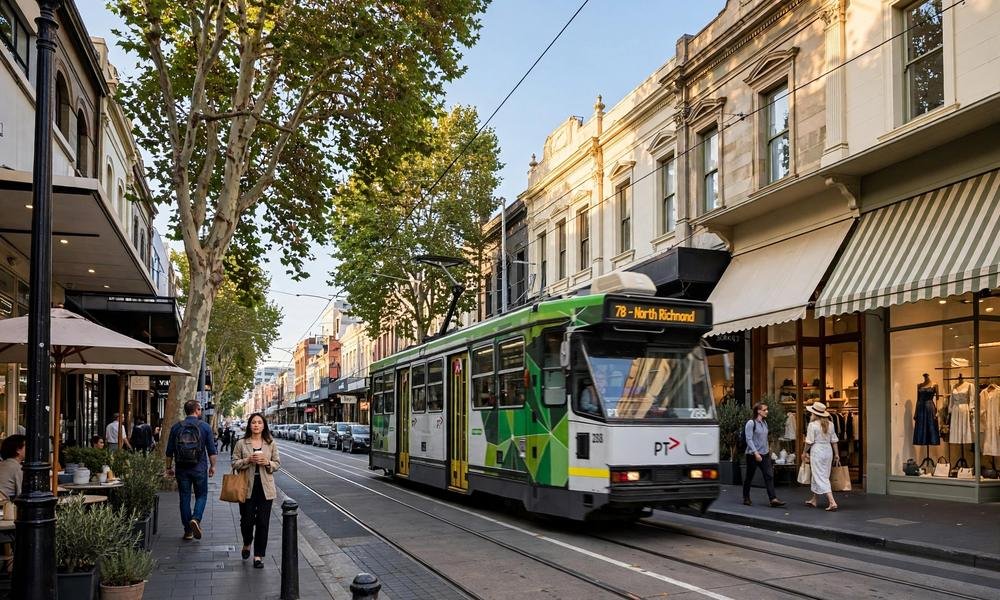
Trams work well once you are there. The 70 tram runs the full length of Swan Street, and the 109 tram runs along Bridge Road. Trams 48 and 75 also run along Bridge Road. Richmond sits outside the Free Tram Zone, so tap on with a myki card or a bank card before you ride. Melbourne trams are the simplest way to move between the strips without walking the whole suburb.
Fares are half price until 1 January 2027. A two-hour full fare costs $2.85 and the weekday daily cap is $5.70, with the discount applied automatically when you tap on. The half-price period covers all metropolitan trains, trams and buses in Victoria, so a day of hopping between Richmond and the city costs no more than one capped fare.
A 3-hour Richmond walking route
Richmond rewards a loose plan rather than a strict one, and this route links the three strips in order. Start at Richmond station and walk east along Swan Street, past the pubs and the Corner Hotel. Turn north up Church Street, where furniture stores and cafes fill the old warehouses, then turn east onto Bridge Road for the shops and the Town Hall. Finish on Victoria Street for lunch, then catch a train home from North Richmond station. The route takes about three hours at a relaxed pace, not counting lunch or shopping time.
If you are here on a Saturday, start at Gleadell Street Market instead. Do the market first, while the stalls are full, then walk the route in reverse and finish with lunch on Victoria Street. The streets are flat and mostly paved, so wear comfortable shoes and carry water on a warm day. Most of the walk is through shopfronts and side streets, which means shade is easy to find and there is always a cafe nearby when you need a break.
Victoria Street and Little Saigon
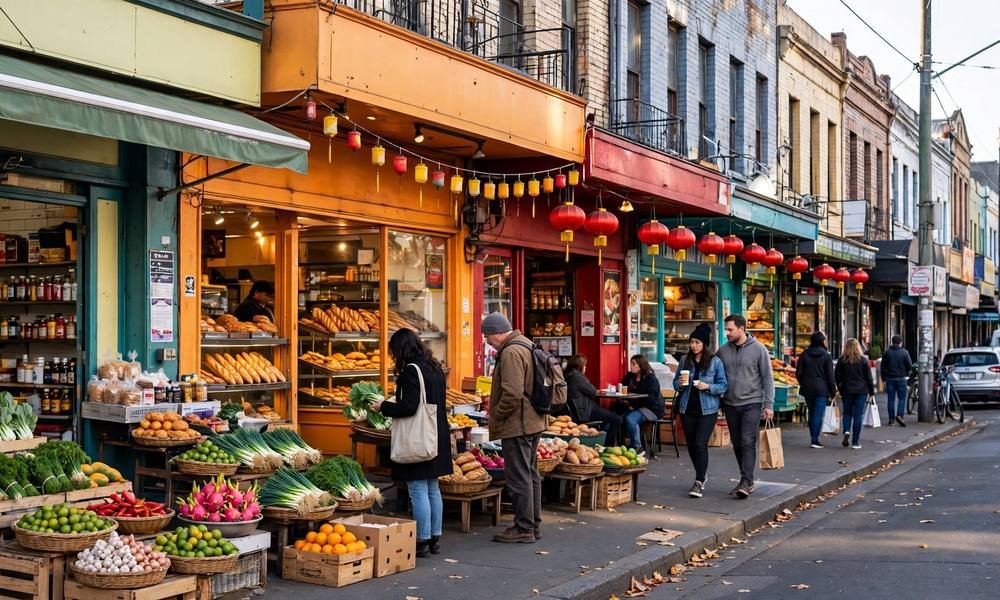
Victoria Street is the reason many people come to Richmond. Vietnamese refugees settled here from the late 1970s, and the street became Melbourne’s first large Vietnamese restaurant and grocery strip. It is still known as Little Saigon, and it runs for about a kilometre east of Hoddle Street, lined with restaurants, bakeries, butchers, fishmongers, herbalists and grocers that spill onto the footpath.
The food is the draw. Pho, banh mi and regional Vietnamese dishes cost less here than in the CBD, and the menus are generous. Walk the strip once before you decide where to eat, and notice where the queues of regulars form. Order the dishes you know and one you do not, and ask the staff to point you at a house special if you are unsure. The grocers and bakeries are part of the visit too, and they sell the herbs, sauces and breads that the restaurants use.
Each summer the street closes for a Lunar New Year festival, with lion dances, firecrackers and food stalls. If your visit falls on that weekend, come early, because the street fills fast. At the eastern end of Victoria Street, Victoria Gardens Shopping Centre holds a cinema and a food court, which suits a wet afternoon.
Bridge Road shopping
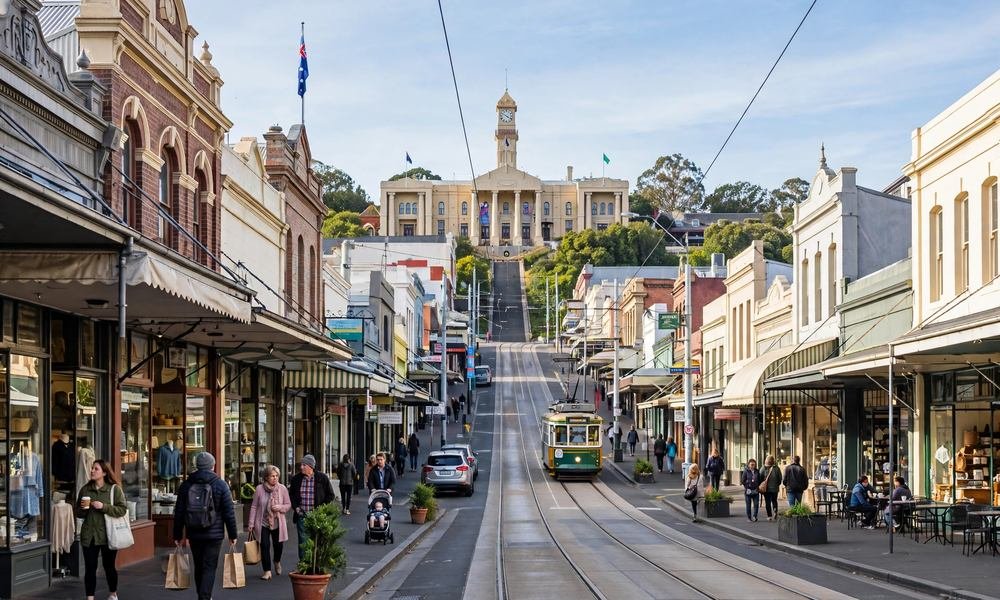
Bridge Road built its name on factory outlets. From the 1980s, clothing brands sold seconds, samples and last-season stock straight from shopfronts, and bargain hunters came from across the city. That reputation has softened as online shopping has grown, and the strip today is a mix of surviving outlets, cafes, homewares stores and a few vacant shopfronts. It is still worth a browse if you like hunting for a deal, but do not expect every shop to be an outlet.
The street is worth walking even if you buy nothing. Richmond Town Hall stands near the top of the hill, remodelled in the 1930s in an Art Deco style, and the side streets hold some of the grandest houses in the suburb. Gleadell Street Market sets up beside the Town Hall every Saturday morning, which makes Bridge Road the natural second stop on a weekend visit. Start at the Richmond end and walk east, and the 109 tram runs the full length if you want to skip a stretch.
Swan Street pubs and live music
Swan Street is Richmond’s pub and live music strip, and it comes alive late in the day. The Corner Hotel at 57 Swan Street is the anchor. It has been a live music venue since the 1940s, and its bandroom hosts local and international acts most nights of the week. The rooftop beer garden opens to the public six days a week, and the kitchen serves until 10pm. The venue opens at 4pm on Mondays, from midday Tuesday to Thursday, from midday to 3am on Fridays and Saturdays, and from midday to 1am on Sundays. Check the gig guide on the Corner Hotel site before you go, because shows can sell out. The hotel sits about 50 metres from Richmond Station, at tram stop 9 on the 70 tram.
The other pubs along the street fill with supporters before and after games at the MCG. The London Tavern Hotel, the All Nations, the Swan and the Royal Saxon are all old working-class pubs that now serve as pre-footy meeting points. On a match day, arrive early, eat on Swan Street or Victoria Street before the crowds build, and leave the pubs for the walk back after the game. Swan Street also holds a string of restaurants, from Italian at Becco to Korean fried chicken at Chimac and modern Vietnamese at New Quarter, so dinner before a gig is easy.
The MCG and the sports precinct
The Melbourne Cricket Ground sits in Yarra Park on Richmond’s northern edge, a short walk from Richmond station through the parkland. The ground is the home of Australian football in winter and cricket in summer, and on match days the streets around it fill with supporters. The walk from the station to the ground is one of the busiest pedestrian routes in the city on game days, so allow extra time and expect crowds at the station straight after the final siren.
A tour is the way to see the ground when no match is on. The MCG Tour is a 75-minute guided walk that starts at Gate 3, with departures between 10am and 3pm. Adult tickets cost $38, children aged 5 to 15 pay $17, and children under 5 go free. A combined ticket with the Australian Sports Museum costs $50 for adults and $22 for children. The museum alone costs $38 for adults, and a family ticket for two adults and two children costs $91. Tours do not run on some event days, so check the calendar on the MCG tours page before you book. Booking is essential.
Punt Road Oval sits beside the ground, and it is the home of the Richmond Football Club, the Tigers, who have trained there since the 1880s. The club’s colours are black and yellow, and you will see them on scarves, flags and pub walls all over the suburb on match days. Check the Richmond Football Club site for open training sessions if you want to watch the team train. Melbourne Park and AAMI Park sit just south of the MCG, and they host the Australian Open each January as well as concerts and other events through the year.
Cafes and coffee in Richmond
Richmond’s cafe culture is genuine, and much of it sits in converted warehouses and quiet side streets. Axil Coffee Roasters on Church Street is the flagship roastery, and it draws a queue on weekend mornings. Nativ Bakery on Swan Street bakes sourdough and pastries that sell out by late morning. Pillar of Salt and Top Paddock serve brunch, and Rowena Corner Store is a local favourite for coffee and a simple breakfast. A flat white and a window seat is a fair way to start a slow morning here.
Coffee is part of the suburb’s working day too. The converted warehouses around Cremorne hold plenty of small cafes that serve the design studios and tech offices nearby, and they are quieter than the main strips on weekdays. If you want to compare Richmond’s cafes with the rest of the city, the guide to cafes in Melbourne covers the wider scene.
Gleadell Street Market
Gleadell Street Market is Richmond’s Saturday morning institution. It runs every Saturday from 7am to 1pm on Gleadell Street, beside the Town Hall, and it has run on Saturday mornings since the 1870s. Yarra City Council operates the market, and the stalls sell fresh fruit and vegetables, bread, flowers, honey, fish and smallgoods. It is a simple, friendly market, and it is where locals do their weekly shopping.
Arrive early for the widest pick of the stalls, and bring your own bags, because the market is plastic-free. The street closes to traffic on market days, which gives the whole block a village feel. The market does not run on Christmas Day, New Year’s Day, Easter Saturday or Anzac Day when those days fall on a Saturday. Check the City of Yarra page for any changes before you go. The guide to markets in Melbourne covers more weekend markets across the city.
Parks and the Yarra River
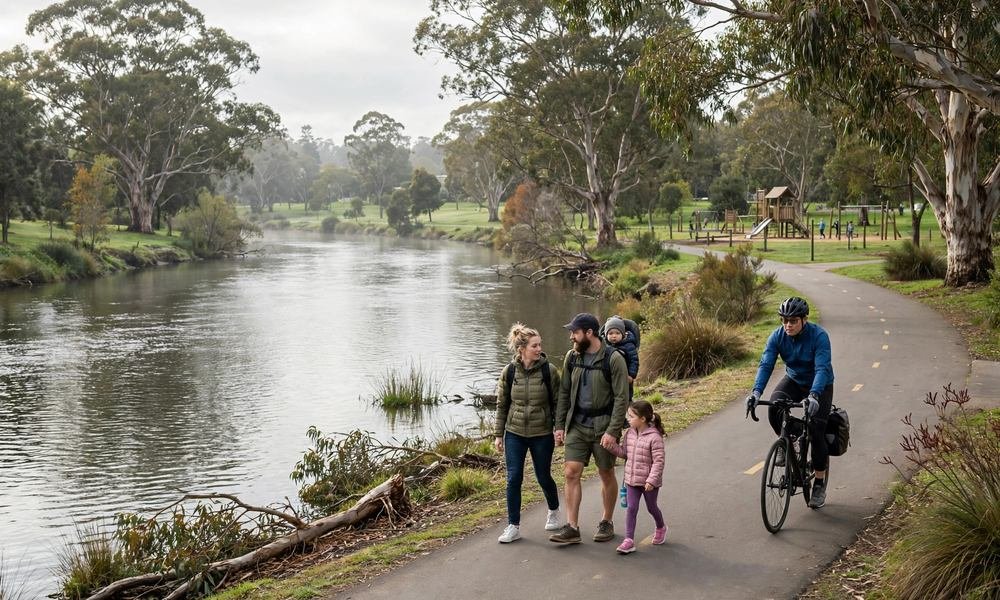
The Yarra River runs along Richmond’s southern edge, and the river trail is the suburb’s main outdoor walk. The Main Yarra Trail is flat and paved, and it is shared with cyclists, so keep to the left and watch for bikes. Start at Burnley Park and walk west toward the MCG and Yarra Park, or east toward Hawthorn and the Fairfield Boathouse. Allow 45 minutes to two hours, depending on how far you go. The trail is free and always open, and the tree cover keeps it bearable even in summer heat.
Burnley Park sits on the river at 150 Yarra Boulevard, near Burnley station. The park holds a playground, a barbecue area, a basketball court, a soccer ground, a sports oval and a dog off-leash area, with public toilets on site. It is the park locals use for picnics and weekend sport, and the riverside paths link it to the trail in both directions.
Citizens Park on Lennox Street is the smaller neighbourhood park, with an off-leash area and a playground near the Richmond Library at 415 Church Street. The library runs free programs, book clubs and community events, and it is a quiet place to rest on a hot afternoon. Herring Island sits in the Yarra just south of Richmond, and it holds nine environmental sculptures along a walking trail, with free electric barbecues and picnic shelters.
Richmond history and heritage
Richmond grew as a working-class industrial suburb. Textile mills, boot and clothing factories and breweries lined the streets in the 19th and early 20th centuries, drawn by the river and the rail links to the port. Many of those factory buildings still stand, and most have been converted into apartments, offices or studios rather than knocked down. That reuse is why the suburb still feels layered, with Victorian terraces beside red-brick warehouses.
Each wave of migration left its mark. Irish and English workers arrived in the 19th century, Greek and Italian families came after the Second World War and made Swan Street a centre of Greek life, and Vietnamese refugees from the late 1970s built the Victoria Street strip. The Nylex clock still stands on a former textile mill silo at the edge of the suburb, and its illuminated clock and thermometer are visible from the Monash Freeway. The Dimmeys clock tower on Swan Street is another local landmark from the retail era.
Cremorne, the southern pocket of Richmond, shows the latest change. Converted warehouses there now hold tech companies, advertising agencies and design studios, with a newer wave of cafes and small bars serving the daytime workers. It is a quieter corner of the suburb, and it suits a slow wander between the main strips.
Where to stay in Richmond
Richmond is a practical place to stay, and it suits sports fans most of all. The Amora Hotel Riverwalk sits beside the Yarra at the eastern end of Bridge Road, with rooms that look over the water. Apartment hotels line Swan Street and Bridge Road and cluster near the stations, and they suit families who want a kitchen and extra space. Staying here puts you a 10-minute train ride from the CBD and a short walk from the MCG, and the streets around you hold enough food and coffee that you will not need to travel for dinner. Check the hotel’s own site for current rates before you book, because prices change with the football season.
Richmond with kids
Richmond works well for families, and most of it costs nothing. The playground at Burnley Park suits toddlers through to primary school age, and the Yarra River Trail is paved and pram-friendly for family walks along the river. Citizens Park has a smaller playground and an off-leash area if you bring the dog as well.
The Richmond Recreation Centre on Gleadell Street has a swimming pool, learn-to-swim programs and family gym sessions, which suits a rainy afternoon. The Richmond Library runs free programs for children, and the Australian Sports Museum at the MCG has an interactive gallery called Game On! that keeps school-age kids busy. On match days, keep small children close around Richmond station, because the crowds move fast.
Richmond or Fitzroy: which suburb suits your trip?
Richmond and Fitzroy are both inner-city suburbs with an industrial past and a food-driven main strip, but they suit different trips. Richmond is anchored by the MCG and a genuine Vietnamese food strip, and its mood is sporty and local. Fitzroy leans harder into street art, indie bars and vintage shopping, and its mood is busier and younger. Richmond suits cheap, authentic food and a match day. Fitzroy suits a night of bar-hopping and gallery-hopping.
Many visitors treat the two as separate half-day trips rather than combining them, because both reward unhurried time on foot. If you have one day, pick Richmond for the morning market and lunch, then cross to Fitzroy for the evening. If you have only an afternoon, pick the suburb that matches your mood and save the other for another day.
Common mistakes in Richmond
Driving to a match and expecting to park near the ground is the most common mistake. The streets around the MCG close or fill early, and the car parks empty slowly after the game. Leave the car at your hotel and take the train to Richmond station instead, then walk back slowly after the game while the station clears.
Treating Bridge Road as a pure outlet strip is another mistake. The outlets are only part of the street now, and the cafes, homewares stores and design shops are the reason to walk it. If you only check the outlet racks, you will miss the part of Bridge Road that locals actually use.
Skipping Victoria Street’s grocers and bakeries is the third mistake. The restaurants get the attention, but the grocers, butchers and bakeries are half the food story on the street. Walk the whole strip, step inside a bakery, and you will understand why locals shop here every week.
Final thoughts on visiting Richmond
Richmond is not a suburb with one unmissable sight, and that is its appeal. Come for a match day, or come on a quiet weekday for the food, the market and the river walk. Start with the three streets, add the MCG tour if you love sport, and finish with lunch on Victoria Street. Australia City Guide has guides to more Melbourne suburbs if you want to keep exploring after Richmond.
Frequently asked questions about Richmond
Is Richmond walkable from the CBD?
It is a long walk rather than a short one. The walk from Flinders Street to the MCG or Bridge Road takes about 30 to 40 minutes on foot, so most visitors take the train or a tram instead. The train from Flinders Street to Richmond station takes about 10 minutes. If you want to walk part of the way, the Yarra riverside path makes for a pleasant stretch between the city and the suburb.
Is the MCG actually in Richmond?
No, the ground sits in Yarra Park, just outside the suburb boundary, but Richmond is the suburb that serves it on match days. Richmond station is the main station for the ground, Swan Street is where fans eat and drink before and after games, and Punt Road Oval sits beside the park. For a visitor, the distinction hardly matters, because the whole match-day experience runs through Richmond.
Which street is better for food, Victoria Street or Swan Street?
Victoria Street suits a cheap, casual meal, and Swan Street suits a sit-down dinner with a drink after. If you have one evening, eat on Victoria Street first, where a bowl of pho or a banh mi costs less than a CBD meal, then walk to Swan Street for a pub meal or a gig at the Corner Hotel. The two streets are a 10-minute walk apart, so you do not have to choose just one.
Can you see Richmond in half a day?
Yes, the three-hour walking route covers the three main streets and leaves time for lunch. Add the MCG tour and it becomes a full day, and add the Saturday market and you will want the whole morning. Pair an afternoon in Richmond with an evening in Fitzroy or the CBD if you want a second suburb in the same day.