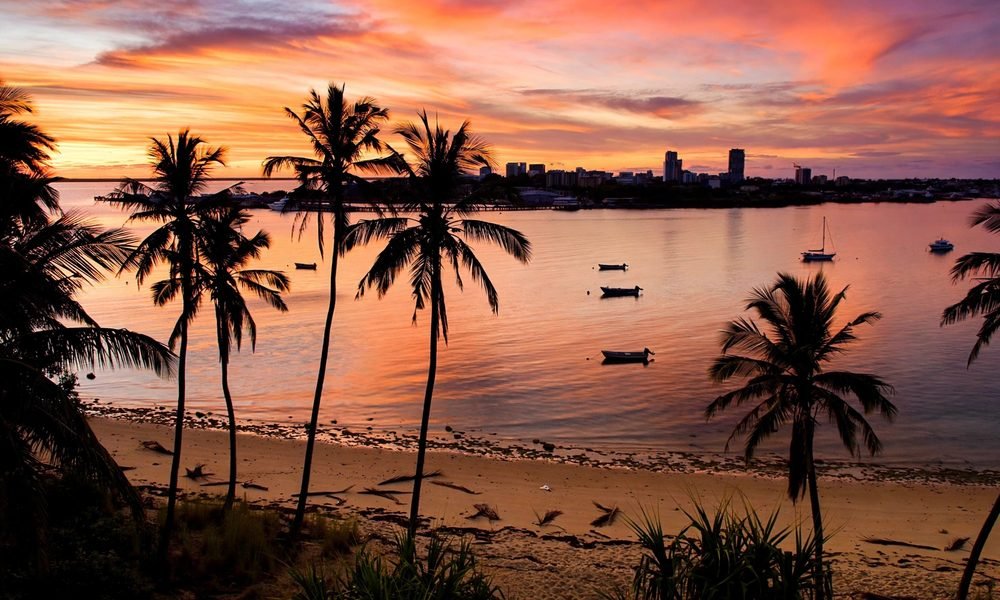

Darwin doesn’t feel like the rest of Australia. It’s tropical, laid-back, and closer to Asia than to Sydney. Palm trees line the streets, the air stays warm through winter, and the sunsets over the harbour are the kind people write home about.
Most travellers use Darwin as the jumping-off point for the Top End, and that’s fair enough. But give the city itself a couple of days and you’ll find sunset markets on the beach, crocodiles in the city centre, and war history you can walk through. This guide covers the best things to do in Darwin, whether you’re passing through or settling in. And as always, the team at Australia City Guide keeps it practical: what to do, when to go, and what to skip.
Darwin Sunsets: Mindil Beach and Sunset Markets
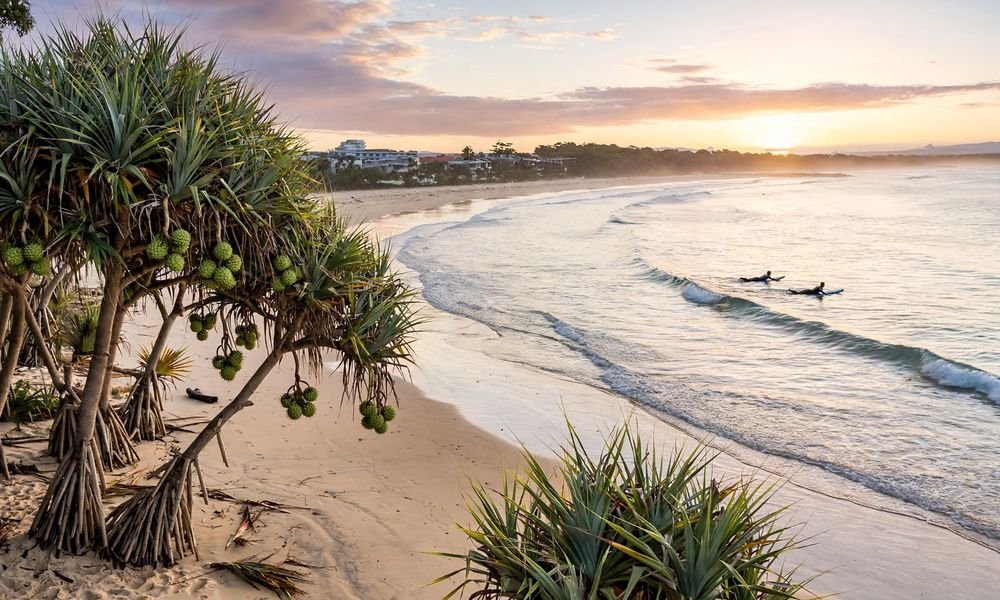
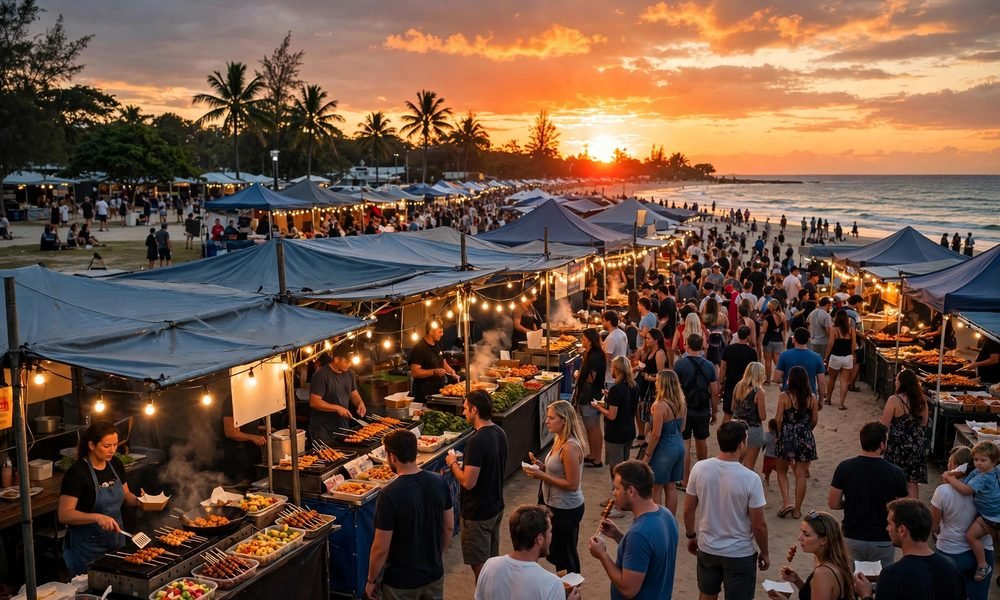
Mindil Beach is Darwin’s front-row seat for the best free show in town. Every dry-season evening, locals and visitors gather on the sand, picnic rugs out, cold drinks in hand, and watch the sun drop straight into the Timor Sea. The sky turns orange, then pink, then a deep purple. Get there about 30 minutes before sunset to grab a good spot.
On Thursday and Sunday evenings from May to October, the foreshore behind the beach turns into the Mindil Beach Sunset Markets. Dozens of food stalls serve everything from laksa and dumplings to kangaroo burgers and fresh tropical fruit. There are craft stalls, buskers, and a buzzing crowd that feels more like Southeast Asia than Australia.
Come hungry, bring cash or a card, and plan to stay for the sunset. Eat first, shop after, then walk down to the water as the sky changes colour. It’s the single most Darwin thing you can do.
Crocosaurus Cove Darwin: Crocodile Encounters and Cage of Death
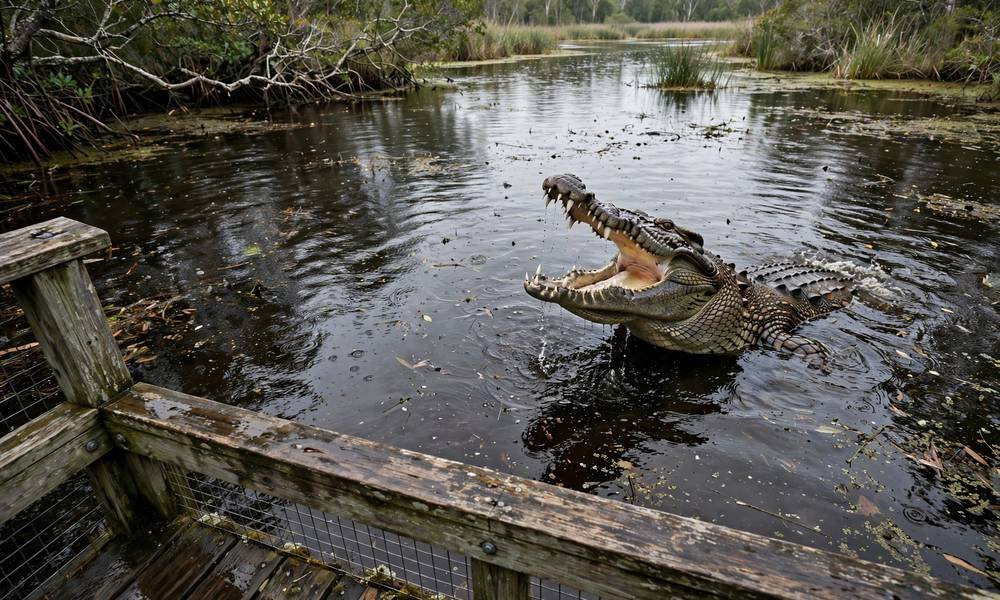
Right in the middle of the city on Mitchell Street sits Crocosaurus Cove, Darwin’s crocodile attraction. It’s home to some of Australia’s largest saltwater crocodiles, and you can watch them being fed from behind glass or on a raised platform. The big males here are genuinely huge, and seeing one launch out of the water at feeding time stays with you.
The star experience is the Cage of Death: you’re lowered into the croc enclosure in a clear acrylic cage while a 5-metre saltie circles around you. It’s not cheap, and it sells out in the dry season, so book ahead if it’s on your list. Even the standard entry is worth it for the reptile house and the feeding sessions, and kids love the small croc encounters.
Museum and Art Gallery of the Northern Territory (MAGNT)
The Museum and Art Gallery of the Northern Territory (MAGNT) sits on the waterfront at Bullocky Point, and general entry is free. It’s the best rainy-day or scorching-afternoon activity in Darwin, and it’s genuinely good.
Start with the Cyclone Tracy exhibit, which tells the story of the Christmas 1974 cyclone that flattened the city. The darkened room with the original sound recordings is chilling. Then find Sweetheart, the famous 5.1-metre saltwater crocodile, preserved and on display. The Aboriginal art galleries are strong too, with works from across the Top End and the Tiwi Islands.
Give it two hours. The cafe overlooks the water, which makes a fine lunch stop.
Swim Safely at the Darwin Waterfront
Here’s the thing about Darwin: you can’t safely swim at most beaches. Saltwater crocodiles and marine stingers live in these waters, and the warning signs are there for a reason. The Darwin Waterfront solves this with two safe swimming spots right in the city.
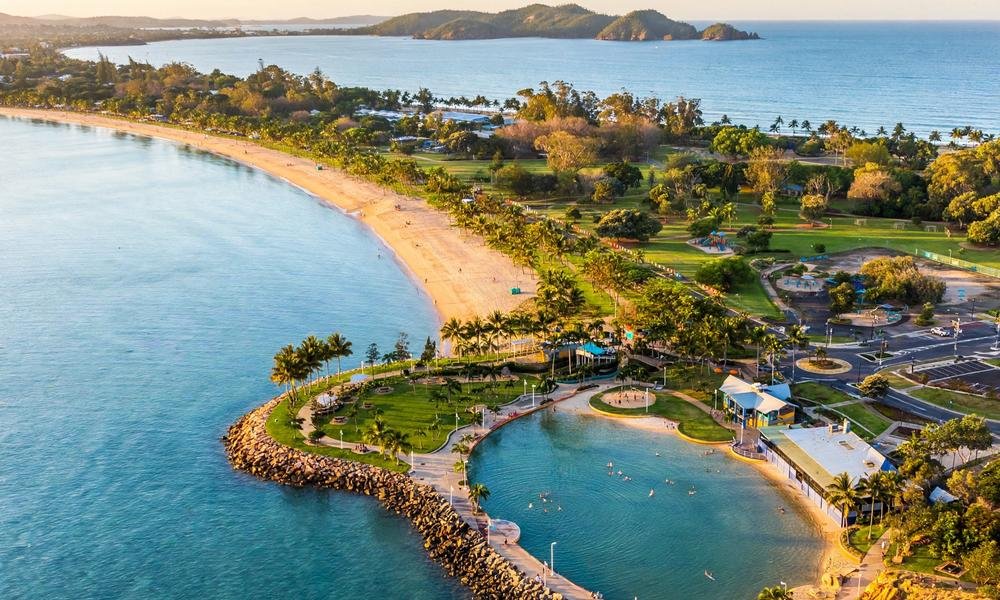
The Recreation Lagoon is a netted, stinger-free swimming area with a sandy beach, separated from the harbour so you can swim without worry. Next to it, the Wave Lagoon is a man-made wave pool with inflatable tubes and a shallow end for kids. Entry fees apply to the Wave Lagoon, and both spots get busy on dry-season weekends, so arrive early.
The waterfront precinct around the lagoons has restaurants, lawns, and shade sails, which makes it an easy half-day with kids.
Darwin WWII History: Oil Storage Tunnels and Military Museum
Darwin was bombed by Japanese forces on 19 February 1942, and the city wears that history openly. The WWII Oil Storage Tunnels, dug into the cliffs near the waterfront, are open for self-guided walks through the cool, echoing tunnels where fuel was once stored. The displays inside explain Darwin’s wartime role without overdoing it.
For the full story, head to the Darwin Military Museum at East Point. It sits on an original wartime site with gun emplacements still in place, and its exhibits cover the 1942 raids and the years that followed. Combine it with a walk around the East Point headland, which has ocean views and a small beach.
More Things to Do in Darwin
A few smaller experiences that round out a Darwin trip nicely:
- Parap Village Markets on Saturday mornings are Darwin’s local food market, smaller and more local-feeling than Mindil, with great laksa and tropical fruit.
- Aquascene at Doctors Gully lets you hand-feed fish at high tide. Check the tide times and season schedule before you go, because it only runs when conditions suit.
- Deckchair Cinema screens films under the stars during the dry season. Bring a picnic, hire a deckchair, and watch the sun set before the movie starts.
- George Brown Darwin Botanic Gardens are free and full of tropical plants, palms, and a rainforest gully. Go early in the morning when the light is soft and the heat is bearable.
- Stokes Hill Wharf is a historic wharf with restaurants over the water and sunset views. It’s where many harbour cruises depart.
How Many Days Do You Need in Darwin?
Two full days covers the city comfortably: one for the markets, waterfront, and Crocosaurus Cove, and one for MAGNT, the WWII sites, and a sunset cruise. Add a third day and you can fit in a Litchfield day trip or a lazy morning at the botanic gardens.
If you’re using Darwin as a base for the Top End, plan five to seven days total. That gives you the city plus Litchfield National Park and Kakadu National Park, which both deserve more than a rushed visit.
The Best Time to Visit Darwin
Darwin has two seasons, and they couldn’t be more different.
The dry season (May to October) is the time to come. Days are sunny and warm, humidity is low, and everything is open: the Mindil markets, the Deckchair Cinema, and most tours run at full schedule. This is peak season, so book accommodation and popular tours ahead.
The wet season (November to April) is hot, humid, and dramatic. Afternoon storms roll in, waterfalls in the national parks are at their most powerful, and prices drop. But some roads and tours close, humidity is relentless, and you’ll need to plan around the rain. The build-up months of October and November are the hardest: hot, sticky, and stormy without the relief of real rain.
For a first trip, aim for May to September. You’ll get the classic Darwin experience.
Getting Around Darwin
The city centre is compact and easy to walk. Mitchell Street, the Esplanade, and the waterfront are all within comfortable walking distance of each other. Public buses cover the suburbs and the airport run.
For day trips you’ll want a car. Litchfield, the jumping croc cruises, and the route toward Kakadu are all self-drive friendly, and rental prices are usually reasonable outside peak season. Tours also run to all the major day-trip spots if you’d rather not drive.
Where to Stay in Darwin
First-timers do best in the city centre around Mitchell Street and the Esplanade: you’re walking distance from restaurants, the waterfront, and Crocosaurus Cove. The Esplanade side has the harbour views and a slightly quieter feel. The waterfront precinct suits families who want the lagoons on their doorstep. Darwin’s accommodation ranges from backpacker hostels to resort-style hotels, and dry-season prices climb, so book early.
The Best Day Trips from Darwin
Darwin’s real superpower is what sits around it. These are the day trips worth your time:
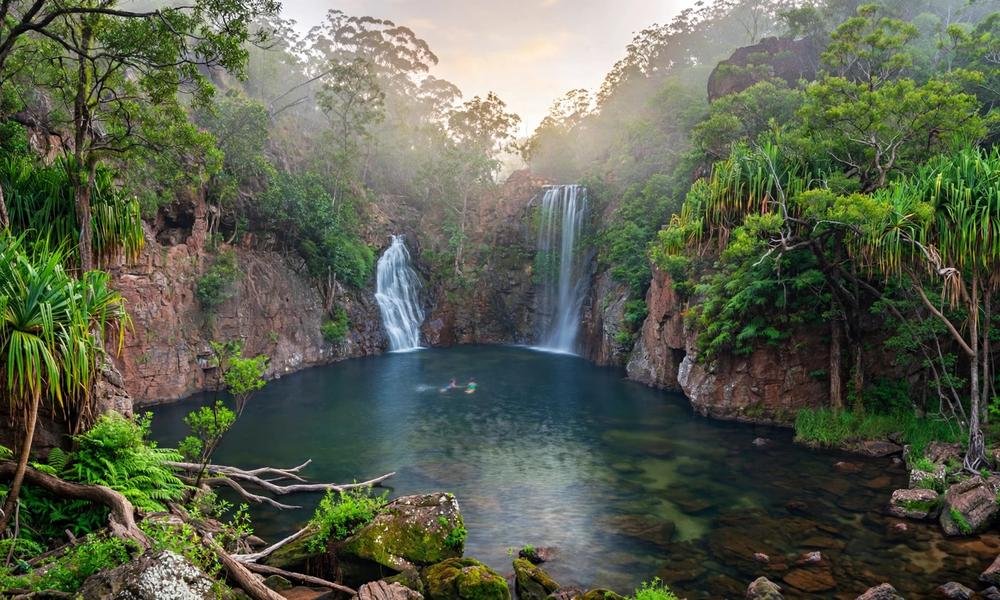
- Litchfield National Park, about 90 minutes south, packs waterfalls you can swim under (Florence Falls and Wangi Falls), the Buley Rockhole swimming holes, and giant magnetic termite mounds into an easy day trip.
- Kakadu National Park, a few hours east, is Australia’s largest national park and a full experience on its own: ancient rock art, wetlands full of birds and crocs, and waterfalls. It deserves two to three days, but day tours run from Darwin if time is tight.
- Jumping crocodile cruises on the Adelaide River, about an hour east, get you close to wild salties as they launch out of the water for food. It’s touristy and completely thrilling.
- The Tiwi Islands (Bathurst and Melville) run day trips by ferry or light plane, with Aboriginal art centres and a culture quite different from the mainland.
Darwin Tours Worth Booking Ahead
A few Darwin experiences sell out in the dry season, so lock these in before you arrive:
- A sunset sailing cruise on Darwin Harbour from Stokes Hill Wharf. Two hours, open water, and the sunset does the rest.
- A jumping crocodile cruise on the Adelaide River, usually combined with a stop at Fogg Dam or a wildlife park.
- A Litchfield day tour with swimming stops, if you’d rather not self-drive.
- Cage of Death at Crocosaurus Cove, if swimming with a crocodile is your idea of a good time.
- Deckchair Cinema tickets for dry-season weekends.
Essential Darwin Tips: What to Know Before You Go
- Crocodiles are real here. Never swim in rivers, estuaries, or beaches with warning signs. The signs are not decoration.
- The sun is brutal year-round. Hat, sunscreen, and water are non-negotiable, even on cloudy days.
- Start day trips early. Distances are bigger than they look on the map, and the heat builds through the day.
- Book dry-season accommodation early. Darwin is small and May to September fills up.
- Check seasonal schedules. Markets, cinemas, and some tours only run in the dry season.
FAQs About Visiting Darwin
Is Darwin worth visiting?
Yes, especially as the gateway to the Top End. The city itself has enough for two to three days of markets, history, crocodiles, and sunsets, and it sits within easy reach of Litchfield and Kakadu.
Can you swim at Darwin’s beaches?
Not safely. Saltwater crocodiles and marine stingers make most beaches unsafe for swimming. Use the netted Recreation Lagoon or the Wave Lagoon at the Darwin Waterfront, or hotel pools.
How many days do you need in Darwin?
Two days covers the city. Plan five to seven days if you want to add Litchfield and Kakadu day trips or overnights.
What is Darwin known for?
Sunsets over the harbour, the Mindil Beach markets, saltwater crocodiles, its WWII bombing history, and its tropical, multicultural character. It’s also the closest Australian capital to Asia.
When is the wet season in Darwin?
Roughly November to April, with the heaviest rain from December to March. The dry season runs May to October and is the best time for most visitors.
Keep exploring:
Darwin is just the start of the Northern Territory. Head east to Kakadu National Park for ancient rock art and wetlands, or go south to the Red Centre with our guide to things to do at Uluru. The Top End rewards travellers who keep going.