
If you only ever do one road trip in Australia, make it this one. The Red Centre Way links Alice Springs, the gorges of the West MacDonnell Ranges, the cliffs of Kings Canyon, and the red icons of Uluru and Kata Tjuta into a single drive of about 1,100 kilometres. At a comfortable pace it takes six days, and every single day gives you something new to stop for. This guide walks you through the whole route day by day, so you can plan it with confidence.
What the Red Centre Way Actually Is
The Red Centre Way is a self-drive touring route through the middle of Australia. It starts in Alice Springs, runs west through Tjoritja / West MacDonnell National Park, turns south to Kings Canyon in Watarrka National Park, then heads on to Uluru-Kata Tjuta National Park before looping back to Alice Springs along the Stuart Highway.
Almost the whole loop is sealed bitumen, which is why ordinary hire cars handle it without trouble. The one famous exception is the Mereenie Loop, a shorter unsealed shortcut between the West MacDonnells and Kings Canyon. It needs a 4WD and a permit, so most first-timers skip it and take the sealed road instead.
You can drive the route in either direction. Most people start in Alice Springs because that is where the airport, the car hire depots, and the big supermarkets are. Stocking up there is half the battle won.
The Stops That Make This Drive Famous
Three big names carry this route, and each one deserves a full day. Here is what you are driving toward.
The West MacDonnell Ranges
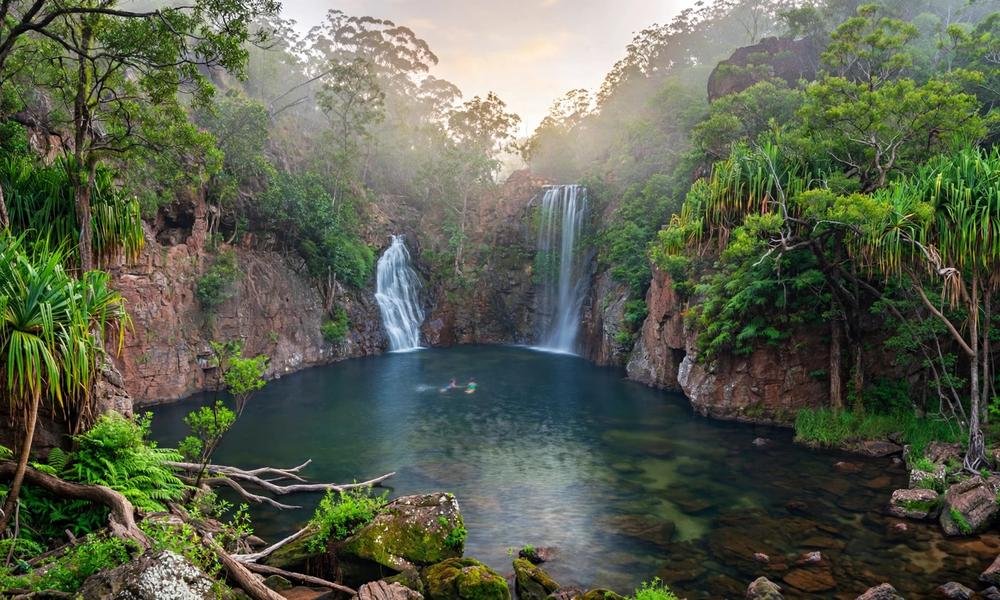
The West MacDonnells are the quiet surprise of the trip. This long line of red ranges runs west of Alice Springs and hides a chain of gaps, gorges, and waterholes. Simpsons Gap is the closest to town and a good first taste. Standley Chasm is a narrow split in the rock that glows red at midday. Ormiston Gorge and Ellery Creek Big Hole both hold deep, cold waterholes that feel unreal after a hot walk.
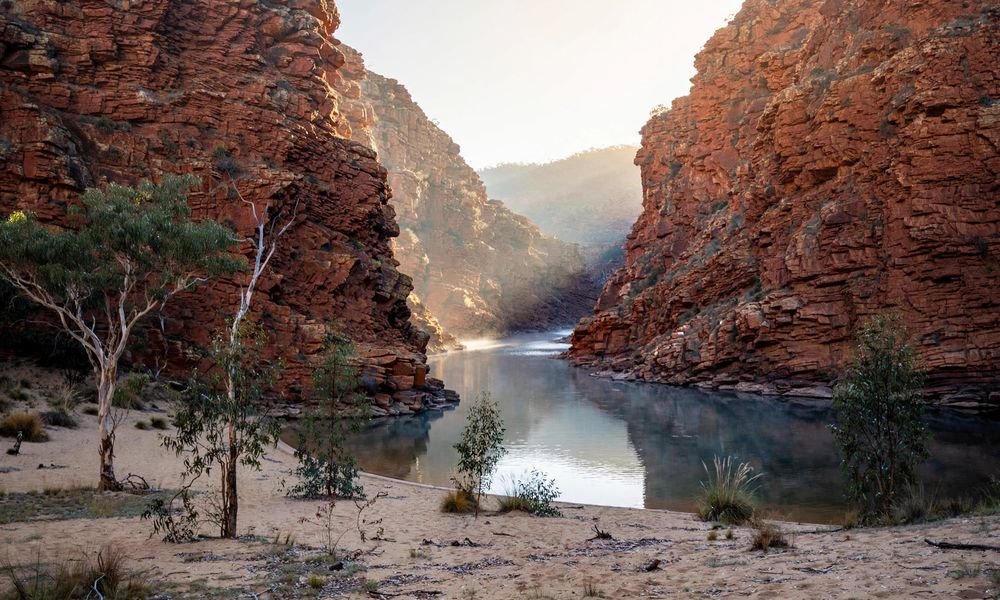
You could rush the ranges in a day, but they reward slow travellers. A short walk at each stop, a swim where the rangers say it is safe, and you will understand why locals rate this stretch so highly.
Kings Canyon
Two days in, the landscape turns serious. Kings Canyon is a giant sandstone canyon with walls that drop hundreds of metres to a valley floor of palms and ferns. The Rim Walk is the main event: a roughly six-kilometre loop along the cliff edge that takes three to four hours with stops.
Halfway around, the track drops into the Garden of Eden, a permanent waterhole ringed by ancient cycads. It feels like a different world down there, cool and green while the desert bakes above. If the full rim walk sounds like too much, the shorter Creek Walk along the canyon floor is an easy stroll with big views of the walls.
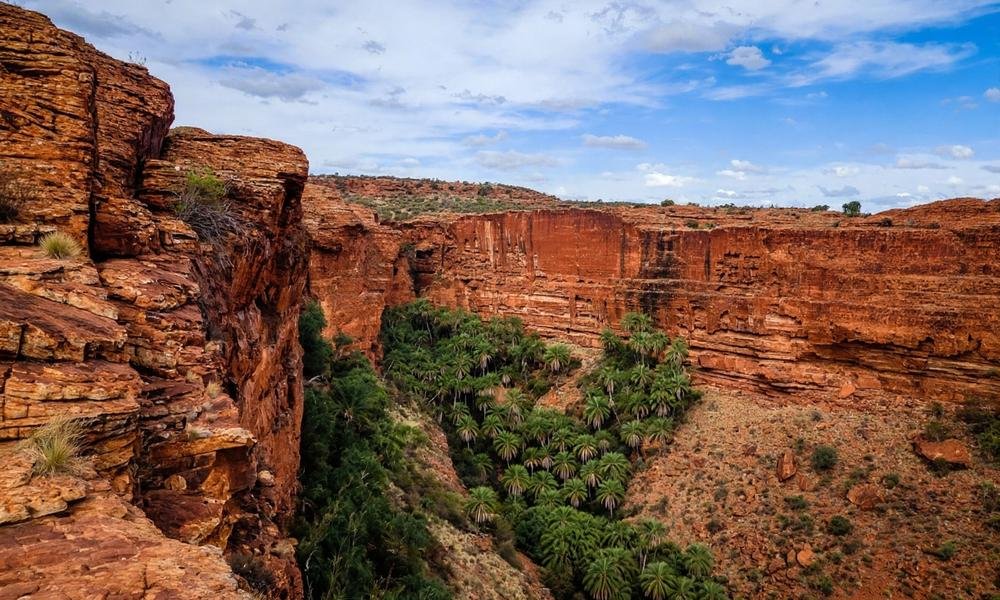
Stay for sunset if you can. The low light turns the canyon walls a deep, glowing red.
Uluru and Kata Tjuta
And then the grand finale. Uluru rises 348 metres above the plain, and nothing prepares you for how big it feels up close. The base walk circles the whole rock, and each section has its own story, waterholes, and rock art. Give it at least half a day. For the full rundown, see our guide to things to do at Uluru.
Just west of Uluru, Kata Tjuta is a cluster of huge red domes with its own walking tracks. The Valley of the Winds walk threads between the domes and finishes at lookouts over the desert. Many travellers say Kata Tjuta moved them even more than Uluru, because it is quieter and the scale is hard to grasp.
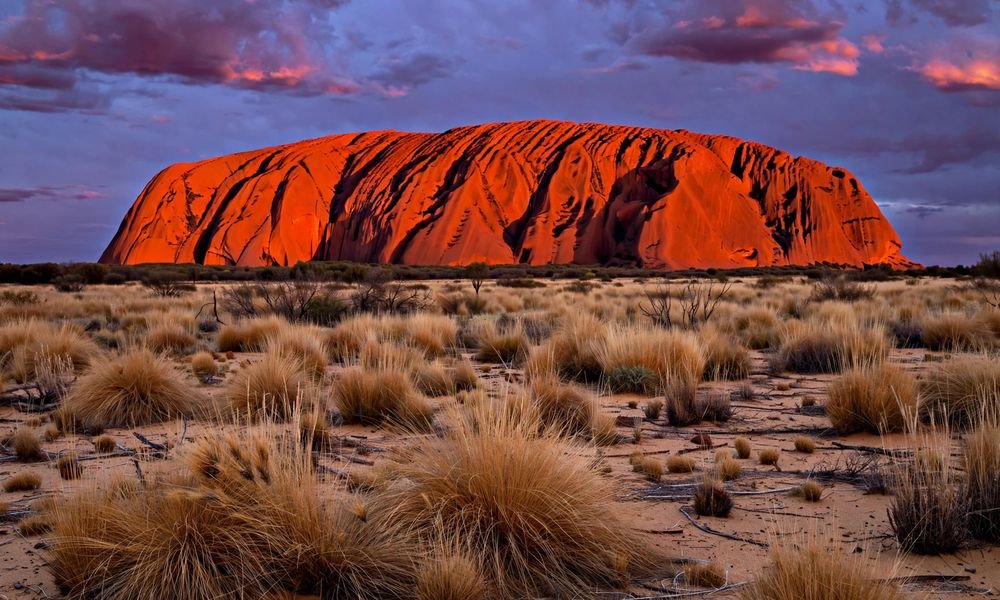
Two icons, one park, and sunsets you will talk about for years.
How Many Days Do You Need for the Red Centre Way?
Six days is the sweet spot, and it matches the length the Northern Territory’s official route suggests. That gives you one full day each for the West MacDonnells, Kings Canyon, Uluru, and Kata Tjuta, plus the driving days and a night in Alice Springs at the start.
Five days works if you are a confident driver and start your walks at sunrise, but you will feel rushed at Kings Canyon or Uluru. Seven or more days lets you slow down and fit in side trips like Palm Valley. Anything under five days means skipping one of the big stops, which defeats the purpose of the drive.
The 6-Day Red Centre Way Itinerary
Here is the day-by-day plan that suits most travellers. Daily drives stay between two and five hours, which leaves plenty of time for walks, swims, and long lunches.
Day 1: Arrive in Alice Springs
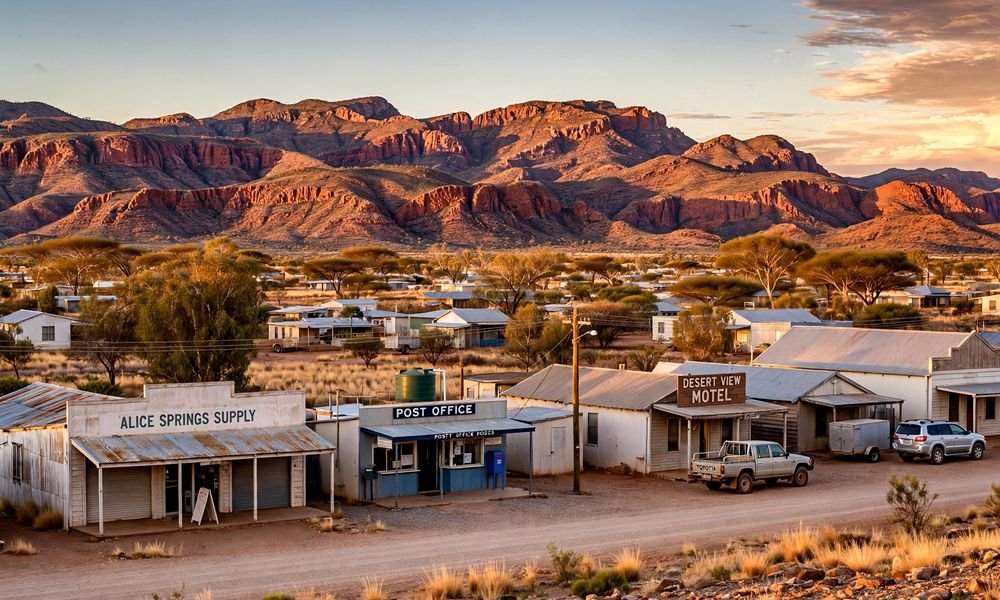
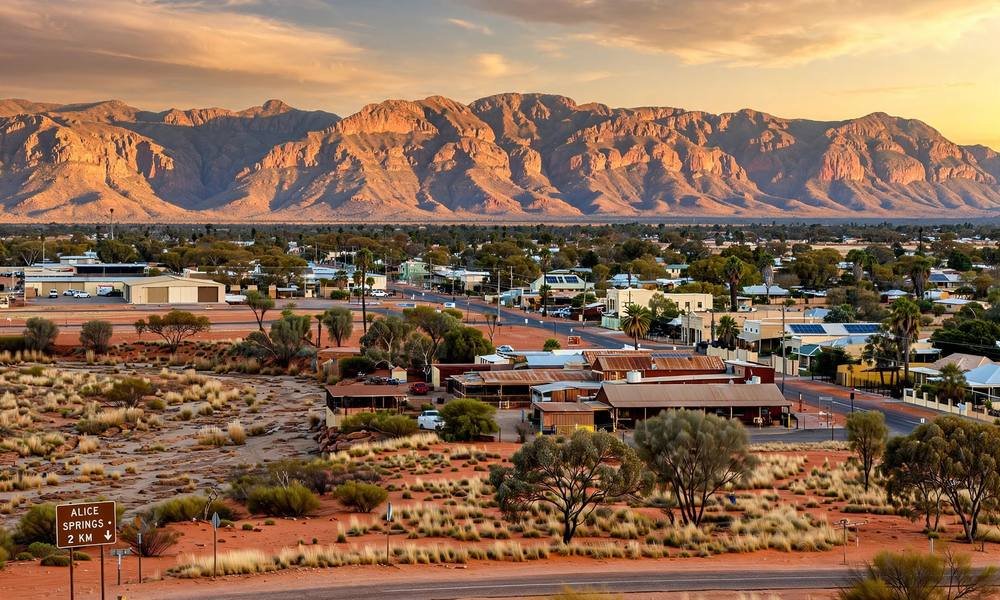
Land, pick up your hire car, and check into your accommodation. Spend the afternoon getting your bearings: the town centre galleries, Todd Mall, and a walk up ANZAC Hill for your first desert sunset. Then do the big supermarket run: water, snacks, sunscreen, and anything you forgot to pack. Our guide to things to do in Alice Springs covers the town in detail.
Day 2: The West MacDonnell Ranges
Head west into the ranges for a full day of gorges and waterholes. Simpsons Gap first, then Standley Chasm around midday when the light hits the walls. Cool off with a swim at Ellery Creek Big Hole, and finish at Ormiston Gorge before driving back to Alice Springs for the night. It is a full day, but none of the drives between stops are long.
Day 3: Alice Springs to Kings Canyon
This is the longest driving day, around five hours on sealed roads via the Stuart Highway and Luritja Road. Leave early and treat the drive as part of the experience: the country opens up the further south you go. Arrive in the afternoon, stretch your legs on the easy Creek Walk, and find a spot to watch the sun go down on the canyon walls.
Day 4: Kings Canyon to Uluru
Start the Rim Walk at sunrise to beat the heat and the crowds. Three to four hours later you will be back at the car park with the hardest walk of the trip behind you. Then point the car toward Uluru, about three to four hours away. Stop at Kings Creek Station on the way if a camel ride or a famous camel burger sounds good. Arrive in time for sunset at the Uluru viewing area, then settle into Yulara for the night.
Day 5: Uluru
Give the rock a full day. Walk part or all of the base track in the cool of the morning, visit the Cultural Centre to understand the Anangu stories behind what you are seeing, and rest through the midday heat. Come back for sunset, then head out after dark for the Field of Light or the Wintjiri Wiru light show. Both book out in peak season, so reserve ahead.
Day 6: Kata Tjuta, Then Back to Alice Springs
Start early with the Valley of the Winds walk at Kata Tjuta while the air is still cool. Then it is the long drive back to Alice Springs via the Stuart Highway, around four to five hours, with a fuel and leg-stretch stop at Erldunda or Curtin Springs. If you would rather not backtrack, you can end the trip at Yulara instead and fly home from Ayers Rock Airport.
Best Time of Year to Drive the Red Centre Way
The cooler months, roughly April to September, are the best time. Days are mild, the light is beautiful, and the big walks are comfortable. Nights get cold, and winter temperatures can drop near freezing, so pack a warm layer even if the days feel perfect.
Summer, from October to March, is seriously hot, with daytime temperatures regularly climbing into the 40s. Rangers can close the walks when the heat gets dangerous, and long drives in that heat are draining. If summer is your only option, start every walk at sunrise, carry extra water, and plan quiet middays in the shade or the pool.
Where to Stay Along the Red Centre Way
You have three main bases: Alice Springs at the start, Kings Canyon in the middle, and Yulara near Uluru. Alice Springs has the widest choice and the lowest prices: backpacker hostels, motels, and resorts. Our guide to where to stay in Alice Springs breaks down the best areas.
At Kings Canyon, the resort and the nearby station stays keep you close to the Rim Walk trailhead, which matters when you are starting at sunrise. At Uluru, Yulara is the only town, built around the Ayers Rock Resort, so it pays to book early in the cooler months. Campers are well looked after too: there are campgrounds and holiday parks at each stop, and several cost far less than a motel room.
Cars, Fuel and Outback Driving Rules
A standard 2WD hire car is fine for the sealed route, which covers every major stop. You only need a 4WD if you want to take the Mereenie Loop shortcut, and even then you need a permit from the Central Land Council first.
Fuel up whenever you get the chance. Roadhouses at Erldunda and Curtin Springs break up the long legs, but the gaps between pumps are bigger than most visitors expect. A good rule: if your tank is half empty and you see fuel, stop.
Drive in daylight. Kangaroos and camels wander onto the roads at dawn and dusk, and hitting one at speed is dangerous. If an animal appears, brake firmly and stay in your lane instead of swerving. Carry several litres of water per person, keep your phone charged, and download offline maps before you leave Alice Springs, because coverage is patchy out here.
Tours Worth Booking Before You Go
You can do the whole Red Centre Way self-guided, but a few tours are worth the money. A guided walk at Uluru with an Anangu guide adds the cultural stories you would miss on your own. The Field of Light installation and the Wintjiri Wiru light and sound show both run after dark at Uluru and sell out in peak season.
Kings Creek Station, between Kings Canyon and Uluru, runs camel rides, quad bike tours, and helicopter flights over the ranges. A short scenic flight is the only way to grasp the true scale of this country, and it is a popular splurge for a special trip.
Must-Knows Before You Hit the Road
A few practical points that catch first-timers out:
- You need a park entry pass for Uluru-Kata Tjuta National Park. One pass is valid for several days, so it covers your whole visit. Check current prices before you go.
- Climbing Uluru has been closed since 2019 at the request of the Anangu traditional owners. Respect the closure and every other cultural request you see on signs.
- Drones are not allowed in the national parks.
- Some sites are sacred, and photography is restricted in certain areas. The signs are clear, so follow them.
- If you take the Mereenie Loop, sort out your permit before you leave Alice Springs.
- Rain can close unsealed roads quickly. Check road conditions if there has been weather about.
FAQs About the Red Centre Way Itinerary
Is the Red Centre Way fully sealed?
Almost. The standard route between Alice Springs, Kings Canyon, and Uluru is sealed bitumen all the way. The only unsealed section is the Mereenie Loop shortcut, which most travellers skip.
Do I need a 4WD for the Red Centre Way?
No. A 2WD handles the sealed route without any trouble. You only need a 4WD if you plan to drive the Mereenie Loop or other unsealed side tracks.
Can I drive the Red Centre Way in three or four days?
You can cover the distances, but you would have to skip the walks and the slow stops that make the trip special. Six days is the recommended minimum for the full loop.
Which direction should I drive the Red Centre Way?
Either works. Alice Springs to Uluru is the most common direction, and it saves the biggest icon for last. Starting at Uluru suits travellers who fly into Ayers Rock Airport.
How much does a Red Centre Way trip cost?
It depends on your style. The big costs are car hire, fuel, and accommodation. Camping and self-catering keep it affordable, while resort stays and scenic flights push the budget up. Book the car and the rooms early for the best prices.
Final Thoughts on Driving the Red Centre Way
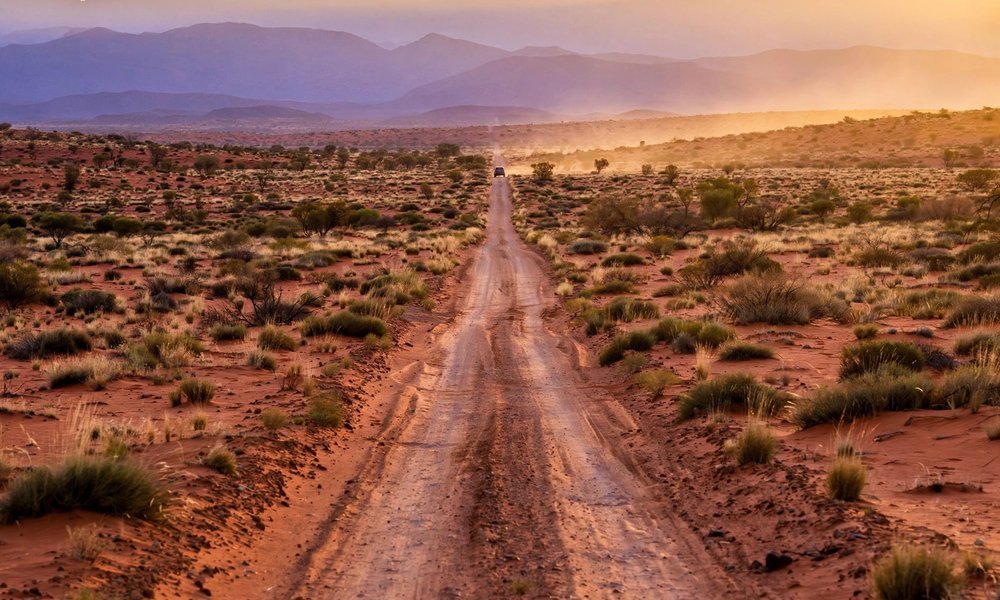
The Red Centre Way earns its reputation. It is one of those rare drives where the road itself is the attraction: red dirt, empty horizons, and a new wonder around every bend. Give it six days, start your walks early, and respect the country you are travelling through. Plan the rest of your Northern Territory trip with the free travel guides here at Australia City Guide, and you will arrive ready for the best week of driving in the country.
Keep exploring:
- Things to do at Uluru: the full guide to the rock, the walks, and the sunsets.
- Things to do in Alice Springs: galleries, lookouts, and desert wildlife in the Red Centre’s capital.
- Where to stay in Alice Springs: the best areas and accommodation for every budget.
- Things to do in Kakadu National Park: your next Northern Territory adventure, up in the Top End.