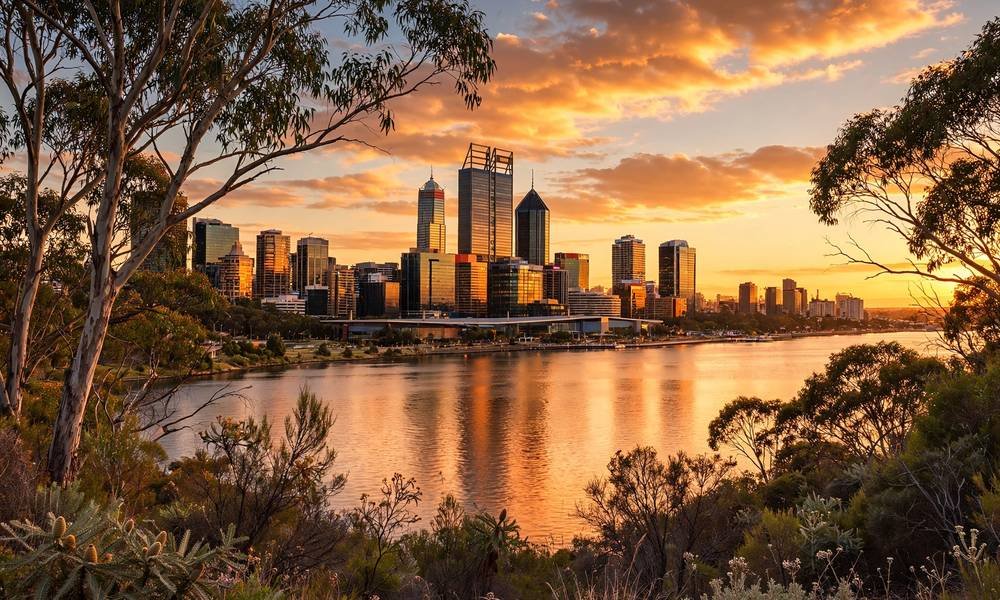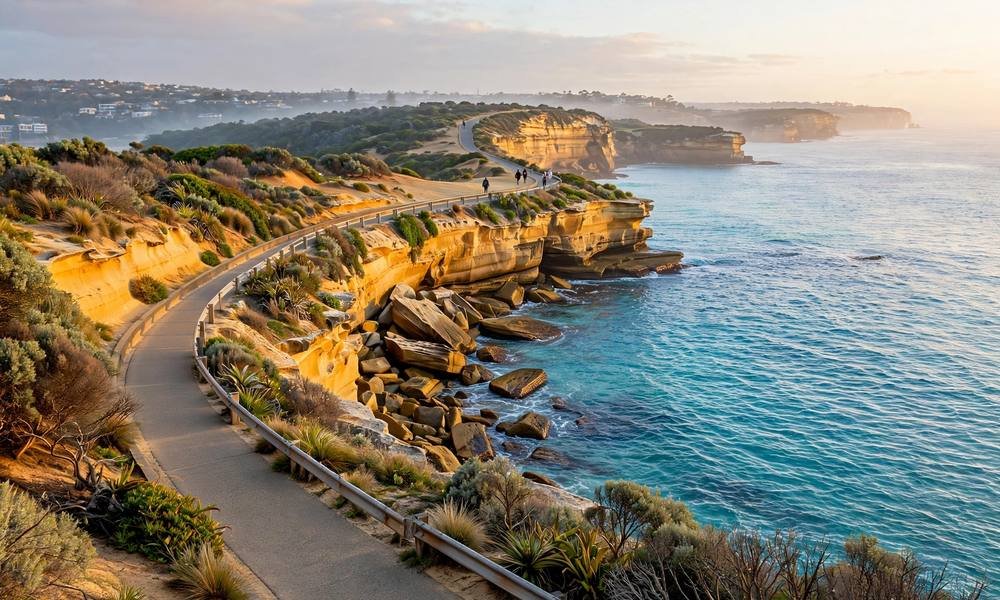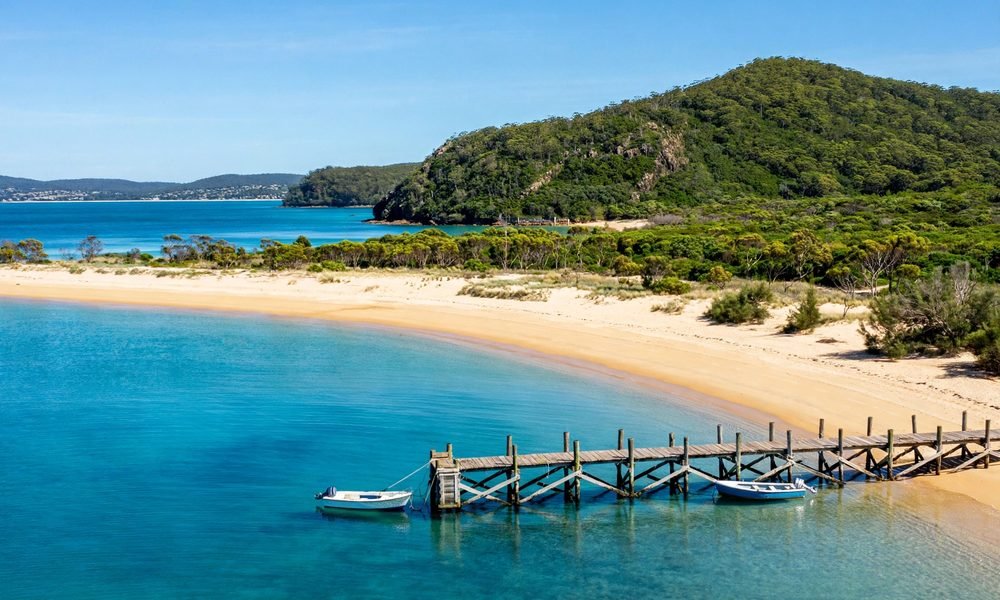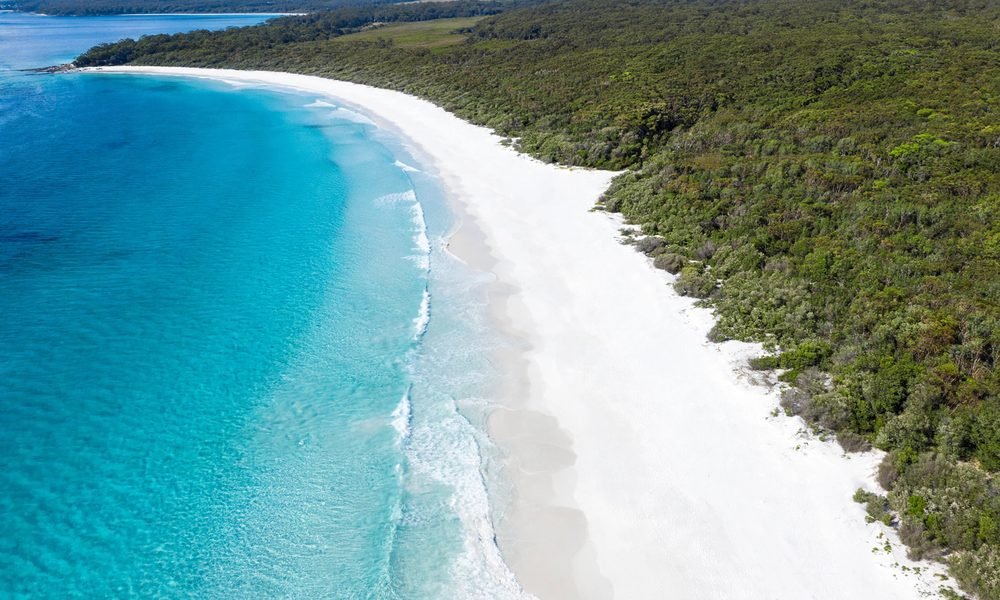
Sydney to Brisbane is about 940 kilometres by the Pacific Highway, and you can drive it in around 9 hours without stopping. But almost nobody should. This is one of Australia’s great coastal drives, and the whole point is the stops along the way: surf beaches, a famous lighthouse, whale watching towns, and the Gold Coast skyline rising out of the haze. At Australia City Guide, we think this trip deserves at least five days, and we’ll show you exactly how to do it. Sydney is the capital city of New South Wales.
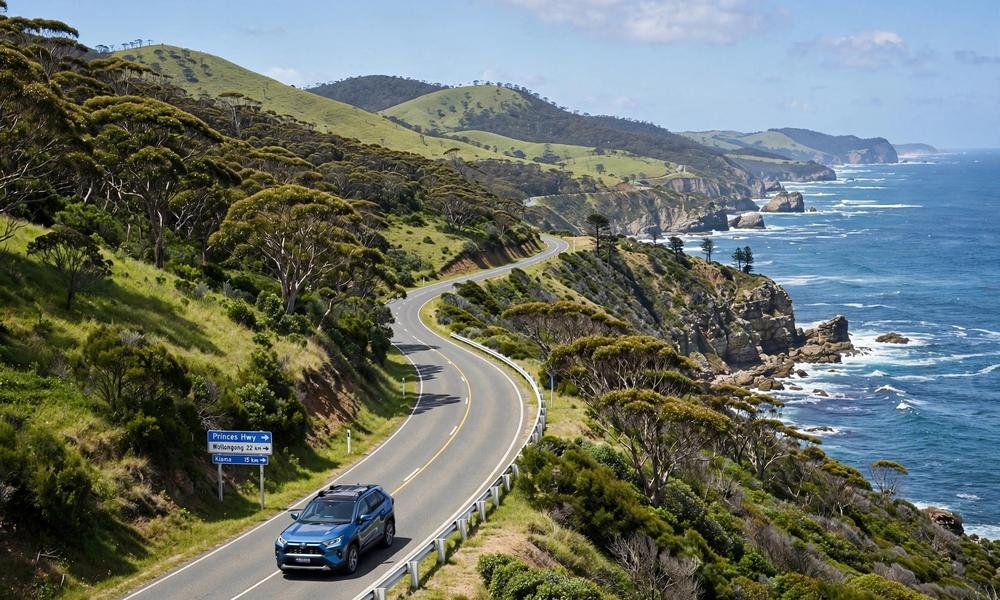
The Central Coast: Your First Taste of Beach Life
You won’t be driving long before the first beaches appear. About 90 minutes north of Sydney, the Central Coast gives you golden sand, surf breaks, and beachside towns that feel a world away from the city.
Terrigal is the easiest stop. It’s got a patrolled surf beach, a lively esplanade of cafes, and a headland walk with ocean views. If you want something quieter, Copacabana and Avoca Beach are right nearby. For families, Toowoon Bay and Blue Bay are calmer swimming spots.
This is a good place for your first swim of the trip. Grab lunch at a beachside cafe, stretch your legs on the sand, and then keep heading north. You could easily spend a full day here, but even a couple of hours sets the tone for the whole drive.
Hunter Valley: The Wine Detour Worth Taking
The Hunter Valley isn’t on the direct route, but it’s close enough that wine lovers should seriously consider it. Turn inland near Newcastle and you’re in Australia’s oldest wine region within about an hour.
The valley is famous for its Semillon and Shiraz. Cellar doors line the roads around Pokolbin, and many have been run by the same families for generations. Even if you’re not big on wine, the region is worth it for the food: cheese shops, chocolate makers, and restaurants that make the most of local produce.
A word of advice: if you add the Hunter to your road trip, give it a full day and an overnight stay. Wine tasting and long drives don’t mix, so plan to stay local. Check opening times before you go, as cellar doors have seasonal hours.
Port Stephens and the Mid North Coast
Back on the highway, Port Stephens sits just north of Newcastle. It’s known for its huge harbour, which is nearly twice the size of Sydney Harbour, and for Nelson Bay, a relaxed holiday town with dolphin cruises and waterfront dining.
Further north, the Mid North Coast rolls through a string of beach towns: Forster, Taree, Port Macquarie, and Nambucca Heads. Port Macquarie is the biggest of these, with a koala hospital you can visit, a coastal walk along the headlands, and plenty of places to eat. It’s a natural overnight stop if you’re pacing the drive over several days.
The beaches along this stretch are some of the least crowded on the east coast. If you want to pull over for a quiet swim, just look for the turn-offs to the coast. Most towns have free parking near the beach.
Coffs Harbour and the Big Banana
Coffs Harbour is roughly the halfway point between Sydney and Brisbane, and it’s a natural place to break the drive. The town sits on a lovely stretch of coast with Solitary Islands Marine Park offshore, which makes it a strong spot for snorkelling and diving.
Yes, the Big Banana is here. It’s one of Australia’s famous “big things”, a 13-metre banana you can walk through. It’s cheesy in the best way, and the kids (and plenty of adults) love it. The surrounding fun park and water slides make it a full morning out.
Coffs Harbour is also good for a proper meal break. The marina area has seafood restaurants with water views, and the town centre has markets and cafes. If you’re driving straight through, this is the town to stop, eat, and refuel, in every sense.
Byron Bay: Lighthouse Walks and Relaxed Markets
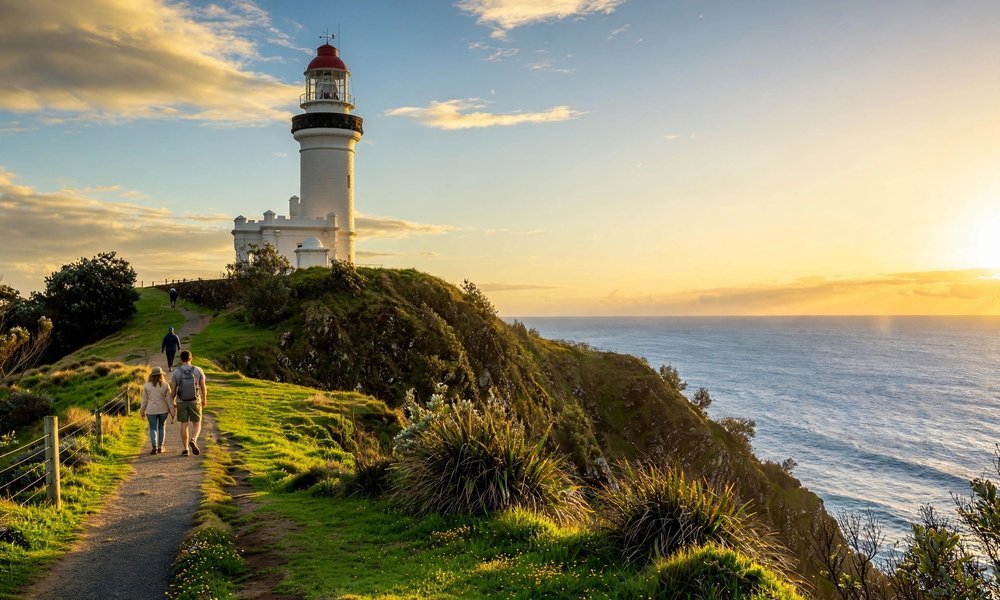
Byron Bay is probably the most famous stop on this drive. It’s a small town with a big reputation: surf beaches, alternative markets, and a laid-back feel that’s drawn visitors for decades.
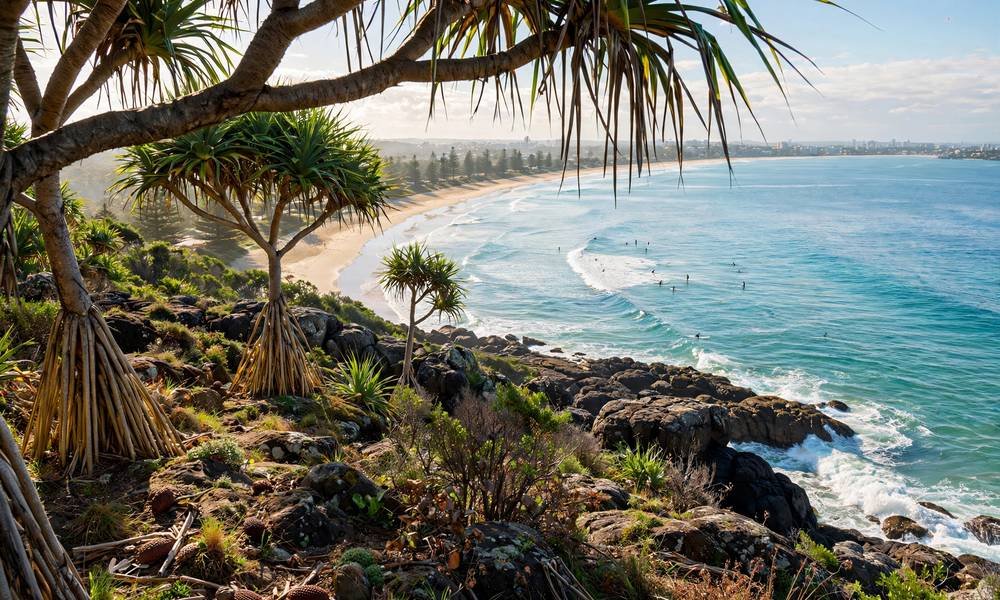
The must-do here is the Cape Byron walking track. It’s a loop of about 3.7 kilometres that takes you from the town up to the Cape Byron Lighthouse, the most easterly point of mainland Australia. The views along the way are some of the best on the entire coast. In winter, you can often spot whales from the headland.
Main Beach is right in town and patrolled for swimming. If you surf, The Pass at the southern end of town is one of the country’s most famous longboard breaks. The markets, held at various times through the month, sell handmade jewellery, local produce, and crafts. Check the schedule before you go so you don’t miss them.
Byron can be busy, especially in school holidays and summer weekends. Book accommodation ahead if you’re visiting at peak times.
The Gold Coast: Beaches, Theme Parks, and the Hinterland
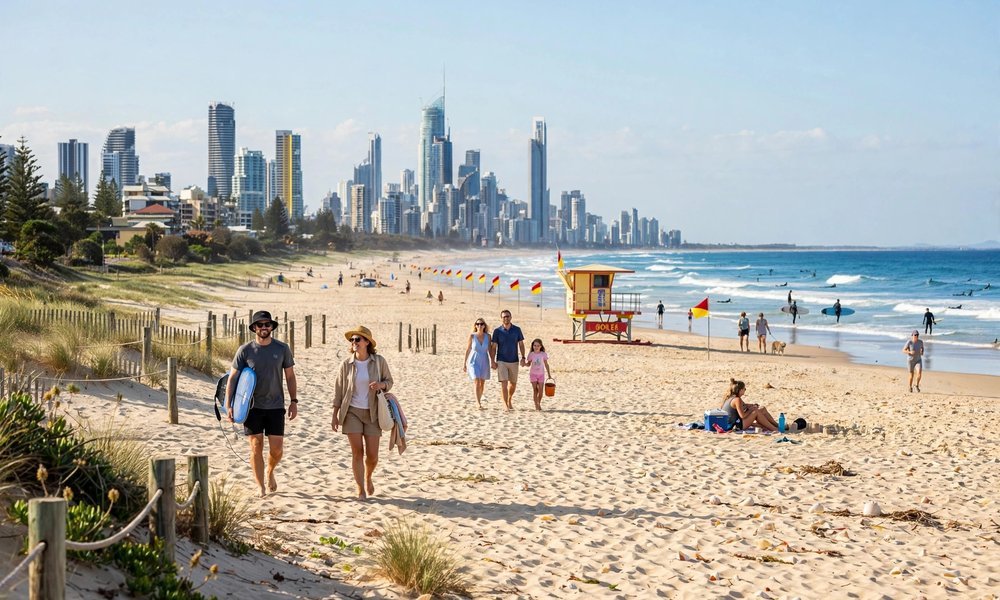
Crossing into Queensland, the Gold Coast greets you with high-rises along the sand. Surfers Paradise is the centre of it all: a wide surf beach backed by a skyline that’s unlike anywhere else in Australia.
The beaches here are excellent. Burleigh Heads has a national park headland with walking tracks and a calmer swimming spot at Tallebudgera Creek. Coolangatta at the southern end has a more relaxed feel. Most beaches are patrolled, and the surf is consistent year-round.
The theme parks (Warner Bros. Movie World, Sea World, Wet’n’Wild, and Dreamworld) are a big draw for families and are all clustered inland near the highway. You could spend a full day or two here without touching a beach.
Don’t miss the Gold Coast Hinterland either. Just 30 minutes inland, the scenery changes completely: rainforest, waterfalls, and mountain villages like Tamborine Mountain and Springbrook. It’s a completely different side of the region, and a day trip into the hills is one of the best things you can do here. If you’re planning a longer stay, our guide to where to stay on the Gold Coast breaks down the best areas and suburbs.
Brisbane: The Finish Line
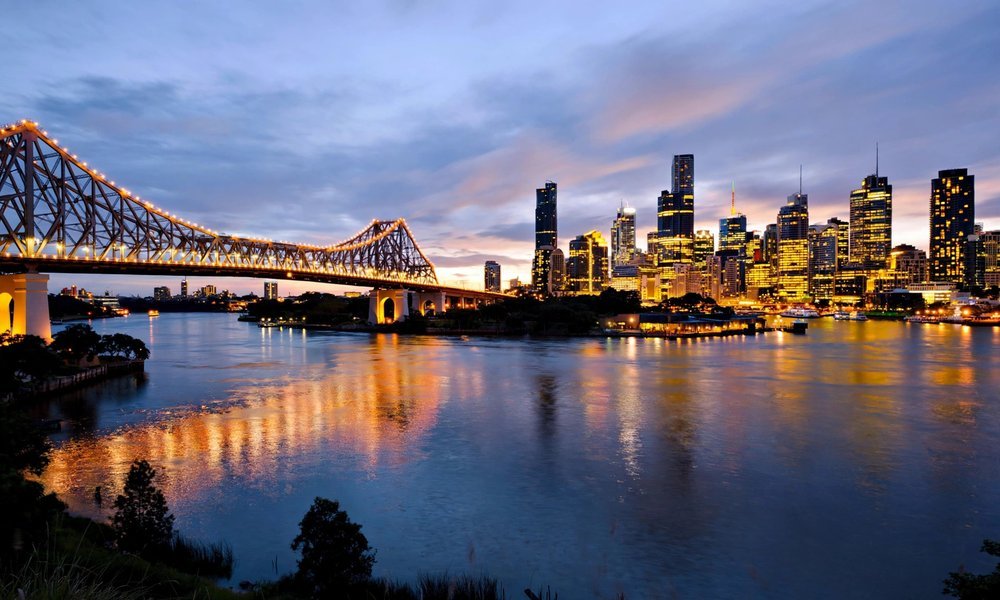
About an hour north of the Gold Coast, Brisbane waits at the end of the highway. Queensland’s capital is a river city with a warm climate, a lively food scene, and far more to do than most people expect.
South Bank is the natural first stop: parklands along the river with a free man-made lagoon for swimming, markets on weekends, and the Queensland Museum and Gallery of Modern Art nearby. The City Botanic Gardens and the Kangaroo Point cliffs give you green space and river views right in the centre of town.
If you’re staying on, our guide to things to do in Brisbane covers the highlights, and where to stay in Brisbane will help you pick the right suburb for your base.
How Many Days Do You Need for the Sydney to Brisbane Drive?
Three days is the minimum to enjoy the trip. Five days is the sweet spot for most travellers. Seven days lets you slow right down and add the detours.
3 days: This is the express version. You’ll cover the big stops (Coffs Harbour, Byron Bay, Gold Coast) with a night in two of them, but you’ll skip the Hunter Valley and most of the Mid North Coast. It works if you’re short on time, but it will feel like a driving holiday rather than a beach holiday.
5 days: The classic. This gives you a full day in Byron Bay, a day on the Gold Coast, and comfortable driving days of 2 to 4 hours each. You can add a Hunter Valley detour if you move quickly, or linger longer at your favourite beach town.
7 days: Slow travel. Add the Hunter Valley, spend two nights in Byron Bay, do a Hinterland day trip from the Gold Coast, and still arrive in Brisbane feeling relaxed. This is the version where the drive feels like a proper holiday.
Best Time to Drive from Sydney to Brisbane
This drive works year-round, but each season has its trade-offs.
Autumn (March to May) is arguably the best time. The summer crowds have gone, the ocean is still warm enough for swimming, and the days are sunny and mild. Accommodation prices drop outside school holidays too.
Winter (June to August) is whale season along this coast, and the viewing from headlands like Cape Byron and Port Macquarie can be excellent. Days are still pleasant (high teens to low 20s in the north), though the water is cooler and mornings can be chilly. You’ll find the quietest roads and cheapest stays.
Spring (September to November) is another great window. Everything greens up, the weather warms, and it’s before the summer school-holiday rush.
Summer (December to February) means hot beach weather and the liveliest atmosphere, but also the biggest crowds, the highest prices, and occasional storms. If you travel in summer, book accommodation well ahead, especially in Byron Bay and the Gold Coast.
Where to Stay Along the Way
You’ll find every style of accommodation on this route: beachfront motels, holiday apartments, caravan parks, backpacker hostels, and boutique stays in the Hinterland. The bigger towns (Newcastle, Coffs Harbour, Byron Bay, Gold Coast, Brisbane) have the widest choice.
A few planning notes. Book ahead in school holidays and long weekends, especially in Byron Bay where demand far outstrips supply. If you’re travelling with a campervan or caravan, there are well-equipped parks all along the route, and many beach towns have parks within walking distance of the sand. For the two biggest cities at the end of the drive, see our guides to where to stay on the Gold Coast and where to stay in Brisbane.
Getting Around: Driving Tips
The main route is the Pacific Highway, which becomes the M1 Pacific Motorway in Queensland. It’s a good-quality divided road for most of the way, with regular service centres and fuel stops.
Tolls: There are toll roads around Sydney at the start of the trip. Make sure you have an e-tag arranged or check the toll payment options before you go, as some tolls have no cash booths.
Fuel: Fuel stops are frequent on the highway, but they thin out if you take coastal detours or head into the Hinterland. A good habit is to fill up whenever you drop below half a tank in rural areas.
Speed limits and fatigue: The limit is generally 100 to 110 km/h on the highway. Take a proper break every two hours. Driver fatigue is a real risk on long highway stretches, and the rest areas along the Pacific Highway are frequent and free.
Mobile coverage: You’ll have coverage in all the towns, but there are black spots on rural stretches and in national parks. Download offline maps before you leave, and let someone know your rough plans if you’re heading into remote areas.
Suggested Itineraries
3-Day Express
- Day 1: Sydney to Coffs Harbour (around 6 hours). Stop at the Central Coast for lunch and a swim. Overnight in Coffs Harbour and see the Big Banana.
- Day 2: Coffs Harbour to Byron Bay (around 3 hours). Walk up to the Cape Byron Lighthouse, swim at Main Beach, browse the town. Overnight in Byron Bay.
- Day 3: Byron Bay to Brisbane via the Gold Coast (around 3 hours). Morning on the Gold Coast beaches, lunch at Burleigh Heads, arrive in Brisbane by afternoon.
5-Day Classic
- Day 1: Sydney to the Central Coast and Newcastle (around 2.5 hours). Beach time, harbour walk, overnight in Newcastle or Port Stephens.
- Day 2: Port Stephens to Coffs Harbour (around 4.5 hours). Stop at Port Macquarie for the koala hospital and coastal walk. Overnight in Coffs Harbour.
- Day 3: Coffs Harbour to Byron Bay (around 3 hours). Full afternoon in Byron: lighthouse walk, markets if they’re on. Overnight in Byron Bay.
- Day 4: Byron Bay to the Gold Coast (around 1.5 hours). Theme parks or beach day, plus a Hinterland drive. Overnight on the Gold Coast.
- Day 5: Gold Coast to Brisbane (around 1 hour). Arrive early and spend the day at South Bank and the river.
7-Day Slow Travel
- Day 1: Sydney to the Hunter Valley via Newcastle (around 3.5 hours). Afternoon cellar doors, overnight in the valley.
- Day 2: Hunter Valley to Port Macquarie (around 4 hours). Coastal walk and koala hospital. Overnight in Port Macquarie.
- Day 3: Port Macquarie to Coffs Harbour (around 2 hours). Easy driving day: Big Banana, marina dinner. Overnight in Coffs Harbour.
- Day 4: Coffs Harbour to Byron Bay (around 3 hours). Lighthouse walk, beach afternoon. Overnight in Byron Bay.
- Day 5: Full day in Byron Bay. Surf lesson, markets, or just the beach. Second night in Byron Bay.
- Day 6: Byron Bay to the Gold Coast (around 1.5 hours). Beach morning, Hinterland afternoon. Overnight on the Gold Coast.
- Day 7: Gold Coast to Brisbane (around 1 hour). Full day exploring the city.
Bookable Tours and Experiences
Booking a few experiences along the way can lift the trip, especially for things you can’t easily do on your own.
Whale watching cruises run from several ports (Port Stephens, Port Macquarie, Coffs Harbour, Byron Bay, and the Gold Coast) during the winter migration season. Boats generally run from around May to November, with the peak months in the middle of that window. Book ahead in season, as popular departures sell out.
Surf lessons are available at almost every surf beach on the route. Byron Bay, the Central Coast, and the Gold Coast all have well-established surf schools for beginners. Most provide the board and wetsuit, so you can just turn up.
Dolphin cruises operate from Nelson Bay in Port Stephens, where a resident population of bottlenose dolphins lives in the harbour. Sightings are very reliable year-round.
Hinterland day trips from the Gold Coast take you into the rainforest around Tamborine Mountain and Springbrook. Guided tours handle the driving on the winding mountain roads, which is a genuine plus.
Koala encounters: the koala hospital in Port Macquarie offers guided tours where you can learn about their rescue and rehabilitation work.
As always, check operator schedules and availability before you go, as tours are seasonal and can book out.
Must-Knows Before You Go
- Wildlife on the roads: Kangaroos and wallabies are most active at dawn and dusk. Slow down on rural stretches at these times, and never swerve sharply if one appears.
- Sun protection: The sun is strong even on overcast days. Keep sunscreen, a hat, and water in the car at all times.
- National park fees: Some parks and attractions along the route charge entry or parking fees. Carry a card or check payment options online before visiting.
- Swim between the flags: Patrolled beaches have red and yellow flags marking the safest swimming area. Always swim between them.
- School holidays: NSW and Queensland school holidays bring heavy traffic and full accommodation. Check the dates and book early if your trip overlaps.
- Road works: The Pacific Highway is mostly complete as a dual carriageway, but check for current road works before you leave, especially after heavy rain.
FAQs About the Sydney to Brisbane Road Trip
How long does it take to drive from Sydney to Brisbane?
Around 9 hours of actual driving via the Pacific Highway, covering about 940 kilometres. With stops, most people spread it over 3 to 7 days.
Is the drive from Sydney to Brisbane scenic?
Yes. Long stretches run close to the coast with ocean views, and the towns along the way (Byron Bay, Coffs Harbour, the Gold Coast) are destinations in their own right. The inland detours to the Hunter Valley and the Gold Coast Hinterland add completely different scenery.
What is the best route from Sydney to Brisbane?
The Pacific Highway (M1 in Queensland) is the standard route and the fastest. The New England Highway is an inland alternative, but it’s longer and misses all the coastal stops that make this trip special.
Can you do the Sydney to Brisbane drive in one day?
You can, but it’s a long day behind the wheel and you’ll miss everything that makes the trip worthwhile. If you’re short on time, fly. If you’re driving, give it at least three days.
When is whale season on this route?
Whales migrate along this coast roughly from May to November. The best viewing from headlands is usually mid-winter, and whale watching cruises operate through the season from several ports.
Do I need a 4WD for this road trip?
No. The entire main route is sealed highway suitable for any car. You only need extra clearance if you’re planning unsealed side tracks, which aren’t part of the standard itinerary.
Is it better to drive or fly from Sydney to Brisbane?
Flying is faster and often cheaper if you just need to get there. Driving is better if the journey is the point: the beaches, towns, and detours are the whole reason to do this trip.
Final Thoughts on the Sydney to Brisbane Drive
This is one of those rare drives where the journey genuinely beats the destination. Brisbane is a great city, but you’ll remember the lighthouse walk at Byron Bay, the swim at a quiet Mid North Coast beach, and the moment the Gold Coast skyline appeared on the horizon.
Five days is the sweet spot: enough time to relax into the trip without rushing, and enough flexibility to follow your mood. Take the detours that appeal to you, skip the ones that don’t, and don’t try to see everything. The coast will still be there next time.
Pack the sunscreen, download your maps, and hit the road. This is Australian coastal travel at its best.