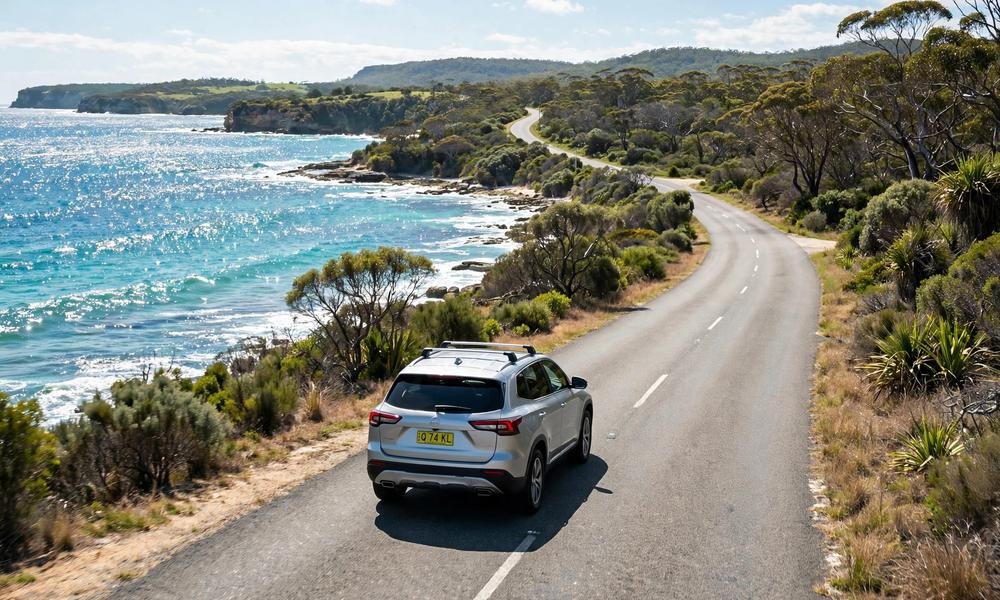
The Brisbane to Cairns drive is the classic Queensland road trip. Roughly 1,700 kilometres of coast from the capital up to the tropics, passing beach towns, islands, reef ports, and rainforest along the way. It is the one drive in Australia where nearly every stop earns its place. This guide from Australia City Guide lays it out as a 10-day itinerary, with shorter and longer options if your schedule looks different.
You will drive the Bruce Highway for most of the trip. That is the main north-south road in Queensland. Parts of it are plain highway, parts hug the coast. The trick is knowing where to slow down and where to push through.
Why This Drive Is Special
Most long drives have one or two highlights and a lot of hours in between. This one is different. The gaps between stops are short enough that you are never far from the next beach, lookout, or small town worth a coffee stop.
The variety is the real selling point. You start in a river city, spend days on the Sunshine Coast, cross the world’s largest sand island, sail through the Whitsundays, and finish in the tropics with the Daintree rainforest an easy day trip away. Honestly, I reckon it beats most overseas itineraries dollar for dollar once you factor in what you are getting for free: beaches, lookouts, and national park walks that cost nothing.
This trip suits couples, families, and grey nomads doing the big lap. It also works well as a first big Australian road trip, because services are frequent and the road is sealed the whole way.
The Route at a Glance: Key Stops South to North
Here is the shape of the trip. You start in Brisbane, then work north through the Sunshine Coast, K’gari, the Whitsundays, Townsville, and finally Cairns. Each stop has a different feel, so the drive never gets boring.
Sunshine Coast and Noosa
About two hours north of Brisbane, the Sunshine Coast is the gentle start. Noosa is the headline act: Noosa National Park has a coastal walking track with lookouts, fairy pools, and regular koala sightings. The main beach is calm and patrolled, which makes it a good family stop.
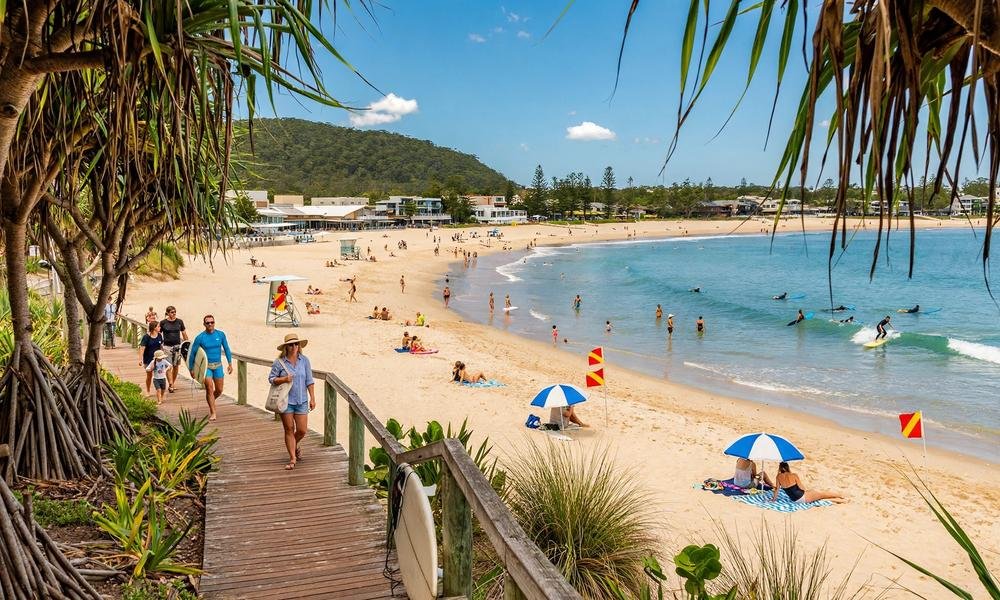
The smaller towns are worth your time too. Eumundi’s markets run on Wednesdays and Saturdays, and the Glass House Mountains make a good detour if you like a short, steep walk with a view. If you are starting in Brisbane, read our guide to things to do in Brisbane to plan your first night before you leave.
K’gari (Fraser Island)
K’gari is the largest sand island in the world, and it feels like another planet. Rainforest grows straight out of sand. Freshwater lakes like Lake McKenzie are so clear you can see your shadow on the bottom. You cannot drive here in a normal car: it is 4WD only, and most visitors join a guided 4WD tour from Rainbow Beach or Hervey Bay.
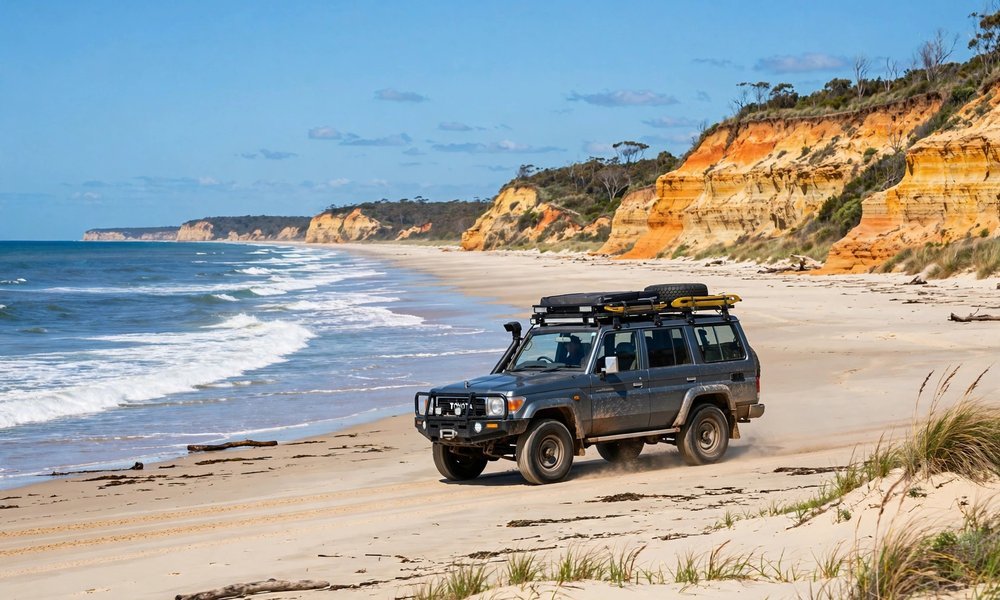
A full day tour covers the main sights: the Maheno shipwreck, Eli Creek, the coloured sands of The Pinnacles, and a swim in Lake McKenzie. If you can spare two days, stay overnight and see it at a slower pace. The dingoes are wild, so keep your distance and secure your food.
The Capricorn Coast
Between K’gari and the Whitsundays there is a long middle stretch. Most travellers push through it, but there are decent stops if you need a break. Rockhampton is the big inland town with good food and the Capricorn Caves nearby. Agnes Water and the Town of 1770 sit on the coast and have a relaxed, end-of-the-road feel.
Do not stress about this section. It is the one part of the trip where the smart move is a long driving day so you can bank time for the Whitsundays.
The Whitsundays and Airlie Beach
Airlie Beach is the launch pad for the Whitsunday Islands. Whitehaven Beach gets all the photos, and it earns them: the sand is 98% silica and squeaks under your feet. The Hill Inlet lookout at the northern end is the view you have seen a hundred times, and it looks even better in person.
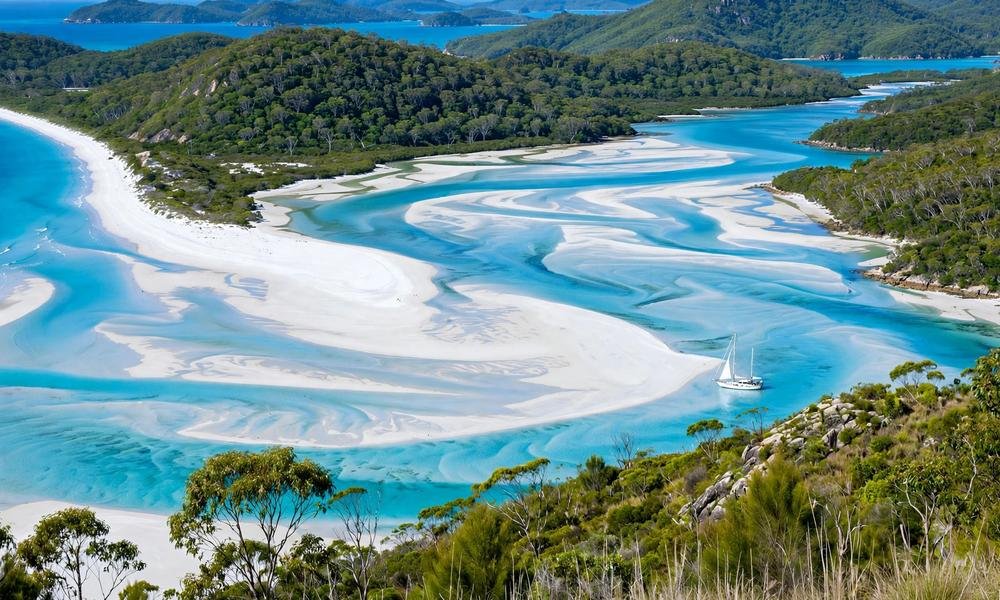
You have two main choices here: a day trip to Whitehaven and Hill Inlet, or a multi-day sailing trip that sleeps on the water. The sailing trips are the best experience on the whole drive if your budget stretches to one. Airlie Beach itself has a good lagoon, plenty of restaurants, and a backpacker-friendly main street.
Townsville and Magnetic Island
Townsville is often overlooked, which is a shame. The Strand is a long waterfront promenade made for sunset walks, and Castle Hill gives you a view over the whole city and out to Magnetic Island. The island sits 20 minutes away by ferry and is worth a full day: koalas in the wild at the Forts walk, quiet beaches, and a relaxed village feel.
Reef HQ, the national reef education centre, is in Townsville if you want a reef experience without getting on a boat. For most travellers, though, Townsville is a one-night stop with a Magnetic Island day trip.
Cairns and the Daintree
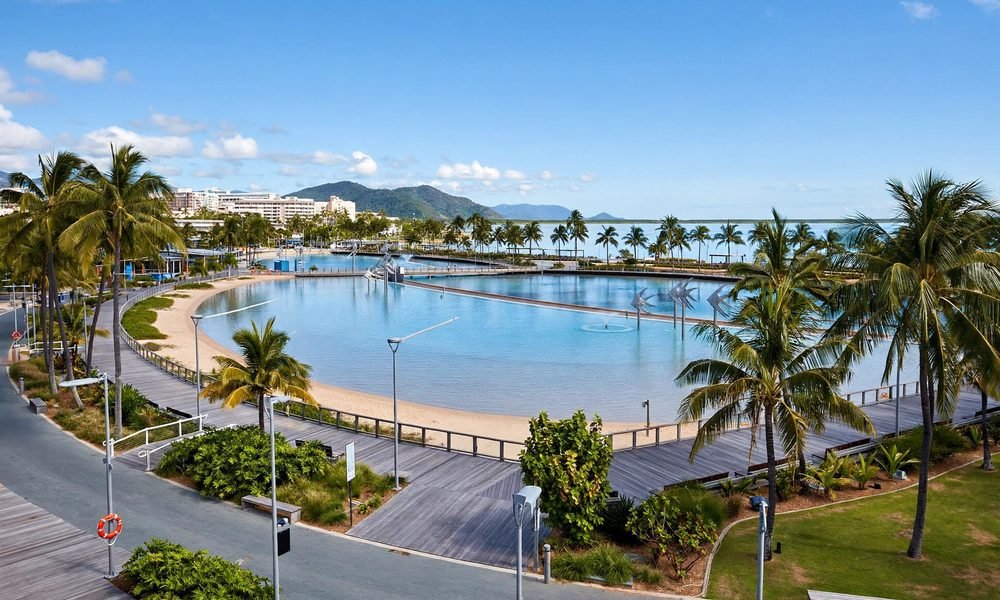
Cairns is the end of the road, and it finishes the trip on a high. There is no surf beach in town, but the lagoon on the esplanade is a great swimming spot, and the reef boats leave from the marina every morning. This is where you tick off the Great Barrier Reef: day trips run to the outer reef pontoons and to quieter coral cays.
North of Cairns, the Daintree rainforest is one of the oldest rainforests on earth. You can do it as a day trip from Cairns or Port Douglas: a river cruise to spot crocodiles, a walk through the canopy at the Discovery Centre, and a swim in Mossman Gorge (in the designated safe areas only). Port Douglas itself is worth a night if you want a more polished base than Cairns.
Extra Stops in South Queensland
The route overview above skips a few places that are easy to add without changing your main plan. The stops below sit in the southern half of the drive, and each one works as a short detour or an overnight stop.
Glasshouse Mountains
The Glasshouse Mountains are a set of steep volcanic peaks that rise out of the flat country near the Sunshine Coast hinterland. You can see them from lookouts along the road, and several peaks have short walks through forest to viewpoints. If you like views without a long hike, this is a good early stop. Check track conditions before you go, as some tracks close in wet weather.
Hervey Bay
Hervey Bay is a calm seaside town with a long esplanade, sheltered water, and a relaxed pace. It is best known as a whale watching town, and in whale season you can join a boat trip to see humpback whales close to shore. Check season dates and tour times before you go, as they change from year to year. Even outside whale season, the town suits a slow overnight stop, with waterfront walks, cafes, and easy swimming spots.
Rainbow Beach and Tin Can Bay
Rainbow Beach is a small surf town known for its coloured sand cliffs and the wide Carlo Sand Blow, a huge sand dune with views over the coast. It is also a main departure point for K’gari, but the town itself is worth a night, with surf beaches, walks, and a quiet main street. A short drive south, Tin Can Bay is a sleepy fishing town on the water. Visitors come for the waterfront, the fishing, and the wild dolphins that visit the shore. Check current dolphin visit times and rules before you go, as arrangements can change.
Bundaberg
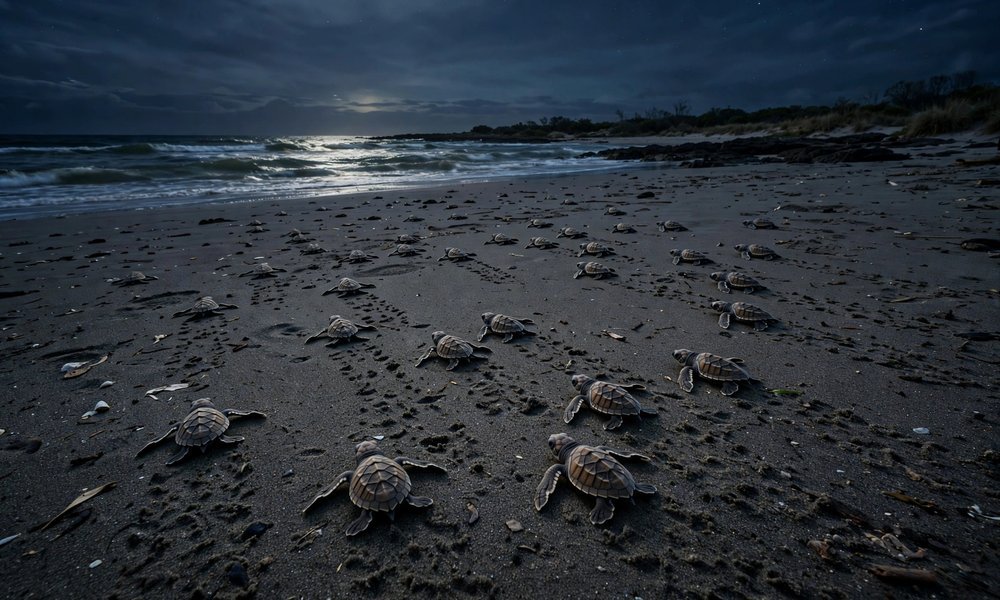
Bundaberg is a friendly regional city inland from the coast, known for its rum distillery tours and its turtle viewing at Mon Repos beach. Distillery tours suit travellers who like a bit of local history with their tasting, and the turtle experience suits families who want a wildlife moment they will talk about for years. Check tour times and turtle season dates before you go, as both run at set times. Bundaberg also works as a practical overnight stop, with motels, cafes, and supermarkets for restocking.
Extra Stops in Central Queensland
The middle of this drive is where many travellers rush through. Slow down here and you will find surf towns, a working city, rainforest gorges, and one of the best sunrise wildlife moments on the coast.
Agnes Water and Seventeen Seventy (1770)
Agnes Water is a laid-back surf town with a patrolled main beach, coastal walks, and a small town feel. Just up the road, the Town of 1770 sits on a headland where the road runs out, and it feels like the edge of the map in the best way. You can fish, kayak, walk the headland trails, or join a boat trip along the coast. Both towns suit travellers who want quiet beaches and slow mornings. Book ahead in school holidays, as accommodation is limited.
Rockhampton
Rockhampton is a large inland service town on the Fitzroy River, and it makes a sensible overnight stop in the middle of the drive. The heritage streets, the river precinct, and the botanic gardens give you a pleasant break from highway driving. It is also a good place to restock, refuel, and sort out laundry before the longer northern legs. If you have an extra half day, the Capricorn Caves nearby are already noted in the middle leg above, so plan them as a side trip from town rather than a separate stop.
Mackay and Cape Hillsborough
Mackay is a working sugar city with a marina, city beaches, and botanic gardens. It is a useful overnight stop, and it puts you close to two of the best nature detours on this drive. Cape Hillsborough, just north of town, is famous for kangaroos that often feed on the beach at sunrise. Stay nearby the night before, arrive quietly at first light, and keep your distance. Do not feed the animals, and let them come and go on their own terms.
Bowen
Bowen is a relaxed fishing town with calm beaches, a working harbour, and a reputation for mangoes. It suits a lunch stop or a quiet overnight stay between Mackay and the Whitsundays. Walk the foreshore, try the local seafood, and enjoy the slower pace. Bowen also gives you reef trip options without the crowds of the bigger towns, so check what is running before you go.
Eungella National Park and Finch Hatton Gorge
Inland from Mackay, Eungella National Park is a cool rainforest escape from the coastal heat. Finch Hatton Gorge has swimming holes, creek walks, and forest trails that suit a half day out. The Broken River area in the park is known for platypus viewing, and early morning and late afternoon are often the best times to look. Stay quiet near the water, be patient, and remember that sightings are never guaranteed. Check road and track conditions before you go, as rain can affect access.
Extra Stops in North Queensland
North of Townsville, the drive turns tropical. The stops below fill the gaps between Townsville and Cairns, and they give the final part of the trip its own character instead of one long push north.
Mission Beach
Mission Beach is a quiet stretch of coast with long beaches, rainforest right behind the sand, and a strong cassowary presence. It is the kind of place where you slow down, walk the beach, and watch for wildlife. Drive slowly on the local roads, keep your distance if you see a cassowary, and never feed one. Mission Beach also works as a calmer base than the bigger towns, with cafes, small stays, and day trips to nearby islands and the reef.
Cardwell Spa Pools and Hinchinbrook Island
Cardwell is a small coastal town between Townsville and Cairns, and its spa pools are a set of clear creek pools in the forest nearby. They suit a refreshing stop on a hot driving day. Check access and conditions before you go, as water levels and road access can change. From Cardwell you can also look across to Hinchinbrook Island, a wild island national park with rainforest peaks and empty beaches. The island is reached by ferry, and its long-distance walk suits fit, well-prepared walkers only. Check ferry times and park advice before you plan an island trip.
Wallaman Falls and Paronella Park
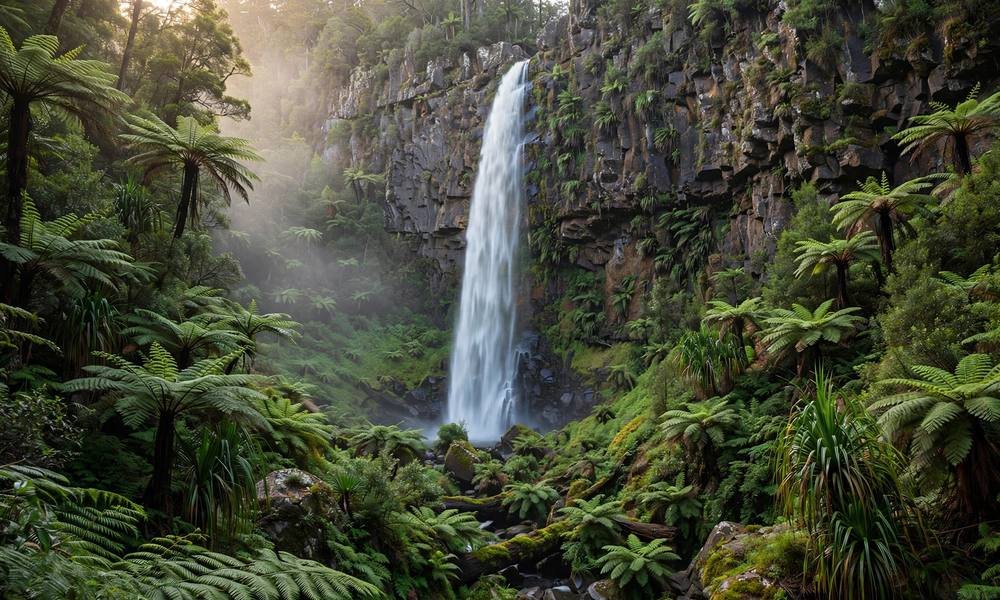
Wallaman Falls, inland from Ingham, is a tall single-drop waterfall in the rainforest. A lookout gives you the full view without a long walk, and a longer track leads down toward the base for fit walkers. Check conditions before you go, as rain can make tracks slippery. Paronella Park, near Mena Creek, is a rainforest park built around old castle-style buildings and gardens. It has a dreamy, overgrown feel, with paths, ponds, and picnic spots. Check opening times and entry details before you go.
Atherton Tablelands as a Standalone Leg
The Atherton Tablelands sit inland from Cairns, and they deserve their own leg rather than a rushed day trip. This is rolling farmland, cooler air, crater lakes, waterfalls, and small country towns. You can swim in crater lakes, follow a waterfall circuit, browse markets, and taste local produce. Add extra nights here after Cairns if you can, and base yourself in one town so you can explore without packing up each day. The tablelands also suit travellers who want a break from the coast before they fly home.
Port Douglas
Port Douglas is a polished tropical town north of Cairns, with Four Mile Beach, a marina, and a village main street full of cafes and shops. It works as a reef trip base, a quieter alternative to staying in Cairns, or a final treat at the end of the drive. Mossman Gorge is nearby for a rainforest swim in signed safe areas, and the Daintree is within easy reach for a day trip. For eating out, see our guide to places to eat in Port Douglas. Markets run on set days in town, so check before you go if a market visit matters to you.
Babinda Boulders
Babinda Boulders, near the small town of Babinda, is a set of smooth granite boulders and clear swimming holes along a rainforest creek. It is a popular local swimming spot on hot days, and the forest setting makes it feel far from the highway. Swim only where signs say it is safe, and take care after rain, when water levels can rise fast. Pack water and snacks, as facilities are basic.
Reef Island Side Trips: Lady Elliot Island, Lady Musgrave Island, and Utopia Rock Pools
If you want a reef island without the Cairns crowds, look south. Lady Elliot Island is a coral cay at the southern end of the reef, reached by small plane, with snorkelling, diving, turtles, and reef walks. Lady Musgrave Island, off the coast near 1770, is another coral cay with a sheltered lagoon for snorkelling and turtle spotting. Both islands suit travellers who want a full day or an overnight reef stay away from the main hubs. Check tours, access, and wildlife seasons before you go, as both islands run at set times. Utopia Rock Pools are a set of natural rock pools that some road trippers add as a side stop on this route. Check the location, access, and conditions before you go, as access can change.
How Many Days Do You Need?
Seven days is the minimum. Ten is the sweet spot. Fourteen lets you actually relax. Here is how each option plays out.
The 7-Day Express Run
Seven days means choosing your battles. You get one night in Noosa, a day trip to K’gari, a long push north, two nights in the Whitsundays, and a final sprint to Cairns via Townsville. You will see the highlights, but you will not linger anywhere. Pick this if you are short on leave and comfortable with a few 5 to 6 hour driving days.
The 10-Day Classic (Recommended)
Ten days is the itinerary below, and it is the one I would recommend to most people. You get two nights in the places that deserve them: Noosa, K’gari, the Whitsundays, and Cairns. The driving days stay under 4 hours except for one longer middle leg, and you have room for a reef trip, an island tour, and a rainforest day.
The 14-Day Slow Trip
Fourteen days turns the drive into a proper holiday. Add a second day in Noosa, an overnight on K’gari, two nights sailing the Whitsundays, a night on Magnetic Island, and a night in Port Douglas. This is the version for families and anyone who hates rushing. The extra days also give you a buffer if weather delays a reef or island trip.
Day by Day: The 10-Day Brisbane to Cairns Itinerary
This is the day-by-day plan I would give a mate. It assumes you are driving your own car or a hire car, starting in Brisbane and finishing in Cairns.
Days 1 to 2: Brisbane to Noosa
Leave Brisbane after breakfast and you will be in Noosa by mid-morning. Spend day one on the Noosa National Park coastal walk: it is an easy track with lookouts the whole way, and Tea Tree Bay is a good swimming stop. Day two is for the beach, the Eumundi markets if the day lines up, and a slow dinner on Hastings Street. If you need a base for your first night, our guide to where to stay in Brisbane covers the best areas.
Days 3 to 4: K’gari (Fraser Island)
Drive to Rainbow Beach or Hervey Bay and join a full-day 4WD tour of K’gari. You will see the Maheno shipwreck, float down Eli Creek, and swim in Lake McKenzie. Day four is your backup day: if the weather was rough, tours run daily, or you can take it easy in Hervey Bay. If you are keen on an overnight stay on the island, book ahead, as spots are limited.
Day 5: The Long Middle Leg
This is the big driving day: K’gari to the Whitsundays via Rockhampton is around 7 hours. Leave early, stop in Rockhampton for lunch and a leg stretch, and aim to reach Airlie Beach by late afternoon. It is the least exciting day of the trip, but it sets up the best part.
Days 6 to 7: The Whitsundays
Day six is Whitehaven Beach and Hill Inlet. Book a day tour from Airlie Beach that includes both, and take the short walk up to the lookout. It is busier than the photos suggest, but the view is still worth it. Day seven is your choice: a second day on the water, a sailing trip if you splurged, or a slow day at the Airlie Beach lagoon.
Day 8: Townsville and Magnetic Island
Drive to Townsville, catch the ferry to Magnetic Island, and walk the Forts track for wild koalas and island views. Have lunch in Horseshoe Bay, then ferry back and spend the night in Townsville. Walk The Strand at sunset and grab dinner on the waterfront.
Days 9 to 10: Cairns and the Daintree
The drive from Townsville to Cairns takes about 4 hours. Stop at Mission Beach on the way if you want a quiet stretch of sand and a cassowary sighting if you are lucky. On your last day, take a day trip to the Daintree: a crocodile river cruise, the canopy walkway, and Mossman Gorge. Book your Great Barrier Reef day trip for one of these days too, since Cairns is the best place on the route to do it.
Best Time to Drive the Queensland Coast
May to September is the best window. The days are dry and mild, the humidity is low, and the water is clear. This is also peak season, so book accommodation and reef tours ahead, especially in the Whitsundays and around school holidays.
October to April is the wet season in the north. It is hot, humid, and afternoon storms are normal. Cyclones are possible from November to April, and the Bruce Highway can flood in heavy rain. The upside is lower prices and fewer crowds. If you drive in the wet season, build in buffer days and check road conditions before the long legs.
Marine stingers are present in northern waters from roughly November to May. Swim inside the stinger nets at patrolled beaches, and hire a stinger suit for reef trips. Tour operators provide them as standard in stinger season.
Where to Stay Along the Way
You do not need to overthink accommodation. Every stop on this route has plenty of options across motels, apartments, and holiday parks.
- Brisbane: one night near the river before you leave. Our where to stay in Brisbane guide breaks down the best areas.
- Noosa: two nights. Apartments near Hastings Street or the river suit families; the town centre has the boutique stays.
- Rainbow Beach or Hervey Bay: one to two nights as your K’gari base. Holiday parks and motels are good value here.
- Airlie Beach: two nights. Stay near the main street so you can walk to the marina and the lagoon.
- Townsville: one night. The Strand and the city centre both work.
- Cairns or Port Douglas: two nights to finish. Cairns suits reef trips; Port Douglas suits a quieter end to the trip.
Book the Whitsundays and Cairns stays first, since those fill fastest. The middle stops are easier to book late.
Driving Tips for the Bruce Highway
The Bruce Highway is a good road, but it is not a motorway the whole way. Expect single-lane sections with overtaking lanes, road trains in the north, and the odd stretch of roadworks. The speed limit is 100 km/h on most of it.
- Fuel up before the long legs. Services are regular, but the stretch from K’gari to the Whitsundays is the longest gap. Do not let the tank drop below a quarter.
- Start long days early. Leaving by 7 am gets you off the road before the afternoon heat and gives you daylight for the last hour, when kangaroos and cattle are most active near the road.
- Take breaks every two hours. Driver fatigue is the real risk on this trip, not the road itself. Queensland’s rest areas are frequent and well signed.
- One-way hire fees are real. If you are hiring a car, picking up in Brisbane and dropping off in Cairns usually attracts a one-way fee. Compare a few companies, as the fee varies a lot.
- Check for flooding in the wet season. The Bruce Highway can close between towns after heavy rain. Check the Queensland traffic site before you set off on a long leg.
Car or Campervan: Which Suits This Drive?
A car and motel stays suit most travellers on this route. A car is cheaper to hire, easier to park in towns, and simpler to drive on the highway. You sleep in motels or apartments, eat out or cook in shared kitchens, and keep your days flexible. A campervan suits travellers who want to sleep where they stop and cook their own meals. You save on accommodation, but you pay more for hire and fuel, drive more slowly, and need to book powered sites in busy seasons. Campervans also need care on narrow town streets and in car parks. If you hire either option one way, check the one-way fee in both directions before you book, as the fee can change the total cost a lot. You do not need a four wheel drive for the highway itself. You only need one for sand driving on K’gari and for some national park tracks, and those are best done on a guided tour if you lack sand driving experience.
Fuel and EV Charging Stops
Fuel is easy on this route, as every major town has service stations, but the habit still matters. Top up when you pass a town, and do not push your luck on the longer legs. The driving tips above already warn against letting the tank drop low, and that advice holds for the whole trip. For electric cars, plan your charging stops in advance rather than hoping for a charger at the next town. Chargers sit in the major towns along the Bruce Highway, but availability and speed vary, so check live charger status before each long leg and allow extra time for charging. Carry a charging app on your phone, and keep a backup stop in mind for every leg.
Road Conditions and Sealed Roads
The Bruce Highway itself is sealed the whole way, so a normal car handles the main route with no trouble. The side roads are a different story. Some national park access roads are gravel or rough, K’gari roads are sand only, and a few beach access tracks need a four wheel drive. In the wet season, rain can close roads or flood low sections with little warning, so check road conditions and closures before each long leg, and build in buffer days if you travel in the wet months. If a road is closed, do not try to drive around barriers or through floodwater. Wait it out or take the signed detour.
What to Pack for the Drive
Packing for this drive is about sun, water, and flexibility. Use this short list as a starting point:
- Water bottles, snacks, and a small esky for long legs between towns.
- Sun protection: a hat, sunscreen, and sunglasses for beach and lookout stops.
- Insect repellent and a light long-sleeved layer for evenings in the north.
- A first aid kit, a phone charger, and offline maps in case phone signal drops out.
- Swim gear, a towel, and reef shoes for creek pools, beaches, and reef trips.
- A warm layer for cooler tablelands nights, even in the warmer months.
- A stinger suit or rash vest for reef trips in stinger season, as noted in the must-knows above.
Keep your valuables out of sight in the car, and pack a day bag so you can leave the bulk of your luggage at your stay for day trips.
What the Trip Costs
There is no single number, because the trip bends around your choices. The big costs are fuel, accommodation, and tours. A couple in a small car staying in motels will spend far less than a family in a 4WD doing a sailing trip and a reef day.
The tours are the costs worth planning for: a K’gari 4WD day tour, a Whitsundays sailing or day trip, and a Great Barrier Reef day trip from Cairns are the three big ones. These are the experiences that make the trip, so budget for at least two of the three. Book them for the middle of your stay in each place, so you have a spare day if weather forces a change.
Free wins are everywhere: the Noosa coastal walk, lookouts, the Airlie Beach lagoon, The Strand in Townsville, and national park beaches cost nothing. A road trip like this is one of the few holidays where the best days can also be the cheapest.
Tours and Experiences Worth Paying For
You could do this drive without booking a single tour, but these are the ones I would actually pay for.
Great Barrier Reef Day Trip From Cairns
This is the big one. A full-day trip to the outer reef includes snorkelling gear, lunch, and usually a marine biologist on board. The pontoons suit first-timers and nervous swimmers; the smaller boats go to quieter sites. Book for your second day in Cairns so you have a weather backup day.
Whitsundays Sailing Trip
A day sail or an overnight sailing trip through the islands is the best water experience on the route. You will snorkel fringing reefs, visit Whitehaven, and spend the night on the water if you go overnight. Overnight trips fill fast in the dry season, so book early.
K’gari 4WD Tour
Unless you own a 4WD and know how to drive on sand, join a guided tour. The guides know the tide times, which matter more than you would think on a sand island, and the day covers more ground than you could manage alone. Full-day tours run from Rainbow Beach and Hervey Bay.
Daintree River Crocodile Cruise
A one-hour river cruise in the Daintree is cheap, easy, and genuinely exciting. The guides spot crocodiles you would never see on your own, and the rainforest scenery from the water is something else. Pair it with the canopy walkway and Mossman Gorge for a full day.
Must-Knows Before You Hit the Road
A few practical things that catch first-timers out.
- Crocodiles are real in the north. From about Rockhampton northwards, treat every creek, river, and estuary as croc country. Swim only in patrolled beaches with stinger nets, hotel pools, and signed safe swimming spots. Obey the signs. They are not decorative.
- Stinger season runs roughly November to May. In those months, swim inside stinger nets and wear a stinger suit on reef trips. Outside those months the risk is much lower.
- Sun protection is non-negotiable. Queensland UV is strong year-round. Sunscreen, a hat, and a rash shirt for snorkelling will save your trip.
- Phone reception drops out. There are dead spots on the long legs. Download offline maps before you leave Brisbane.
- K’gari needs planning. You cannot just drive onto the island. You need a 4WD, a vehicle permit, and tide knowledge, which is why most people take a tour.
- Book reef and island tours early in dry season. May to September is busy, and the best boats sell out. Have a backup day in your itinerary in case of bad weather.
Doing It Without a Car: Train and Flight Alternatives
If you do not want to drive the whole way, you still have good options. The Spirit of Queensland train runs between Brisbane and Cairns, and it lets you watch the coast go by without worrying about fuel, roadworks, or parking. You will still need local transport, tours, or a hire car at the stops you care about most, so plan those before you board. Check the current timetable and fares before you book, as services and prices change.
Flying is the other alternative, and it works well as a one-way option. You can fly into one city, drive one direction, and fly home from the other end, which saves you a return drive. You can also fly to Cairns and base yourself there for reef and rainforest day trips, as noted in the one-week FAQ below. Flying suits travellers who are short on time but still want the reef, the Whitsundays, or the Daintree. Check flight times and car hire terms before you book, as one-way hire fees apply here too.
Driving It in Reverse: Cairns to Brisbane Legs
Driving north to south uses the same stops in reverse order, and it suits travellers who fly into Cairns first. The legs run like this: start in Cairns, with Port Douglas and the Daintree as your opening days, then add the Atherton Tablelands as a standalone leg before you head south. From there, work down through Mission Beach, Cardwell, and Townsville with Magnetic Island, then the Whitsundays and Airlie Beach. Continue south through Mackay and Cape Hillsborough, Bowen, Rockhampton, and Agnes Water with 1770. Finish with Bundaberg, Hervey Bay, Rainbow Beach, and the Sunshine Coast with Noosa before you reach Brisbane. The southbound version ends in the city rather than at the reef, which suits travellers who want to fly home from Brisbane or add city days at the end. The same practical advice applies in both directions: fuel up before long legs, check road conditions in the wet season, and book reef and island tours ahead.
FAQs About the Brisbane to Cairns Drive
How long does it take to drive from Brisbane to Cairns?
The distance is roughly 1,700 kilometres, which is about 20 hours of actual driving. You could do it in two very long days, but that misses the point. Plan at least 7 days, ideally 10, so the stops get the time they deserve.
Is the drive from Brisbane to Cairns worth it?
Yes, if you like variety. Few drives pack this much in: a sand island, the Whitsundays, the reef, and the Daintree in one trip. It is less worth it if you only have 3 or 4 days, because you will spend most of the trip in the car. In that case, fly to Cairns and base yourself there instead.
Which direction is better: Brisbane to Cairns or Cairns to Brisbane?
It barely matters. Most people go south to north and finish at the reef and rainforest, which feels like a grand finale. The practical factor is car hire: check one-way fees in both directions, as they can differ. Flights home are usually easy to find from either city.
Can you do the Brisbane to Cairns drive in a week?
Yes, but be selective. A 7-day version covers Noosa, a K’gari day tour, two nights in the Whitsundays, and Cairns with a reef trip. You will skip or rush Townsville, Magnetic Island, and the Daintree. If those matter to you, take 10 days.
What is the best month to drive the Queensland coast?
August and September are hard to beat: dry, mild, and clear water, with the wet season still months away. June and July are also excellent but a touch cooler for swimming in the south. Avoid the peak wet season months of January to March if you can, when rain and flooding can disrupt the drive.
Do I need a four wheel drive for the Brisbane to Cairns drive?
No, not for the highway itself. The Bruce Highway is sealed the whole way, so a normal car handles the main route. You only need a four wheel drive for sand driving on K’gari and for some rough national park tracks. Most travellers join a guided K’gari tour for the sand driving, which keeps things simple and safe.
Can I do the Brisbane to Cairns trip by train instead of driving?
Yes. The Spirit of Queensland train runs between Brisbane and Cairns, and it is a relaxed way to cover the same coast without driving. You will still need local transport or tours at the stops you want to explore, so plan those in advance. Check the current timetable and fares before you book.
Is Cairns to Brisbane just as good as Brisbane to Cairns?
Yes, you see the same stops in reverse order. Start with Cairns, Port Douglas, and the Atherton Tablelands, then work south through Mission Beach, Townsville, the Whitsundays, Mackay, Rockhampton, Agnes Water, Bundaberg, Hervey Bay, and Noosa before you finish in Brisbane. The southbound trip ends in the city, which suits travellers who want to fly home from Brisbane.
Final Thoughts on the Brisbane to Cairns Drive
This is the road trip I recommend when someone asks for the one drive that shows off Queensland. The 10-day version gives you the sand island, the islands, the reef, and the rainforest without a single day that feels wasted. The long middle leg is the only dull stretch, and even that is manageable with an early start and a good playlist.
My honest advice: do not try to squeeze it into a week unless you have to. The trip is built for lingering, and the best memories come from the unplanned stops, the second swim at Whitehaven, the extra night in Port Douglas. Book the three big tours early, respect the croc signs, and give the drive the days it deserves. Keep this itinerary handy and you will not go wrong.