
The Australian Open is the first Grand Slam of the tennis year, and it takes over Melbourne Park each January. The 2027 tournament runs from 11 to 31 January, with three weeks of matches, food, live music and summer crowds. This guide covers the dates, tickets, transport and first-timer tips you need to plan your visit.
Details checked on the official site, November 2026
Quick facts
- Where: Melbourne Park, on the eastern edge of the Melbourne CBD
- When: 11 to 31 January 2027 (Opening Week 10 to 16 January; main draw 17 to 31 January)
- Time needed: a full day for a Ground Pass; an evening for a night session
- Getting there: a 10-minute walk from the CBD, or tram Route 70 or 70a, or train to Richmond or Jolimont stations
Australian Open Melbourne 2027 dates and sessions
The tournament runs from Monday 11 to Sunday 31 January 2027 at Melbourne Park. Opening Week runs from 10 to 16 January and includes Kids Tennis Day on Sunday 10 January, with qualifying and practice sessions from 11 January. The main draw starts on Sunday 17 January.
The finals close the tournament on the last weekend. The women’s singles final is on Saturday 30 January and the men’s singles final is on Sunday 31 January, both at night in Rod Laver Arena. The quarter-finals fall on 26 and 27 January, and the semi-finals on 28 and 29 January.
The daily order of play is released the evening before, usually around 6pm, on the Australian Open website and app. Check it the night before your visit and build a loose plan around the matches you most want to see. Session times can change with the weather, so confirm them on the day.
The tournament began in 1905 and has been held at Melbourne Park since 1988. Players call it the “happy slam” for its warm crowds and festival feel. More than 1.3 million fans came through the gates in 2026, according to the Australian Open.
Where the Australian Open is held
The Open is played at Melbourne Park, a purpose-built precinct just east of the CBD on the edge of the Yarra River. It sits in the city’s sporting district, right next to the Melbourne Cricket Ground.
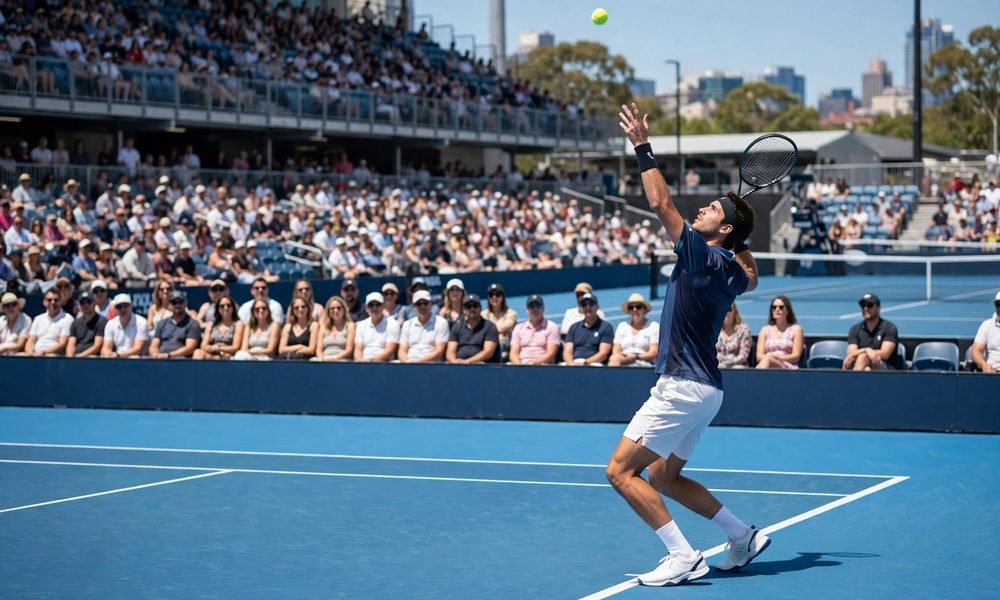
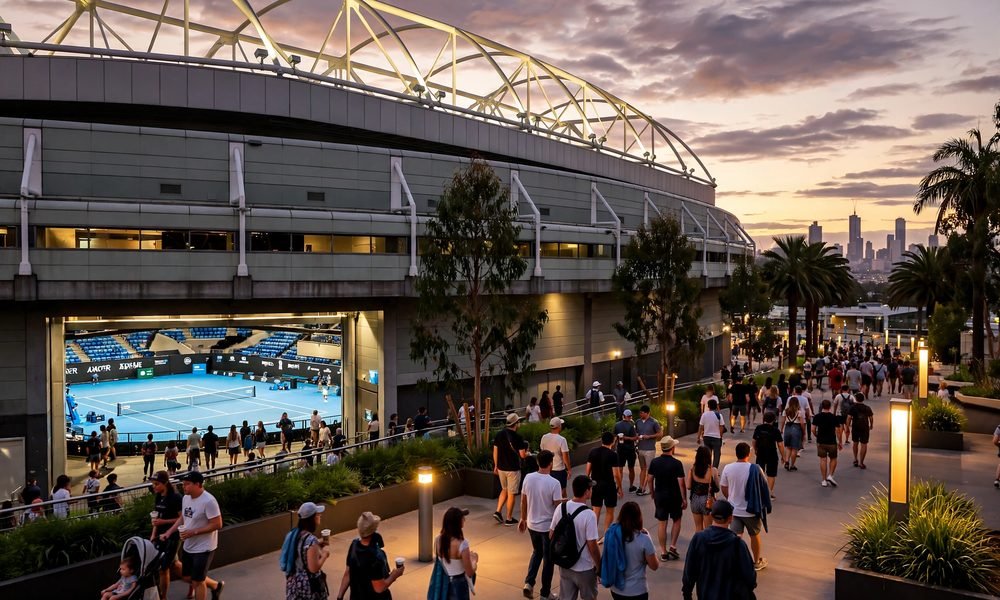
Three show courts anchor the site: Rod Laver Arena, Margaret Court Arena and John Cain Arena. All three have retractable roofs, so play in the main arenas carries on through rain and extreme heat. Around them sit more show courts and outdoor courts, including Kia Arena and 1573 Arena, where you can sit close to the baseline.
The whole precinct is walkable. You can drift from court to court, then rest on the lawns at Garden Square or Grand Slam Oval and watch the big screens. Food stalls, bars, live music stages and fan zones fill the space between the courts, so the site works as a summer festival as much as a tennis tournament.
Australian Open tickets and prices
There are two broad ways into the Australian Open. A Ground Pass is the budget-friendly option, while a reserved arena ticket buys you a set seat in one of the three show courts for a specific day or night session. Tickets are sold only through Ticketmaster, the official seller, at ticketmaster.com.au.
A Ground Pass gets you into the precinct, all the outdoor courts, the festival zones and the big screens. It also gets you into John Cain Arena when unreserved seats are free. It does not get you into Rod Laver Arena or Margaret Court Arena, or into the reserved seats at John Cain Arena. An arena ticket includes your reserved seat plus the whole precinct, so you can wander the outdoor courts before or after your session.
For the first time in 2027, the number of Ground Passes sold each day is capped. Buy your pass ahead for the day you want and do not count on buying one at the gate. Early-bird prices run until 12:59pm AEDT on Monday 30 November 2026, and prices can rise after that date.
Ticket prices for 2027 (early bird)
| Ticket | Price from |
|---|---|
| Opening Week Ground Pass (10 to 16 January) | $10 adults, $5 kids (kids free Monday 11 January) |
| Main draw Ground Pass (17 to 25 January) | $49 most days; $69 on Friday 22 and Saturday 23 January |
| Main draw Ground Pass (from 26 January) | $19 |
| Seven-day Ground Pass (25 to 31 January) | $99 |
| John Cain Arena reserved seat | $65 |
| Margaret Court Arena reserved seat | $69 |
| Rod Laver Arena reserved seat | $99 |
| Women’s singles final (Saturday 30 January) | $409 |
| Men’s singles final (Sunday 31 January) | $1,299 |
Prices are in Australian dollars and come from Ticketmaster listings checked in November 2026. Check the official site for current prices before you buy, as prices can change with demand.
Opening Week also brings back the million-dollar AO 1 Point Slam, a one-point shootout with a $1 million prize. Tickets start from $59. Some events inside the precinct, such as AO LIVE concerts, need their own ticket on top of your entry pass.
Which days should you go?
It depends on what you want from the day. Opening Week is the cheapest way in and the most relaxed, with qualifying matches, open practice sessions and smaller crowds. The first week of the main draw gives you the most matches on the outdoor courts, and it is when even top seeds can turn up on a small court.
The second week is the business end of the tournament. The quarter-finals onwards bring bigger names on the main courts, but prices climb and crowds grow. Night sessions have their own pull, with cooler air and a livelier crowd, while day sessions on a Ground Pass give you the most tennis for your money.
For a first visit, pair a first-week Ground Pass day with one night session in Rod Laver Arena in the second week. You get the outdoor-court buzz and one big arena night, without paying final-week prices for every day.
How to get to Melbourne Park
Public transport is the easiest way to reach the Australian Open. Melbourne Park is a 10-minute walk from the CBD through Birrarung Marr or across the Tanderrum Bridge, and the walk is signposted on match days.
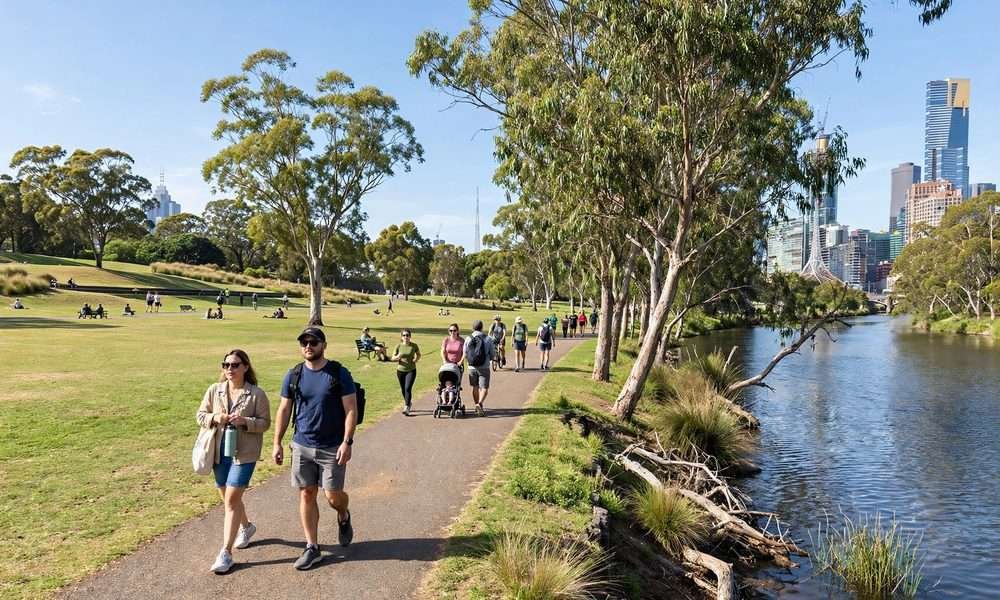
Trams run along Flinders Street to Melbourne Park. Route 70 and 70a trams stop at the Garden Square and Grand Slam Oval entrances. In 2026, ticket holders rode these event trams free on the day of their ticket. The 2027 arrangements have not been announced yet, so check the Transport Victoria Australian Open page before you go.
By train, Richmond Station is the closest stop, and Jolimont and Flinders Street stations are both a short walk away. Allow extra time after night sessions, as Richmond Station gets busy when crowds leave at once. For the trip from the airport, take the SkyBus to Southern Cross Station, then a tram or train towards Melbourne Park. Melbourne Airport has no train line.
If you drive, leave plenty of time. Limited paid parking is available at Yarra Park, next to the MCG, on a first-come, first-served basis, with no pre-booking. A taxi rank sits next to Grand Slam Oval on Olympic Boulevard, and the rideshare drop-off and pick-up point is outside John Cain Arena on Olympic Boulevard.
What to do between matches
You do not need to watch tennis all day to enjoy the Australian Open. Grand Slam Oval and Garden Square are the two main gathering spots, with big screens, shaded lawns, bars and food stalls. For 2027, Grand Slam Oval has grown by 45 per cent, with three times the shade cover of past years.
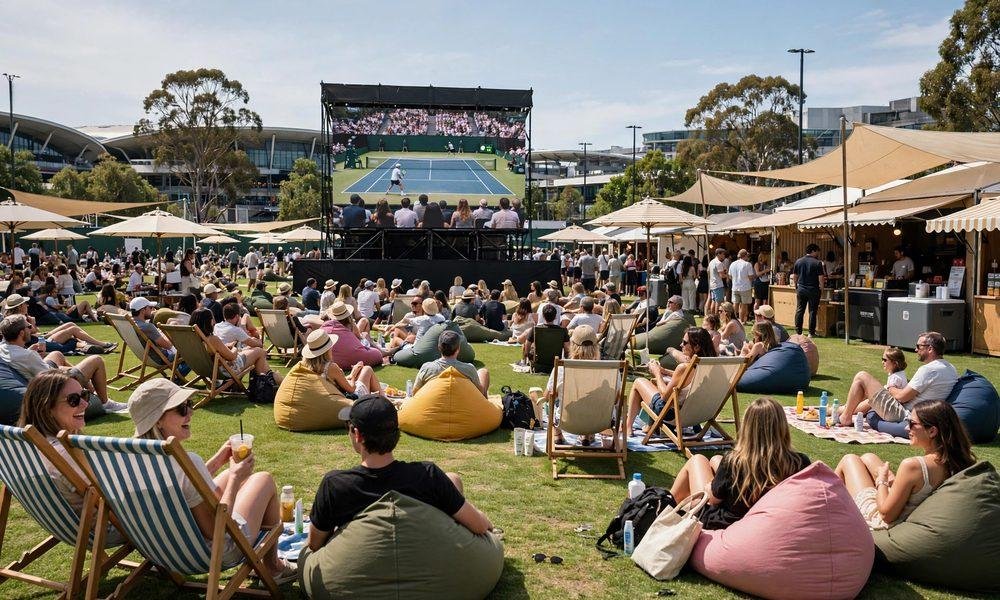
Food is a big part of the day. The precinct hosts food trucks and pop-up stalls from Melbourne operators, plus bars pouring wine, beer and the tournament’s signature cocktails. Shake Shack is back for 2027. You can also bring your own food and non-alcoholic drinks in sealed containers, which saves queuing at midday.
Live music runs most nights across several stages, and AO LIVE brings headline concerts to John Cain Arena and TOPCOURT. For 2027, Benny Benassi and Fedde Le Grand play John Cain Arena on 31 January, and RuPaul plays TOPCOURT on 29 January for Pride Day. AO LIVE tickets start from $69 for TOPCOURT and $89 for John Cain Arena, including a Ground Pass, and are sold separately from match tickets.
Families get their own corners of the precinct too. AO Ballpark and TOPCOURT run games and activities for kids, and the open lawns give younger children room to move. The Melbourne Park guide lists the full program of activities, food and entertainment.
Australian Open with kids
The Open works well for families, and Opening Week is the easiest time to bring children. Kids Tennis Day falls on Sunday 10 January, with tennis activities, stage shows and interactive experiences around the precinct. During Opening Week, kids’ Ground Passes cost $5, and kids go free on Monday 11 January.
AO Ballpark and TOPCOURT are the main kids’ zones, with games and activities that suit younger visitors. Strollers are welcome in the outdoor areas, and the lawns at Garden Square give children space to run around between matches. Keep in mind that arena sessions run long, and summer heat and late-night finishes can tire younger children out, so plan breaks in the shade.
Children must stay under the supervision of a parent or responsible adult at all times. Some licensed or entertainment areas may restrict access for younger visitors. For more ideas on visiting the city with children, see our guide to Melbourne with kids.
Accessibility at the Australian Open
Melbourne Park is fully accessible, with step-free paths, ramps, lifts and accessible toilets across the precinct. All entrances except the Richmond Entrance have a dedicated Accessible Entry lane, and the Richmond Entrance is still wheelchair accessible.
Four accessible seating types are available across the arenas: wheelchair and mobility equipment bays, ease-of-access rows close to ramps and stairs, enhanced vision seats near the court, and seating for guests who are deaf or hard of hearing, aligned with hearing loops and live screen captions. Companion Cards are accepted on a one-to-one basis.
An accessible drop-off zone sits on Olympic Boulevard near Entrance D, at the Eastern Plaza Car Park, and connects to a free buggy transfer service to the Garden Square Entrance. A limited number of accessible parking spaces are available at the Eastern Plaza Car Park and must be purchased in advance. Changing Places facilities are inside Rod Laver Arena and John Cain Arena.
Book accessible tickets through Ticketmaster’s accessible ticket option, or call the Australian Open Accessibility Line on 1300 308 999, open 9am to 5pm daily. Accessible allocations can be limited, so book early. One note on concessions: a Victorian Seniors Card on its own does not qualify for concession pricing. Accepted cards are a Pensioner Concession Card, Health Care Card, Department of Veterans’ Affairs or TPI card, and full-time student cards, and concessions do not apply to lower-bowl Rod Laver Arena main-draw seats.
Weather, heat and what to bring
January is Melbourne’s hottest month, and the Open has seen everything from mild high-20s days to 40-degree heat. The average January high at Olympic Park, next to Melbourne Park, is about 27 degrees. The tournament rates the heat on a scale from 1 to 5. At level 5, play stops on the outside courts and the roofs close on the three main arenas. Play stopped for this reason twice in 2026.
Pack a hat, sunglasses and high-SPF sunscreen, as the outdoor courts sit in full sun. Bring a refillable water bottle, since free water stations sit around the precinct, and a light layer for the evening, when the temperature can drop fast. Wear comfortable shoes, as you will walk between courts all day, and carry a phone charger. Melbourne Park is a cashless venue, so bring a bank card or mobile wallet.
If it rains, play carries on under the retractable roofs at Rod Laver Arena, Margaret Court Arena and John Cain Arena. Matches on the outdoor courts may pause or be rescheduled. Shaded seating areas and elevated viewing platforms sit around the precinct, and Grand Slam Oval has triple the shade cover for 2027.
A sample day at the Australian Open
A Ground Pass day works best with a loose plan. Arrive when the gates open, at 9am in the main draw or 9:30am in Opening Week, and head to John Cain Arena first, as its unreserved seats fill early. The first hour is the quietest time of the day, with short queues and space to explore the precinct.
By midday, move between the outdoor courts and follow the buzz. Check the screens around the site, which show which courts still have capacity, then settle where the match looks closest. Buy lunch early from Grand Slam Oval or Garden Square, or eat the picnic you brought, before the midday queues build.
In the afternoon, look for shade. The covered seating on the western courts is a reliable choice, and the practice courts behind John Cain Arena are worth a look for a behind-the-scenes view of players warming up. As evening falls, stay for the night atmosphere in Garden Square, where deckchairs and the big screen make an easy end to the day. Day sessions in Rod Laver Arena start at 11:30am and night sessions at 7pm.
Watching the Australian Open for free
You can follow the tournament without a ticket. In Australia, the Nine Network shows the Australian Open free on its free-to-air channels and on the 9Now streaming app, with a free account. Stan Sport, a paid service, streams every court live, with replays and select matches in 4K.
In past years, Federation Square has screened the big matches on its big screen, drawing crowds of workers and fans into the city square. The 2027 live-site details are announced closer to the event, so check before you go if you plan to watch there. For more on the best time to plan a Melbourne trip around the tournament, see our guide to the best time to visit Melbourne.
Where to stay near Melbourne Park
For walking-distance convenience, base yourself in the CBD, Southbank or East Melbourne. The city end near Flinders Street Station puts you a short walk from Melbourne Park through Birrarung Marr, with restaurants, bars and laneways on your doorstep. Richmond is another smart choice, close to the precinct and full of cafes and restaurants on Bridge Road and Swan Street.
Book early. January is peak season in Melbourne, and the Open pushes demand and prices up, so the best-value rooms go months ahead. Our guide to where to stay in Melbourne breaks down the best areas by budget and style. If you want to stretch the trip further, day trips from Melbourne offer ideas beyond the city.
First-timer tips for the Australian Open
Choose shaded seats when you book. Use the Ticketmaster seating plan to pick a seat out of the direct sun, as a full day in an exposed seat is hard work in January heat. A seat with cover also keeps you dry if a shower passes through.
Know about the wristband system for evening access to John Cain Arena. The arrangements change each year, and in 2026 wristbands were given out from 1pm, so check the AO App on the morning of your visit to confirm the time and place for 2027.
Download the AO App before you go. It carries the order of play, schedules, ticket updates and precinct maps, and it is the fastest way to check which courts have room once you are inside.
Plan food and rest rather than waiting for a natural break. Play runs all day with no set lunch pause, so buy food early or bring a picnic. A short rest in the shade at Garden Square or Grand Slam Oval keeps your energy up for the evening session.
Final thoughts on the Australian Open Melbourne
The Australian Open rewards a simple plan: a first-week Ground Pass day for the outdoor courts, plus one night session under the roof at Rod Laver Arena. Book early, as Ground Passes are capped for the first time in 2027, and give yourself a few extra days in Melbourne to enjoy the city around the tennis. For more trip planning, Australia City Guide covers the city in detail.
Frequently asked questions
Can I buy Australian Open tickets at the gate?
Do not count on it. Daily Ground Pass numbers are capped for the first time in 2027, and the busiest days in the first week of the main draw can sell out. Buy your pass in advance through Ticketmaster for the day you want.
What happens to my ticket if rain or heat stops play?
It depends on the session. For the singles semi-final and final sessions, you get a refund or credit if less than one full set is played. For every other arena session, you get a refund, a credit or a replacement ticket if no tennis starts in your session at all. If outdoor play is interrupted by weather but the day is not cancelled, refunds are generally not available, so check the ticket conditions of sale before you buy.
Do I need a myki card to get to Melbourne Park?
Yes, for trains and regular trams in Melbourne. In 2026, ticket holders rode the Route 70 and 70a event trams free without tapping on, but the 2027 arrangements have not been announced yet. Victoria’s half-price fares end on 1 January 2027, and the full-fare myki daily cap was $11.40 in 2026, so check the 2027 fare on the Transport Victoria site before you travel. Our guide to Melbourne trams explains how the network works.
What bag can I bring into Melbourne Park?
One small bag per person, small enough to fit under your seat. You can bring food and non-alcoholic drinks in sealed containers, but glass is not allowed, and metal cans over 1.5 litres are not allowed either. Suitcases must be cloaked at Flinders Street or Southern Cross stations, as the precinct cloaking booth does not take them.
What is the AO 1 Point Slam?
It is a one-point shootout played during Opening Week, with a $1 million prize for the winner. Pros and amateur qualifiers face off in a single-point format, and the 2027 event has Carlos Alcaraz, Coco Gauff, Naomi Osaka and Jannik Sinner among the first players signed up. Tickets start from $59 through Ticketmaster.