Litchfield National Park is the Top End’s easy win. It’s about 90 minutes’ drive south of Darwin, entry is free, and nearly everything worth seeing sits close to a sealed road. Waterfalls pour into pools you can actually swim in. Tall, strange termite mounds line the roadside. And you can cover the highlights in a single day if time is tight.
This is the park for travellers who want the Northern Territory without the long outback drives. Pair it with our guide to things to do in Darwin and the Top End is sorted. The team at Australia City Guide has done Litchfield more than once, so here’s what to see, when to go, and how to plan it.
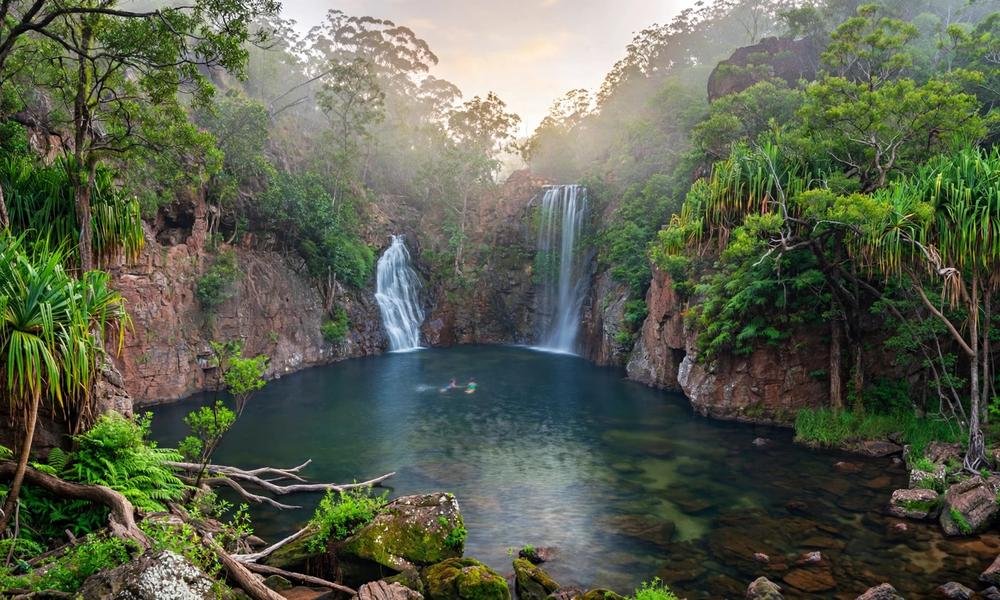
Swim Beneath Florence Falls
Florence Falls is the waterfall on all the postcards. Two streams of water drop into a deep, clear plunge pool ringed by monsoon forest, and on a hot Top End day that water feels like the best thing in the world. A staircase leads down through the bush to the pool, so wear proper shoes and carry water with you.
It gets busy by midday in the dry season, so arrive early for a quieter swim and an easier walk back up. Check the park alerts before you go: the pool sometimes closes for swimming after heavy rain or crocodile sightings.
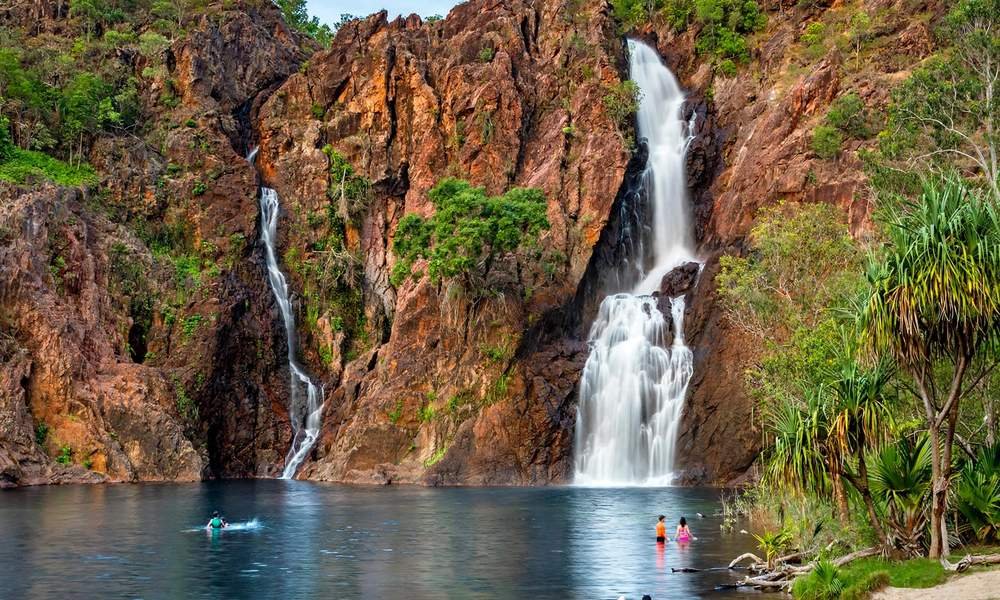
Cool Off at Wangi Falls
Wangi Falls is the park’s social swimming spot. The plunge pool is wide and easy to get into, there’s a big shaded picnic area, and a kiosk nearby sells cold drinks and snacks. Families rate it highly because the water entry is gentle and there’s plenty of room to spread out on the grass.
The campground here is the most popular in the park, so the falls see a steady crowd through the dry season. Like Florence Falls, swimming can close in the wet season, so check conditions on the day you visit.
Drift Between the Pools at Buley Rockhole
Buley Rockhole is a string of small rock pools stepping down a creek, and it’s made for slow afternoons. Sit in one pool and let the water spill over you into the next, or just dangle your feet and watch the bush go by. It’s a five-minute walk from the car park, which makes it the easiest stop in the park. Go late in the day when the tour buses have left and you’ll often have a pool to yourself.
Stand Among the Magnetic Termite Mounds
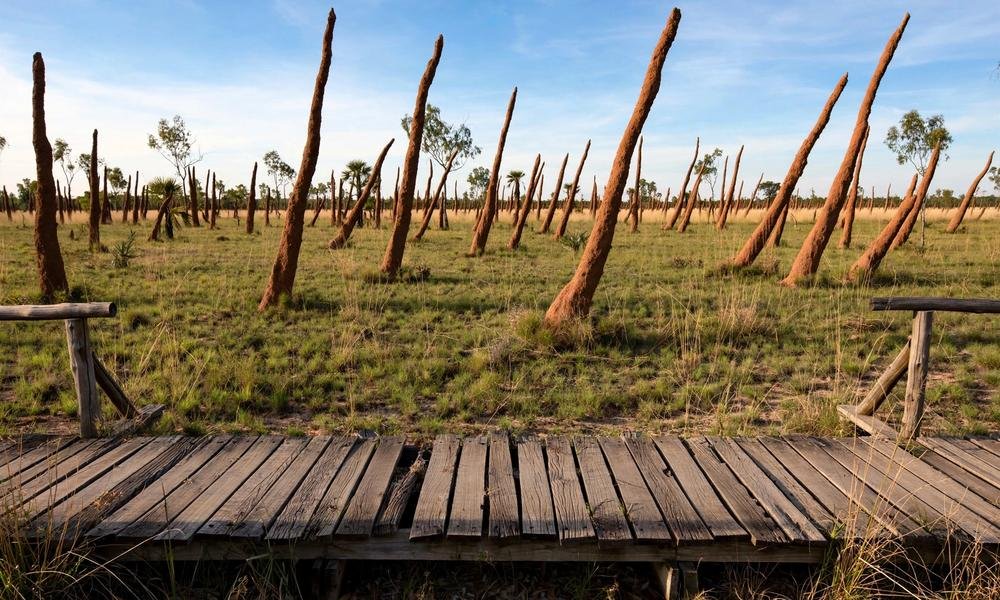
On the drive in you’ll pass a field of tall, thin termite mounds all leaning the same way. These are magnetic termite mounds, and they line themselves up north to south to stay cool through the heat of the day. A short boardwalk with signs explains how they work, and the whole stop takes about ten minutes. You’ll see bigger cathedral mounds elsewhere in the Territory, but these slim ones are Litchfield’s signature sight.
Take the Short Walk to the Tolmer Falls Lookout
Tolmer Falls drops a long way down a sheer cliff face, and you take it in from a lookout platform across the gorge. There’s no swimming here, and that’s fine: this stop is about the view. The walk from the car park is short and mostly flat, the morning light hits the falls nicely, and you’ll often have the platform to yourself.
Getting to Litchfield National Park from Darwin
The drive from Darwin takes about 90 minutes to the park’s northern entrance near Batchelor, or closer to two hours if you enter from the south. The main loop road is sealed and fine in a normal car, and the big attractions all sit off it. A few side tracks, like the Reynolds River track, need a high-clearance 4WD, so check track conditions before you turn off the main road. Fuel up in Darwin or Batchelor: there’s no petrol inside the park.
The Best Time to Visit Litchfield
The dry season, roughly May to October, is the sweet spot. The waterfalls are flowing, the swimming holes are usually open, the roads stay dry, and the humidity is bearable. In the wet season, roughly November to April, the falls run at their most powerful but swimming often closes and some roads and campgrounds shut. If you visit in the wet, check the park alerts on the morning you go.
One Day or Overnight: How Long You Need
You can see the highlights in one full day from Darwin. Florence Falls, Wangi Falls, Buley Rockhole, the termite mounds, and Tolmer Falls all fit if you leave early. But an overnight stay changes the trip. You get the swimming holes at sunrise and sunset when the day-trippers are gone, and there’s time for a longer walk or the Lost City rock formations. If the schedule allows, stay a night.
Where to Stay: Camping in the Park and Batchelor
Camping Inside the Park
The park has a few campgrounds, with Wangi Falls the pick thanks to its spot near the swimming hole. Sites are basic: expect toilets and not much else, so bring everything you need including drinking water. Book ahead in the dry season because weekends fill fast.
Staying in Batchelor
Batchelor is the gateway town just outside the park’s northern entrance, with motels, a pub, and a general store for supplies. It’s a good base if camping isn’t your thing, and it’s close enough for an early start at the falls. Darwin works too if you’d rather keep one base and day-trip it.
Litchfield or Kakadu: Which One Should You Pick
Short on time? Pick Litchfield. It’s closer to Darwin, everything is easy to reach, and the swimming is the main event. Got three or more days? Add Kakadu National Park, which is bigger, wilder, and packed with ancient rock art and wetlands full of wildlife. They pair well together: Litchfield for waterfalls and swimming, Kakadu for culture and scale. If you can only manage one day trip from Darwin, Litchfield wins on ease.
Day Tours and Scenic Flights Worth Booking
If you’d rather not drive, day tours run from Darwin to Litchfield most days in the dry season. They usually bundle the waterfalls with a jumping crocodile cruise on the way home. Small-group tours cost more but move faster and allow longer swims. Scenic helicopter flights over the park operate from near Darwin and show you the falls from above. Book dry-season weekends ahead: the popular departures sell out.
Staying Safe Around the Water
Saltwater crocodiles live in the Top End, and they can turn up in park waterways, especially in the wet season. Only swim where the signs say it’s allowed, and never swim at dawn or dusk in unpatrolled water. The park closes swimming holes when crocodiles are spotted, which is exactly what you want to see. Beyond crocs: carry more water than you think you’ll need, wear a hat, and tell someone your plans if you’re heading off on a walk alone.
FAQs About Visiting Litchfield National Park
Is Litchfield National Park worth visiting?
Yes, especially on a Top End trip. It’s an easy day trip from Darwin with waterfalls you can swim under, strange termite mounds, and free entry. Few national parks pack this much into such an easy drive.
Can you swim in Litchfield National Park?
Yes, at signed swimming spots like Florence Falls, Wangi Falls, and Buley Rockhole during the dry season. Swimming closes after heavy rain or crocodile sightings, so always check the signs and park alerts before getting in.
How far is Litchfield from Darwin?
About 90 minutes’ drive to the northern entrance near Batchelor, or around two hours via the southern entrance. The main roads are sealed and suitable for a normal car.
Do you need a 4WD for Litchfield?
No, not for the main attractions. Florence Falls, Wangi Falls, Buley Rockhole, Tolmer Falls, and the termite mounds are all on sealed roads. Only side tracks like the Reynolds River track need a high-clearance 4WD.
Is there an entry fee for Litchfield National Park?
No. Entry to Northern Territory national parks is free. You only pay if you stay overnight at a campground.
Final Thoughts on Visiting Litchfield National Park
Litchfield is the rare national park that asks almost nothing of you and gives a lot back. No entry fee, no long dirt roads, no multi-day commitment. Just waterfalls you can swim in, a creek full of rock pools, and some of the strangest termite mounds you’ll ever see, all within a day trip of Darwin. Go in the dry season, start early, swim twice, and you’ll understand why locals treat it as their backyard.
Keep exploring:
- Things to do in Darwin: pair the park with two days in the Top End capital, with sunset markets, crocodiles, and wartime history.
- Kakadu National Park: ancient rock art, wetlands, and waterfalls on a grander scale, a few hours east of Darwin.
- Things to do at Uluru: fly south to the Red Centre for Australia’s most famous rock and desert sunsets.