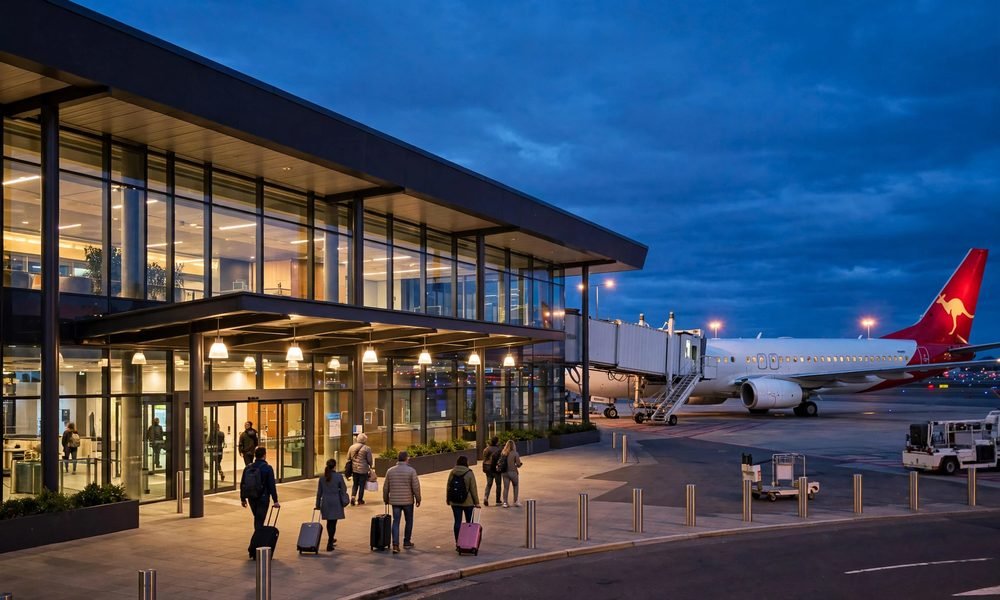

Melbourne Airport is the front door to Victoria. Most visitors to the city land here, and your first hour in Australia is shaped by how well you know this airport. The good news is that it is a compact, easy airport once you know the layout. The catch is that there is no train to the city, the four terminals serve different airlines, and the pick-up and drop-off areas changed in late 2026. This guide walks you through all of it, from the moment your plane lands to the moment you reach your hotel. If you are planning the rest of your trip, Australia City Guide has the full picture, and the Melbourne guides cover what to do once you arrive.
The Airport at a Glance
The airport sits at Tullamarine, about 23 kilometres north-west of the city centre. That is why locals still call it Tullamarine Airport. Its code is MEL, and it is the main international and domestic gateway for Victoria. Around 37 million passengers passed through in the 2025/26 financial year, which makes it Australia’s second busiest airport after Sydney.
The airport runs 24 hours a day and has no curfew, so late night and early morning flights are normal here. All four terminals sit in one connected precinct, so you can walk between them without a shuttle bus if you want to. The walk from one end to the other takes about 10 to 15 minutes at a normal pace.
There are a few facts worth knowing before you fly. The airport has no direct rail link to the city, and that trips up first timers more than anything else. SkyBus is a coach, not a train. Free Wi-Fi works in Terminals 2, 3 and 4, but Terminal 1 runs its own Qantas network instead. And if your booking says Avalon instead of Tullamarine, you are flying into a different airport altogether, which brings us to the next point.
Tullamarine or Avalon Airport? Check Before You Book
Two airports serve the Melbourne area, and mixing them up is one of the most expensive mistakes a traveller can make. The main airport (MEL) is at Tullamarine, 23 kilometres from the city. Avalon Airport (AVV) sits near Geelong, about 55 kilometres south-west of the city, and the trip into town takes far longer.
Jetstar uses both airports, so check your booking with care. Your confirmation should say either “Melbourne (Tullamarine)” or “Avalon”. The three-letter code is the clearest clue. MEL means Tullamarine. AVV means Avalon. If you turn up at the wrong airport, you will miss your flight, so check the code when you book and again the day before you fly.
Which Terminal Do You Need?
Your terminal depends on your airline and whether your flight is domestic or international. Get this wrong and you could be a 15 minute walk from the right check-in desk, so check your booking email or your airline’s app before you leave home. You can also look up your flight number on the airport’s website for live terminal details.
Terminal 1: Qantas Domestic
Terminal 1 is for Qantas and QantasLink domestic flights. Arrivals come out on the ground floor, and baggage claim is on the same level before you exit. The Qantas Club lounge sits upstairs past security in the departures area. For ground transport, pre-booked cars and the taxi rank are both at Door 4 on the kerb. Short stay parking connects by a covered walkway.
Terminal 2: International
Terminal 2 handles every international flight. Qantas international, Emirates, Singapore Airlines, Cathay Pacific, Air New Zealand, United, Malaysia Airlines, Thai Airways and all other overseas carriers use this terminal. Arrivals take longer here than at the domestic terminals, because you go through passport checks, biosecurity screening and baggage claim. Allow 20 to 60 minutes from landing to the arrivals hall, depending on queues. The meeters and greeters area is outside the arrivals hall exit on the ground level.
One detail catches people out at Terminal 2. The taxi rank is at Roadway A, but pre-booked cars wait at Roadway B, about 50 metres away. If your driver is meeting you, tell them Roadway B, not Roadway A. Rideshare has its own signed zone, separate again. The SkyBus stop is in the ground transport area, and car rental works by free shuttle to a separate car rental village.
Terminal 3: Virgin Australia Domestic
Terminal 3 is the Virgin Australia domestic terminal. It is the simplest terminal in the precinct. Arrivals exit on the ground level into a compact hall, while check-in and bag drop are on the upper departures level. The Virgin Australia lounge is past security on the departures level. Pre-booked cars pick up at the kerb by the arrivals exit, and taxi and rideshare zones are signposted from the same exit. The covered walkway to Terminal 2 takes about five minutes, which is handy if you are connecting to an international flight.
Terminal 4: Jetstar, Rex and Link Airways Domestic
Terminal 4 is the budget end of the airport. Jetstar domestic, Rex Airlines and Link Airways fly from here. It is a compact terminal with one check-in hall, and arrivals exit at kerbside on the ground level. It sits at the south end of the precinct, next to Terminal 3, and the walk between the two takes about two minutes.
Here is the trap with Terminal 4. If you fly Jetstar internationally, you depart and arrive at Terminal 2, not Terminal 4. Plenty of people have rushed to the wrong terminal for an international Jetstar flight. The same goes for Qantas. Qantas domestic is Terminal 1, Qantas international is Terminal 2. Check your ticket, not just your airline.
Moving Between Terminals
All four terminals connect landside, so you can walk between them without leaving the building. Terminal 1 to Terminal 2 takes three to five minutes on a covered walkway. Terminal 3 to Terminal 4 takes about two minutes. The longer walk, from Terminal 1 or 2 down to Terminal 3 or 4, takes 10 to 15 minutes on foot.
A free Terminal Transfer Bus also runs between all four terminals every 10 to 15 minutes, 24 hours a day. Pick it up from the ground transport area outside any terminal. No ticket is needed. Use it if you have heavy bags or a tight connection. If your connection is domestic to domestic and you do not need to re-check bags, you can walk between terminals without going through security again. For a domestic to international connection, you will go through international security at Terminal 2.
Arriving at the Airport: Step by Step
Your arrival looks different depending on whether you land from overseas or from another Australian city. Here is how each one works in practice.
International Arrivals
After your plane lands, you walk to passport control. Many travellers from ePassport countries, such as New Zealand, the United Kingdom and much of Europe, can use the SmartGates. You scan your passport, look at the camera, and walk through to baggage claim. Families with young children and some nationalities still use the staffed counters, which can mean longer queues.
Next comes baggage claim, where free trolleys are easy to find. Then you clear customs and biosecurity. Australia has some of the strictest biosecurity rules in the world. On the plane you fill in an incoming passenger card that asks about food, plant material and animal products. Declare everything you are unsure about. If you leave a piece of fruit in your bag by mistake, declare it and it will be thrown away without a fine. If you hide it and get caught, the fine is heavy.
After customs you pass duty-free shops and money exchange counters, then you step into the public arrivals hall. If you land between 7 and 9 in the morning, when many flights from Asia arrive at once, allow at least 45 to 60 minutes from landing to the arrivals hall. At quiet times it can take as little as 20 minutes.
Money is simple at the airport. ATMs from the big Australian banks sit near the exits and near the SkyBus ticket counters. Rates at the currency exchange counters are usually worse than in the city, so most travellers just use an ATM with a debit or travel card. You can also buy a prepaid SIM card in the Terminal 2 arrivals area from Optus or Vodafone, or use an eSIM if your phone supports one.
Domestic Arrivals
Domestic arrivals are far simpler. You walk off the plane, pick up your bag from the carousel, and walk out. There is no passport check and no customs. From wheels down to the kerb usually takes 15 to 30 minutes, unless your bag is slow. If you are connecting to another domestic flight and your bags are checked through, follow the signs to your next terminal. If your bags are not checked through, collect them and re-check at the next terminal.
Connecting Flights
Connections need more time than most people expect. If you arrive on an international flight and connect to a domestic flight, you must collect your bags, clear customs and biosecurity, walk to your domestic terminal, and re-check your bags. Allow at least 60 minutes for this, and more in the morning peak. The biosecurity queue alone can take 30 minutes on a busy morning.
If you arrive on a domestic flight and connect to an international flight, allow at least 90 minutes. You need to walk or catch the free bus to Terminal 2, check in, and clear international security, where queues can run 20 to 40 minutes at peak times. If you booked the two flights on separate tickets, which is called a self-transfer, allow two and a half to three hours. Your bags will not be checked through, and if your first flight is late, the second airline owes you nothing.
Getting from the Airport to the City
There is no train, so your options are SkyBus, taxi, rideshare, public bus, or driving yourself. Each one suits a different kind of traveller, and the cheapest option is not always the best one. Fares change over time, so treat the prices below as a guide and check the current fare before you travel.

SkyBus: The Simplest Option for Most Travellers
SkyBus runs the Melbourne City Express between the airport and Southern Cross Station, on the western edge of the city centre. Coaches leave every 10 to 15 minutes from 4 am to 1 am, seven days a week, including public holidays. There is no service between 1 am and 4 am. The trip takes around 30 to 45 minutes depending on traffic.
Stops sit directly outside Terminals 1, 3 and 4. If you arrive internationally at Terminal 2, walk a short distance to the Terminal 3 stop. You can buy tickets online, from staffed counters near the exits, or from machines at the stops. Buying online in advance is usually a little cheaper. A one-way adult ticket costs around $25.90, and a return is around $43.40. Children and concession fares are available. The coaches are air conditioned with luggage storage underneath.
Once you reach Southern Cross Station, you can change to suburban trains, trams and buses. The Free Tram Zone covers the central city grid, so a short tram ride from Southern Cross costs nothing. If your hotel is near Flinders Street, you can take a short city loop train or walk. Many first timers pick a hotel near Southern Cross just because the SkyBus drop-off makes arrival with luggage so easy.
SkyBus also runs other routes from the airport to St Kilda, Frankston and Sunshine, with different frequencies. If you are heading to the Surf Coast or the Bellarine Peninsula, Gull Geelong runs a scheduled coach service between the airport and Geelong.
Taxi: Door to Door, Day or Night
Taxis run 24 hours a day from ranks outside each terminal, usually managed by marshals at busy times. A taxi to the city costs roughly $55 to $65, including the airport pick-up surcharge, and takes about 35 minutes in light traffic. In peak hour or when roadworks slow the Tullamarine Freeway, it can take an hour or more.
Taxis suit groups and anyone with heavy luggage. The fare includes CityLink tolls, which the driver adds to the meter. If you are travelling with five or more people, or with lots of bags, ask for a maxi cab. It costs more than a standard taxi but fits up to 11 passengers, and for a big group it often works out cheaper per person than separate SkyBus tickets.
Rideshare: Uber, DiDi and Ola
Rideshare services use signed pick-up zones outside the terminals, not the taxi ranks. Uber in particular runs an exclusive rank outside Terminals 1, 2 and 4 and uses a PIN system for many airport pick-ups. After you request a ride in the app, you may get a six-digit PIN instead of being matched to one driver. At the rank you join the queue, the next driver pulls up, and you read the PIN to them so they can start the right trip.
A standard rideshare to the city usually costs around $45 to $70, depending on traffic and surge pricing. In off-peak times it is often a little cheaper than a taxi. In peak times, surge pricing can push it above taxi rates. Check the fare in the app before you book, and note that rideshare pick-ups carry an airport fee on top of the fare.
Watch out for one scam that travellers report at the airport. A driver may refuse to enter the PIN, ask you to cancel the app trip, and offer to take you for cash instead. Never agree to this. Insist the driver enters the PIN and that the app shows the right trip, car and price before you leave. If something feels off, step back, let that car go, and wait for the next one. Only get into a car that matches the number plate and car details in your app.
Public Bus: The Cheapest Way, But the Slowest
Public buses are the only other public transport from the airport, and they are the cheapest option by far. The catch is time. SmartBus route 901 runs between the airport and Frankston, with a transfer at Broadmeadows Station on the Craigieburn train line. Other local routes, such as 478, 479 and 482, link the airport to nearby suburbs. Expect 60 to 90 minutes or more to reach the city this way, with at least one change.
Buses use a Myki card, which is the reusable smartcard for public transport across Melbourne. You can buy or top up a Myki at many shops in the city, some vending machines, and staffed train stations. You cannot buy one at the airport itself, so if you plan to use the bus, sort out your Myki before you land or at Southern Cross on your way back. Buses suit budget travellers who are not in a hurry, or people heading to the northern suburbs directly.
Driving Yourself
The airport connects to the Tullamarine Freeway (M2), and the drive to the city usually takes 30 to 40 minutes in light traffic. In peak hour, allow an hour or more. The freeway joins CityLink, which is a tolled road. Rental cars usually come with a toll pass arranged by the hire company, often at a daily surcharge, or you can buy a casual pass from Transurban before you travel. Ask your hire company how tolls work before you drive off, so you do not get a surprise bill later.
Which Transfer Should You Pick?
The right choice depends on who you are and when you land. Here is a quick way to decide.
- Travelling solo and watching your budget: take SkyBus. It is the best mix of price and speed, and Southern Cross puts you in the city centre.
- Two or more people with normal luggage: run the numbers on a taxi or rideshare. Two SkyBus tickets cost about the same as one taxi fare, and a taxi drops you at your hotel door.
- Family with kids and lots of bags: book a maxi cab or a rideshare with extra seats. One big car beats splitting the family across two vehicles.
- Landing after 1 am: SkyBus has stopped running, so pre-book a private transfer or use a taxi or rideshare. If your flight lands close to 1 am, you could also stay at an airport hotel and head into town in the morning.
- Heading straight out of Melbourne: hire a car at the airport. You are already on the freeway, and driving to the Great Ocean Road, the Grampians or Phillip Island from the airport is often easier than driving out of the city.
- On a tight budget with time to spare: take the public bus with a Myki card. It costs the least, but it is slow and involves changes with luggage.
One more tip for the trip back. Melbourne’s freeway can seize up without warning because of an accident or heavy rain. Leave the city earlier than you think you need to, especially if you have a morning flight. The peace of mind is worth far more than an extra half hour at your hotel.
Picking Someone Up or Dropping Someone Off
The pick-up and drop-off areas changed on 6 October 2026 as part of the Naarm Way project, so even regulars need to learn the new layout. For Terminals 1, 2 and 3, take Exit 19 (Naarm Way) from the Tullamarine Freeway and follow the signs to the T123 Transport Hub.
Drop-off is on Level 3 of the T123 Transport Hub, and it is free for one minute. Have your luggage ready before you arrive, because one minute goes fast. Pick-up is at the rear of Level 2 of the same hub, with 115 undercover spaces and a five-minute limit. The new drop-off area connects to the terminals by a covered pedestrian bridge, but allow extra walking time between the hub and your terminal, especially with children or heavy bags.
Terminal 4 still uses the T4 Transport Hub, with drop-off on Level 2 and pick-up on Level 1. Taxi and rideshare pick-ups for Terminals 1, 2 and 3 stay at the ground level terminal forecourt, while drop-offs now use Level 3 of the T123 Hub.
If you arrive early to collect someone, use the Wait Zone on Mercer Drive. The first 60 minutes of parking there are free. Your passenger can call you once they have cleared customs, collected their bags and reached the pick-up zone.
Parking at the Airport
Parking suits every budget, from a quick goodbye to a three-week holiday. Booking online in advance is usually cheaper than paying on arrival, so book before you leave home if you can.
Terminal Car Parks
The multi-storey Terminal Car Parks sit directly opposite Terminals 1 to 4. The T123 Car Park serves Terminals 1, 2 and 3, and the T4 Car Park sits about 100 metres from Terminal 4. These are the closest parks and the easiest option for short stays. Short-term rates cover stays under six hours, and drive-up daily rates run roughly $49 to $54. Premium undercover bays sit closest to the check-in counters, on Level 2 of the T123 Car Park and Level 1 of the T4 Car Park.
Value Car Parks
The Value Car Parks are the budget option. These open-air parks sit off the Tullamarine Freeway, split into Value North and Value South, with free shuttle buses to the terminals every 15 minutes, 24 hours a day. Drive-up rates start around $12 to $14 a day. Remember to leave time for the shuttle ride when you plan your arrival.
Valet and Accessible Parking
Valet parking lets you leave your car with airport staff at Level 1 of the T123 Car Park before your flight. Staff park it in a prime undercover spot, and a car wash is available for an extra fee. You can book valet through the airport or through Qantas.
Accessible bays are available in all car parks on a first-come basis, and you can now pre-book an accessible park in the T123 Accessible Car Park on Level 2 of the T123 Car Park. Book ahead if you need a guaranteed spot.
Keeping Your Car Safe
Victoria Police warn that car theft has risen in Victoria, and the airport is one of the places thieves target. Most break-ins are opportunistic, so a few simple steps help. Take valuables out of sight before you arrive, and lock them in the boot if you must leave them. Do not leave house keys in the car, and delete your home address from the car’s GPS before you leave. Lock all doors and close the windows fully, then double-check after you walk away. If your car has keyless entry, keep the fob in a shielded pouch or switch it off if you can, because thieves can relay the signal to unlock the car. Note your bay and level, and take a photo of your number plate in case you need to report anything.
Hiring a Car at the Airport
Several major hire companies work from the airport, including Avis, Budget, Europcar, Hertz and SIXT. Counters sit on the ground floor of the T123 Car Park, opposite Terminal 2, and the cars are parked in the garage below. Booking ahead is strongly advised, especially during school holidays and peak travel times.
Before you sign, check the licence rules, the insurance excess, and any fees for extra drivers. The excess you pay if the car is damaged can be very high. Rather than paying the hire company’s excess waiver, it is often cheaper to buy a separate car hire excess insurance policy before you travel. Ask how CityLink tolls are handled too, since the drive into the city uses a tolled road.
A hire car makes sense if you plan to explore beyond the city. From the airport you can drive straight onto the freeway toward the Great Ocean Road, the Grampians or Phillip Island without fighting city traffic first. Our day trips from Melbourne guide covers the best drives within a few hours of the city.
Where to Stay Near the Airport
An airport hotel makes sense if you have a very early departure, a late-night arrival, or a long layover. Six major hotels sit near the airport, and four of them are within walking distance of the terminals.
The PARKROYAL hotel is the closest of all. It connects to the international and domestic terminals by a covered walkway, and you can walk from your room to check-in in a few minutes. It also sells day rooms, which are handy if you need a shower and a bed between flights. The Novotel and ibis Styles hotels sit in the precinct near Terminal 4. The Holiday Inn is about a five-minute walk through the car park.
A short drive away you will find the ibis Budget, Quality Hotel, Quest, Ciloms Airport Lodge and the Best Western Airport Motel. Most of these run free 24-hour shuttle buses to the terminals. The usual pattern is to call the hotel after you collect your bags, then wait 10 to 20 minutes for the shuttle. Some hotels further out, around Essendon Fields, offer park-and-fly packages that combine a night’s stay with several days of parking and a morning shuttle to the terminal.
Food, Shopping and Free Wi-Fi

Food and Drink
Food has improved a lot at the airport in recent years. The Square, a dining precinct in Terminal 1, brings Melbourne coffee culture into the terminal with places like Rustica, Pope Joan and ST. ALi, right after Qantas security. Terminal 2 has sit-down options such as Bar Pulpo by MoVida, plus Brunetti Classico which stays open around the clock. Terminal 3 has the Stomping Ground Brewery and Beer Hall, pouring local craft beer on tap. Terminal 4 has a central food court and a 24-hour McDonald’s.
Several places stay open 24 hours, including Hungry Jack’s in Terminal 2 and McDonald’s in Terminals 3 and 4. Prices airside are higher than in the city, but they are what you would expect at a major international airport. If you have a long wait, eat lightly, drink plenty of water, and go easy on alcohol before a long flight.
Shopping and Duty-Free
More than 200 shops sit across the terminals, from fashion and tech to Australian souvenirs. Duty-free shops sit in Terminal 2, and only international travellers can use them. You need your boarding pass to buy, and domestic travellers cannot shop there. If you are arriving from overseas, you pass the duty-free stores just after customs, before the arrivals hall.
Wi-Fi and Charging
Free Wi-Fi is available in Terminals 2, 3 and 4. Connect to the network called “Airport Free Wi-Fi” and follow the sign-in steps. There is no time limit, but the public network can be slow at busy times. Terminal 1 is the exception. Qantas runs Terminal 1, so it has its own Qantas network instead, and the free airport Wi-Fi does not work there.
Charging points are thinner than you might expect for an airport this size. Free power points and USB ports sit airside and landside, with a good cluster along the Terminal 3 security approach and near the Middle Ground cafe between Terminals 1 and 2. Wall outlets get busy at peak times, so bring a power bank. If you forget a cable, shops like JB Hi-Fi in Terminal 1, Tech2Go in Terminals 3 and 4, and WH Smith sell cables and chargers.
Lounges at the Airport
There are 12 lounges across the four terminals. Most are for airline members, business class passengers or status holders, but several welcome anyone who buys a day pass, and some accept Priority Pass.
In Terminal 1, the Qantas Club and Qantas Business Lounge sit past security near the gates. Walk-in entry to the Qantas Club costs from around $99, and you get showers, barista coffee and food. Terminal 2 has the widest choice. The Qantas International Business and First lounges sit here, along with the Emirates Lounge near Gate 10 on Level 3, the American Express Centurion Lounge near Gate 7, the Plaza Premium Lounge near Gates 9 and 10, the Marhaba Lounge, The House near Gate 10, and the Singapore Airlines SilverKris Lounge. Plaza Premium and Marhaba accept Priority Pass and sell passes online, which is worth doing in advance because lounges can fill up during the morning and evening international banks.
Terminal 3 has the Virgin Australia Lounge past security, with day passes from around $65. Terminal 4 has the REX Lounge near Gate 30, with day passes from around $33 for Regional Express ticket holders. Jetstar does not have a lounge. If you have a long layover and no status, a pay-per-use lounge in Terminal 2 is usually the best value, because you get food, drinks, Wi-Fi and a shower in one price.
Luggage Storage, Showers and Other Handy Services
If you have hours to kill between flights, or you want to explore the city without dragging a suitcase, a few services make life easier. SmarteCarte luggage storage sits between Terminal 2 and Terminal 3 on the ground level, open from 6 am to 1 am. Prices run around $12 to $20 per item per day. Self-service lockers also sit on the first floor of the Terminal 4 car park, open 24 hours, for around $10 to $15.
Showers are free in Terminal 2, both landside near Nando’s and airside on level 1 after duty-free. Bring your own towel and toiletries, or buy a kit at WH Smith. Paid showers come with entry to the Plaza Premium Lounge and other lounges.
Other useful services include a health and medical centre on level 1 of Terminal 1, open on weekdays, and Amcal pharmacies in Terminal 1, Terminal 2 arrivals and the Terminal 4 food court. Multi-faith prayer rooms sit between Terminals 2 and 3 on the ground level and in the Terminal 2 airside mezzanine. If you travel with a pet, the Hanrob Pet Hotel on Melrose Drive offers boarding near the airport. Printing, photocopying and online visa services are available at SmarteCarte between Terminals 2 and 3.
The Airport with Kids
Flying with kids through the airport is easier than many parents expect, as long as you plan for the slow parts. There are 16 baby-care rooms across all terminals, and a children’s play zone airside at Gate 15B in Terminal 2. Prams can go through the terminal, and lifts and escalators serve every level.
The two things that catch families out are the walks and the waits. The walk from Terminal 1 to Terminal 4 takes 10 to 15 minutes, which feels much longer with small children and bags, so use the free Terminal Transfer Bus if you are connecting between the far terminals. The international arrivals queue is the other slow spot. If you land in the morning peak, allow a full hour from landing to the arrivals hall, and have snacks and something to keep the kids busy in your carry-on.
For the trip into the city, a maxi cab or a larger rideshare vehicle is usually the best choice for a family. You fit everyone and all the bags in one car, and you split one fare instead of paying for two cars or several SkyBus tickets. If you are staying in the city, our best time to visit Melbourne guide helps you pick dates that suit the kids, with school holiday crowds in mind.
Accessibility at the Airport
The airport offers a free service called Melbourne Airport Assist, which helps eligible passengers move between terminals, car parks and transport zones. Book it through your airline or travel agent before you fly, and your airline will arrange it with the airport on your behalf. If you need a wheelchair, book that through your airline too.
All terminals have accessible toilets, lifts and escalators, and accessible parking bays in every car park. You can pre-book an accessible bay in the T123 Accessible Car Park on Level 2 of the T123 Car Park. The free Terminal Transfer Bus is wheelchair accessible. If you need help at any point, ask airport staff or use the help points in the terminals.
Departing from the Airport: Step by Step
International Departures
Airlines usually ask you to arrive at least three hours before an international flight, and earlier during school holidays and peak periods. Check-in and bag drop for Terminal 2 run in one long row with several airlines sharing counters. Check the overhead screens for your flight’s row before you join a queue. Some larger airlines offer automated bag drops if you checked in online and printed your tags at a kiosk.
After check-in, head upstairs through security and outbound passport control. Security follows standard international rules. Laptops and larger electronics come out of your bag, and liquids and gels must be in containers of 100 millilitres or less. Lines move steadily, but the morning wave of long-haul flights to Asia and the Middle East can clog the queues, so leave a margin after security for a meal or last-minute shopping.
Domestic Departures
Domestic departures move faster, but early morning and evening peaks still get busy with business travellers. Budget at least 60 to 90 minutes from kerb to gate on a busy weekday morning. If you are checking in bags or you do not know the layout, give yourself more time. If you are using the new T123 Transport Hub for drop-off, factor in the extra walk to check-in.
Long Layover? Here’s a Plan
A long stop at the airport does not have to mean hours in a plastic seat. What you can do depends on how much time you have.
Under three hours: stay in the terminal. Clear security, find your gate, then use a lounge if you have access. A pay-per-use lounge in Terminal 2 gives you food, drinks and a shower. If not, the free shower landside in Terminal 2 and a proper meal at The Square in Terminal 1 or Brunetti in Terminal 2 will freshen you up.
Three to six hours: you have time to leave the airport, but stay close. The Westfield Airport West shopping centre is about seven minutes away by car, with shops and a cinema. The airport golf club is about 12 minutes away if you want fresh air. Marnong Estate, a vineyard and wine estate, is about 15 minutes away by taxi and runs tours. If you leave, remember you need to be back for check-in and security, so set a hard deadline.
Over six hours: head into the city. SkyBus to Southern Cross takes around 30 to 45 minutes, which leaves you a few hours to walk the city centre, grab a proper meal, and ride the free tram around the central grid. Store your bags at SmarteCarte first so you travel light. Our things to do in Melbourne guide and the best museums in Melbourne guide will help you pick what fits your window.
If you leave the airport during transit, check your airline’s rules first. You may need to check your bags in again and clear security on your return, so leave plenty of time. Overnight, the public areas stay open 24 hours, but security points close for a few hours overnight depending on the terminal, and security does a wake-up sweep of the public concourse around 4 am. There are no branded quiet zones, but travellers say the padded benches near the Qantas carousel in Terminal 1 arrivals, the corridor by security in Terminal 3, and the carpeted walkway between Terminals 3 and 4 are the calmest spots. An airport hotel day room is a far better night’s sleep if you can afford it.
Common Mistakes to Avoid
- Booking the wrong airport: check whether your flight uses MEL (Tullamarine) or AVV (Avalon). Jetstar flies from both.
- Going to the wrong terminal: Jetstar international is Terminal 2, not Terminal 4. Qantas international is Terminal 2, not Terminal 1. Check the ticket, not just the airline.
- Expecting a train: there is no train to the city. SkyBus is a coach. The airport rail link is still in planning.
- Meeting your driver at the wrong road: at Terminal 2, pre-booked cars wait at Roadway B. The taxi rank is Roadway A. They are 50 metres apart, and tired travellers mix them up every day.
- Using the old drop-off area: since October 2026, drop-off for Terminals 1, 2 and 3 is on Level 3 of the T123 Transport Hub, via Exit 19 (Naarm Way). The old forecourt drop-off no longer works the same way.
- Expecting free Wi-Fi in Terminal 1: Terminal 1 runs its own Qantas network. The free airport Wi-Fi works in Terminals 2, 3 and 4 only.
- Cutting a connection too fine: international to domestic needs at least 60 minutes, domestic to international at least 90 minutes, and a self-transfer needs two and a half to three hours.
- Forgetting the tolls: the drive into the city uses CityLink, a tolled road. Sort out a toll pass with your hire company before you drive off.
What’s Next for the Airport
The airport is in the middle of major upgrades to handle growing passenger numbers. A third runway is planned, with an opening expected around 2031. The new north-south runway will allow more aircraft movements at once and should help cut delays. A $4.5 billion expansion of the international terminal is also planned, with more gates, bigger check-in and baggage areas, and better passenger facilities.
The airport rail project will one day give the airport a direct rail link to the city’s train network. It has been talked about for years, and construction is still in planning. For now, the bus, taxi and rideshare options in this guide are what you plan around.
FAQs About the Airport
Is there a train from the airport to the city?
No. There is no train link, and the airport rail project is still in planning. SkyBus is a coach service, not a train. It runs between the airport and Southern Cross Station every 10 to 15 minutes from 4 am to 1 am.
How long does it take to get to the city?
SkyBus takes around 30 to 45 minutes to Southern Cross Station, depending on traffic. A taxi or rideshare takes about 25 to 35 minutes in light traffic and 45 minutes or more in peak hour. The public bus takes 60 to 90 minutes or more with a change.
How much is a taxi to the city?
A standard taxi costs roughly $55 to $65, including the airport surcharge and tolls. Rideshare usually costs around $45 to $70, depending on traffic and surge pricing. SkyBus costs around $25.90 one way for an adult.
Which terminal do I need?
Terminal 1 is Qantas domestic. Terminal 2 is all international flights. Terminal 3 is Virgin Australia domestic. Terminal 4 is Jetstar, Rex and Link Airways domestic. Remember that Jetstar international and Qantas international both use Terminal 2.
Can I walk between terminals?
Yes. All four terminals connect landside in one precinct. Terminal 1 to Terminal 2 takes three to five minutes, Terminal 3 to Terminal 4 takes about two minutes, and the full walk from one end to the other takes 10 to 15 minutes. A free bus also runs between terminals every 10 to 15 minutes, 24 hours a day.
How early should I arrive?
Arrive at least three hours before an international flight and at least two hours before a domestic flight. Allow extra time during school holidays and peak periods. For a busy weekday morning domestic flight, 60 to 90 minutes from kerb to gate is the minimum.
Is there free Wi-Fi?
Yes, in Terminals 2, 3 and 4. Connect to “Airport Free Wi-Fi” and follow the sign-in steps. Terminal 1 does not have the free airport Wi-Fi, because Qantas runs its own network there.
Where do I pick someone up?
For Terminals 1, 2 and 3, use the pick-up zone at the rear of Level 2 of the T123 Transport Hub, via Exit 19 (Naarm Way). The limit is five minutes. For Terminal 4, pick-up is on Level 1 of the T4 Transport Hub. If you arrive early, wait in the Wait Zone on Mercer Drive, where the first 60 minutes are free.
Can I sleep at the airport overnight?
The public areas stay open 24 hours, so you can stay overnight, but there are no proper sleeping areas and security sweeps the concourse around 4 am. The calmest spots are the benches near the Qantas carousel in Terminal 1, the corridor by security in Terminal 3, and the walkway between Terminals 3 and 4. An airport hotel day room is a much better option if you have a long overnight wait.
Is SkyBus or Uber cheaper?
SkyBus is usually cheaper per person, especially if you travel solo or as a couple. For three or four people sharing one car, a rideshare or taxi can cost about the same in total, with the bonus of dropping you at your hotel door.
Final Thoughts on Visiting Melbourne Airport
This airport rewards travellers who do a little homework. Know your terminal before you leave home, remember there is no train, and pick your transfer based on your group size and arrival time. SkyBus suits solo travellers, a taxi or rideshare suits couples and families, and a hire car suits anyone heading straight out of the city. Give yourself generous time for connections, keep the new Naarm Way pick-up and drop-off layout in mind, and use the free transfer bus if you need to cross the precinct with heavy bags. Do that, and your first hour in Victoria will be smooth instead of stressful. Once you are through, the city is waiting, and our guides to things to do in Melbourne and day trips from Melbourne are the best place to start planning what comes next.