St Kilda Melbourne is the bayside suburb about 6 km south of the CBD, and it packs a beach, a long pier, a heritage amusement park, cake shops with a long history, live music pubs and a wild colony of little penguins into one walkable area. If you only have time for one beachside trip in Melbourne, St Kilda is the easy pick. This guide covers the beach, the pier, Luna Park, the markets, the food and the practical details, so you can plan a half day or a full day without missing the parts that matter. It comes from Australia City Guide, and every price, time and ticket rule below was checked on an official source in November 2026.
Last updated: November 2026
Details checked on the official site, November 2026
Quick facts
- Where: St Kilda, about 6 km south of the Melbourne CBD, in Victoria.
- Getting there: tram 96 or 16 from the CBD, about 25 to 30 minutes. St Kilda sits outside the Free Tram Zone, so tap on a Myki.
- Best for: a beach afternoon that runs into the evening, with penguins at dusk.
- Penguins: free to view, but you must book a free session in advance. Tickets are released on Tuesdays at 10 am.
- Luna Park: everyone aged 4 and over needs a ticket. The cheapest option is $30 for entry plus one ride or game.
- Market: Esplanade Market, Sundays 10 am to 4 pm, and 5 pm in daylight saving.
Quick picks: a St Kilda day in one list
- St Kilda Beach: a calm bay beach, best in the late afternoon.
- St Kilda Pier: the 450 m walk and the penguin viewing platform at dusk.
- Luna Park: the Scenic Railway, the wooden rollercoaster from 1912.
- Palais Theatre: Australia’s largest seated theatre, with 2,896 seats.
- Acland Street: Monarch Cakes, on the street since 1934.
- Fitzroy Street: the Espy, with live music since the 1970s, and Mya Tiger upstairs.
- Esplanade Market: more than 80 makers, on Sundays only.
- Botanical Gardens: about 6 hectares of calm, a short walk inland.
Contents
- St Kilda Beach and the foreshore
- Luna Park and the Palais Theatre
- Acland Street and the cake shops
- Fitzroy Street: food, bars and live music
- Markets and gardens
- A short history of St Kilda
- How long do you need in St Kilda?
- Best time to visit St Kilda Melbourne
- Where to stay in St Kilda
- Getting to St Kilda and getting around
- A relaxed half-day plan
- A full day in St Kilda
- St Kilda with kids
- What a day in St Kilda costs
- St Kilda or Phillip Island for penguins?
- Good to know before you go
- FAQs about visiting St Kilda
- Plan your St Kilda day
St Kilda Beach and the foreshore
The beach is where most visits start, and it sets the tone for the whole suburb. It is a wide stretch of sand on Port Phillip Bay, with palm trees along the promenade, a long walking and cycling path, and a clear view back to the Melbourne skyline. On a warm day, the sand fills with families, swimmers and people sitting on the grass above the beach. On a quiet weekday morning, it belongs to joggers, dog walkers and open-water swimmers doing their laps before work.
Be honest with yourself about what the beach is. It is a calm bay beach, not a surf beach. The water is gentle, the waves are small, and the sand is good for a swim or a paddle. If you want big waves and wild coastline, head to the Great Ocean Road instead. As an easy city beach you can reach by tram, it is a simple choice. Our guide to the best beaches in Melbourne compares it with the other bayside options.
The foreshore path runs the length of the beach and keeps going in both directions. Walk north and you reach Port Melbourne. Walk south and you reach Elwood and Brighton. The path is shared by walkers, runners and cyclists, so keep to the left and watch for bikes on a busy weekend. Early morning is the calmest time to walk it. Late afternoon is when the light turns soft and the whole foreshore fills with people out for a stroll before dinner. For sunset, walk south along the foreshore to Point Ormond, a grassy headland that works well for a picnic with a view back to the city.
Swimming at St Kilda Beach
Yes, you can swim here, and plenty of locals do. The water is calm because the bay shelters it from ocean swell, which makes it a good pick for kids and for anyone who just wants a gentle swim. Swim between the flags in summer when lifeguards are on duty, and check the water quality signs before you get in. After heavy rain, the water can be murky for a day or two, and the council posts warnings when that happens.
The beach has showers, toilets and kiosks along the foreshore, so you do not need to bring much. Bring a towel, sunscreen and a hat. The sun in Melbourne is strong even on a mild day, and the bay gives you no shade. If you would rather stay dry, the promenade is just as good. You can walk the full length of the sand, watch the kite surfers and paddleboarders, and find a bench with a view of the city skyline across the water.
Kite surfing and paddleboarding
St Kilda is the main spot in Melbourne for kite surfing and stand-up paddleboarding, thanks to the steady bay breeze and the shallow water near the shore. Three local schools run lessons and hire from the foreshore. Kite Republic, at 10 to 18 Jacka Boulevard, has run kiteboarding, wing foiling and stand-up paddleboarding lessons and hire since 2008. The Zu, at 330 Beaconsfield Parade on West Beach, runs kite, windsurf and stand-up paddleboard lessons and hire. Stand Up Paddle HQ, on Pier Road, is a stand-up paddleboard school founded in 2008, with lessons, hire and tours. Book ahead in summer, when lessons fill fast.
St Kilda Pier and the little penguins
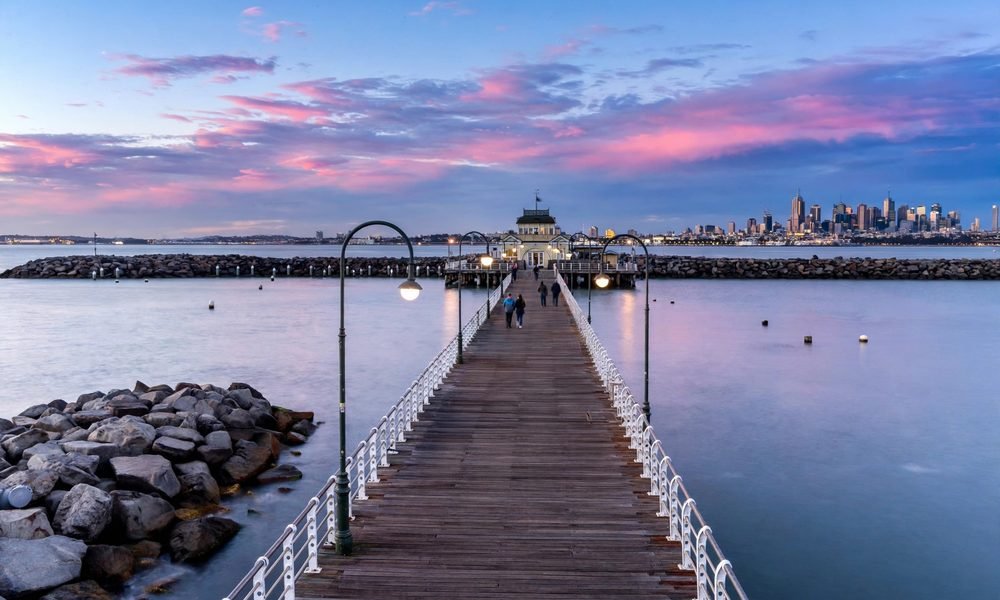
The pier is the reason to stay until dusk. It stretches about 450 metres out into the bay to the breakwater, and the walk out gives you a clear view of the city skyline. The pier was rebuilt at a cost of $53 million, and it now has a wide curved walkway, tiered seating and toilets. It opened in December 2024, and it won the Victorian Architecture Medal in 2026. It is free to walk, and it is busy at sunset.
The real draw sits at the end of the pier. A wild colony of about 1,400 little penguins lives among the rocks of the breakwater, and the birds come ashore at dusk after a day out at sea feeding. Little penguins are the smallest penguin species in the world, and this colony has lived here since the 1970s. It is a genuinely wild colony, not a zoo exhibit, and it sits a five-minute walk from a tram stop in the middle of a capital city. That is what makes it special.
Plan your visit around the light. There are two viewing sessions each night, about 30 minutes and about 90 minutes after sunset, and each session lasts about 45 minutes. The exact times shift with the season. In winter, sunset can be as early as 5:30 pm. In midsummer, it can be after 9 pm. Check the sunset time for your date before you go, and arrive at least 10 minutes early, as late arrivals can lose their tickets.
Penguin viewing is free, but you must book a session in advance. Parks Victoria manages the pier, and Phillip Island Nature Parks runs the viewing sessions. Tickets are released at 10 am on Tuesdays for the following week, and the sessions fill fast. Each session is capped at 150 people. Viewing happens from a 150 m viewing boardwalk that opened in October 2025, and viewing resumed on 29 October 2025 after a five-year break. Book your free ticket through Phillip Island Nature Parks before you go, and do not just turn up and hope for a spot. Sighting is not guaranteed, as the penguins are wild animals. When you are there, stay quiet, stay behind the marked areas, and do not use flash photography. White light and camera flash disturb the birds, and volunteers from the Earthcare St Kilda group are often on hand at dusk to help visitors and keep the colony safe. A red-filtered torch or a dimmed phone screen is the right way to see them without harming them. Takeaway food and drink are not allowed on the viewing platform.
St Kilda Sea Baths
Right on the sand at the northern end of the beach sits the St Kilda Sea Baths, a large building that has been part of the foreshore for over a century in one form or another. Inside you will find a heated seawater pool, a spa, a gym, and a few places to eat and drink with a view of the water. It is a good fallback on a cool or windy day when a swim in the bay does not appeal. You can use the pool and spa without staying anywhere, and the rooftop and deck areas give you a different view of the beach from above the sand.
Luna Park and the Palais Theatre
Walk to the lower end of the Esplanade and you cannot miss the giant laughing face. That is Mr Moon, the entrance to Luna Park, and it has greeted visitors since the park opened in 1912. Luna Park, at 18 Lower Esplanade, is a heritage amusement park that is still running today. The park mixes old rides with newer ones, plus carnival games and sideshows, so it works for small kids and for adults who just want to walk through and take photos.
The ride that matters most is the Scenic Railway. It is a wooden rollercoaster built in 1912, and it is the oldest surviving rollercoaster in the Southern Hemisphere. It is slower and gentler than a modern coaster, and that is the point. You ride it for the history and the creak of the old timber, not for a thrill.
Everyone aged 4 and over needs a ticket to enter Luna Park. There is no free entry for non-riders. The cheapest option is the Entry and Single Ride or Game ticket at $30 per person, sold at the ticket box only. An extra ride costs $15. Unlimited Rides costs $57 for ages 13 and over, $47 for ages 4 to 12 and concession holders, and children aged 0 to 3 go free. A Family Pass for four people costs $175. An Annual Pass costs $85 in a limited-time sale, down from $129. The unlimited pass pays for itself at three rides, since entry plus two extra rides already costs $60. Book online through Luna Park to guarantee entry, as walk-up tickets are limited. Check the opening calendar before you go, because the park runs longer hours in summer and school holidays and shorter hours in the quiet months. Our Luna Park St Kilda guide lists every ride and its height limit.

The Palais Theatre
Right next door to Luna Park stands the Palais Theatre, a grand Art Deco building on the Lower Esplanade that opened on 11 November 1927. With 2,896 seats, it is Australia’s largest seated theatre. Touring acts, comedians and theatre shows all pass through it, and it sits on the Victorian Heritage Register. The facade lights up at night, and it is as much a part of the foreshore view as Luna Park’s face. If a show you like is on while you are in town, book ahead, because popular nights sell out. Even if you do not go inside, the building is worth a look from the Esplanade, and it pairs well with a walk around Luna Park and the beach at dusk.
The Astor Theatre
A short walk inland, on the corner of Chapel Street and Dandenong Road, stands the Astor Theatre, which opened in 1936. It is one of Melbourne’s last single-screen cinemas, and it still shows classic films, cult favourites and new releases in a grand Art Deco room. Check the program on the theatre website, and call (03) 9510 1414 for session times. It is a good rainy-day option, and it sits close to the Fitzroy Street bars for after the film.
Acland Street and the cake shops
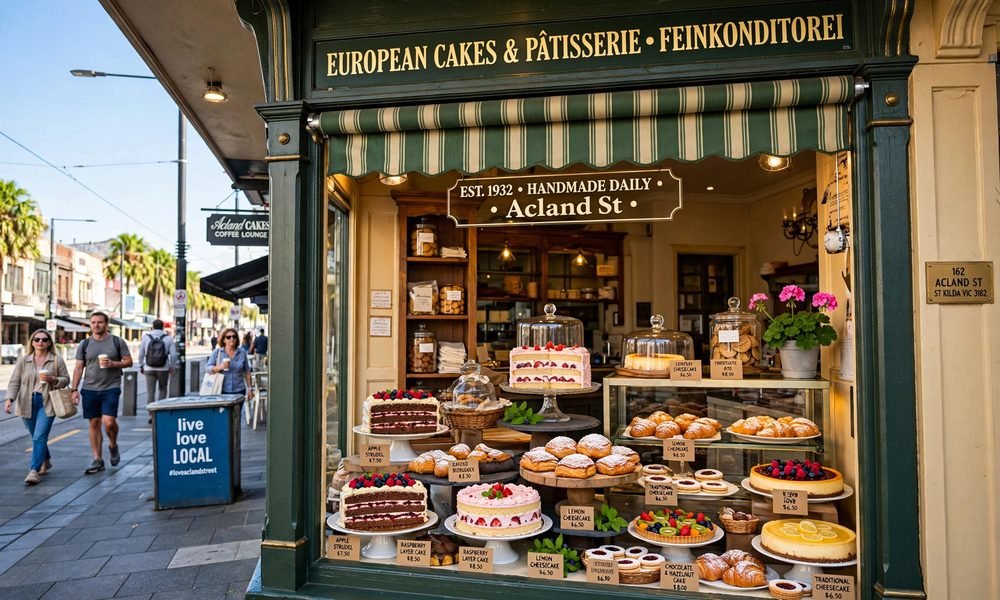
Acland Street runs inland from the beach past Luna Park, and it is the street where St Kilda’s cake shops live. After the Second World War, Jewish and Polish migrants settled here, and they opened the European cake shops that made the street famous. The display windows are still piled with strudel, cheesecake, cream horns and tortes, and a few of the original shops are still trading alongside newer cafes and restaurants.
Two names come up again and again. Monarch Cakes, at 103 Acland Street, opened in Lygon Street, Carlton in 1931 and moved to Acland Street in 1934, where it has stayed ever since. Its signature is the chocolate kugelhopf, and its Polish cheesecake is the slice to ask for. Europa Cake Shop is a long-time favourite from the area’s Jewish community. Abbey Road Café, near the beach end of the street, is a Beatles-themed cafe that draws a crowd for breakfast. You do not need a plan here. Walk the street, look in the windows, and pick the slice that catches your eye. A cake and coffee stop for two will cost around A$15 to A$20, as a rough guide.
Go in the late morning or mid-afternoon, when the shops are in full swing and the street is at its liveliest. Weekend mornings get busy, and the popular shops can have a queue out the door. That is part of the fun, and the queue moves fast. The street has changed over the years, with more modern cafes and boutiques mixed in, but the cake shops are still the reason most people walk down it. If you want to understand the area’s migrant history, this street tells the story better than any plaque.
Fitzroy Street: food, bars and live music
Fitzroy Street is the other main strip, and it runs from St Kilda Road down toward the beach. It carries most of the suburb’s restaurants and bars, and it gets livelier as the day goes on. At lunch, the terraces fill with people eating in the sun. By evening, the street shifts into nightlife mode, and the bars and pubs stay open late on weekends.
The food here covers a lot of ground. You will find Italian, Greek, Japanese, Middle Eastern and modern Australian restaurants, plus casual cafes and late-night eats. Prices are generally a notch below the beachfront, and lunch on a terrace here is one of the better-value meals in the inner south. At dinner, check the menu and prices before you sit down, because the strip can be pricey at night, especially for wine. Our guide to the best restaurants in Melbourne includes St Kilda picks alongside the city options, which helps if you are choosing between a night here and a night in the CBD.
For a meal with a view, head to Republica on the beachfront, where you can eat pizza and modern Australian food with the bay in front of you. For something different, Mya Tiger serves Cantonese food in a lively dining room on Level 5 of The Espy, at 11 The Esplanade. It runs weekend Yum Cha, and you can call (03) 9534 0211 to book. For a low-key night, the back streets around Grey Street hold small wine bars and independent cafes that feel far from the tourist strip.
The Esplanade Hotel (the Espy)
No guide to St Kilda is complete without the Espy. The Esplanade Hotel is a big heritage pub on the Upper Esplanade, right on the beachfront, and it has hosted live music since the 1970s. Generations of Australian bands have played its rooms. After closing in 2015 for a major restoration, it reopened in 2018, back to full strength, with bands most weekends, a large beer garden, and a front bar that fills fast on a warm evening.
St Kilda’s place in Australian music history is bigger than one pub. The suburb’s cheap rents and bohemian streak through the late 20th century drew musicians, artists and writers, and that thread still runs through the place today. Small venues along Fitzroy Street and Barkly Street keep the live scene going, and the annual St Kilda Festival in February brings free outdoor music to the foreshore. If you are in town for the festival, expect big crowds and a very different, very loud St Kilda.
Vegan and plant-based eating
St Kilda has a strong plant-based scene, centred on Acland Street. Sister of Soul, at 73 Acland Street, serves vegetarian and vegan fare, and you can call (03) 9593 8550 to book. Matcha Mylkbar, at 72 Acland Street, is a plant-based cafe from the team behind Matcha Maiden, with matcha drinks and vegan brunch dishes. Lentil As Anything is a pay-as-you-feel vegetarian restaurant in St Kilda, where you pay what you think the meal was worth. All three sit within a short walk of the beach, so they work well as a lunch stop between the sand and the cake shops.
Markets and gardens
St Kilda is not all beach and bars. The quieter side of the suburb is worth an hour, especially on a Sunday, when the market is on and the gardens are at their best.
St Kilda Esplanade Market
Every Sunday, the Upper Esplanade turns into an open-air market. The St Kilda Esplanade Market has run since 1970, and more than 80 local artists and makers sell jewellery, homewares, art and handmade goods from their stalls. It runs from 10 am to 4 pm, or 5 pm in daylight saving, and it sits right above the beach, so you can browse with the bay behind you.
This is a makers’ market, not a tourist souvenir stall. Each stallholder makes what they sell, so it is a good place to find a gift you will not see anywhere else. Food stalls sell churros, sugarcane juice, Turkish börek, tres leches cake and bánh mì, and live music drifts through the market on a good day. Bring cash for the smaller stalls, though many now take cards. If your visit falls on a Sunday, build the market into your morning before the beach crowds arrive. The market is closed on St Kilda Festival Sunday, and extreme weather can cancel it, so check the market Facebook page before you go.
Catani Gardens and St Kilda Botanical Gardens
Catani Gardens runs along the Esplanade between the pier and the Upper Esplanade, and it is the green centre of the foreshore. It is named for Carlo Catani, the engineer who shaped much of St Kilda’s foreshore in the early 1900s. Moreton Bay fig trees shade the lawns, and the gardens host the St Kilda Festival and smaller markets through the year. It is a good spot for a picnic with a view of the beach and the pier, and families spread out on the grass here on warm weekends.
A short walk inland sits the St Kilda Botanical Gardens, a quieter and more old-fashioned garden on Blessington Street. It covers about 6 hectares, with an ornamental pond, palm trees, a conservatory and a community garden. It was established in 1859, and it opens at dawn and closes at dusk, and it is free. Locals come here to read, sketch or walk the dog away from the foreshore crowds. If the beach feels too busy, this is where you go for an hour of calm. Nearby, the Corroboree Tree is a reminder that this land has a much older story than the resort era, and it is worth a respectful look as you pass through the area.
St Kilda Adventure Playground
Families with younger kids can add the St Kilda Adventure Playground, on the foreshore near the beach. It has climbing structures and a maze, and it sits close to the sand, so it works as a break between swimming and lunch. It is free, and it is busiest on weekend mornings.
A short history of St Kilda
St Kilda has changed its face more than once, and that layered past is part of its charm. It started in the 1850s as Melbourne’s first fashionable seaside resort, with grand hotels and formal gardens along the Esplanade for the city’s wealthy families. The pier, the baths and the gardens all date from this early resort era.
The 20th century was less kind. The Great Depression and the postwar decades pulled the suburb down, and cheap rents drew artists, musicians and a red-light strip along Grey Street that lasted into the 1990s. That rough patch is also what gave St Kilda its live music scene and its bohemian streak. From the late 1990s, the suburb gentrified again, with cafes, small bars and boutique hotels moving in. But it never became as polished as Brighton further down the bay. The mix of grand old buildings, cake shops, pubs and backpacker hostels is still there, and that mix is what makes the place feel real rather than staged.
How long do you need in St Kilda?
For a first visit, give St Kilda half a day. Three to five hours covers the beach, the pier, a walk down Acland Street and a meal. That is enough to get the feel of the place and see the main sights without rushing.
A full day is better if you want to ride at Luna Park, browse the Sunday market and stay for the penguins at dusk. Luna Park alone can take two to four hours for families. Add the gardens, a long lunch and a sunset walk, and the day fills itself. If you are short on time, skip the gardens and the market and focus on the beach, the pier and Acland Street. Those three give you the core of St Kilda in the least time.
Best time to visit St Kilda Melbourne
Summer is the classic time to come. From December to February, the beach is at its best, the days are long, and the foreshore stays busy into the evening. The St Kilda Festival runs in February, and it brings free music and big crowds to the foreshore and Fitzroy Street. Summer also means the foreshore alcohol ban is in force, and the beach can be packed on a hot weekend. Arrive early if you want a quiet swim.
Autumn and spring are the sweet spots for many visitors. The weather is mild, the crowds thin out, and the penguins still come ashore at dusk. Sunset is earlier, so you do not have to wait until 9 pm to see them. Winter is the quietest season, and the beach feels empty on a grey day. But the penguins are still there, the cafes are warm, and you will have Acland Street mostly to yourself.
Where to stay in St Kilda
Staying in St Kilda makes sense if the beach and the nightlife are the main point of your trip. You wake up near the sand, you can walk to dinner, and you do not need to catch a tram home after a late night on Fitzroy Street. The trade-off is the commute. The CBD is a tram ride away, and that adds up if your days are built around the city centre, Southbank and the inner north.
Accommodation here covers backpacker hostels near the beach, mid-range hotels, and serviced apartments along the Esplanade and the streets behind it. St Kilda has long been a backpacker hub, so budget options are easy to find. Apartments work well for longer stays, since Acland Street’s food shops make self-catering easy.
One warning before you book. Rooms on Fitzroy Street and the blocks around it get real street noise on Friday and Saturday nights. If you are a light sleeper, pick a room facing the bay or on a side street toward Balaclava. Read recent reviews with noise in mind, and do not book a Fitzroy Street room if you need an early night.
Getting to St Kilda and getting around
The tram is the easiest way in. Route 96 runs from the CBD along Bourke Street and St Kilda Road, and it ends at the junction of Fitzroy and Acland Streets, a short walk from the beach. Route 16 is a good alternative via St Kilda Road and Fitzroy Street. The trip from Flinders Street takes about 25 to 30 minutes. You need a tapped-on Myki, because St Kilda sits outside the Free Tram Zone.
The train is another option. Balaclava station on the Sandringham line is a manageable walk into central St Kilda, though most visitors find the tram simpler. If you are coming from the airport, allow extra time for the trip into the city before you head south to the bay.
Once you arrive, walk. The beach, the pier, Luna Park, Acland Street and Fitzroy Street are all within a 10 to 15 minute walk of each other. You do not need a car, and you should not bring one if you can avoid it. Parking near the beach and Acland Street fills fast on weekends, and most of it is paid. Cycling is a good option too. The Bay Trail runs along the foreshore, and bike hire is available near the beach in the warmer months. A ride south toward Elwood and Brighton is one of the nicest easy rides in Melbourne.
A relaxed half-day plan
Here is a simple plan that uses the light well and ends with the penguins.
- Early afternoon: Take tram 96 from the CBD and get off at the Acland Street terminus. Walk down Acland Street for cake and coffee.
- Mid-afternoon: Walk to the beach and along the foreshore to the pier. Swim if the day is warm, or just walk the sand and the promenade.
- Late afternoon: Take photos at the Mr Moon entrance to Luna Park. Walk through Catani Gardens on the way back.
- Early evening: Eat dinner on Fitzroy Street or at Republica on the beachfront.
- Dusk: Walk out to the pier breakwater for the little penguins, then catch the tram back to the city.
This plan works in any season. In summer, start later and lean on the long evening. In winter, start earlier so you are not waiting hours for a 5:30 pm sunset.
A full day in St Kilda
With a full day, slow down and add the parts the half-day plan skips. Start with a morning swim or a walk along the Bay Trail. Spend the late morning at Luna Park, riding the Scenic Railway and the other old rides. Have lunch on Acland Street, then spend the afternoon in the Botanical Gardens and around Carlisle Street in Balaclava, a short walk inland, where the cafes and delis are quieter and more local.
On a Sunday, swap the morning for the Esplanade Market. Browse the stalls, eat from the food vendors, and then walk down to the beach as the day warms up. In the evening, pick a show at the Palais Theatre if one is on, or settle into a Fitzroy Street bar for the night. Families can stretch the day the same way, with the market and the gardens in the morning and Luna Park in the afternoon.
St Kilda with kids
St Kilda is an easy Melbourne outing with kids. The beach is calm, the sand is good for building and paddling, and the water stays shallow near the shore. Luna Park is built for families, with rides for small kids as well as older ones. Catani Gardens has a playground, barbecues and open lawns for a picnic.
Time the day around naps and energy. Do the beach and the gardens in the morning, eat an early lunch on Acland Street, and save Luna Park for the afternoon. The penguins are the wildcard. Little kids may not last until dusk in summer, when sunset is after 9 pm. In winter, the 5:30 pm sunset makes the penguins an easy win for families.
What a day in St Kilda costs
Most of what makes St Kilda worth a visit is free. The beach, the pier, the gardens, the market and the penguins cost nothing. Luna Park is the main expense, and food is the other one. Here is a rough guide based on current prices.
| Experience | Time to allow | Cost |
|---|---|---|
| St Kilda Beach and foreshore | 30 to 90 minutes | Free |
| St Kilda Pier walk | 30 to 60 minutes | Free |
| Little penguin viewing | Evening session, about 45 minutes | Free, booking needed |
| Luna Park entry plus one ride or game | 30 minutes | $30, gate only, ages 4 and over |
| Luna Park unlimited rides, adult 13 and over | 2 to 4 hours | $57 |
| Luna Park unlimited rides, child 4 to 12 | 2 to 4 hours | $47 |
| Acland Street cake and coffee for two | 30 minutes | About A$15 to A$20, rough guide |
| Esplanade Market | 30 to 60 minutes | Free entry |
| Dinner on Fitzroy Street | 1 to 2 hours | About A$25 to A$40 per person, rough guide |
Prices change, so treat these as a guide and check current prices before you go. The tram fare is a standard Myki fare, and the daily cap keeps the cost down if you ride more than once. St Kilda is one of the cheaper half-day trips from the CBD, because the beach, the pier and the penguins cost nothing at all.
St Kilda or Phillip Island for penguins?
Both places host the same species, but the experience is very different. St Kilda is free and easy to add to a city evening. You walk out to the breakwater, wait quietly, and hope the birds show. It is less reliable than a managed viewing, and you see fewer birds at a greater distance. That is the trade for a free, wild sighting in the middle of the city.
Phillip Island’s Penguin Parade is a paid, managed viewing platform with rangers, seating and a far higher chance of a clear sighting. General Viewing costs $34 per adult as of November 2026. It is a full day trip from Melbourne, and it costs real money. If penguins are the main reason for your trip, Phillip Island is the safer bet. If you are already in Melbourne and you have a free evening, St Kilda is the easy add-on. Many visitors do both, and our Phillip Island guide covers the day trip in full if you want to compare.
Good to know before you go
A few practical points will save you trouble. Alcohol is banned on the St Kilda foreshore from 1 November to 31 March, between Langridge Street and Thackeray Street, and the ban covers sealed and unsealed containers. Breaching it risks a $204 fine. Glass is banned on the foreshore at all times. The City of Port Phillip publishes the full rules. Plan your picnic without wine during those months.
Weekends are busy. The beach, the market and Acland Street all fill up, and parking near the waterfront is hard to find. Come by tram and arrive early if you want a quiet start. The penguin viewing area has rules for a reason. Stay behind the marked areas, keep your voice down, and never use flash. Your behaviour is what keeps the colony safe.
Finally, check the details before you go. Luna Park hours and prices change with the season, the penguin booking system has changed in recent years, and the Esplanade Market can close in bad weather. A quick check on the day saves a wasted trip.
FAQs about visiting St Kilda
How do I get to St Kilda from central Melbourne?
Tram 96 runs directly from the CBD to St Kilda in about 25 to 30 minutes. It is the simplest option. You need a tapped-on Myki, because St Kilda sits outside the Free Tram Zone. Route 16 is a good alternative. You cannot buy a Myki on the tram, so buy one at a station or a shop before you board.
Can you see penguins in St Kilda for free?
Yes. The little penguin colony at the St Kilda Pier breakwater is free to view. You need to book a free evening session ahead of time, with tickets released on Tuesdays at 10 am for the following week. There are two sessions each night, about 30 and about 90 minutes after sunset, and each lasts about 45 minutes. Takeaway food and drink are not allowed on the viewing platform, and the boardwalk closes each night after the sessions.
Is St Kilda Beach good for swimming?
Yes, for a calm bay swim. The water is gentle and the beach is good for families and casual swimmers. It is not a surf beach, so do not expect waves. Swim between the flags in summer and check water quality after rain. Dogs have their own off-leash areas and hours, and the rules change from 1 November to 31 March, so check the signs at the beach entry.
How long should I spend in St Kilda?
Half a day covers the beach, the pier, Acland Street and a meal. A full day lets you add Luna Park, the gardens, the Sunday market and the penguins at dusk without rushing. If you only have two hours, do the beach, the pier and one cake shop, in that order, and save Luna Park for a longer visit.
Is Luna Park St Kilda worth visiting?
If you will ride three times or more, the unlimited-rides day pass at $57 for an adult is good value, since entry plus two extra rides already costs $60. For a quick look, the $30 entry plus one ride or game ticket is the cheaper option. The Scenic Railway alone is worth the visit for the history. Children under 4 go free, and the Family Pass at $175 for four people works out cheaper than four separate unlimited tickets.
Plan your St Kilda day
Come for the beach and stay for the evening. A swim, a ride on a 1912 rollercoaster, a slice of Polish cheesecake and a wild penguin colony fit into one day, all within a short tram ride from the city centre. Arrive in the afternoon, eat well, and finish at the pier as the light fades. That is the St Kilda day that sticks with you. For a wider plan, see our things to do in Melbourne guide to build the rest of your trip.