
State Library Victoria is one of Melbourne’s most visited free attractions. It sits at 328 Swanston Street, on the corner of Swanston and La Trobe streets, directly opposite Melbourne Central. Entry is free, no booking is needed, and the doors open daily from 10am to 6pm. This guide from Australia City Guide covers what to see inside, how long to allow, and how to plan your visit.
Details checked on the official site, November 2026.
State Library Victoria at a Glance
- Location: 328 Swanston Street, in central Melbourne, on the corner of Swanston and La Trobe streets
- Cost: Free entry, no booking needed for a general visit
- Hours: 10am to 6pm daily
- Time needed: 45 minutes for the highlights, up to 2 hours for the full building
- Getting there: State Library station and Melbourne Central station, trams on Swanston Street, inside the Free Tram Zone
State Library Victoria Opening Hours and Entry
The Library opens daily from 10am to 6pm, and entry is free. You can walk in from Swanston Street without a booking. The Library closes on New Year’s Day, Good Friday, Christmas Day and Boxing Day, and stays open on all other public holidays. Check the official opening hours page before a special trip, as rooms can close for functions or works.
The Ian Potter Queen’s Hall keeps shorter hours than the rest of the building, opening daily from 10am to 4pm. Two closures apply at the moment. Levels 5 and 6 of the Dome are closed, and Entry 2 on La Trobe Street is closed while the cafe there is refurbished. Use the Swanston Street entrance or the Russell Street entrance instead.
Allow 45 minutes if you only want the La Trobe Reading Room and a quick look at the galleries. Allow up to 2 hours if you want the exhibitions, the reading rooms and the Children’s Quarter as well. Readers use the building every day, so keep your voice low in the reading rooms and give people working at the desks plenty of space.
Leave large bags behind if you can. Large travel backpacks, suitcases and scooters should not be brought inside, and the lockers have limited capacity. Prams and bags for babies or young children are permitted.
The La Trobe Reading Room and the Dome
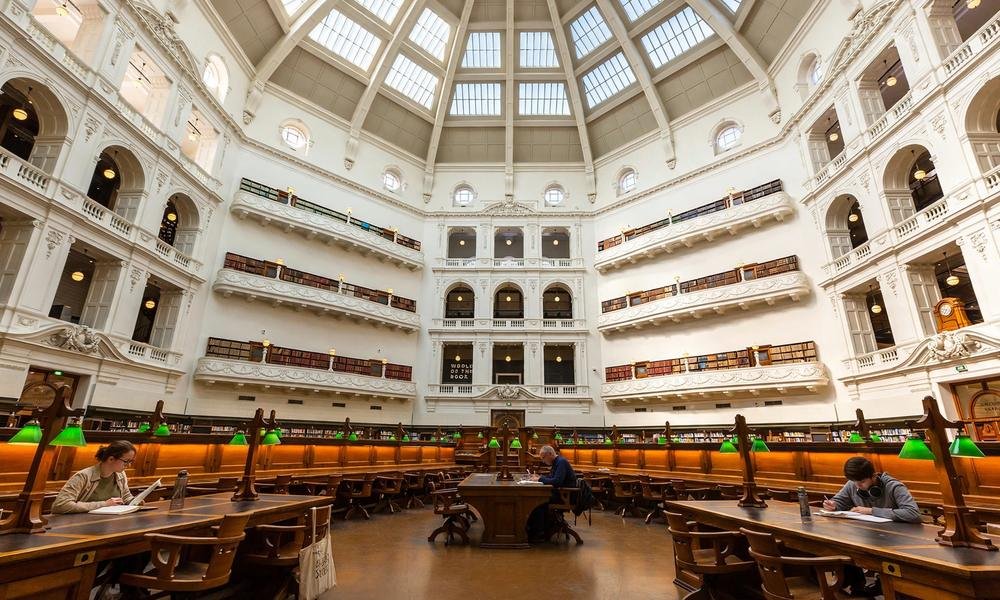
The La Trobe Reading Room is the reason most people come. The room opened on 14 November 1913, and its dome measures 35 metres across. When it was built, it was the largest reinforced concrete dome in the world. The room rises six storeys, seats 320 readers and holds 32,000 books. You can read the full story of the Dome on the Library’s own blog.
Start on the floor. Stand in the middle and look up at the dome, then take in the radiating desks, the silky oak chairs and the green glass lamps. The pattern of the room only makes sense from the floor, where you can see how the desks fan out from the centre.
Then take the lift or the stairs to the Level 4 gallery. The view down from above is the one most visitors remember, because the geometry of the desks and the dome comes together from height. Level 4 also holds the World of the Book exhibition, so the gallery works as both a viewpoint and a display space. For now, Level 4 is the highest gallery you can reach, so plan your photos around it.
The room is a working study space, not a museum hall. Students and readers sit at the desks through the day, so keep conversations quiet and do not photograph people without their consent.
What to See Inside State Library Victoria
The Dome gets the attention, but the rest of the building holds just as much. The rooms below are the ones to plan around, and each one suits a different kind of visit.
Ian Potter Queen’s Hall
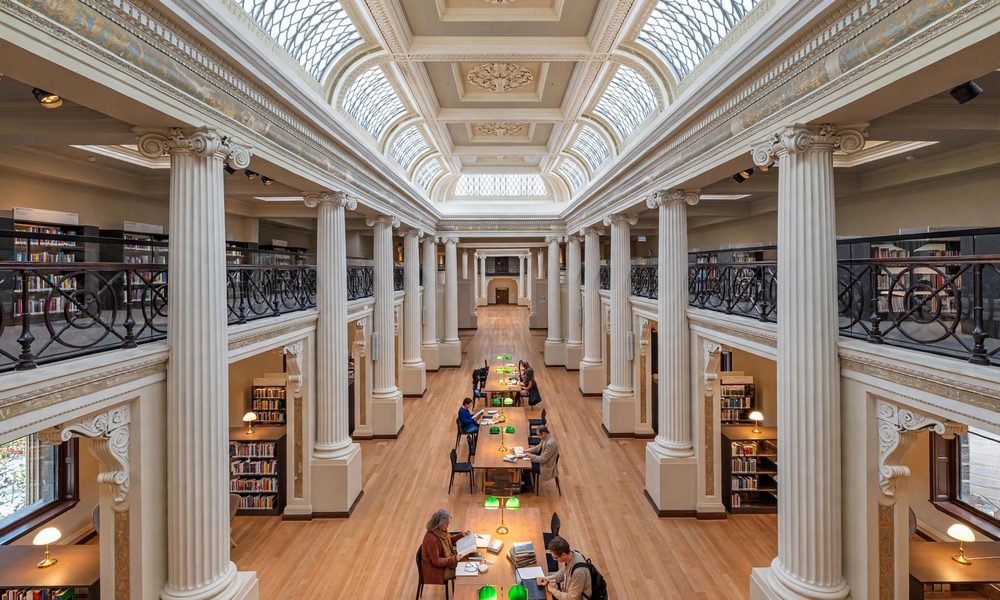
Queen’s Hall began as the Library’s first reading room, opening in 1859. It closed in 2003 after falling into disrepair, and reopened in December 2019 after restoration. The hall is quieter than the Dome room and less crowded, with high ceilings, stone columns and natural light from tall arched windows.
By day, the hall holds browsing collections of Australian literature, poetry, drama and young adult fiction, with chess and bridge collections on the mezzanine. It closes at 4pm, two hours before the rest of the Library, so visit it before the Dome galleries if you want to see both.
Ned Kelly’s Armour in the Redmond Barry Reading Room
Ned Kelly’s armour sits in a display case in the Redmond Barry Reading Room. Kelly wore the iron suit at the Glenrowan siege on 28 June 1880, and the armour weighs about 45 kilos. The display runs from 1 June 2025 to 31 December 2028 and is free to see. The Library’s Ned Kelly page has the full story of the armour and the objects around it.
The room itself is worth time too. It is a grand reading room with red iron columns and a mezzanine level, and it holds the Library’s newspaper and magazine collections. The armour sits in a room named after Judge Redmond Barry, the man who sentenced Kelly to hang, which gives the display an edge that most visitors notice once they know it.
World of the Book
World of the Book is the Library’s long-running rare book exhibition, and the current edition runs from 4 July 2026 to 16 May 2027 in the Dome Galleries on Level 4. Entry is free and no booking is needed. The show brings together more than 400 rare and significant items, from around 2000 BCE to today. See the official exhibition page for the current details.
This edition gives its largest focus yet to women writers, with Jane Austen, Octavia Butler, Agatha Christie, Toni Morrison and Virginia Woolf among the names on show. Highlights include a first edition of Jane Austen’s Emma from 1816, originally owned by the Austen family, and The Mystery of a Hansom Cab, the Melbourne novel that outsold Sherlock Holmes when it appeared in 1886. Moveable books, miniature books and the smallest book in the Library’s collection sit alongside them.
Cowen Gallery and Victoria Gallery
The Cowen Gallery sits on the ground floor, just off the Redmond Barry Reading Room near the Russell Street entrance. It is a permanent, free exhibition that tells the story of Victoria through the Library’s Pictures Collection, from early colonial settlement to the growth of Melbourne as a city. More than 40 artworks hang in the space, including William Strutt’s large 1864 painting of the Black Thursday bushfires. Allow 20 to 30 minutes for a proper walk through.
The Victoria Gallery draws on the same collections to explore Victoria’s history and culture through photographs, manuscripts, maps, books and personal records. Changing exhibitions across the building cover literature, photography, art, social history and contemporary culture, so check the current program before you arrive if one subject matters to your visit.
The Forecourt and the Joan of Arc Statue
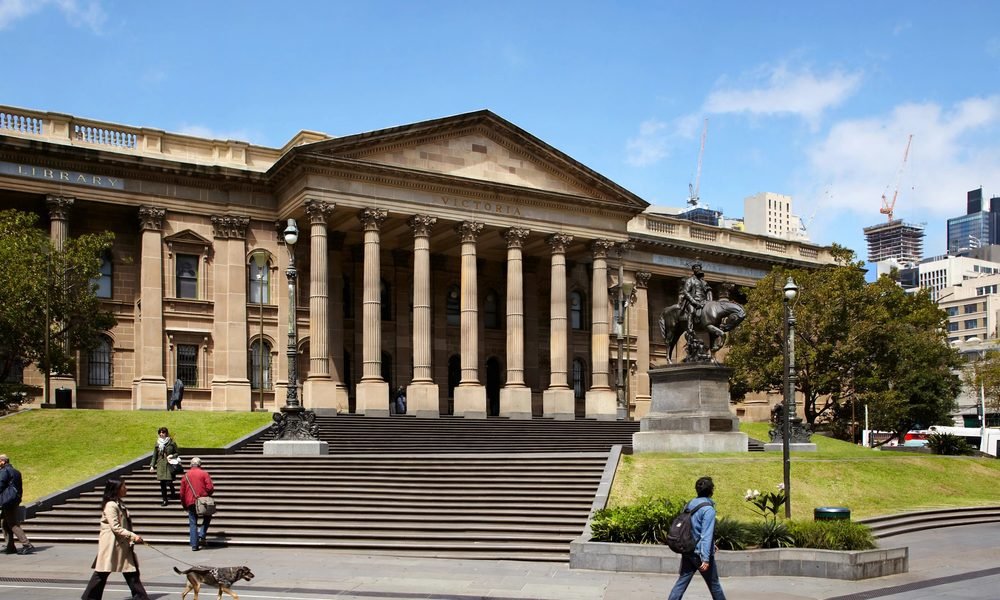
Before you go in, or after you come out, spend a few minutes on the Swanston Street forecourt. The Joan of Arc statue stands by the entrance, and a giant chess set is often out on the paving, free for anyone to play. The forecourt works as a meeting point and a pause between city stops, and it is where the scale of the building first hits you.
Free Tours at State Library Victoria
Free guided tours add context that is easy to miss on your own. Volunteer guides lead them, and they run on select days, so check the official What’s On page and book ahead. Tours fill fast, and a free general visit does not include a place on a tour. A self-guided option called Wander is also listed on the What’s On page for visitors who prefer to explore at their own pace.
History of the Library Tour
The History of the Library Tour runs for about an hour and takes in the heritage reading rooms and Queen’s Hall. Groups stay small, with 10 people per session, so the tour feels personal rather than crowded. It suits a first visit, because the guides explain the building’s history as you walk through it.
World of the Book Tour
The World of the Book Tour runs through the current exhibition in the Dome Galleries on select days, usually at 11am or 2pm. It suits book lovers, because it covers the history of book design, production and illustration from around 2000 BCE to today. The tour is free, but you still need to book a place.
State Library Victoria Unlocked
Unlocked is a paid tour that runs before the doors open. It costs $39 per person plus a booking fee, and it takes you from the Dome down into the catacombs below the Library, through spaces that stay closed to general visitors. Book it if you want the behind-the-scenes side of the building, and check the What’s On page for the current dates.
Visiting with Kids: The Pauline Gandel Children’s Quarter
The Pauline Gandel Children’s Quarter is a free space for children up to 12 and their parents or carers. It sits on the ground floor, just off the Quad. A two-storey timber castle runs along one wall, with the upper level set aside for children aged 9 to 12 and a softer play area downstairs for younger ones. The space holds a browsing collection of more than 4,000 children’s books, including picture books, non-fiction, graphic novels and titles in community languages. For more family ideas across the city, see the guide to Melbourne with kids.
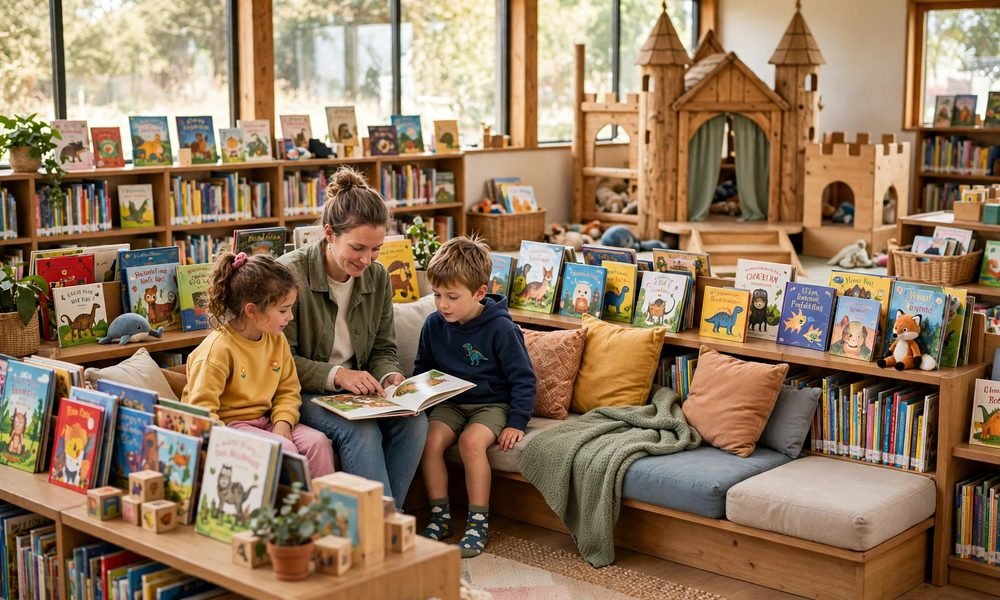
Free sessions run through the week, including Storytime for preschoolers, Toddler Tales for younger children and Baby Bounce for babies. None of them need a booking. During school holidays the program grows, with drop-in activities such as zine-making, board games and craft projects, so check the What’s On page before a holiday visit.
The practical side is well thought through. Low-sensory nursing nooks, baby-change tables, child-height and adult toilets, and pram parking all sit inside the Quarter. Children under 12 must be accompanied, with adults staying nearby throughout the visit. Small snacks and drinks are permitted in the Children’s Quarter, though food stays out of the heritage reading rooms.
A Short History of State Library Victoria
State Library Victoria is Australia’s oldest public library and one of the first free public libraries in the world. The Library’s own history guide records the key dates. The library was established in 1854 as the Melbourne Public Library, and Governor Sir Charles Hotham laid the foundation stone on 3 July 1854. The first building opened on 11 February 1856 with a collection of just 3,800 books, chosen by Sir Redmond Barry, the judge who drove the library’s creation.
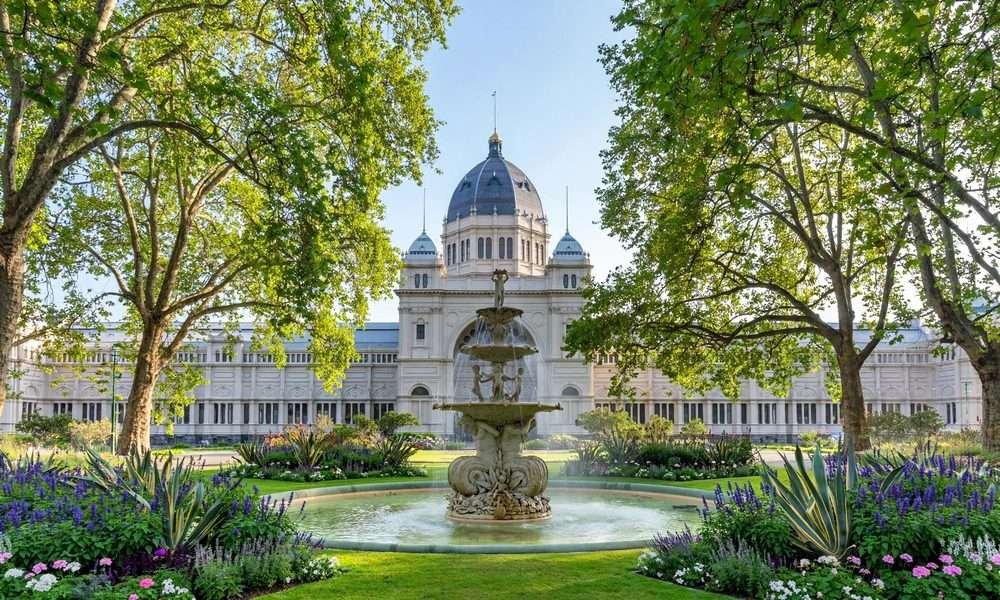
Architect Joseph Reed won the design competition for the building in 1853, and his firm shaped the site for decades. The Queen’s Reading Room, now Queen’s Hall, opened in 1859. The Domed Reading Room followed in 1913, built on the site of the old Great Hall and Rotunda. The Library has stayed on the same city block since 1856, growing until it covered the whole area bounded by Swanston, La Trobe, Russell and Little Lonsdale streets. Reed also designed the Royal Exhibition Building, so the two buildings share a designer as well as a neighbourhood.
The most recent chapter was the Vision 2020 redevelopment, completed in December 2019, which added many of the newer public spaces you see today, including the Russell Street Welcome Zone and the Children’s Quarter. The Dome’s skylights, hidden behind copper sheathing since 1959, were reinstated in 2003, when the room reopened as the La Trobe Reading Room.
Cafes, Bookshop and Facilities
The Guild Cafe sits in the Russell Street Welcome Zone and opens at 8:30am Monday to Friday and 9am on Saturday and Sunday. Mr Tulk, the main cafe, sits just inside the Swanston Street entrance. It is licensed, serves breakfast through to lunch, and handles gluten-free and vegetarian diets well. Cafe hours run separately from the Library day, so allow for closing time if you want food or coffee after exploring.
Readings runs the Library bookshop, just inside the Russell Street entrance. It opens from 10am to 6pm Monday to Saturday and noon to 5pm on Sunday. It is the first commercial bookshop ever permitted inside the building, and it stocks a curated range of books, gifts and stationery. Leave time to browse on the way out, particularly on a Sunday afternoon when the shop closes before the main Library.
Getting to State Library Victoria
State Library station sits right outside, with an entrance on the corner of Swanston and La Trobe streets. Melbourne Central station is directly across the road, and the two stations connect through an underground concourse. Trams run along Swanston and La Trobe streets, and the Library sits inside the Free Tram Zone, so journeys entirely inside the zone cost nothing. The City Circle tram, Route 35, stops on La Trobe Street beside the Library.
There is no onsite car park. Paid options sit nearby at Melbourne Central and QV, with paid street parking on La Trobe Street. Both the Swanston Street and La Trobe Street entrances work well for a kerbside drop-off, with tram stops immediately outside either one. Flinders Street Station is about a 10-minute walk south, so the Library fits easily into a city-centre day on foot.
Old Melbourne Gaol is a short walk north on Russell Street, and Chinatown sits a few minutes east. Queen Victoria Market is a short walk west, and the Melbourne Museum sits a little further on, past Carlton Gardens. Choose one or two nearby stops rather than trying to fit every central-city attraction into one short visit.
A Suggested First-Visit Route
If it is your first time, follow this order from the forecourt to the bookshop.
- Start on the forecourt. Look at the facade and the Joan of Arc statue, then walk in through the Swanston Street entrance.
- Go straight to the La Trobe Reading Room. Stand on the floor, look up at the dome, then walk a slow lap of the desks.
- Take the lift to Level 4. See World of the Book, then look down over the balustrade into the reading room.
- Walk to the Ian Potter Queen’s Hall. It closes at 4pm, so see it before the late afternoon.
- Head to the Redmond Barry Reading Room for Ned Kelly’s armour, then step into the Cowen Gallery next door.
- If you have children with you, finish in the Pauline Gandel Children’s Quarter on the ground floor.
- End at the Guild Cafe or the Readings bookshop by the Russell Street entrance on your way out.
Using the Library Like a Local
State Library Victoria is a reference library, so books are used onsite rather than borrowed to take home. That rule surprises some first-time visitors, but it is what keeps the collections open to everyone. You can sit and read in any public reading room without joining anything.
Free membership is open to all Victorians. You need photo ID, and you can join online or in person at a Welcome Zone desk. Membership unlocks thousands of e-resources and databases, the ability to order digital copies or extracts of collection items, and the option to book meeting rooms and creative studios. Paid tiers add perks such as cafe and bookshop discounts and early booking for programs.
If you want to consult a specific collection item, ask staff at the Quad Information Centre or in the Redmond Barry Reading Room. The separate Heritage Collections Reading Room needs an appointment rather than casual entry, so arrange it before you travel if a particular item is the reason for your visit.
Accessibility at State Library Victoria
Step-free access runs through the ramp near Swanston and La Trobe streets for the Swanston Welcome Zone, and through Entry 5 near Russell Street for the other welcome zone. Lifts connect the La Trobe Reading Room, the open Dome galleries and the other major public spaces. Access to the Redmond Barry mezzanine needs staff assistance.
A courtesy wheelchair can be booked ahead online or by phone, subject to availability. Staff cannot push the wheelchair for you. Portable hearing loops are available for tours, with permanent loops in selected spaces, and Companion Card holders can arrange free companion admission to paid Library events. Accessible toilets sit in several areas of the building.
If your visit needs more specific support, contact the Access and Inclusion Librarian on 03 8664 7005 before you travel. The Library also lists assistive technology, including large-screen workstations, magnifiers and book rests, in the Quad Information Centre and the Redmond Barry Reading Room.
Photography at the Library
Personal, non-commercial photography is allowed with handheld cameras and phones, without flash or tripods. Do not photograph other visitors or staff without their consent, and follow the signs in exhibitions, as some do not allow photos.
The dome itself, photographed straight up from the reading room floor, is the shot to take first. Then go to the Level 4 gallery and photograph the room from above, where the radiating desks and the dome come together in one frame. Queen’s Hall gives a different picture, with cooler light, tall columns and far less foot traffic. Come early if you want fewer people in your frames, as the reading room fills quickly on weekends.
Frequently Asked Questions About State Library Victoria
Can you borrow books from State Library Victoria?
No. It is a reference library, so the collection stays onsite. Members can still use the Library from home through its e-resources and databases, and they can order digital copies or extracts of collection items without visiting in person.
Is there parking at State Library Victoria?
There is no onsite car park. Paid parking sits at Melbourne Central and QV, with paid street parking on La Trobe Street. Accessible permit parking spaces are available on La Trobe Street and Little Lonsdale Street.
Do you need to book for the free tours?
Yes. General entry needs no booking, but the free tours do. Book through the official What’s On page before you go, and check the meeting point listed for your tour, as it can change between tours.
Is State Library Victoria a good rainy-day stop?
Yes. The whole visit happens indoors, entry is free, and you can fill 1 to 2 hours without spending anything. It sits between Melbourne Central and QV, so you can move between the Library and the shops without going back out into the weather.
Final Thoughts on Visiting State Library Victoria
Start at 10am, when the reading room is at its quietest and the morning light comes through the dome. Treat the Library as the first stop of a city day, not a quick photo stop, and give the galleries the same time you would give a museum. If you are building a wider day in the city, the guide to things to do in Melbourne picks up where this one leaves off.