
The Royal Exhibition Building in Melbourne is a palace built for a world fair, and it still stands in the middle of its original gardens. You cannot walk in off the street. The way inside is a booked Dome Promenade tour or a ticketed event, but the gardens around it are free, and Melbourne Museum sits right behind it. This guide covers the building’s history, how the tour works, what to see in Carlton Gardens, and how to plan a half day here.
Details checked on the official site, November 2026
Quick facts
- Location: 9 Nicholson Street, Carlton, in Carlton Gardens on the north-eastern edge of Melbourne’s CBD.
- Cost: Carlton Gardens are free. The Dome Promenade tour costs $29 for adults. Melbourne Museum costs $18 for adults, and children aged 16 and under enter free.
- Time needed: Allow half a day for the tour, the museum and the gardens. The gardens alone take about an hour.
- How to get there: Take tram 86 or 96 to Stop 11, Melbourne Museum, on Nicholson Street. Parliament Station is about 500 metres away, a walk of around 10 minutes.
Why the Royal Exhibition Building Matters
Carlton Gardens and the Royal Exhibition Building stand on Wurundjeri Country. The building is the reason the whole site is on the UNESCO World Heritage List. On 1 July 2004, the building and gardens became the first Victorian place and the first built heritage site in Australia to be added to the list. UNESCO listed the site under cultural criterion (ii), for the way it shows the exchange of ideas through architecture and design. The site joined Australia’s National Heritage List on 20 July 2004 as well. You can read the full listing on the Museums Victoria World Heritage page.
The listing matters because so little of the exhibition age survives. Cities across the world built huge halls for the international exhibitions of the 1800s, and most of them were pulled down once the crowds went home. Melbourne kept its hall, kept its gardens, and still uses the building. That is rare. The site is also where Australia’s first Federal Parliament opened, on 9 May 1901, which gives the hall a place in the country’s political story as well as its architectural one. Victoria has only two World Heritage sites, and this is one of them.
History of the Royal Exhibition Building in Melbourne
Architect Joseph Reed designed the building, and builder David Mitchell put it up in about 18 months. It was built in 1879 and 1880 for the Melbourne International Exhibition, which opened on 1 October 1880. The exhibition drew 1.3 million visitors at a time when Melbourne’s population was around 283,000. A second, larger exhibition followed in 1888 to mark the centenary of European settlement. The 1888 show was the first international exhibition lit by electric light, so it could stay open after dark.
The building’s grandest day came on 9 May 1901, when the first Parliament of the new Commonwealth of Australia opened in the Great Hall. There was no national capital yet, so the new federal Parliament borrowed Parliament House on Spring Street, and the Victorian Parliament moved into the Exhibition Building instead. It expected to stay for a few years and remained until 1927. The hall was redecorated for the 1901 opening by John Anderson, and his painted scheme still covers the interior today. The original 1880 decoration by John Mather survives in parts of the building as well.
Between the great occasions, the hall did whatever Melbourne needed. It became an emergency hospital during the influenza pandemic of 1919. It held basketball, weightlifting, wrestling and fencing during the 1956 Olympic Games. Generations of Victorian students have sat final exams on its floor, and exams still fill the hall during exam periods. In 1948, Melbourne City Council voted only narrowly against demolishing the building. The annexes around it went one by one, the last of them, the ballroom, demolished in 1979. The dome walkway closed in the 1920s and stayed shut for almost a century, until restoration work brought it back in October 2022.
The Building Today
The Great Hall runs about 152 metres long, and the dome rises about 68 metres above the gardens. The dome is built of cast iron and timber with a double shell. Look up inside and you will see the painted interior under the dome, which carries the motto “Victoria Welcomes All Nations”. The building still earns its keep as a working hall. It hosts trade shows, cultural festivals, markets and major public exhibitions through the year.
One object ties the building to the day Australia’s Parliament opened. Artist Tom Roberts spent two years painting the 1901 opening in the Great Hall. The painting, known as the Big Picture, shows the crowded hall on 9 May 1901. It now hangs in Parliament House in Canberra. If your tour takes you onto the floor of the hall, you are standing inside the scene Roberts painted.
How to See Inside: The Dome Promenade Tour
The building is not open for walk-in visits. The only ordinary way inside is the Dome Promenade tour, run by Museums Victoria, or a ticketed event. The tour runs for 60 minutes and takes no more than 30 people. You meet your guide at the Tours Lounge in the Melbourne Museum foyer, then walk across to the building. Book through the Museums Victoria Dome Promenade page before you go, and check the booking calendar for your date. Museums Victoria lists the tour on various dates rather than a fixed daily timetable, while the City of Melbourne lists sessions at 10am and 2pm each day. Treat the calendar as the final word, and expect no tours during some events.
What the Tour Covers
The tour starts in the basement, where an exhibition traces the site’s story from long before the building existed, through the gold rush and the exhibitions, to the present day. Look for the Spanish flu vaccine developed after the First World War. It is a reminder of the building’s time as an emergency hospital in 1919. The tour then moves through the Great Hall and climbs to the Dome Promenade, the outdoor walkway around the base of the dome. Visitors to the exhibitions of 1880 and 1888 came up here for the same view. More than 100,000 people paid to walk it during the 1888 exhibition alone.
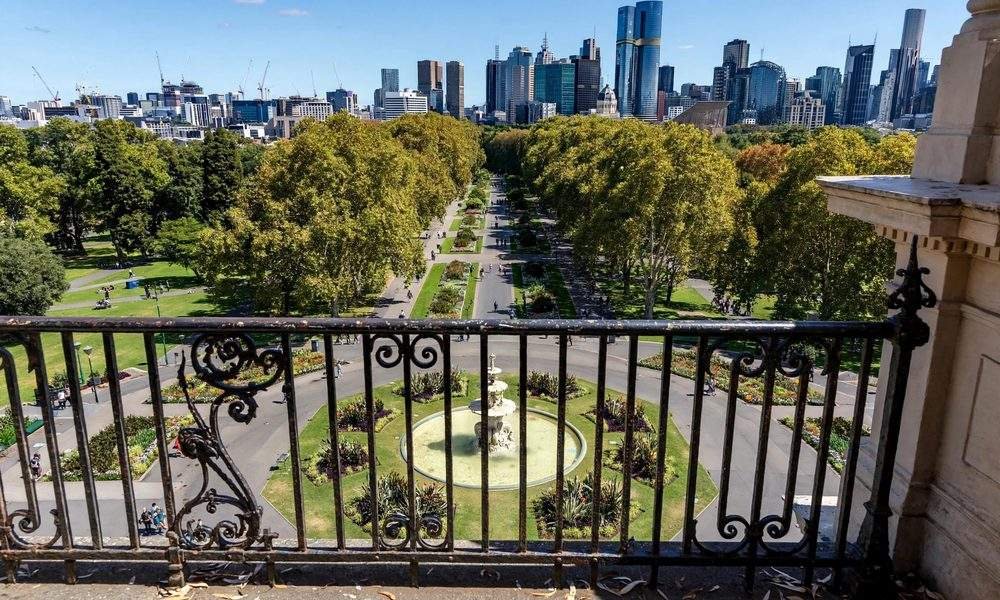
From the promenade you look south over the gardens, down the plane tree avenue to the fountain, and past it to the city towers. On a clear day the view runs a long way. Pick a clear day if you can. Both promenade levels are outdoors and exposed to the weather, so a wet or windy day takes the shine off the walk.
Tickets and Booking
Tickets cost $29 for adults, $23 for seniors and concession holders, $15 for children aged 16 and under, and $13 for Museums Victoria members. Bookings are essential, and tours often sell out, so lock in a time before you plan the rest of your day. Your Dome Promenade ticket includes general admission to Melbourne Museum on the same day, so the tour and the museum pair naturally. If you want a Devonshire Tea at Mercury Restaurant in the museum afterwards, ask about the add-on when you book.
Access on the Tour
Three levels of the tour, the basement, the mezzanine and the lower promenade, can be reached by lift. The upper promenade is not wheelchair accessible. It takes about 20 steps to reach, with more steps to walk the full circuit around the top. Talk to Museums Victoria on 13 11 02 before you book if you have mobility needs, so the team can plan the right route with you.
What to See in Carlton Gardens
Carlton Gardens cover 26 hectares, bounded by Victoria, Rathdowne, Carlton and Nicholson streets. The gardens are free to walk through, and they give you the clearest view of the building from the outside. The southern half is the formal forecourt to the building, laid out to frame the dome. The northern half, around the museum, was laid out after 1888. The gardens are lovely in autumn, when the elms turn gold, and in spring, when the flower beds around the fountain are replanted.
The Fountains
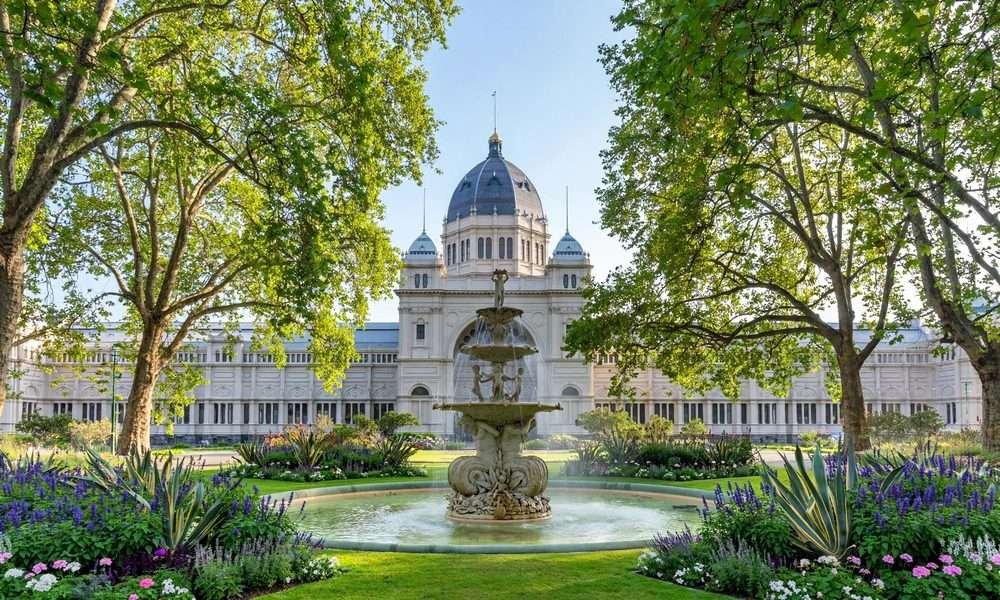
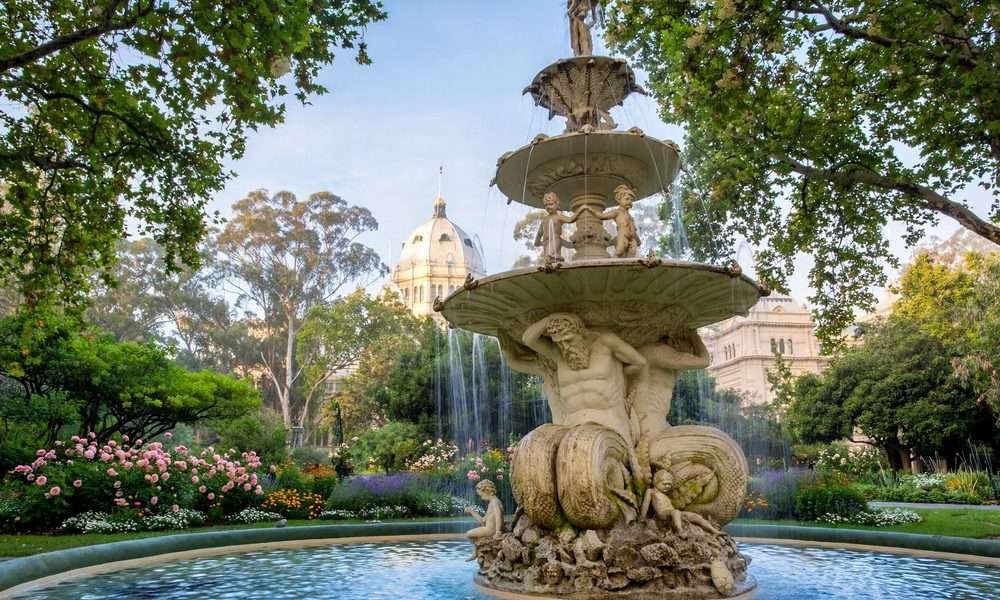
Start at the Exhibition Fountain, designed by Joseph Hochgurtel for the 1880 exhibition. It stands at the southern entrance to the building, at the end of the main avenue, and it is the classic photo spot, with the dome rising behind it. Morning light suits it well. Two smaller historic fountains sit elsewhere in the gardens: the French Fountain and the Westgarth Drinking Fountain. Together with the main fountain they give the gardens three fountains to find on a slow walk.
Avenues, Lakes and Lawns
The main avenue is lined with 26 plane trees, and it runs straight from Victoria Street to the building. Avenues of elms, cedars, poplars and oaks cross the lawns. Mature elm avenues like these are rare worldwide because of Dutch elm disease, so the trees here are worth a look on their own. Two ornamental lakes sit in the southern gardens, each with its own island. They are a quiet spot away from the museum crowds, and the building reflects in the water at dusk.
The Playground and Tennis Courts
The northern section of the gardens holds a children’s playground designed around a Victorian maze theme. It is a good stop if you have young children with you. Tennis courts sit in the gardens as well, and they are open to the public for bookings through the Carlton Gardens Tennis Club. Bring a picnic if the weather is kind. The lawns around the fountain are the natural place to sit, and the gardens are free, so there is no rush to move on.
Melbourne Museum Next Door
Melbourne Museum sits at the northern end of Carlton Gardens, directly behind the Royal Exhibition Building. It opened in 2000 on the site of the demolished annexes, and it is the half of the precinct you can simply walk into. The museum is open from 9am to 5pm every day except Good Friday and Christmas Day. You can check current prices and hours on the Melbourne Museum visiting page.
General admission costs $18 for adults and $12 for Australian Seniors Card holders. Concession holders, children aged 16 and under, and Museums Victoria members enter free. Some temporary exhibitions cost extra. The museum holds a permanent collection across eight galleries, and a suggested route for adults takes about two and a half hours.
Galleries to Allow Time For
Upstairs, Melbourne Story tells the city’s history, and Phar Lap, the champion racehorse, stands in it. Further in, you walk through the workers’ houses of Little Lon, a lost quarter of the city centre. First Peoples, in the Bunjilaka Aboriginal Cultural Centre, was made with the Yulendj Group of Elders and tells the history, cultures and survival of the First Peoples of south-eastern Australia through more than 600 objects. Outside it, the Milarri Garden has an eel pond with a daily feeding. The Forest Gallery brings a mountain forest indoors, with native fish, spiny crayfish and birds such as the tawny frogmouth. The dinosaurs are the draw for children: Dinosaur Walk, and Horridus, which the museum calls the most complete real dinosaur on display anywhere in Australia. The Pauline Gandel Children’s Gallery is made for children up to five. Our guide to Melbourne Museum covers the galleries in more detail, and our list of the best museums in Melbourne puts it alongside the city’s other museums.
IMAX Melbourne
IMAX Melbourne shares the museum building. Documentary films cost $12 for all tickets. Feature films cost from $27 to $31.50 for adults, $23.50 to $27 for concession holders, and $18 to $23.50 for children. An IMAX film is a solid rainy-day plan if the weather turns on your garden walk.
Events at the Royal Exhibition Building
The building’s biggest public event is the Melbourne International Flower and Garden Show, which fills the hall and the gardens each year. The 2027 show runs from 17 to 21 March 2027 at the Royal Exhibition Building and Carlton Gardens. The show’s own site calls it the largest horticultural event in the Southern Hemisphere, drawing more than 100,000 visitors over five days. See the Flower Show tickets page for dates, hours and ticket details. Gardens by Twilight evening sessions run on the Friday and Saturday of show week.
Outside show week, the hall hosts trade fairs, fashion shows, cultural festivals and markets. Event organisers set their own opening hours, ticket prices and entry gates, so check the event’s own page before you go. A big event can close the building to tours, and it can change which gates you use. If you are visiting during an event, the gardens and the museum still make the trip worthwhile.
How to Get to the Royal Exhibition Building
The building sits at 9 Nicholson Street, Carlton. Trams 86 and 96 run along Nicholson Street to Stop 11, Melbourne Museum, right beside the gardens’ eastern side. Stop 11 sits outside the Free Tram Zone, so have a valid fare ready for that leg. The free City Circle tram runs along Victoria Parade and Spring Street, a short walk from the southern entrance to the gardens.
Parliament Station on the City Loop is the closest train station, about 500 metres south of the gardens, or around 10 minutes on foot. From the Spring Street side, walk north towards Victoria Street and follow the paths towards the building. On foot from Swanston Street, allow about 15 minutes. If you are driving, paid parking sits beneath Melbourne Museum, with entries from Nicholson Street and Rathdowne Street. Check the current parking price online before you arrive, and allow extra time during big events. Public transport is simpler than searching for a space when a major show is on. The City of Melbourne lists tour times and booking details on its Dome Promenade page.
How to Plan Your Visit
Book the Dome Promenade tour first, then plan the museum and gardens around it. Tour places are limited to 30 people, and the session you want can sell out. A good order for a half day is the tour in the morning, the museum through the middle of the day, and the gardens last, when you can sit on the lawns and take your time. Allow an hour for the tour, two to three hours for the museum, and an hour for the gardens.
Go on a clear day if you can, so the promenade views pay off. The museum is calmer from 3pm to 5pm on term weekdays, so a late museum visit after a morning tour works well. Check the event calendar before you set your date. A trade show or exam period can close the hall to tours, and the Flower Show week in March is the busiest time of the year at the site. For a wider day out, Queen Victoria Market is about 15 minutes’ walk west, and Federation Square is a short tram ride south. Our guide to free things to do in Melbourne has more no-cost stops to add to the same day.
Visiting with Children
Children aged 16 and under enter Melbourne Museum free, and the museum is one of the most family-friendly stops in the city. The dinosaurs and the Pauline Gandel Children’s Gallery are made for them, and the gardens outside give them room to run. The Children’s Gallery suits babies and children up to five. Pram parking is on car park levels P1 and P2, and the museum’s main floors are linked by lifts.
The Dome Promenade tour suits older children who can manage stairs and an hour of guided talk. The upper promenade takes about 20 steps and is outdoors, so hold a young child’s hand on the walkway. The maze-themed playground in the northern gardens is a good reward after the tour. The Royal Botanic Gardens are another easy family stop nearby if the kids still have energy.
Frequently Asked Questions
Can you go inside the Royal Exhibition Building without a tour?
No. There is no walk-in entry to the building. You get inside on a booked Dome Promenade tour or with a ticket to an event in the hall. If the hall is closed on your day, the gardens and Melbourne Museum are still open, so the trip is not wasted. Check the Museums Victoria booking calendar and the event calendar for your date before you travel.
Do children need a ticket for Melbourne Museum?
Children aged 16 and under enter free for general admission, but they may still need a free timed ticket at busy times so the museum can manage numbers. The Pauline Gandel Children’s Gallery also needs a free timed reservation on top of museum entry. Book both online before you go, and book early in school holidays.
What should I wear on the Dome Promenade tour?
Wear closed shoes with grip, because the tour climbs stairs and the promenade is outdoors. Bring a layer for wind, even on a sunny day, and sun protection on a clear day. The walkway is exposed on all sides, so rain and wind reach it. Leave bulky bags behind where you can, and carry water in warm weather.
Where can I eat during the visit?
Mercury Restaurant sits inside Melbourne Museum, and the museum has a cafe as well. Lygon Street, Melbourne’s Italian strip, is two blocks west of the gardens. Queen Victoria Market, about 15 minutes’ walk west, has food stalls on market days.
Is this the same building as the Melbourne Exhibition Centre?
No. The Melbourne Exhibition Centre, often called Jeff’s Shed, is a modern convention centre on Southbank, on the other side of the river. The Royal Exhibition Building is the 1880 hall in Carlton Gardens. Tour bookings and event tickets for the two venues are separate, so check the address on your ticket before you travel.
Final Thoughts on Visiting the Royal Exhibition Building
The Royal Exhibition Building rewards a planned visit. Book the Dome Promenade tour first, give the museum two unhurried hours, and finish with a slow walk through Carlton Gardens to the fountain. If you only have an hour, walk the gardens and look at the building from the fountain. It is free, and it is the view the avenues were laid out to frame. As the team at Australia City Guide would say, this is the one place in Melbourne where a world fair, the first Parliament and a working museum share the same garden. Go on a clear day, and give it the half day it deserves.