
Australia is known for wide deserts, long beaches, and modern cities. But many travelers do not realise how rich Australia is in waterfalls. From tropical rainforests to rocky mountain ranges, the country is filled with flowing water wonders.
Some waterfalls fall from great heights, while others gently flow into clear pools. These natural places offer calm views, fresh air, and peaceful moments. Whether you love nature walks, photography, or short trips, waterfalls in Australia always leave a strong memory.
This guide covers famous waterfalls, hidden spots, safety tips, and helpful travel ideas. It is written for easy reading and simple planning. If you enjoy exploring nature, this list will help you choose the best waterfall stops for your next trip.
Why Does Australia Have So Many Great Waterfalls?
Australia has a wide range of landscapes that help create beautiful waterfalls. The country has tropical regions, dry areas, mountain ranges and coastal forests. Heavy rain in some regions feeds rivers that drop over cliffs and rock edges. National parks protect many waterfalls, which keep the areas clean and natural.
Another reason is changing weather patterns across the country. Different seasons in Australia bring rain to various regions at different times. This makes waterfalls flow stronger in some months and softer in others. The mix of land shapes and weather helps Australia stay rich in waterfall beauty all year round.
Top 10 Most Beautiful Waterfalls in Australia
I time my visit for early morning. The light hits each tier, the heat stays low, and the long corrugated drive feels worth it the moment the falls appear.
1. Mitchell Falls, Western Australia
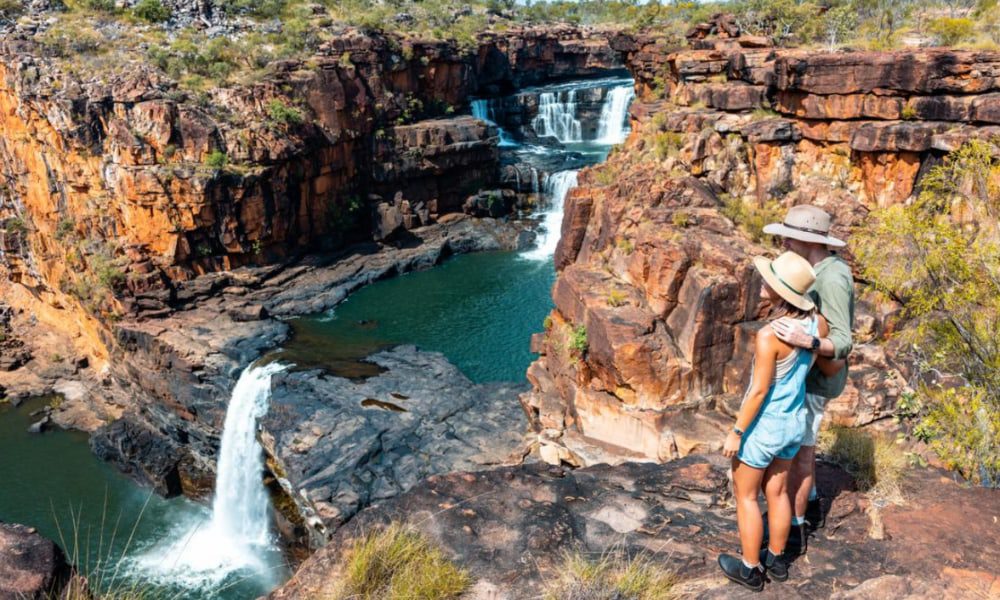
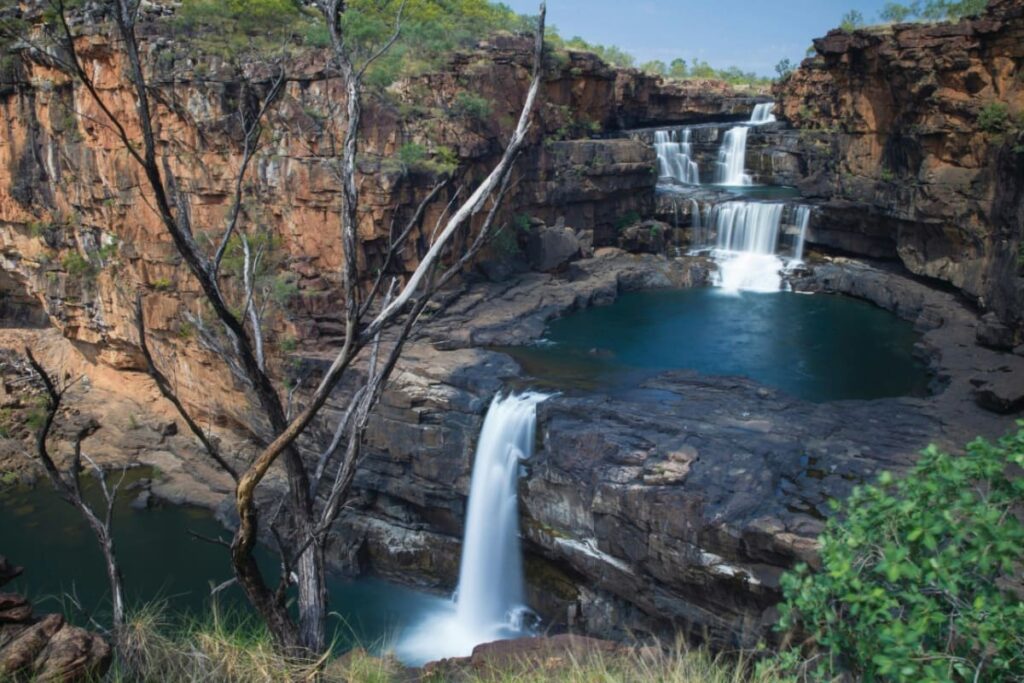
Mitchell Falls sits in the far north of the Kimberley in Western Australia, and it takes real effort to reach. The falls drop in four tiers over red rock into clear pools below. The tiers run best after the wet season, when the river still carries strong flow. The setting is remote, wide and quiet, with spinifex plains and sandstone ridges all around.
Getting here is half the trip. Most visitors fly in by helicopter from a nearby camp or station, or join a guided tour that handles the rough access track. A self-drive trip needs a high-clearance four-wheel drive and careful planning, plus extra fuel and water. Check road and park conditions before you set out, as the access track closes in the wet season.
The walk from the top camp to the falls lookout is rough in places, so wear solid shoes and carry more water than you think you need. Start early to beat the heat, and give yourself time at the pools. The rock art sites near the falls are culturally important, so stay on the marked paths and follow local guidance.
Mitchell Falls suits travellers who want a true outback waterfall, not a quick roadside stop. Pair it with a longer Kimberley trip if you can, and book flights or tours well ahead. The dry season months give you the safest access and the most reliable tracks.
Pack sun protection, a hat and a camera you can keep dry. The Kimberley sun is harsh even in the dry season, and the spray at the base pools can reach your gear. Offline maps help too, as phone signal drops out across much of the region.
2. Jim Jim Falls, Northern Territory
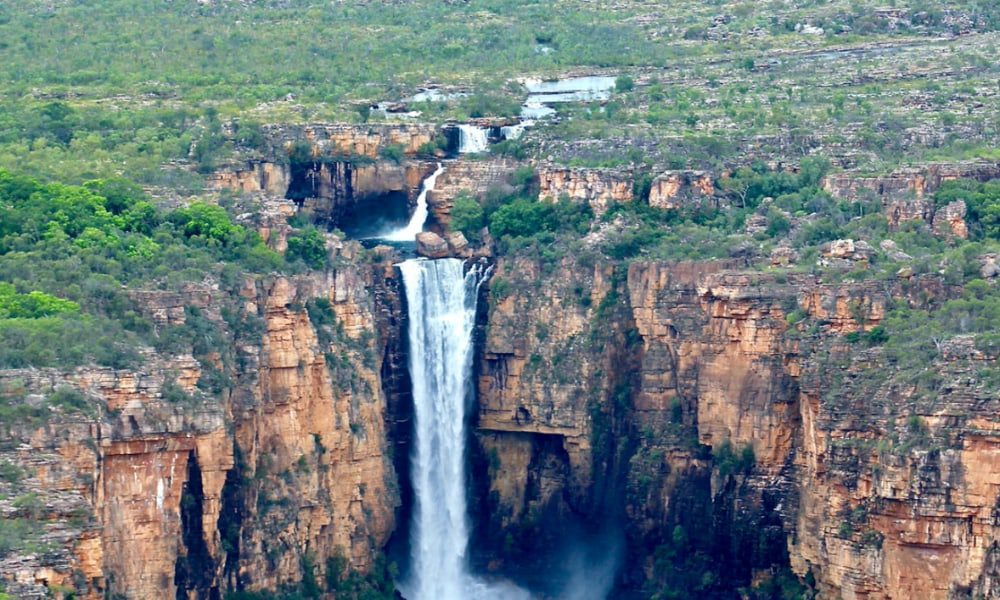
Jim Jim Falls drops over a tall escarpment in Kakadu National Park in the Northern Territory. In the wet season the falls run hard and the gorge fills with spray and noise. In the dry season the flow eases right back, and the upper pools become the main draw. Either way, the sandstone cliffs around the gorge make the walk in feel grand.
Access needs care. The track in suits high-clearance four-wheel drives, and it closes when rain makes it unsafe. Plan Jim Jim for the dry season if you drive yourself, and check park alerts the night before. If you do not have the right vehicle, a Kakadu tour from Jabiru or Cooinda is the easier option.
The walk to the plunge pool crosses sand and rock, so wear shoes with good grip and carry plenty of water. Swim only where signs say it is safe, and stay out of the water entirely in the wet season when crocodiles may be present. The gorge is a culturally important place, so stick to marked tracks.
My guide to things to do in Kakadu National Park covers the main sites, walks and day plans in detail. Pair Jim Jim with other Kakadu falls for a full gorge day, and leave early so you reach the pool before the heat builds.
If you have a second day in Kakadu, add Twin Falls to the plan. It sits in the same park and needs a boat trip in, which makes it a very different day from the Jim Jim drive. Both falls show why Kakadu is the best park in the country for gorge waterfalls.
3. Wallaman Falls, Queensland
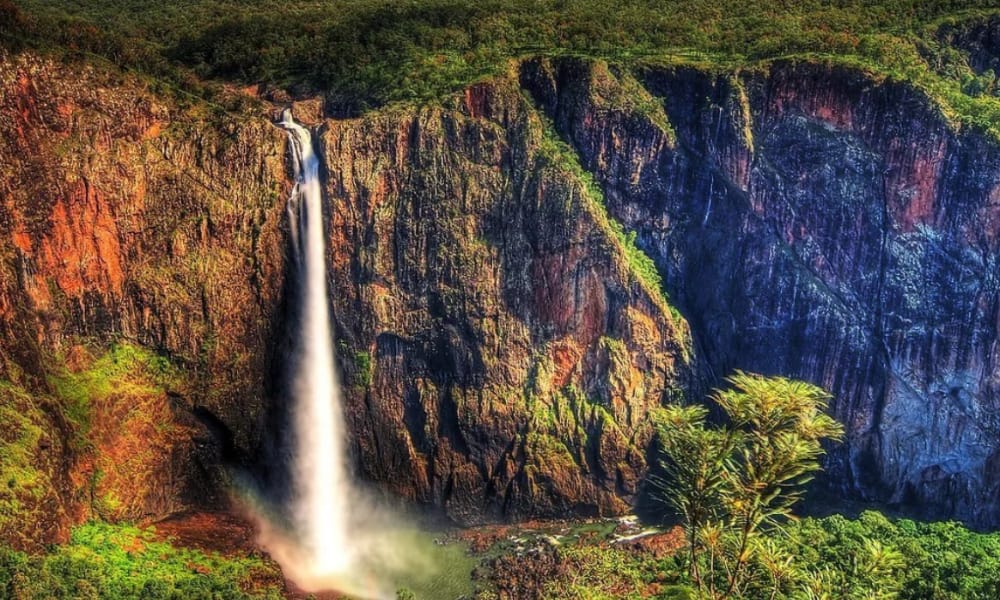
Wallaman Falls in Queensland is the tallest single-drop waterfall in Australia, with the main drop falling 268 metres into a deep gorge. The falls sit in Girringun National Park in the Wet Tropics, and they flow all year. Rainforest crowds the gorge rim, and the lookout at the top gives you the full scale in one view.
Start at the top lookout, then take the track down for a closer angle. The return climb is steep, so take your time and carry water. The track can be slippery after rain, and leeches appear in the wet months, so wear long socks and closed shoes.
Wallaman suits a day trip from Ingham or a stop on a drive between Townsville and Cairns. Go in the morning for softer light and fewer people at the lookout. After heavy rain the falls run at their strongest, but check park alerts first, as tracks can close.
There is no swimming at the base track for most visitors, so treat Wallaman as a lookout and walking stop rather than a swim spot. The gorge views alone make the drive worth it, and the rainforest walk adds a second reason to visit.
Photographers should aim for the morning, when the sun sits behind the lookout and the gorge stays in soft shade. Afternoon light can be harsh on the white water. Bring a lens cloth as well, since mist from the gorge drifts up to the top track.
4. Fitzroy Falls, New South Wales
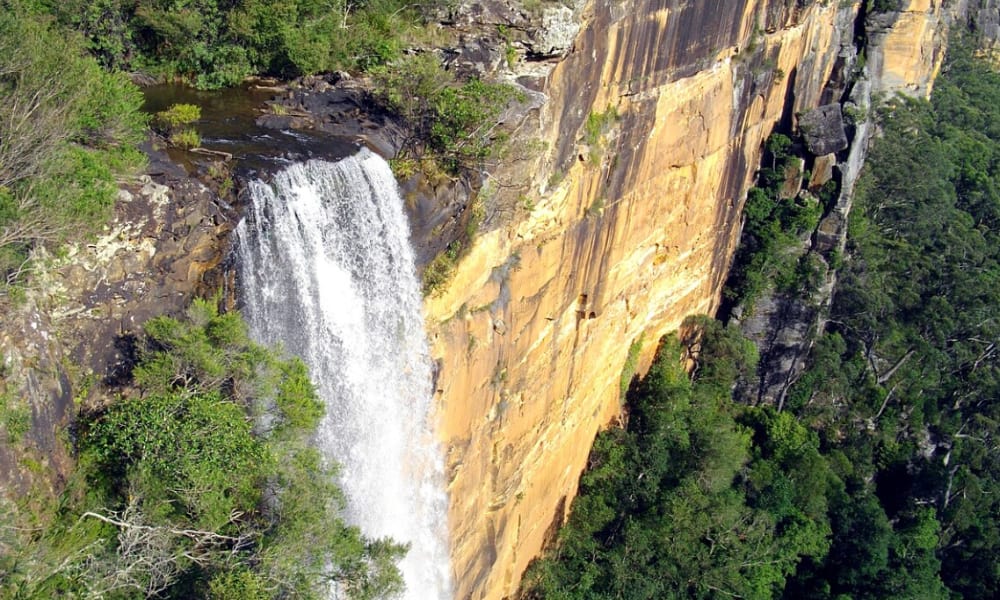
Fitzroy Falls tumbles 81 metres into a deep gorge in the Southern Highlands of New South Wales. The falls sit in Morton National Park, and well-kept walking tracks and viewing platforms make the visit easy. The gorge rim walk suits most fitness levels, and the eucalyptus forest and fern gullies around the tracks add shade and birdsong.
The main lookout sits a short walk from the car park, so Fitzroy works well for families and for travellers with limited time. Longer tracks lead along the gorge rim to more lookouts, and each one gives a different angle on the falls. Take water and sun protection, as the rim tracks have little shade in the middle of the day.
Fitzroy flows best after rain, so time your visit after a wet week if you can. The visitor centre near the car park has track maps and current conditions, and the picnic areas suit a slow lunch after the walk. Pair Fitzroy with a Southern Highlands weekend for wineries, villages and gardens.
The falls are an easy drive south of Sydney, which makes them a strong first waterfall stop for visitors to New South Wales. Go early on weekends, as the main lookout fills up by late morning.
The picnic areas near the car park make Fitzroy an easy family day out. Bring lunch and let kids burn off energy on the short tracks before the drive home. The visitor centre staff can point you to the track that suits your group best.
5. Russell Falls, Tasmania
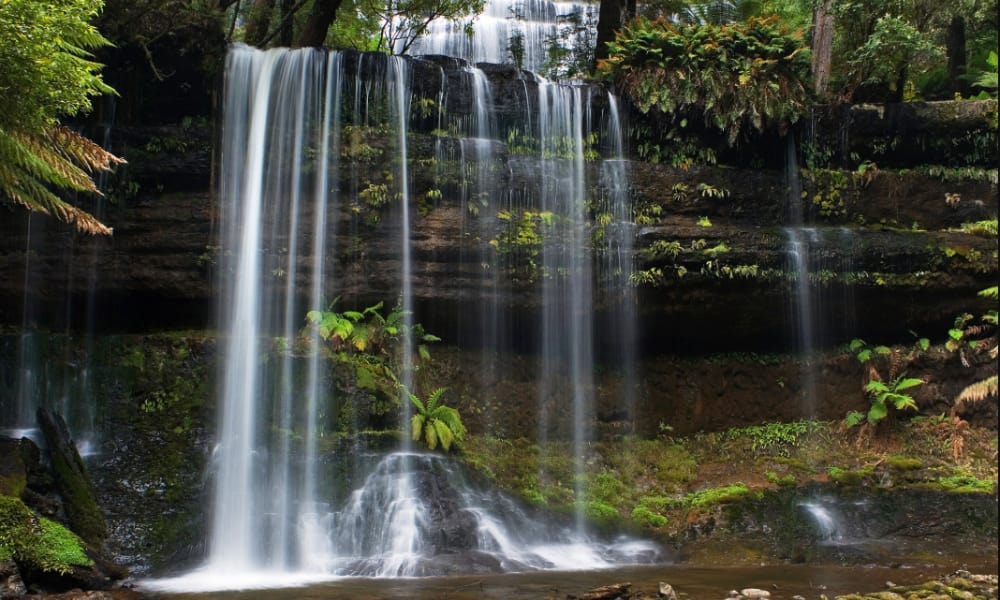
Russell Falls is a three-tiered waterfall in Mount Field National Park in Tasmania. The falls run all year, and the short path from the car park winds through tall tree ferns and swamp gums. The track is flat and wheelchair friendly, which makes Russell one of the easiest major falls in Australia to visit.
Go after rain for the best flow. The tiers run dark and full, and the fern gullies turn deep green. The upper falls, Horseshoe Falls, sit a short walk further along the same track, so add them to the same visit. The whole circuit takes under an hour at a relaxed pace.
Russell suits families, older travellers and anyone short on time. The visitor centre has track maps, and the picnic areas near the car park work well for lunch. In winter the park can be cold and wet, so pack a warm layer and a rain jacket.
Pair Russell Falls with a Mount Field day trip from Hobart. The drive takes under an hour each way, and the tall forest alone makes the trip worth it. Start early to enjoy the track before tour groups arrive.
Winter visits have their own appeal. The park is quieter, the ferns look their best after rain, and the cold air makes the walk feel fresh. Just pack a warm layer and a rain jacket, and check the park’s current conditions before you leave Hobart.
6. Wangi Falls, Northern Territory
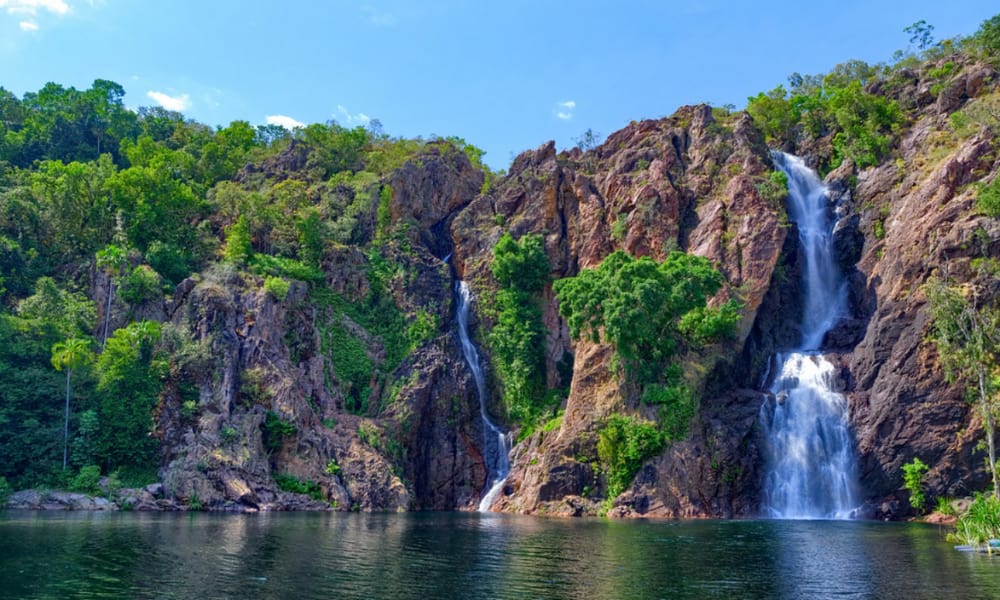
Wangi Falls in Litchfield National Park has twin cascades that flow into a large swimming hole. The falls sit in monsoon forest in the Northern Territory, and the pool is one of the best swimming spots in the Top End. Facilities, shade and easy access make Wangi a favourite for families.
Swim in the dry season, when rangers check the pool and keep it open. Always read the signs before you get in, as the pool closes when water levels or wildlife make it unsafe. Go early in the day for a quiet swim, then sit in the shade and watch for wallabies in the grass.
Wangi works as a day trip from Darwin, and it pairs well with Florence Falls on the same Litchfield loop. The short walk from the car park suits all ages, and the picnic areas near the pool suit a long lunch. Take plenty of water, as the Top End heat builds fast.
My guide to things to do in Litchfield National Park has the full plan for the park loop. Wangi is the easiest waterfall swim on this list, and it shows why Litchfield is called Darwin’s backyard.
If the pool is closed on the day you visit, do not swim anyway. Rangers close it for good reasons, and the falls lookout and forest walks still make the trip worth it. Check the signs again later in the day, as conditions can change.
7. Ellenborough Falls, New South Wales
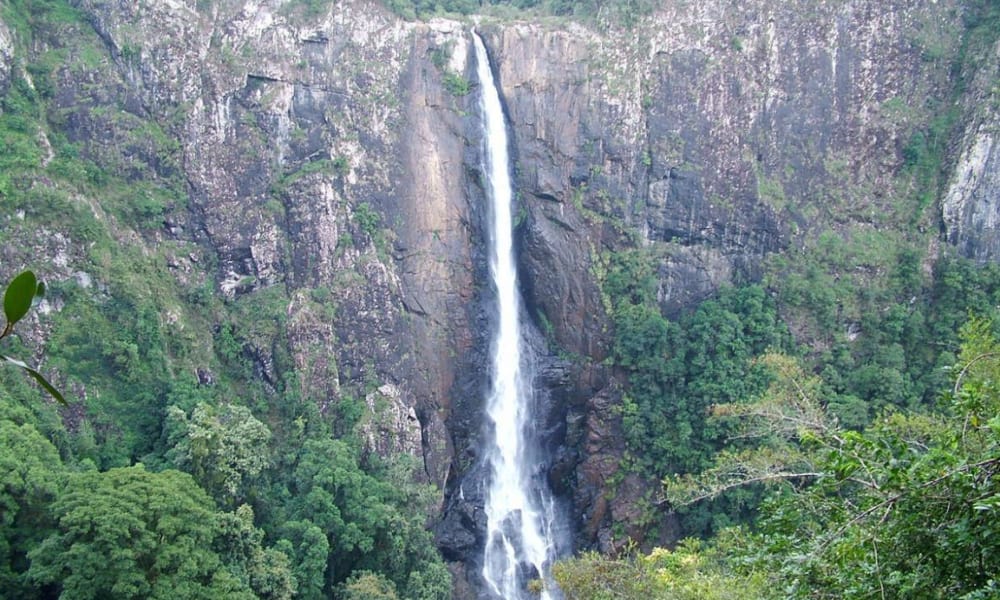
Ellenborough Falls near Elands in New South Wales drops 160 metres in one clean line. The falls rank among the tallest single drops in the country, and viewing platforms at the top and base give different views. The picnic areas near the car park make it a strong day-trip stop.
The walk to the base is steep, with many steps down and back up, so wear solid shoes and take your time. The top lookout needs only a short walk, so the falls still work for visitors who want a quick stop. Stop in Elands on the way through for fuel and food, as services near the falls are limited.
Ellenborough flows best after rain, and the single drop looks best in soft morning light. The surrounding forest holds birds and wallabies, and the picnic tables suit a packed lunch. Pair the falls with a Mid North Coast drive for beaches and hinterland towns.
The falls are remote enough to stay quiet on most days, which is part of the appeal. Check road conditions before you go, as the hinterland roads are narrow and winding in places.
Take care on the drive in and out. The hinterland roads are narrow, and logging trucks and wildlife share the route. Drive slowly, especially at dawn and dusk, and allow extra time so you never feel rushed on the way home.
8. Purling Brook Falls, Queensland
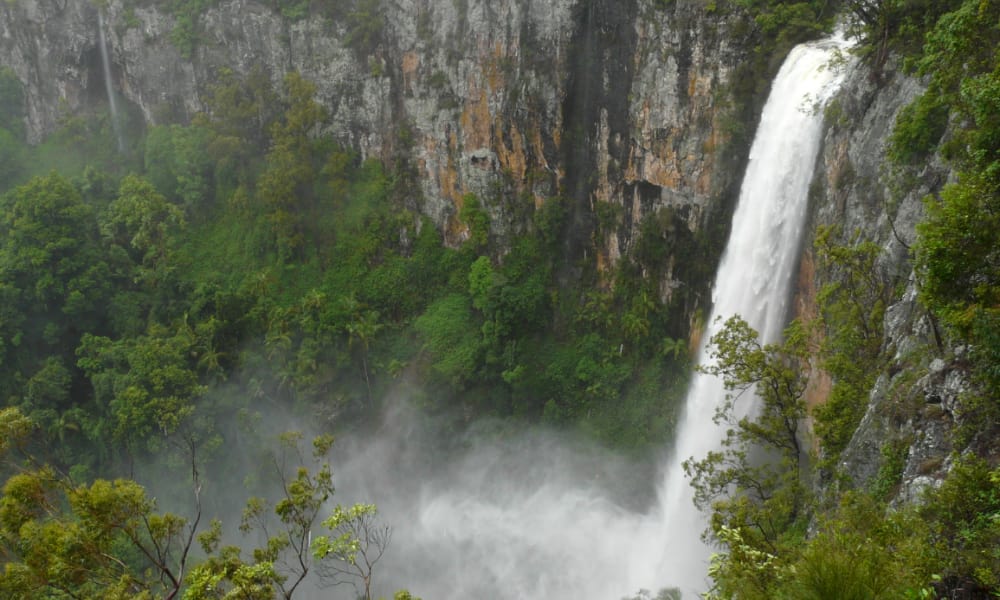
Purling Brook Falls drops 106 metres in Springbrook National Park in the Gold Coast hinterland. The walking circuit lets you view the falls from above and from the base, and the track winds through ancient rainforest. The views across the hinterland from the top track are wide and green.
Take the full circuit if you have time. The descent to the base is steep, but the close-up view and the pool at the bottom make it worth the climb back up. Go after rain for the strongest flow, and wear shoes with good grip, as the stone steps get slippery.
Springbrook sits under an hour from the Gold Coast beaches, so Purling Brook pairs well with a coast and hinterland day. My guide to the best waterfalls in the Gold Coast covers the hinterland’s best falls. Start early to beat the heat and the crowds on the circuit track.
The rainforest here is cool even on warm days, and the birdlife along the track is worth a slow walk. Take water for the climb, and give yourself at least two hours for the full circuit.
Keep your camera in a dry bag on the base walk. The mist at the bottom soaks gear fast, and the stone steps stay wet long after rain. A small towel for wiping lenses saves a lot of frustration on the climb back up.
9. MacKenzie Falls, Victoria
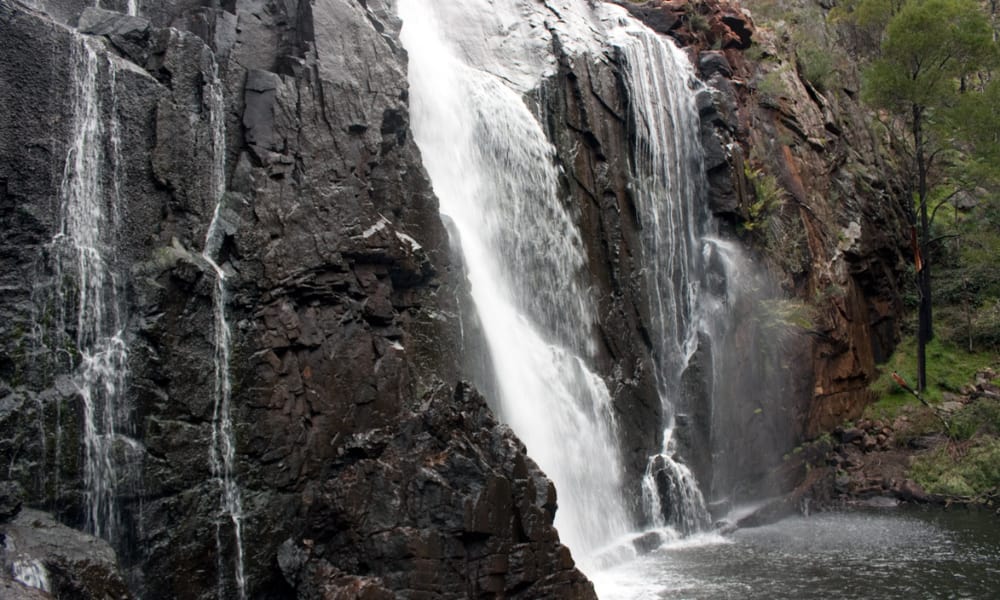
MacKenzie Falls in the Grampians National Park in Victoria drops 35 metres into a deep gorge. Two viewing areas give different angles over the falls, and the base walk takes you close enough to feel the mist. The falls flow all year, which makes them one of the most reliable falls in Victoria.
Take the base walk for the close-up view, but expect steep steps on the way back up. The top lookout needs only a short walk from the car park, so the falls work for a quick stop too. After rain the flow strengthens and the gorge runs loud, so time your visit after a wet week if you can.
MacKenzie sits near Halls Gap, the main town for the Grampians, so base yourself there for walks, lookouts and wildlife. The Grampians hold rock art sites and wildflower country, and the falls pair well with a full day in the park. In summer the gorge can be hot, so start early and carry extra water.
The falls are one of the best-known sights in the Grampians, and the lookout platforms keep the visit safe and easy. Stay behind the barriers near the cliff edges, and keep to marked tracks on the base walk.
MacKenzie is worth visiting in any season, but each season changes the feel. Summer brings heat and crowds, while winter brings cold air and strong flow. Pick the season that suits your walking style best.
10. Millaa Millaa Falls, Queensland
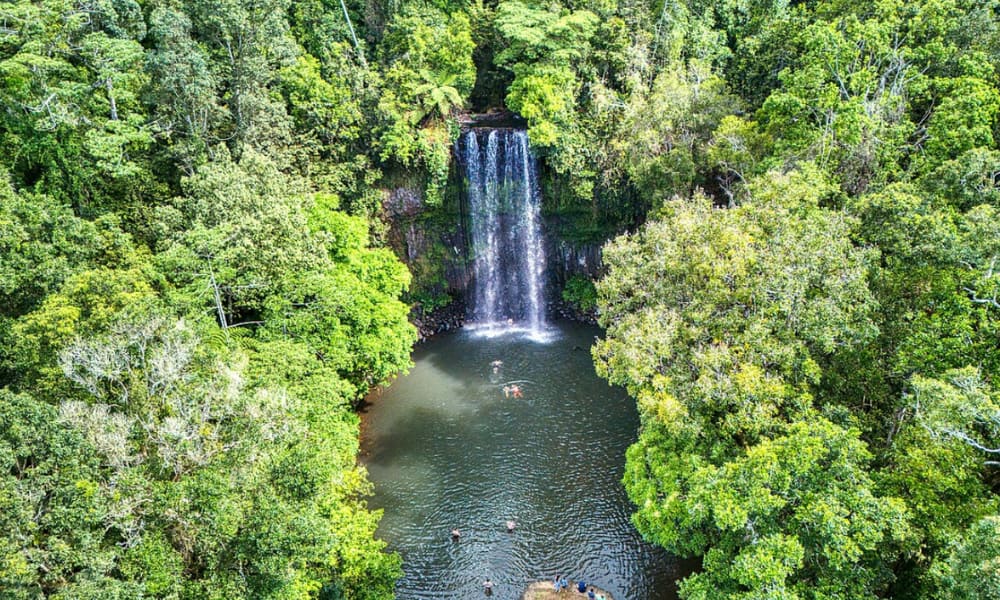
Millaa Millaa Falls on the Atherton Tablelands in Queensland is one of the most photographed waterfalls in Australia. The falls drop in a neat curtain into a calm pool, and the rainforest setting makes it a classic swim and photo stop. Easy access from the road makes it one of the simplest falls on this list to visit.
Go on a weekday and early in the day for photos without a crowd in every frame. The pool suits a short swim, and the grassed area near the car park works for a picnic. The falls sit on the waterfall circuit drive with other Tablelands falls, so add two or three more stops to the same day.
The circuit road is narrow and winding in places, so drive slowly and watch for other cars at the small car parks. After rain the falls run fuller, but the Tablelands roads can be wet, so check conditions before you set out.
Millaa Millaa works for every kind of traveller, from families to photographers to road trippers passing through the Tablelands. The easy access and calm pool make it the most relaxed waterfall stop on this list.
Share the pool kindly. Millaa Millaa is popular, and the small pool fills fast on weekends. Keep swims short when others wait, leave no rubbish behind, and keep noise down so everyone enjoys the rainforest setting.
How I Plan a Waterfall Trip Around Australia
I group my waterfall trips by region first. North Queensland works best in one road trip from Cairns, while the New South Wales falls suit separate weekends from Sydney or the Mid North Coast.
Next, I check the season for each area. Southern falls usually flow hardest after winter rain, while the Top End runs strongest late in the wet season, when some tracks stay closed for safety.
I also keep the driving easy. One big falls day beats three rushed stops, and most of these walks need solid shoes, drinking water and a dry bag for my phone.
Finally, I leave a spare morning up my sleeve. Rain can close a track overnight, and a flexible plan means I still get a walk in somewhere green that day.
For photos, I chase soft morning light. Harsh midday sun washes out the white water, while a calm early start keeps the tracks quiet and the air cool.
I also check park alerts the night before I set off. Closures, fire bans and road works can change fast, and five minutes online saves a wasted drive.
Waterfall Etiquette I Always Follow
I stay on marked tracks, even when a shortcut looks tempting. Waterfall country erodes fast, and one careless cut-through can scar the bank for years.
I swim only where the signs allow it. Some pools close for cultural reasons or hidden currents, and I trust the local advice over any photo I saw online.
I take every scrap of rubbish out with me as well. A clean swimming hole stays clean when each visitor leaves it exactly as they found it.
Hidden and Less Crowded Waterfalls in Australia
I save these quieter falls for busy holiday weekends, when the famous lookouts fill up fast.
- Tia Falls, New South Wales: Peaceful cascade near Dorrigo with minimal crowds, featuring swimming holes surrounded by lush vegetation and native wildlife sightings.
- Twin Falls, Northern Territory: Remote waterfall in Kakadu requiring boat access, offering pristine swimming holes with dramatic sandstone cliffs and crocodile-free waters.
- Cedar Creek Falls, Queensland: A secluded spot near Samford with a rope swing, natural rock slides, and clear pools perfect for adventurous swimmers seeking solitude.
- Tooloom Falls, New South Wales: A quiet horseshoe-shaped waterfall near the Queensland border, providing excellent camping nearby and peaceful walking trails through the forest.
- Lilydale Falls, Tasmania: An often-overlooked gem with two distinct falls, accessible walking paths, and beautiful forest surroundings without the tourist crowds.
- Dangar Falls, New South Wales: 30-meter drop near Dorrigo with few visitors, featuring viewing platforms, picnic areas, and a resident platypus population.
Tips for Visiting Waterfalls Safely
I run through this simple checklist every time I visit a waterfall, no matter how easy the walk looks.
- Check weather conditions before departure and avoid visiting during heavy rain or flood warnings
- Wear appropriate footwear with good grip, as rocks around waterfalls are often slippery and wet
- Never dive into waterfall pools without knowing the depth and checking for hidden rocks
- Bring plenty of water, sun protection, and insect repellent for your journey
- Stay on marked trails and respect barriers placed for your safety
- Be aware of wildlife, including snakes, leeches, and, in northern regions, crocodiles
- Tell someone your plans and expected return time when visiting remote locations
- Carry a first aid kit and a fully charged phone for emergencies
- Respect Aboriginal cultural sites and follow all park regulations
- Check if roads require four-wheel drive vehicles before attempting access
Read Also: Things to Do in Ettalong Beach
Waterfalls by State
Queensland holds the most waterfalls on this list, and it also holds the most variety. Wallaman Falls gives you the tallest single drop, Millaa Millaa Falls gives you the classic swim stop, and Purling Brook Falls gives you a rainforest circuit in the Gold Coast hinterland. My guide to the best waterfalls in Queensland covers the full state list.
Brisbane deserves its own mention, because this pillar had no Brisbane coverage until now. The falls around Brisbane suit easy day trips from the city, and my guide to the best waterfalls in Brisbane covers the closest options. The Sunshine Coast and Gold Coast hinterlands add more falls within an hour or two of the south-east cities, covered in my guides to the best waterfalls on the Sunshine Coast and the best waterfalls in the Gold Coast.
New South Wales mixes easy lookouts with remote gorge falls. Fitzroy Falls suits a quick Southern Highlands stop, while Ellenborough Falls suits a longer hinterland drive. My guide to hidden waterfalls in New South Wales covers the quieter falls beyond the famous ones.
The Northern Territory gives you the wildest falls on this list. Jim Jim Falls and Wangi Falls sit in national parks with big wet-season flows and strict dry-season access rules. My guides to things to do in Kakadu National Park and things to do in Litchfield National Park cover both parks in detail.
Victoria and Tasmania give you the most accessible falls. MacKenzie Falls in the Grampians runs all year and suits a weekend from Melbourne, while Russell Falls in Mount Field suits a short day trip from Hobart. Both have short, well-kept tracks and clear signage.
Western Australia gives you the most remote falls. Mitchell Falls in the Kimberley needs a flight or a long four-wheel-drive trip, and that effort is exactly why it feels so special. If you want one waterfall trip per state, start with the state closest to you and build from there.
South Australia and the Australian Capital Territory have no entry on this top 10 list. If you live in Adelaide or Canberra, the closest big falls are a road trip away in Victoria or New South Wales. Start with the state guides linked above, and plan the falls as part of a longer drive rather than a day trip. The state guides also help with seasons, since the best month for Queensland falls is rarely the best month for Tasmanian ones.
Use the linked state guides to plan deeper. Each one covers more falls in that state, including the quieter spots that never make a top 10 list. The Queensland guide covers the Wet Tropics and the south-east hinterland, the New South Wales guide covers the hidden falls beyond the famous lookouts, and the Gold Coast and Sunshine Coast guides cover the hinterland falls closest to the south-east cities. Start with your home state, then add one new state per trip, and this list becomes a long-term travel plan rather than a single holiday.
Best Time to Visit Waterfalls
The best time depends on where the falls sit. Northern waterfalls in the Top End and the Wet Tropics flow strongest in the wet season, roughly November to April. Southern falls in New South Wales, Victoria and Tasmania peak after winter and spring rain, roughly June to October. These months match the post’s own season guidance, so use them as a starting point, not a strict rule.
Strong flow is not always the best visit. In the wet season, northern tracks and roads can close for safety, and some gorge pools shut to swimmers. In the dry season, northern falls run lower, but access opens up and swimming holes become safer. Weigh flow against access before you lock in dates.
For southern falls, go after a wet week rather than in a fixed month. A single week of rain can turn a thin trickle into a full cascade, while a dry winter can leave the same falls quiet. Check recent rain and park alerts before you drive, and keep a backup falls nearby in case your first choice is low.
Time of day matters too. Early morning gives you soft light for photos, cooler air for climbs, and quieter tracks. Midday sun washes out white water in photos and heats up gorge walks fast. For the most popular falls, an early start is the simplest way to beat the crowds.
If you can only pick one season for a multi-state trip, late spring works well. Southern falls still carry spring rain, northern roads start to open, and the weather stays mild across most of the country. Whatever season you choose, check park alerts the night before, as rain can close a track overnight.
Finally, build a backup into every waterfall day. Rain can close a track overnight, and a dry spell can leave a falls quiet, so pick a second falls or a lookout nearby before you set out. A closure then becomes a change of plan rather than a wasted drive.
The backup stop often turns out to be the highlight, because quieter falls give you space, shade and time. Keep the driving easy on backup days too: one big falls day beats three rushed stops, and most of these walks need solid shoes, drinking water and a dry bag for your phone.
A dry falls is not always a wasted trip. The gorge, the rainforest walk and the lookout still give you a good day out, and the same falls can look completely different after the next rain. Treat a low-flow visit as a scouting trip: learn the track, find the best lookout, and come back after a wet week for the full flow.
Final Thoughts
Waterfalls add beauty, balance, and calm to Australian travel experiences. They show another side of nature beyond beaches in Australia and busy city life. Whether you visit famous sites or quieter spots, waterfalls help people relax and connect with nature. With careful planning and safe travel habits, these places can be enjoyed by all ages.
If you want more travel ideas, location guides, and nature trips, you can explore helpful articles on the Australia City Guide for simple and clear planning.
If you are planning more waterfall stops, these guides will help:
- Best Waterfalls in Queensland
- Hidden Waterfalls in New South Wales
- Best Waterfalls on the Sunshine Coast
- Best Waterfalls on the Gold Coast
- More Things to Do in Australia
Frequently Asked Questions
What is Australia’s biggest waterfall?
Wallaman Falls in Queensland is Australia’s tallest single-drop waterfall at 268 meters. It flows year-round through the tropical rainforest in the Wet Tropics region.
What is the most photographed waterfall in Australia?
Millaa Millaa Falls on the Atherton Tablelands is considered the most photographed. Its circular shape and easy access make it incredibly popular with visitors.
Which state in Australia has the most waterfalls?
Queensland has the most waterfalls due to its tropical climate and mountainous terrain. The state’s high rainfall creates numerous permanent and seasonal cascades throughout.
When is the best time to visit Australian waterfalls?
The best time depends on the location. Northern waterfalls flow strongest during the wet season (November-April), while southern falls peak after winter-spring rains (June-October).
Are all Australian waterfalls safe for swimming?
Not all waterfalls are safe for swimming. Always check local signs, watch for strong currents, and in northern areas, be aware of crocodiles.
Do I need a four-wheel drive to visit these waterfalls?
Most falls on this list are fine in a normal car. Russell Falls, Fitzroy Falls, Millaa Millaa Falls and Purling Brook Falls all have sealed access and short walks from the car park. You only need a high-clearance four-wheel drive for Mitchell Falls and for the access track into Jim Jim Falls, and both can be visited on a tour if you do not have the right vehicle. Check road conditions before you go, as rain can change access fast.
Which waterfall on this list is best for families with young kids?
Russell Falls is the easiest win. The path is flat and wheelchair friendly, the walk takes under an hour, and the visitor centre and picnic areas sit close to the car park. Wangi Falls suits families too, with facilities and a large swimming hole in the dry season. Fitzroy Falls works well for a short stop, as the main lookout needs only a short walk.
How many days do I need to see the best waterfalls in Australia?
You cannot see all ten in one trip, so group them by region. One day covers the Gold Coast hinterland falls, one day covers the Atherton Tablelands circuit, and one weekend covers the Southern Highlands falls from Sydney. The Northern Territory falls need a full Top End week, and Mitchell Falls needs its own Kimberley trip. Pick one region per trip and enjoy it slowly.
Can I visit these waterfalls without a car?
Some yes, some no. Russell Falls works as a day trip from Hobart on a tour, and Fitzroy Falls suits a Southern Highlands tour from Sydney. The remote falls like Mitchell Falls and Jim Jim Falls need a tour or a four-wheel drive, as no public transport reaches them. For the rest, a hire car gives you the most freedom, and tours cover the famous stops.