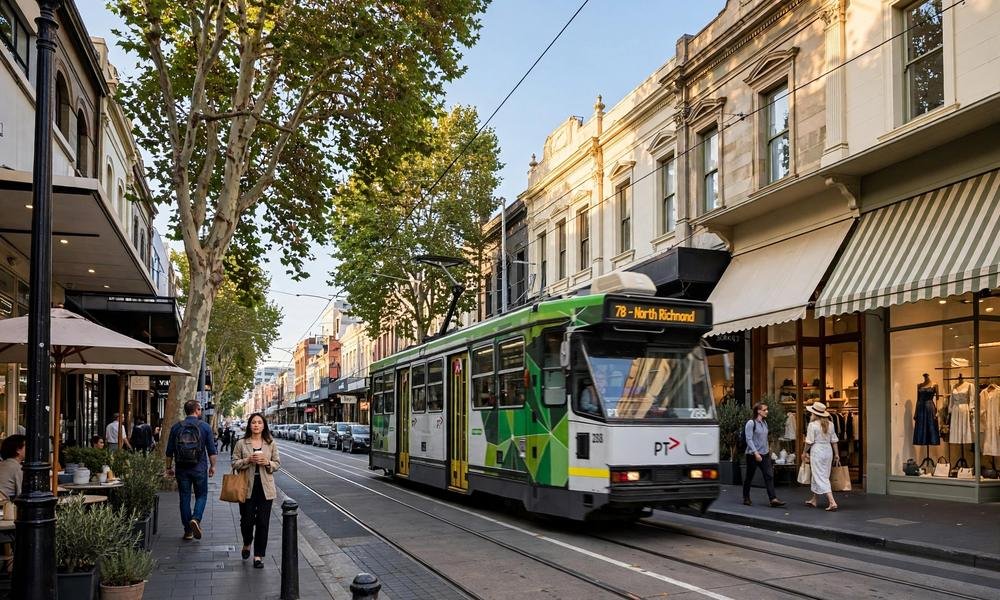
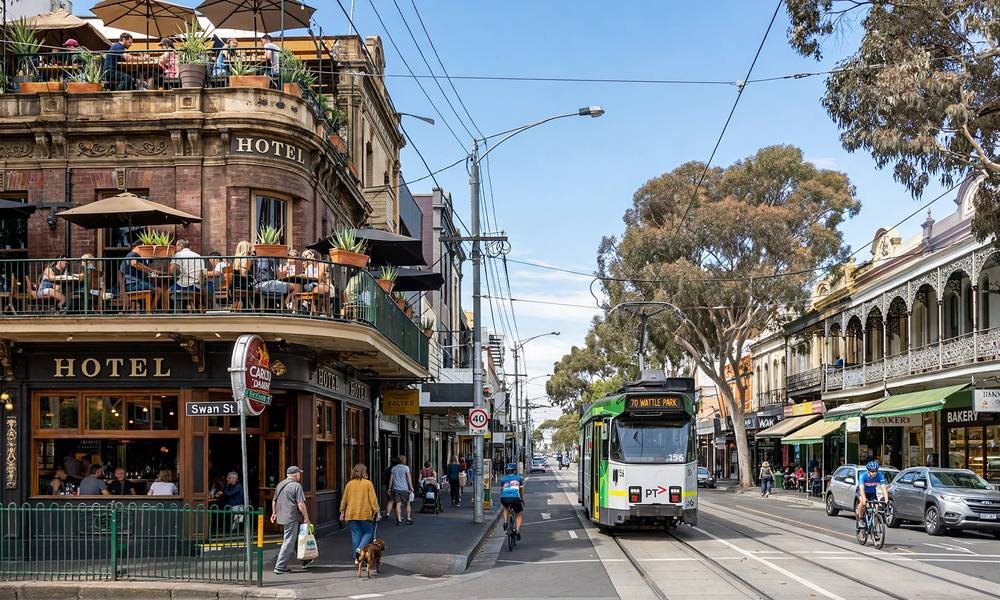
Collingwood Melbourne is the inner-north suburb where old factories now hold breweries, galleries and roasters, and where Smith Street serves up some of the most interesting eating and drinking in the city. It sits just north-east of the CBD, a short tram ride away, and it packs a full day of food, beer, street art and live music into a small grid of streets. This guide covers the history, the main streets, the places to eat and drink, where to stay, and how to get there, so you can plan a half day or a full day without missing the good parts.
Details checked on the official site, November 2026
Quick facts
- Location: Inner north Melbourne, just north-east of the CBD, between Smith Street and Hoddle Street
- Cost: Free to walk around; the mural, Collingwood Yards and the street art cost nothing
- Time needed: Half a day for the main sights; a full day if you add dinner and bars
- How to get there: Tram 86 along Smith Street, or train to Collingwood station on the Mernda and Hurstbridge lines
Where Is Collingwood?
Collingwood is a small, flat suburb in the City of Yarra, bordered by Smith Street to the west, Alexandra Parade to the north, Hoddle Street to the east and Victoria Parade to the south. Fitzroy sits directly across Smith Street, and the two suburbs share so much street life that visitors often treat them as one area. Abbotsford lies just across Hoddle Street to the east, and Richmond sits to the south.
The suburb is a tight grid of narrow streets, workers cottages, corner pubs and red-brick warehouses. Many of the warehouses now hold architects, designers, galleries and start-ups, which gives the area a busy weekday life as well as a lively night-time one. Public housing towers and long-running community services sit a few streets from polished cafes and design stores, and that mix is part of what makes the place feel real rather than staged.
A Short History of Collingwood
Collingwood lies on the Country of the Wurundjeri Woi-wurrung people of the Kulin Nation, on low ground that drains towards the Yarra River. The area was subdivided in the late 1830s and grew fast during the gold rush, when workers cottages, shops and factories went up quickly on land that lay outside the city boundary, where building rules did not apply.
The Flat, Boots and Beer
The low-lying land flooded and drained poorly, and noxious trades such as tanneries, wool washers and slaughter yards lined the nearby river. Locals called their suburb the Flat, and outsiders treated it as a slum almost from the start. By the late nineteenth century Collingwood had become one of the main manufacturing districts in Australia. It made much of the country’s footwear and a good deal of its beer. The Foy and Gibson company built an enormous complex of factories and warehouses around Oxford and Cambridge streets to supply its department stores, producing everything from clothing and bedding to furniture and hardware. Those red-brick buildings still fill several blocks, and they are among the finest industrial buildings in the city.
Coles began in Collingwood in 1914, when the first store opened here. The old Coles facade still stands on Smith Street, now fronting a supermarket, and it is a quiet reminder of how much of Australian retail started in this suburb.
John Wren, the Tote and the Magpies
Collingwood’s most notorious figure was John Wren, who from 1893 ran an illegal betting shop, known as the Tote, behind a tea shop on Johnston Street. Protected by lookouts, escape tunnels and friendly policemen, it made him a fortune before it was finally closed in 1906. His life inspired Frank Hardy’s novel Power Without Glory, which led to a famous libel trial.
The Collingwood Football Club was founded in 1892 and quickly became the most supported, and most resented, team in the country. For a suburb with little else to celebrate, its success was a source of immense pride. The club has long since moved its base, but the black and white stripes remain everywhere, from pub walls to street murals. The Grace Darling Hotel, built in the 1850s, hosted the meeting at which the football club was formed.
Reinvention
Factories closed from the 1970s, and for a time Collingwood was known mainly for cheap rents and a hard drug trade on Smith Street. Artists and musicians moved in, followed by cafes, bars and developers. The change since 2000 has been dramatic, though the suburb still holds onto its rough edge, and that edge is much of its appeal. The factories did not disappear. They became apartments, studios, breweries and galleries, and Smith Street, its main thoroughfare, was named among the coolest streets in the world.
Smith Street
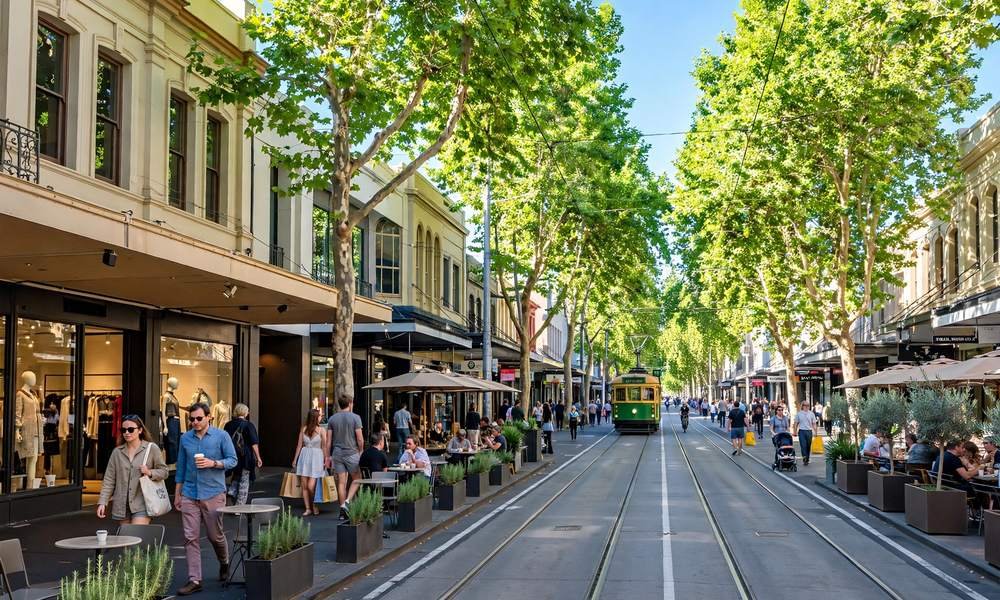
Smith Street is the spine of Collingwood. It runs from Victoria Parade in the south to Queens Parade in the north, and it forms the boundary with Fitzroy along its western side. Time Out named it the coolest street in the world in 2021, and Yarra City Council notes the same award on its Smith Street page. The street earned it with a mix that is hard to find elsewhere: Vietnamese bakeries beside natural wine bars, outdoor and camping stores, vintage dealers, record shops, bookshops and gay bars.
The southern end, near Gertrude Street, is the most polished stretch, with design stores, wine bars and smart cafes. The street grows more eclectic as you head north, with grocers, delis, op-shops and long-running Vietnamese restaurants. The stretch between Johnston and Gertrude streets is where most of the action concentrates, and it is the best place to start if you have limited time.
Smith Street is also a shopping street with a distinct character. Australian design labels sit beside vintage racks and record stores, and the shopfronts change often, so repeat visits turn up new finds. The street works best on foot. Walk it slowly, duck into the side streets, and treat the shop windows as part of the visit rather than a detour from it.
Collingwood Yards and the Keith Haring Mural
The single most important sight in Collingwood sits on Johnston Street. In 1984 the New York artist Keith Haring painted a large mural on the wall of the former Collingwood Technical School, and it is the artist’s only remaining large-scale public artwork in Australia. The mural measures 7.4 by 11.5 metres, with a bright yellow background, red and green dancing figures, and a large green creature with a computer monitor for a head. Haring painted the figures by hand on 6 March 1984, after students of the school had rolled on the yellow background the day before. It was added to the Victorian Heritage Register in 2004, and Yarra City Council records the mural’s history and restoration on its public art page.
The former technical school behind the mural reopened in 2021 as Collingwood Yards, a not-for-profit arts precinct. Collingwood Yards spans more than 6,500 square metres across three buildings and a leafy central courtyard, and it houses dozens of studios, galleries, record labels, community radio and bars. The precinct is free to wander, and visitors are welcome to walk through the courtyard and look into the gallery spaces. Gallery openings are often held on weekday evenings and are free.

Breweries in Collingwood Melbourne
Brewing has returned to Collingwood in a big way, and the suburb is now one of the most concentrated brewery precincts in Melbourne. Several working breweries pour within a short walk of each other, and most do tasting paddles, which makes a self-guided afternoon crawl the most natural way to move through the suburb. The best breweries in Australia guide puts this cluster in context, but Collingwood earns its place on the list on its own.
Stomping Ground
Stomping Ground at 100 Gipps Street is the anchor. It sits in a huge converted warehouse with a beer hall, a garden with a retractable roof and a children’s play area. The bar pours from around 30 taps, and the kitchen serves wood-fired pizzas and Sunday roasts. The beer hall opens daily from 11.30am, and brewery tours run every Saturday at 3pm for about 45 minutes. It is family friendly during the day, with highchairs and space for prams, and it fills up on Friday and Saturday nights.
Molly Rose and The Mill
Molly Rose Brewing at 279 Wellington Street brews sour and wine-like beers in an old furniture warehouse, with a South-East Asian restaurant and beer garden next door. The Mill on Sackville Street pours a dozen small-batch brews out of a former mechanic’s workshop. Both are a short walk from Stomping Ground, and the three together make a tidy crawl: start at the big hall, move to Molly Rose for something more experimental, then finish at The Mill.

Live Music Pubs
Collingwood pubs have personality, and the live music rooms here are part of Melbourne music history. The Tote on the corner of Johnston and Wellington streets is the spiritual home of Melbourne rock, and it has twice been saved from closure by public campaigns. Punk, metal and rock roll through its band room most nights of the week. The Smith St Hotel, the former Gasometer, also hosts bands in its band room, and it has a rooftop that opens in warm weather.
The Grace Darling Hotel on Smith Street is one of the oldest pubs in the area, and it runs regular live music in a candle-lit bar. If you want a quieter night, the front bar of any of these pubs works just as well as the band room. Gigs are usually cheap or free, and doors tend to open early, so check the venue’s own listings on the day rather than assuming a late start.
Where to Eat in Collingwood
Collingwood is one of the strongest places in Melbourne for casual, interesting food, and it changes constantly. Venues open and close often here, so check before making a special trip. The streets around Smith, Johnston and Wellington hold most of the options, and the range runs from Vietnamese pho and banh mi to Greek taverns, Italian delis and modern fine dining.
Breakfast and Coffee at Proud Mary
Proud Mary at 172 Oxford Street is one of the pioneers of specialty coffee in Australia, and it draws queues for brunch. The cafe sits in a converted warehouse with communal tables, and the menu runs to ricotta hotcakes, potato hash and inventive brunch plates. It opens weekdays from 7am to 3pm and weekends from 8am to 3pm, so arrive early on a Saturday if you want a table without a wait. Its roastery cafe, Aunty Peg’s, sits around the corner at 200 Wellington Street.
Greek Food on Johnston Street
Jim’s Greek Tavern at 32 Johnston Street has been serving saganaki, dips and lamb from the spit for more than 40 years. There is no menu. The waiters ask if you want meat, seafood or both, and the food keeps landing until you tell them to stop. It is BYO with free corkage. The Pontian Club at 8 Smith Street is another Greek option, known for moussaka, charred lamb chops and olive oil cake.
Easey’s Rooftop Train Carriages
Easey’s at 48 Easey Street serves burgers inside old train carriages perched on the roof of a five-storey building, with city views to match. The signature burger comes with pickles and a thick patty, and the rooftop setting makes it one of the most photographed dining rooms in the suburb. Book ahead on weekends, as the carriages fill fast.
Smith Street Eating
Smith Street covers most cuisines in a few blocks. Vietnamese bakeries and pho shops sit beside Italian delis, and Gelato Messina draws a queue on warm evenings. Santito at 174 Smith Street is a lively Mexican restaurant and bar that makes its tortillas from scratch. For a sit-down dinner with more polish, IDES on Smith Street runs a small degustation menu, and Smith Street Bistrot serves French dishes in a 1930s-styled room.

Bars and Wine Bars
Collingwood’s bar scene leans small, local and low-key, and it is cheaper than the CBD’s hidden bars. Above Board is a 16-seat cocktail room tucked down a laneway behind BeerMash at 306 Smith Street, run by veteran bartender Hayden Lambert, with no back bar of bottles in sight. Book ahead, as the room is tiny.
The Moon at 28 Stanley Street is a small wine bar with hundreds of wines on its list and Japanese and Filipino plates. At Collingwood Yards, Hope St Radio pours natural wine and plates of house pasta, and Runner Up is a rooftop wine and cocktail garden with fruit trees and DJ sets. The pair sum up Collingwood well: one foot in the garden, one foot on the concrete. Natural wine bars and bottle shops line Smith Street and its side streets, and staff are usually happy to pour a taste before you commit to a glass.
Shopping in Collingwood
Shopping here leans independent and design-led. Aesop is headquartered on Smith Street, and the strip carries a run of homegrown labels worth crossing town for, including Gorman for bold prints, Dinosaur Designs for resin jewellery and homewares, and Scanlan Theodore at the smarter end. The joy of shopping here is that it never feels sealed off from the rest of the suburb. One minute you are in a polished store, the next you are passing a vintage rack, a record shop or a plant store.
Brunswick Street and Gertrude Street together hold one of the city’s strongest runs of vintage clothing stores, from curated boutiques to genuine by-the-kilo op-shops. The Rose Street Artists’ Market, held most weekends just across the border in Fitzroy, focuses on local designers, jewellery and small-run crafts. Independent bookshops along Brunswick Street, several trading for decades, are worth a browse for secondhand and small-press titles that are harder to find at chain retailers in the CBD. Skydiver on Smith Street doubles as a record store by day and a wine bar with a beer garden by night.
Street Art and Galleries
Where the CBD’s Hosier Lane packs small-scale, high-turnover street art into a single corridor, Collingwood’s street art tends towards larger walls, longer-running murals and politically engaged work. Murals cluster around the Collingwood substation and the side lanes off Smith Street, and the Adnate mural on the corner of Wellington and Vere streets towers over the local streets with portraits of local faces.
Collingwood holds one of the highest concentrations of commercial art galleries in Australia, mostly in converted warehouses in the back streets. Australian Galleries on Derby Street has shown Australian art since the 1950s, and it gives the suburb a more formal art footing to go with the murals and the precinct energy. Several leading contemporary dealers are here, along with furniture and lighting showrooms, and openings are often held on weekday evenings and are free.
A Half-Day Walk Around Collingwood
Collingwood is compact and flat, and most of it is best done on foot. This route takes about four hours at a relaxed pace, with stops for food and drink built in. Start at Collingwood station and walk west along Johnston Street to Collingwood Yards. Give the mural and the courtyard a good half hour. From there, walk south to Smith Street and turn north, browsing the shops and galleries as you go. Stop for lunch at one of the Smith Street cafes or at Jim’s Greek Tavern on Johnston Street.
After lunch, cut east along Gipps Street to Stomping Ground for a tasting paddle, then loop back via Wellington Street to Molly Rose. Finish the afternoon with a walk down Easey Street to see the rooftop train carriages from street level, then return to Smith Street for dinner and a bar. If you have a full day, add a morning coffee at Proud Mary before you start, and end the night at the Tote or the Smith St Hotel.
Collingwood with Kids
Collingwood works better for families in the daytime than at night. Stomping Ground is the easiest family stop, with a children’s play area, highchairs and space for prams, and the beer garden suits a long lunch. Collingwood Yards is free to wander, and kids usually enjoy the mural and the open courtyard.
Just across the river in Abbotsford, Collingwood Children’s Farm is a working community farm on the banks of the Yarra, a short walk from the suburb. It holds more than 350 animals across a dozen species, from pigs and ponies to guinea pigs and bees, and it runs a monthly farmers market. The farm cafe is open seven days a week. Friday and Saturday nights are noisy near the main streets, so families should pick accommodation on a quieter block and plan the evening around an early dinner rather than the late bars.
Where to Stay in Collingwood
Accommodation in Collingwood is limited but growing, and it suits travellers who would rather be among bars and restaurants than office towers. Most options are modern apartment hotels in new or converted buildings close to Smith Street, with kitchens and laundries that suit longer stays. There are also private apartments and a few rooms above pubs.
The StandardX at 62 Rose Street on the Fitzroy side of Smith Street is the nearest full hotel, with an all-day Thai restaurant on the ground floor and a rooftop for guests. Neighbouring Fitzroy has a small number of boutique hotels and a long-running backpacker hostel, and the city centre is ten minutes away by tram. If you are driving, look for an apartment with its own parking, as almost every street in Collingwood has permit or time limits. Friday and Saturday nights are noisy near the main streets, so light sleepers should choose a room away from Smith and Johnston streets.
Getting to Collingwood and Getting Around
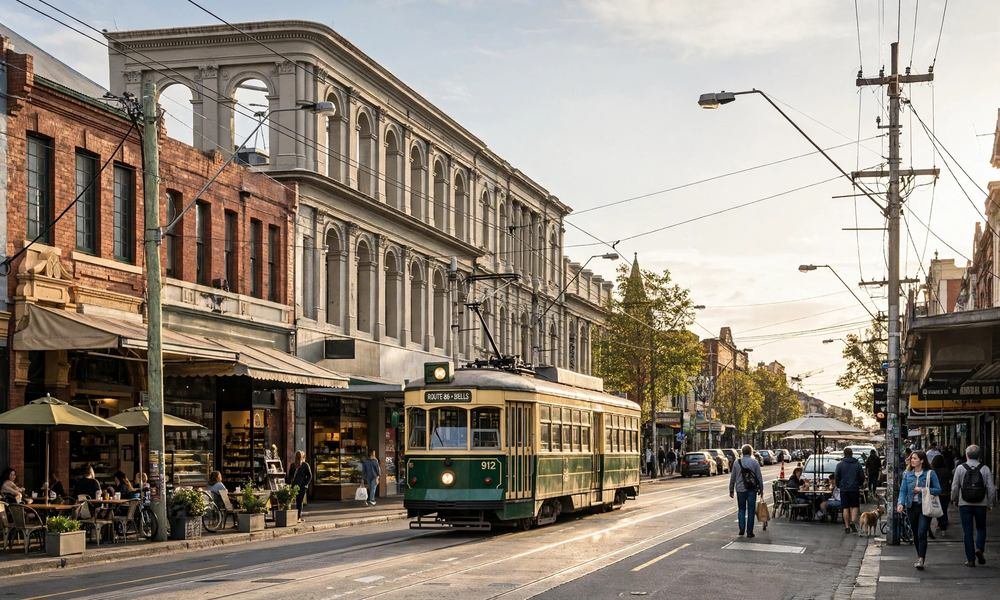
Tram route 86 is the workhorse. It runs the length of Smith Street from the CBD out to Bundoora, and Stop 19 at the corner of Johnston and Smith streets drops you in the middle of the strip. Yarra Trams lists the full route 86 stops and timetable. Collingwood sits outside the Free Tram Zone, so tap on with a Myki card before you board. By train, Collingwood station on the Mernda and Hurstbridge lines is on the eastern side of the suburb near Hoddle Street, about a ten-minute walk from Smith Street. Victoria Park station on the same lines is about a five-minute walk from Smith Street. Buses run along Johnston Street and Hoddle Street.
From the city it is a pleasant half-hour walk through Fitzroy Gardens and up Smith Street. Parking is restricted on most streets, with permit zones and time limits, so the tram or train is the better option. If you must drive, arrive before 9am, when the side streets still have space, or use a paid car park near the CBD and take the tram in. The suburb is flat and compact, so once you arrive, walking covers everything. The breweries, bars and galleries all sit within a walkable core around Smith, Wellington and Gipps streets.
How Much Does a Day in Collingwood Cost?
Collingwood is a mid-range suburb by Melbourne standards. Walking the streets, seeing the mural and wandering Collingwood Yards cost nothing. Coffee here runs close to the citywide average, slightly cheaper than the CBD’s most tourist-facing laneways. A casual lunch on Smith Street is reasonable, and a sit-down dinner runs higher, before drinks. Tasting paddles at the breweries are the cheapest way to try several beers, and gallery openings are free.
To keep costs down, plan your day around the free sights, eat lunch at one of the Vietnamese bakeries or delis on Smith Street, and save the sit-down dinner for one meal. Check the official site for current prices before you go, as menus and beer prices change often in this suburb. The Melbourne region page links to more city guides if you are planning a longer stay.
Is Collingwood Safe at Night?
Yes, generally. The main strips, Smith, Johnston and Gertrude streets, are well-lit and busy into the evening, with bars and restaurants open late. Standard city precautions apply on quieter side streets, which get dark after midnight. The streets heading towards Hoddle Street and the housing estate get quiet and deserted late at night, so stick to the main drags if you are walking. The 86 tram runs late, and there is usually a queue of rideshares on Johnston Street. Collingwood Police Station is at 255 Smith Street.
Final Thoughts on Visiting Collingwood
Collingwood rewards visitors who arrive with time and no fixed plan. Walk Smith Street, see the Haring mural, drink a paddle at Stomping Ground, and let the side streets surprise you. It is the most lived-in corner of inner Melbourne, and half a day here shows you a side of the city the CBD never will.
Frequently Asked Questions About Collingwood Melbourne
How is Collingwood different from Fitzroy?
Fitzroy is the older, more established suburb centred on Brunswick Street, and it has been Melbourne’s bohemian hub since the 1970s. Collingwood, immediately east across Smith Street, followed a similar path a decade or two later and keeps a slightly grittier, more industrial feel, with a stronger brewery scene and more warehouse space. In practice the two suburbs overlap so much that most visitors walk between them without noticing the border, and a good day out usually covers both.
How long should I spend in Collingwood?
Half a day covers the mural, Collingwood Yards, a walk down Smith Street and one brewery. A full day lets you add a long lunch, a second brewery, the galleries and an evening at a live music pub. If you only have two hours, start at Collingwood Yards, walk Smith Street from Gertrude Street to Johnston Street, and finish with a coffee or a beer. That short loop still gives you the flavour of the place.
Can I walk from the CBD to Collingwood?
Yes. It takes about 25 to 30 minutes from Parliament station, through Fitzroy Gardens and up Smith Street. The walk is flat and pleasant in good weather, and it passes the Fitzroy Gardens, which are worth a short detour. In summer heat or rain, take the 86 tram instead, as the walk has little shade.
What is the best time of year to visit Collingwood?
Autumn and spring are the easiest seasons, with mild days that suit walking and sitting outside. Summer brings long evenings and busy beer gardens, but the concrete and brick hold the heat, and the suburb has few big parks for shade. Winter is quieter, with shorter days and cooler nights, but the pubs, bars and breweries are at their cosiest. Weekday mornings are the calmest time for coffee and browsing, while Friday and Saturday nights are the liveliest.
Is Collingwood Melbourne worth visiting if I only have one day in Melbourne?
It depends on what you want from the day. If you want the classic sights, the CBD, the Melbourne Museum and the NGV International come first, and our best museums in Melbourne guide ranks them. If you want to see how Melbourne actually lives, eats and drinks, Collingwood is the better pick. A half day here, paired with a morning in the CBD, is a strong way to spend a single day. Start your planning with Australia City Guide for the wider city.