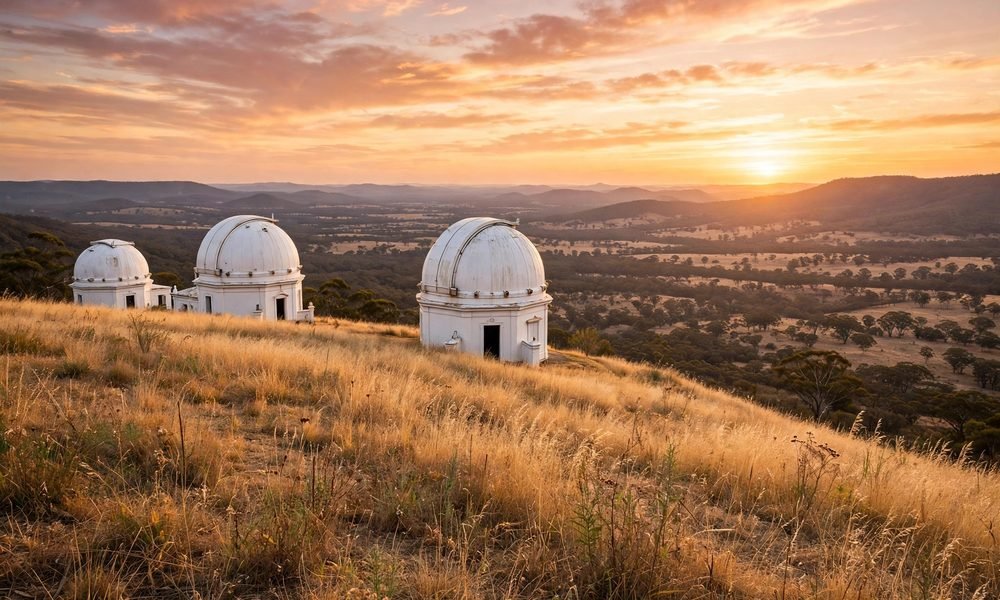

Mount Stromlo Observatory sits on a hill just outside Canberra, in the Australian Capital Territory, and it gives you two very different visits in one place. By day it is a quiet hilltop with wide valley views, a short history trail and kangaroos grazing on the lawns. After dark it turns into one of the best places near the city to look at the stars through a real telescope. This guide covers both sides of the visit, plus the hours, the booking rules and the one big thing you need to know before you go.
One heads-up first. At the time of writing, the Visitor Centre and the Cafe at Stromlo are closed. The grounds, the Heritage Trail and the Director’s Residence are still open every day, and the stargazing events still go ahead. The closure is meant to be short term, so ring (02) 6125 0230 before you travel if the centre matters to your visit.
What Is Mount Stromlo Observatory?
Stromlo is the home of the Australian National University’s Research School of Astronomy and Astrophysics. It is a working research base, not a theme park. Astronomers still work here, even though the big telescopes no longer look at the sky from this hill. That mix of real science and open public access is what makes the place special.
The site sits on Mount Stromlo Road, off Cotter Road in Weston Creek. It is about 12 kilometres from the city centre, which works out to roughly a 20 minute drive. You get a real sense of leaving the city behind as you drive up, even though you never go far.
A Short History: 1924 to the 2003 Firestorm
The observatory was set up in 1924, which means it marked its 100th birthday in 2024. In its early years it grew into Australia’s best known place for astronomy research. Telescopes were built on the hill, homes were built for the astronomers and their families, and the site became a small science village above the valley.
The Director’s Residence dates from 1928, and it is one of the oldest buildings still standing on the site. It gives you a clear picture of what life was like for the people who ran the observatory in its early days. You can step inside during opening hours and look around.
Then came 18 January 2003. A firestorm swept through the area and badly damaged the observatory. Most of the large telescopes were lost in the fire. The Farnham telescope was the only one to survive the fire in one piece, and it is now used as a public outreach telescope. That means visitors can look through the same telescope that lived through the fire.
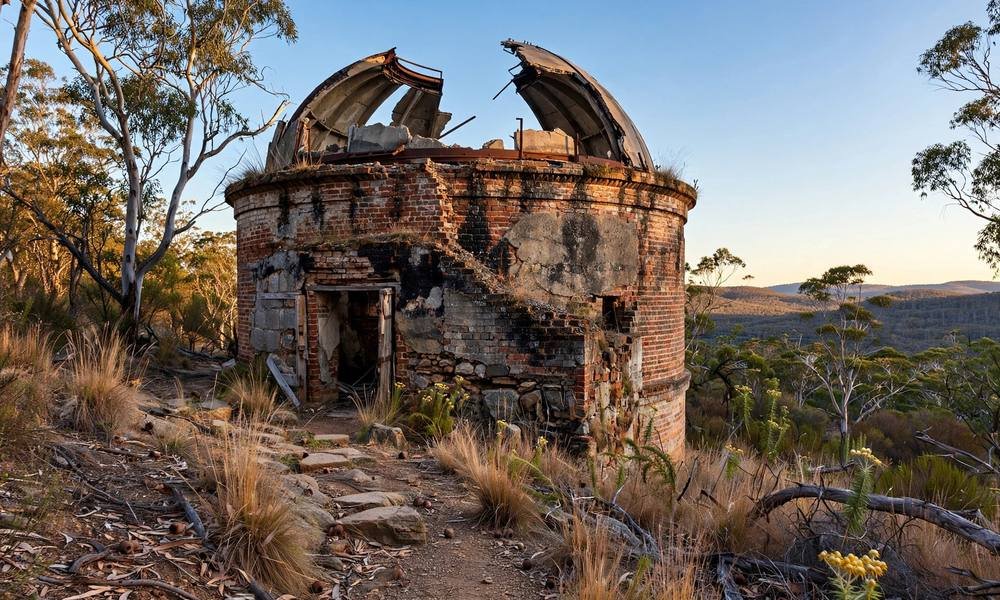
After the fire, the big research telescopes were not rebuilt on this hill. The school’s working telescopes now sit at Siding Spring Observatory, near Coonabarabran in New South Wales. Stromlo kept its role as the research headquarters, and it also opened up more to the public. The ruins of the old telescope domes were kept as part of the site, so you can still see them today.
What You’ll Find There Today
Today the site has a few clear parts. The grounds are open parkland with paths, lawns and lookouts. The Heritage Trail loops around the site with signs that tell the story of the place. The Director’s Residence is open to walk through. The old telescope buildings stand as ruins, and they make for striking photos.
When the Visitor Centre is open, it holds science displays and a kids zone. During the current closure you will not be able to go inside it, but the outdoor parts of the visit are all still there. Events that use the centre, like the talks at the astronomy nights, still go ahead.
The Heritage Trail: 11 Signs Through 100 Years of History
The Heritage Trail is the best way to understand Stromlo, and it costs nothing. The trail has 11 interpretive signs placed around the grounds. Each sign covers one part of the story, from the early days of the observatory through to the fire and the rebuild.
Walk the trail slowly. The signs explain what each ruined building was used for, who worked there and what they found. You will learn about the telescopes, the people and the fire in a way that makes the ruins mean something. Without the signs, the old domes are just strange round buildings. With them, you get the full story.
The trail is a gentle walk on formed paths, and most people take 30 to 45 minutes if they stop to read each sign. It suits all ages, and it works well as a first stop because it gives you the background for everything else you will see. If you only have an hour at Stromlo, spend it on this trail and the lookout.
One tip: read the signs in order if you can. They are placed to follow the story from start to finish. The later signs about the 2003 fire hit harder once you know what the place was before it.
The Director’s Residence
The Director’s Residence is the oldest home on the site, built in 1928. It was home to the observatory’s directors and their families, and it has been kept much as it was. Walking through it gives you a feel for daily life on a working observatory hill nearly 100 years ago.
The house is open daily from 9:00 am to 5:00 pm. It is a small building, so allow 15 to 20 minutes for a look around. It pairs well with the Heritage Trail, since one of the trail signs covers the house and the people who lived in it.
Families often find this is the part kids enjoy most. The house feels lived in, not like a museum display. It is a good stop if you want a quiet break from the open hilltop before you head back down.
Public Astronomy Nights: Stargazing at Stromlo
The astronomy nights are the main reason many people visit Stromlo, and they are the part you need to plan for. They run from April to September each year, put on by the observatory together with the Canberra Astronomical Society. Each night runs for about two hours, usually from 7:00 pm to 9:00 pm.
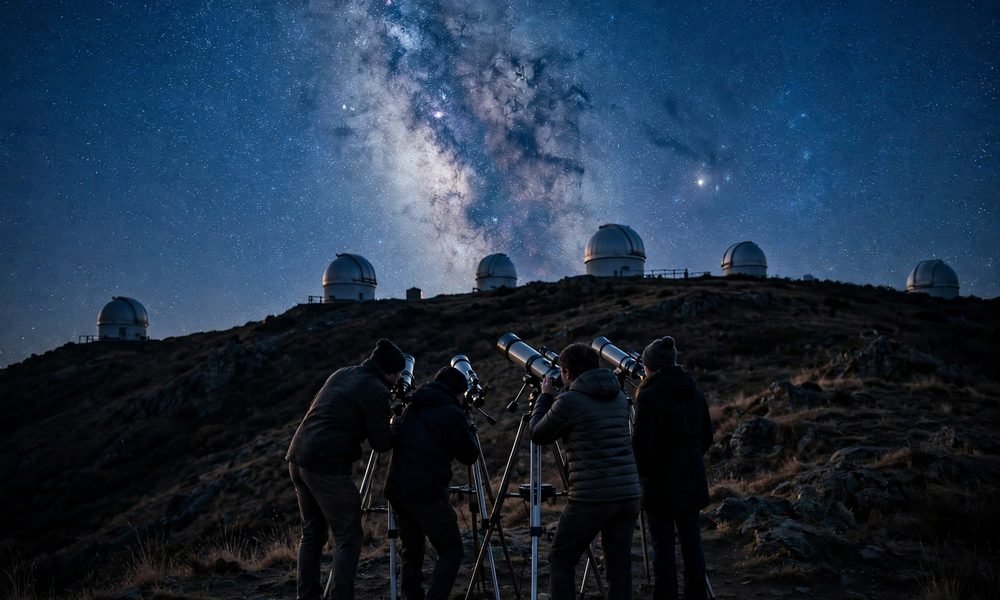
The format is simple and it works well. Astronomers from the research school give short talks, then take you on a tour of the night sky. After the talks, you get to look through several telescopes set up on the grounds. The astronomers and volunteers stay with the telescopes and explain what you are seeing, so you do not need to know anything about space before you go.
Nights are free, but bookings are essential. They book out fast, so check the ANU events page as soon as dates are listed and book early. If you miss out, ask about the next date rather than just turning up. The site is not set up for walk-in crowds at night, and the car park is dark.
What You’ll See Through the Telescopes
What you see depends on the night and the time of year. On a clear night you can expect the craters of the Moon in sharp detail, and that alone is worth the trip. The Moon through a good telescope looks nothing like the flat disc you see with your eyes. You can pick out craters, ridges and shadows along the edge where light meets dark.
Planets are often on show too. Jupiter and its moons are a regular sight, and Saturn with its rings stops people in their tracks. The astronomers will also point the telescopes at star clusters and nebulae, which are clouds of gas and dust where stars are born. Omega Centauri, a huge cluster of stars, is a favourite target when it is in the sky.
The astronomers explain each object as you look at it. They will tell you how far away it is, what it is made of and why it matters. That running commentary is what turns a nice view into a real learning experience. Bring your questions. The volunteers love them.
How to Book an Astronomy Night
Book through the ANU events page for the observatory. Dates for the season are listed there, usually one night a month from April to September. Pick a date, register for each person in your group and keep your booking confirmation.
Arrive on time. The talks start at the listed time and the group moves between telescopes on a loose schedule. If you arrive late you will still get to look through telescopes, but you may miss the opening talks.
Dress warmly. Evenings on the hill are cold, even in the warmer months. Layers, a warm jacket and closed shoes are the right call. A torch helps a lot in the car park, which has no lights. Bring water and a snack if you need one, as there is no food for sale on the night while the Cafe is closed.
Private Stargazing Sessions
If you have a private group or a school group, you can book a private stargazing session using the observatory’s outreach telescopes. These are set up for your group only, and the astronomers shape the session around what your group wants to see and learn.
Private sessions suit birthday groups, school trips and work groups that want something different. Contact the observatory directly to ask about dates and group sizes. The outreach email is outreach@mso.anu.edu.au, and the phone number is (02) 6125 0230.
Visiting During the Day: Views, Kangaroos and Photos
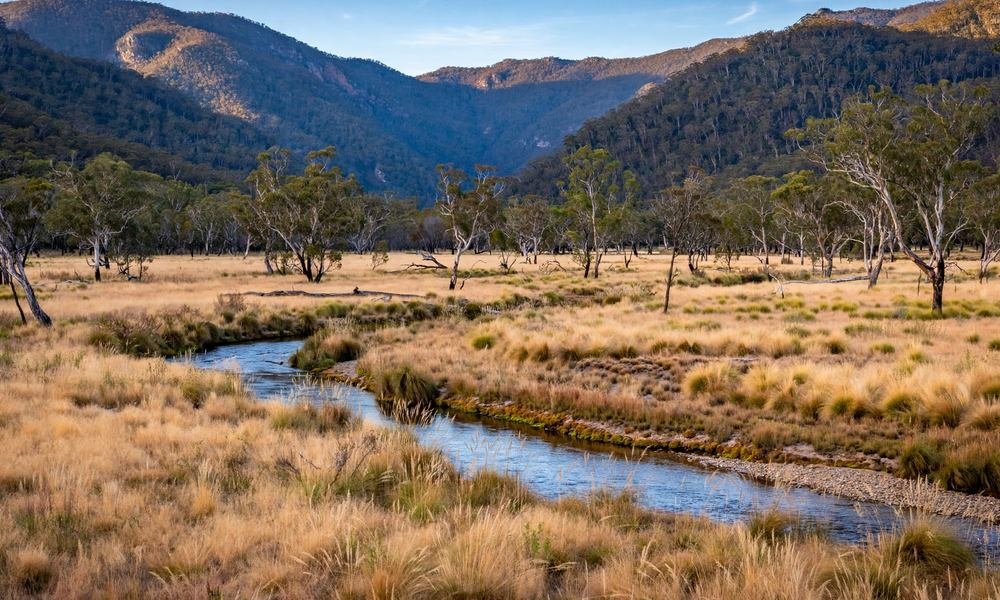
The daytime visit is quieter than the night events, and that is part of the appeal. You can walk the grounds at your own pace, read the trail signs and take in the view across the valley. On a clear day you can see a long way, and the late afternoon light is kind to the old stone and brick ruins.
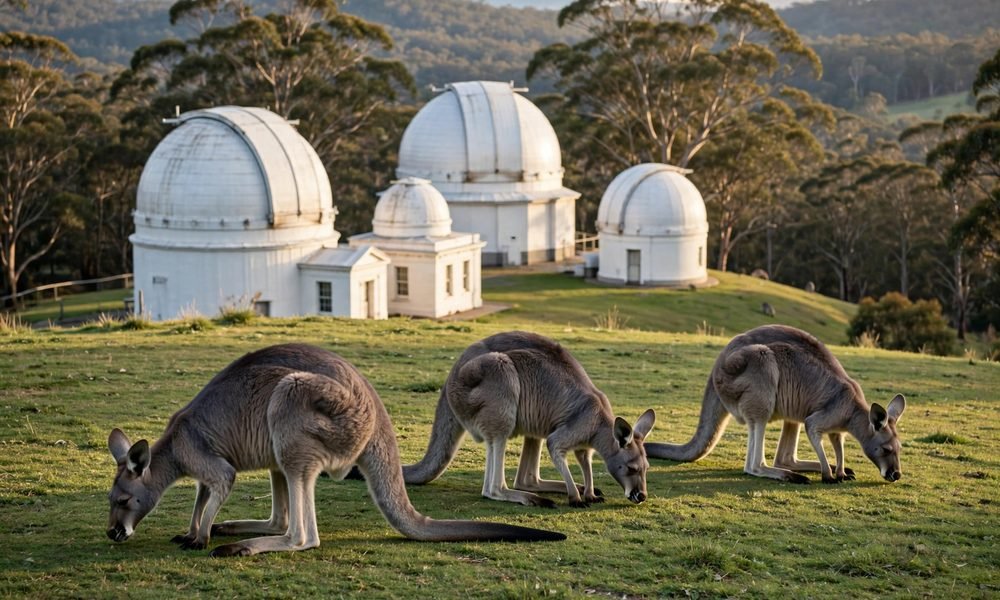
Kangaroos graze on the grounds most days, and they are easiest to spot in the late afternoon and early evening. They are used to people, but keep your distance and do not feed them. A phone camera is enough to get a good shot, and the kangaroos with the ruined domes behind them make for a photo you will not get anywhere else in Canberra.
Sunset is the best time for photos. The light turns warm, the valley below fills with soft shadow and the domes stand out against the sky. Photographers rate Stromlo as one of the better sunset spots near the city, and you will often see tripods set up near the lookout in the last hour of light. If you plan to stay for sunset, bring a torch for the walk back to the car.
Opening Hours and Entry Prices
The observatory grounds are open to the public daily from 8:00 am to 6:00 pm. The Director’s Residence is open daily from 9:00 am to 5:00 pm. These hours come from the ANU, and they are the ones to trust over any other listing you find online.
Entry to the grounds and the Heritage Trail is free. There is no ticket to walk in during the day. The science displays in the Visitor Centre are also free when the centre is open. Public astronomy nights are free too, but you must book a place.
Private stargazing sessions and private site tours are the only parts of the visit with a cost, and prices depend on your group. Ask when you book. School programs are also bookable, and teachers can contact the observatory for details.
One warning: hours and opening status can change, and other websites do not always keep up. The ANU pages have disagreed with each other about the Visitor Centre in the past, and the centre is closed right now. A quick call to (02) 6125 0266 before you travel takes a minute and saves a wasted trip.
How to Get There
Stromlo sits in Weston Creek, off Cotter Road. The drive from the city centre takes about 20 minutes in normal traffic. It is a simple drive, and the road up the hill is sealed and easy to follow.
By Car
Driving is the easiest way to get there, and for an evening visit it is really the only sensible option. Head out of the city on Cotter Road towards Weston Creek, then turn onto Mount Stromlo Road and follow it up the hill. The observatory is at the top, and the car park is right by the grounds.
Parking is free, and there is a car park on site. At night the car park is unlit, so bring a torch and watch your step. Staff are usually on hand to direct parking on astronomy nights, which helps when a lot of cars arrive at once.
By Bus or Taxi
Public transport to Stromlo is limited, so do not rely on it. Buses run to Weston Creek, but the trip up the hill from the shops is a long walk on a road with no footpath in places. A taxi or rideshare from the city centre is a better option if you do not have a car. Book your return trip in advance for an evening visit, as cars are hard to find on the hill at night.
If you are staying in the city and want to sort out transport in advance, read our Getting Around Canberra guide. It covers buses, taxis and driving in the capital, and it will help you plan the trip out to Weston Creek.
Parking
The car park is free and close to the main grounds, so you will not walk far from your car. On a normal day there is plenty of space. On astronomy nights it fills up, and staff direct cars into place. Arrive a little early on event nights so you are not rushed.
Best Time to Visit
The best time depends on what you want from the visit. For the daytime grounds, the trail and the views, any clear day works. Autumn and winter give you crisp air and clear skies, and the late afternoon is the pick of the day for kangaroos and sunset photos.
For stargazing, the season is April to September. The cooler, drier months bring clearer skies, and the nights are long. Pick a night near a new moon if you can. A new moon means the Moon is not washing out the fainter stars, so clusters and nebulae show up much better. The observatory lists its astronomy night dates well ahead, so you can match a date to the moon phase.
Weekdays are quieter than weekends for a daytime visit. If you want the grounds mostly to yourself, go on a weekday morning. If you want the social side of the place, a Saturday afternoon brings more visitors and a livelier feel.
How Long to Spend There: A Simple Half-Day Plan
Allow two to three hours for a daytime visit. That gives you time for the Heritage Trail, the Director’s Residence and a slow look at the views without rushing. If you add a picnic on the lawns, you can stretch it to a relaxed half day.
For an astronomy night, plan for the full evening. Aim to arrive in the late afternoon so you can walk the trail and catch the sunset first. Then stay for the talks and the telescope viewing from 7:00 pm to 9:00 pm. That late afternoon to night plan is the best way to see Stromlo, because you get the daytime history, the sunset and the stars in one trip.
A simple plan looks like this. Arrive at 4:30 pm and walk the Heritage Trail. Visit the Director’s Residence if it is still open. Find a spot for sunset photos around 5:30 pm to 6:00 pm, and keep an eye out for kangaroos. Have a snack from your bag, then join the astronomy night at 7:00 pm. You will be back in the city by about 9:30 pm.
Visiting With Kids
Stromlo works well with kids, as long as you set the day up right. The Heritage Trail gives them a story to follow, the kangaroos are a hit with younger children, and the ruins feel like a place from a film. The kids zone in the Visitor Centre is a draw when the centre is open, so check the current status before you promise it.
For an astronomy night with kids, go for the early part of the evening and be ready to leave before the end if they tire. The talks are short and friendly, and the astronomers are good with children. Dress them warmly and bring a torch, a drink and a snack. The dark car park and the cold are the two things that catch families out.
School groups can book education programs through the observatory. These are run by the research school’s own team, and they suit science classes and curious groups of any age. If you are planning a family trip with kids of different ages, our Canberra with Kids guide has more ideas for the rest of your stay.
Where to Eat Near Stromlo
There is no food for sale at the observatory while the Cafe is closed, and there are no permanent food stalls on the grounds. Bring your own snacks and water, and take all your rubbish with you when you leave. A picnic on the lawns is a good option on a fine day, and the grounds have spots where you can sit and eat with the valley view in front of you.
If you want a proper meal, head to the shops at Weston Creek or Cooleman Court, which are a short drive down the hill. You will find cafes and takeaway there. For a bigger night out after an astronomy night, head back into the city. Our Best Restaurants in Canberra guide covers the places worth booking, and Best Cafes in Canberra is handy if you want breakfast before a morning visit.
What to Bring and Good to Know
A little prep makes the visit much better. Pack a torch, warm layers, water and snacks. Wear closed shoes with a good grip, as the paths on the hill can be uneven. Sunscreen and a hat are worth bringing for a daytime visit, and a camera or a phone with a good night mode will serve you well at sunset and on astronomy nights.
There are no shops at the top of the hill, so bring what you need with you. Mobile reception is fine on the site. There are toilets on the grounds, but check they are open during your visit, as access can change with events and the centre closure.
Accessibility
The main visitor areas and parts of the Heritage Trail are accessible, and the grounds have accessible parking. The hilltop setting means some paths are steep, and the natural ground can be rough in places. If you have access needs, ring the observatory on (02) 6125 0266 before you go so staff can tell you which parts will suit you best.
Drones and Other Rules
Drones are not allowed at Stromlo without written approval from the research school. You need to hold a commercial licence to fly one there, so leave the drone at home unless you have been through the approval process. Academic buildings are closed to the public, so stick to the marked visitor areas, the trail and the Residence.
Things to Do Near Stromlo
Stromlo sits in a part of Canberra with plenty nearby, so it pairs well with other stops. You can build a full day around the hill without driving far.
Stromlo Forest Park
Stromlo Forest Park sits at the base of the mountain, just down the road from the observatory. It is one of Australia’s best known mountain biking parks, with trails for all skill levels, a pump track and open grass areas. If you ride, bring your bike and make a day of it. The park also has picnic spots and a big open lawn that suits families. Riders and walkers share some areas, so watch for bikes on the trails.
Canberra Deep Space Communication Complex
The Canberra Deep Space Communication Complex at Tidbinbilla is about 9 kilometres from Stromlo, and it is the natural next stop for anyone who likes space. It is one of only three deep space tracking stations in the world, and its visitor centre has real spacecraft, a Moon rock and dishes you can watch moving. Read our Canberra Deep Space Communication Complex guide before you go, and you can pair the two sites in one day.
Cotter Reserve
Cotter Reserve is a short drive down Cotter Road from Stromlo, on the banks of the Cotter River. It has picnic areas, barbecues and a popular swimming spot in summer. It makes a good lunch stop on the way to or from the observatory, and it is a favourite with Canberra families on hot days. If you are planning a wider trip out west, our Best Day Trips from Canberra guide covers more options in this direction.
FAQs About Visiting Stromlo
Is it free to visit?
Yes. Entry to the grounds and the Heritage Trail is free, and the astronomy nights are free too. You only pay if you book a private tour or a private stargazing session. You do need to book a place for the astronomy nights, even though they cost nothing.
Is it worth visiting during the day?
Yes, if you like history, views and quiet places. The Heritage Trail and the ruined domes are the main part of the daytime visit, and the sunset and kangaroos make the late afternoon special. If you only want telescopes and stars, come at night instead. The daytime visit will not show you the night sky.
Can I just turn up at night?
No, not for an astronomy night. Those nights need a booking, and they sell out. The grounds close at 6:00 pm, so you cannot wander the site at night on your own. If you want to see the stars from Stromlo, book a place on a listed astronomy night or a private session.
What happens if it is cloudy on an astronomy night?
Cloud is the one thing nobody can plan for. The astronomers still give their talks, and they will show you what they can through breaks in the cloud. Some nights the cloud clears during the session. Check the weather before you go, and dress for a cool night either way. The observatory will tell you if a night has to change.
Is the Visitor Centre open?
At the time of writing, the Cafe and Visitor Centre are closed, and the ANU has not given a reopening date. The grounds, the Heritage Trail and the Director’s Residence are open as normal, and the astronomy night talks still go ahead. Ring (02) 6125 0230 before you travel if the centre is part of your plan.
Final Thoughts on Visiting Stromlo
Mount Stromlo Observatory rewards the visitors who plan a little. Come in the late afternoon, walk the Heritage Trail, watch the kangaroos and the sunset, then stay for the stars. That one trip gives you history, views, wildlife and a look through a telescope, all within 20 minutes of the city.
The closure of the Visitor Centre and Cafe is a real downside right now, and you should know about it before you go. But the best parts of Stromlo are outside: the trail, the ruins, the Residence and the night sky. None of those are closed. Book an astronomy night early, bring a torch and warm layers, and give the place the full evening it deserves. For more ideas to fill the rest of your trip, the team at Australia City Guide has full guides to the capital’s best sights, and our Things to Do in Canberra guide is the best place to start.