About 40 minutes south-west of Canberra, in a quiet valley ringed by bush-covered hills, sit some of the biggest ears on Earth. The Canberra Deep Space Communication Complex is where NASA listens to spacecraft flying billions of kilometres away, and on weekends you can walk right in and see it for yourself. It is free, it is run by real scientists and engineers, and it is one of the most unusual days out you can have near the capital.
This guide covers what the complex is, what you will see inside the visitor centre, the dishes you can stand beneath, the Apollo 11 story, and everything you need to plan a visit, from opening hours to the fuel stop you should not skip.
Why the Canberra Deep Space Communication Complex Is Worth a Visit
Most space museums show you models and videos. This place is different. The dishes outside are not displays. They are working antennas, and while you are having a coffee in the visitor centre they may be talking to a spacecraft near Mars or listening for a faint signal from Voyager 2, now far beyond our solar system.
That is what makes a visit here feel special. You are not just learning about space flight. You are standing inside a place that still does it, every hour of every day. Kids love the hands-on exhibits and the space suit dress-up. Adults tend to love the sheer scale of the 70-metre dish and the story of how a small station in the Tidbinbilla Valley helped put the first moonwalk on television screens around the world.
If you are building a Canberra trip and want one stop that is nothing like a museum or a gallery, this is it. It pairs well with a drive through the Tidbinbilla Valley, and it fits neatly into a half day out from the city.
What Is This Deep Space Station?
The complex, known as CDSCC for short, is one of only three deep space tracking stations in the world. It is part of NASA’s Deep Space Network, and it is operated in Australia by CSIRO, our national science agency. The other two stations sit in California and Spain, and together the three give NASA round-the-clock contact with spacecraft as the Earth turns.
The station opened in 1965. Back then its job was to track early space missions. Today it talks to probes around Mars, orbiters studying distant planets, and the two Voyager spacecraft, which have now travelled further from Earth than anything humans have ever built.
About 90 people work here around the clock. The dishes receive hundreds of gigabytes of data every day, from photos of alien landscapes to tiny streams of science readings sent across billions of kilometres of empty space.
The Three Stations That Talk to Deep Space
Spacecraft far from Earth send very weak radio signals. A normal radio dish cannot pick them up. NASA needs huge dishes, and it needs them spread around the planet so that at least one station always faces the spacecraft.
That is why there are three stations, roughly a third of the way around the world from each other: Goldstone in California, Madrid in Spain, and Tidbinbilla here in Australia. As the Earth spins, one station hands over to the next, so contact with a distant probe is never lost for long. Canberra covers the southern sky, which makes it the key station for some missions, including Voyager 2.
The Dishes at Tidbinbilla
There are four dishes in use at the complex today. The one everyone comes to see is Deep Space Station 43, or DSS-43. It is 70 metres across, which makes it the largest steerable dish in the Southern Hemisphere. Steerable means the whole dish can turn and tilt to follow a spacecraft across the sky.
Alongside it sit three 34-metre dishes: DSS-34, DSS-35 and DSS-36. They are big too. Each one stands taller than a ten-storey building. You will see them as you drive in, white against the green hills, and they look far bigger up close than they do from the road.
A fifth dish is on the way. A new 34-metre antenna, DSS-33, broke ground in April 2025 and had its foundations laid in September 2026. It is due to start work in 2029, which will give the station even more capacity as new missions head for the Moon and Mars.
The Big Dish: Deep Space Station 43
DSS-43 is the star of the show. It was built in the early 1970s and it has been upgraded many times since. Its 70-metre dish can pick up signals so faint that they carry less power than a trillionth of a watt by the time they reach Earth. To put that simply, the signal from Voyager 2 arrives weaker than the power in a single Christmas tree light, after travelling for more than 20 billion kilometres.
Visitors cannot walk right up to the base of the dish, but you can see it clearly from the visitor centre and the viewing areas. It moves slowly as it tracks spacecraft, so if you watch for a few minutes you may see it turn. Photos do not do it justice. Stand under it and look up, and you get a real sense of the size.
DSS-43 is also the only dish on Earth that can still send commands to Voyager 2. The spacecraft is so far away that a radio signal takes more than 18 hours to reach it, and the reply takes just as long to come back. Every instruction Voyager 2 receives now comes through this dish in Tidbinbilla.

Things to See and Do at the Canberra Space Centre
The visitor centre is called the Canberra Space Centre. It sits inside the complex with views out to the dishes, and it holds the exhibits, the theatres, the cafe and the gift shop. Entry is free, and most people spend one to two hours here. Here is what to look for.
See a Real Piece of Moon Rock
One of the most popular exhibits is a small slice of rock brought back from the Moon by Apollo 11. It sits in a display case in the visitor centre, and it is about 3.8 billion years old. That makes it older than almost any rock you will ever see on Earth.
Take a moment with it. This piece of the Moon travelled to Earth in 1969 with the first people to walk on another world, and Canberra’s own tracking stations helped bring that mission home.
Try On a Space Suit
The visitor centre has a space suit you can try on for photos. Kids love this part, and plenty of adults do too. There are also real spacecraft parts on display, including hardware from missions to Mars and beyond, plus models of famous spacecraft that help you picture how big the real ones are.
Watch Live Missions as They Happen
Screens in the visitor centre show live data from NASA missions that the station is tracking right now. You can see which spacecraft the dishes are talking to and what they are doing. Staff are often nearby and happy to explain what you are looking at, so ask questions. They work here because they love this stuff, and it shows.
Walk the Planet Trail
Outside the visitor centre there is a scale model of the solar system laid out along a walking path. Each planet sits at a distance that matches its real distance from the Sun, shrunk down to fit the grounds. It is a simple idea and it works well. Walking from planet to planet gives you a much better feel for how far apart things really are than any picture in a book.
Watch a Film in the Theatres
The centre has two small audio-visual theatres that play short films about space exploration, past missions and what comes next. They run through the day and they are a good way to rest your feet for a while, especially if you have young kids who need a break from walking around.
Stop at the Moon Rock Cafe and Gift Shop
The Moon Rock Cafe serves coffee, snacks and light meals, with views out over the valley and the dishes. It is a good spot to sit for a while after you have seen the exhibits. There is also a gift shop with books, models and space-themed gifts if you want a souvenir. If you are after a full lunch, eat in Canberra before you drive out or plan a stop on the way back, as the cafe menu is simple.

Canberra’s Role in the Apollo 11 Moon Landing
The complex is part of one of the great Australian space stories. When Neil Armstrong stepped onto the Moon on 20 July 1969, the pictures the world watched came through Australian tracking stations.
The television pictures were received at Honeysuckle Creek, a tracking station south of Canberra that has since closed. Tidbinbilla, the site of the complex you can visit today, tracked the Apollo spacecraft and supported the mission too. Together, the Canberra stations helped make sure the world could watch the first moonwalk live.
The complex has been part of NASA’s network ever since, supporting missions to every planet in our solar system. It tracked the Voyager probes as they flew past Jupiter, Saturn, Uranus and Neptune. It talks to rovers and orbiters at Mars. It has followed missions to comets, asteroids and the outer planets.
That history is part of why a visit feels different from a normal museum trip. You are not looking at a retired display. You are standing in a place that was there for Apollo and is still doing the same job today.
Voyager 2: The Farthest Phone Call on Earth
If there is one story to take home from your visit, it is Voyager 2. Launched in 1977, the spacecraft has now travelled more than 20 billion kilometres from Earth. It is the farthest human-made object in space, and it is still sending back data.
Here is the catch. Voyager 2 is so far south in the sky that only the Canberra station can talk to it properly. The dishes in California and Spain cannot see it well enough. That makes the Tidbinbilla dishes the only link between Earth and the spacecraft.
Think about that for a second. A radio signal sent from this valley takes more than 18 hours to reach Voyager 2. Then the spacecraft answers, and that reply takes another 18 hours to get back. One question and one answer takes more than a day and a half. And the whole conversation runs through a dish you can stand beneath on a weekend visit.
Planning Your Visit
A little planning goes a long way here, because the complex sits well outside the city and the visitor centre is only open on weekends. Get the basics right and the trip is easy.
Opening Hours and Entry
The Canberra Space Centre is open from 10am to 4pm on Saturdays and Sundays. Entry is free, and parking is free too. The complex is closed to casual visitors on weekdays, but schools and groups can book a scheduled visit through the CDSCC website at cdscc.nasa.gov.
Hours can change for special events or maintenance, so it is worth a quick check of the official CSIRO page or the CDSCC website before you drive out. This matters because a wasted trip is a long drive for nothing.
Getting There
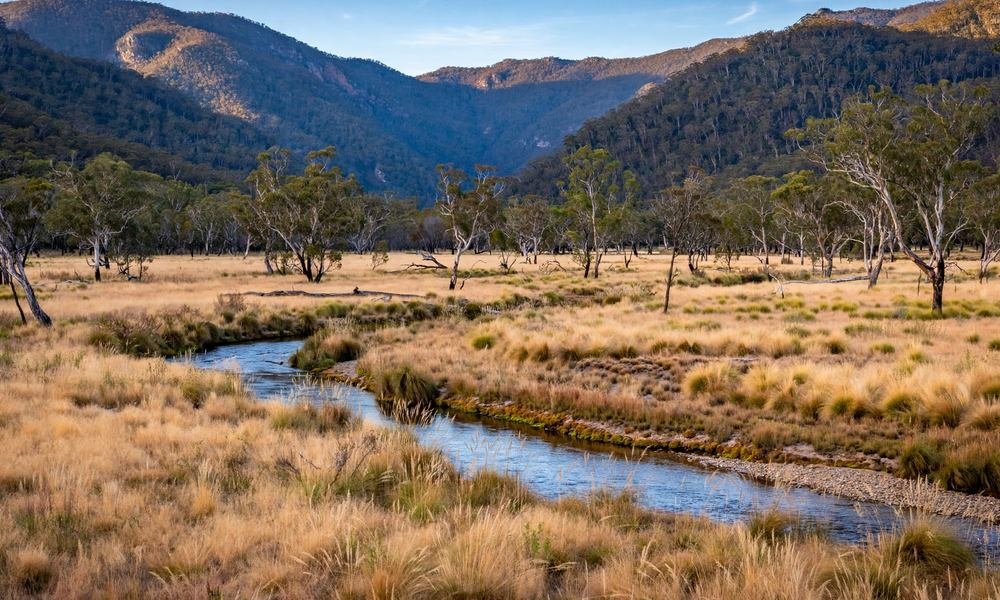
The complex sits at 421 Discovery Drive, Tidbinbilla, about 35 kilometres south-west of Canberra city. The drive takes 40 to 45 minutes from the city centre along Tourist Drive 5, through the Tidbinbilla Valley. The road winds through bush and farmland, and the views are part of the trip.
Driving is really the only practical way to get here. There is no regular public bus that serves the complex, so plan on a car, a hire car or a taxi. If you are staying in Canberra without a car, a taxi or rideshare from the city takes about 30 to 40 minutes depending on traffic, and you will need to arrange a return trip too, as there are no taxis waiting at the complex.
If you are planning your stay, our guide to where to stay in Canberra covers the best areas, and getting around Canberra explains the drive and transport options in more detail.
How Long to Allow
Most visitors spend one to two hours at the visitor centre. Add 40 to 45 minutes of driving each way, and the trip takes about three to four hours in total. If you want to pair it with a walk or a picnic in the Tidbinbilla Valley, allow a full half day.
There is no need to book ahead for a normal weekend visit. Just turn up during opening hours. School groups and large groups should book in advance.
Tips Before You Go
These tips come from the official visitor information, and they are worth reading before you leave Canberra.
- Fuel up first. The nearest petrol station is 25 kilometres from the complex, and there is no fuel on site. Fill up in Canberra before you drive out.
- Switch your phone to flight mode. The dishes listen for signals so weak that the noise from phones, Wi-Fi and Bluetooth can drown them out. Put your phone in flight mode before you arrive. You can still take photos and video, just with the radios off.
- Expect limited phone coverage. Mobile reception is patchy in the valley. Download your maps before you leave the city and do not rely on live navigation the whole way.
- Watch for wildlife. Kangaroos, emus, wombats, sheep and cows cross the roads in the area without warning, at any time of day. Drive carefully, especially around dawn and dusk.
- Wear comfortable shoes. You will walk between the visitor centre, the viewing areas and the planet trail, and the ground is uneven in places.
- Bring water and sun protection. There is shade inside, but the outdoor viewing areas are open to the sun. A hat and sunscreen help on a warm day.
- Help is limited. Staff can give basic first aid, but an ambulance can take up to 45 minutes to reach the complex. Keep that in mind if anyone in your group has a medical condition.

Visiting with Kids
This is one of the better Canberra outings for kids, and the visitor centre is built for families. The exhibits are hands-on, the space suit dress-up is a hit with younger children, and the planet trail gives them room to run around while they learn something.
Older kids and teenagers tend to get the most out of it. The live mission screens, the moon rock and the Voyager 2 story all land well once a child is old enough to grasp how far away these spacecraft really are. Younger children will still enjoy the big dishes, the films and the cafe, even if the science goes over their heads.
Schools book guided tours here often, and the centre runs education programs for school groups. If you are a teacher planning a visit, book through the CDSCC website well ahead of time.
For more family ideas in the capital, see our guide to Canberra with kids, which covers Questacon, Cockington Green and other stops that pair well with this one.
Best Time to Visit
Weekends are the only option for casual visitors, so pick your Saturday or Sunday and get there when the doors open at 10am. Mornings are quieter, the light is better for photos of the dishes, and you will have the whole afternoon free for something else.
Any time of year works. Canberra’s clear winter skies make the dishes look sharp against the hills, and the drive is pretty in autumn. Summer can be hot out in the valley, so bring water and a hat, and do the outdoor parts first before the middle of the day.
If you can, time your visit with something else in the valley. The Tidbinbilla area is at its best in the cooler months, when walking is easy and the kangaroos are out in the early morning and late afternoon.
A Simple Half-Day Plan
Here is an easy way to fit the complex into a morning out from Canberra.
9:00am: Leave Canberra with a full tank of fuel. Take Tourist Drive 5 south-west through the Tidbinbilla Valley. Keep an eye out for kangaroos near the road.
10:00am: Arrive as the visitor centre opens. Start with the exhibits inside, the moon rock and the space suit, then watch the live mission screens and ask the staff what the dishes are tracking today.
11:00am: Walk outside to see DSS-43 and the other dishes from the viewing areas. Then walk the planet trail and let the scale of the solar system sink in.
12:00pm: Catch a short film in one of the theatres, then have a coffee and a snack at the Moon Rock Cafe before you head back.
1:00pm: Drive back towards Canberra. If you have the afternoon free, stop at Mount Stromlo Observatory on the way back for another space stop, or head to Lake Burley Griffin for a walk and lunch. Our guide to Lake Burley Griffin covers the best lakeside walks.
Pair It With Tidbinbilla Nature Reserve
The complex sits in the Tidbinbilla Valley, and the Tidbinbilla Nature Reserve is right next door. The reserve has walking trails, wildlife, picnic spots and the famous koala and kangaroo viewing areas. It is the natural partner for this trip, and many visitors do both in one day.
Do the space centre first in the morning, then spend the afternoon in the reserve. The drive between the two is short, and the valley is worth slowing down for. Mount Stromlo Observatory is also close by on the drive back towards the city, if you want to keep the space theme going.
If you are planning a wider trip, our guide to day trips from Canberra has more ideas for half-day and full-day escapes from the city.
FAQs About Visiting
Is it free to visit?
Yes. Entry to the Canberra Space Centre is free, and parking is free too. The Moon Rock Cafe and the gift shop are the only places you will spend money, and both are optional.
Is it open every day?
No. The visitor centre is open to the public on Saturdays and Sundays from 10am to 4pm. It is closed to casual visitors on weekdays, though schools and groups can book a scheduled visit in advance.
Can you see the dishes up close?
You can see the dishes clearly from the visitor centre and the viewing areas, and DSS-43 looks huge from the ground. You cannot walk right up to the base of the dishes, as they are working equipment in a secure area, but the viewing spots give you a great look.
Is there public transport to the complex?
No. There is no regular bus service to the complex. You need a car, a hire car or a taxi. The drive from Canberra city takes 40 to 45 minutes.
How long do you need there?
Allow one to two hours at the visitor centre, plus the drive each way. Most people turn it into a three to four hour trip, or a half day if they pair it with the Tidbinbilla Nature Reserve.
Is it good for kids?
Yes. The hands-on exhibits, the space suit dress-up, the planet trail and the short films all work well for families. Older kids get the most from the science, but younger ones enjoy the big dishes and the open space.
Can you take photos?
Yes. Photography and video are welcome, but you need to put your phone and other devices in flight mode first. The radio noise from phones can interfere with the weak signals the dishes are listening for.
What is the difference between the complex and the Canberra Space Centre?
The complex is the whole station: the dishes, the operations buildings and the land. The Canberra Space Centre is the visitor centre inside the complex, with the exhibits, theatres, cafe and gift shop. When people talk about visiting, they mean the Space Centre.
Final Thoughts on Visiting
This is a rare kind of attraction. It is free, it is run by the people who do the work, and it is still doing one of the most important jobs in space exploration. You will stand under a dish that talks to a spacecraft more than 20 billion kilometres away, hold your gaze on a piece of the Moon, and drive home through a valley full of kangaroos.
It is not a full-day stop, and it is not open every day, so plan around the weekend hours and the drive. Do that, and it is one of the most memorable half days you can have near Canberra. It is also a good reminder that some of the biggest science in the world happens in quiet corners of the Australian Capital Territory, not just in big cities.
If you are putting together a Canberra trip, our things to do in Canberra guide covers the landmarks, museums and nature stops to pair with this one. For more trip ideas around the country, visit Australia City Guide and start planning your next stop.
Keep exploring:
- Things to Do in Canberra: Complete Guide
- Best Day Trips from Canberra
- Canberra with Kids: Family Guide
- Questacon Canberra: Complete Visitor Guide
- Where to Stay in Canberra: Best Areas and Hotels
- Getting Around Canberra: Transport Guide
- Cockington Green Gardens: Visitor Guide
- Australian National Botanic Gardens: Visitor Guide