
The Great Barrier Reef is the one Australian experience people put on their list years before they book the trip. It stretches about 2,300 kilometres along the Queensland coast, it was listed as a World Heritage site back in 1981, and it is the largest coral reef system on the planet. But you cannot just swim out to it. The reef sits well offshore, so you see it the way most people do: on a boat, with a mask on your face and a wetsuit keeping you warm.
That is where great barrier reef tours come in. Dozens of operators run daily trips from the Queensland coast, and picking the right one makes a big difference to your day. This guide from Australia City Guide walks you through what the day feels like, the types of tours on offer, where to leave from, when to go, and how to book without the rookie mistakes.
What a Great Barrier Reef Tour Actually Feels Like
Picture this. You board a fast catamaran before nine, grab a coffee, and watch the coastline shrink behind you. After an hour or so the water changes colour. That milky turquoise means you have arrived. The crew anchors, the briefing happens, and then you are in.
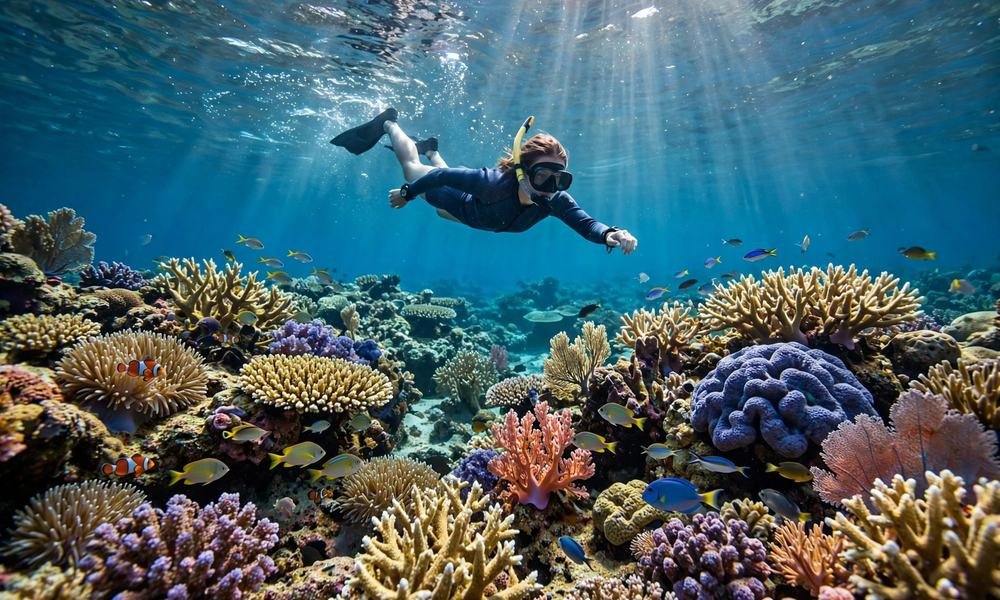
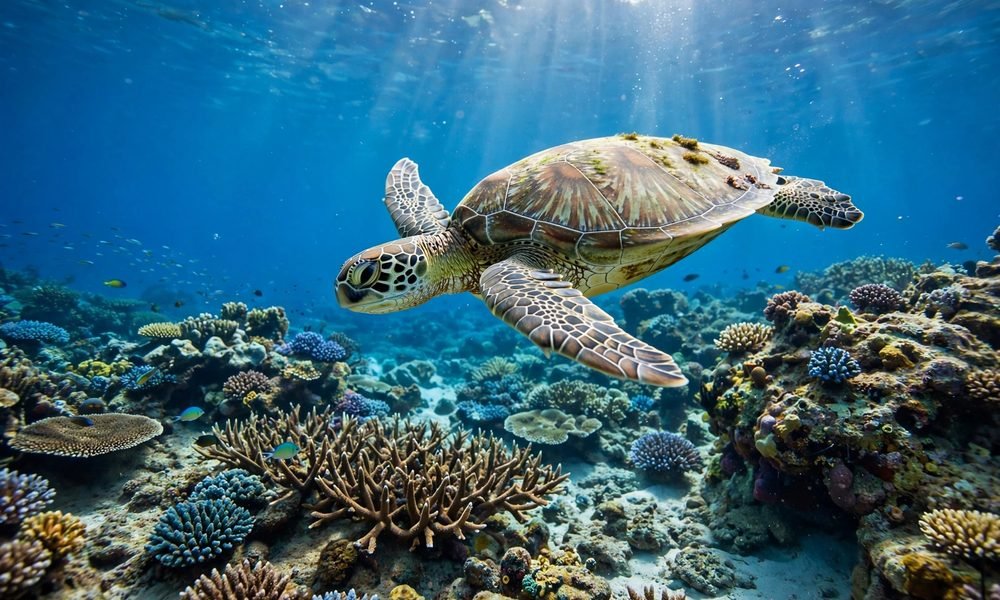
The first minute is the one you will remember. Cold shock, then you look down and the water clears into a garden. Hard corals fan out in plates and branches. Clouds of small blue and yellow fish flicker past. A turtle paddles by without any hurry at all. Turtles are almost guaranteed on the outer reef, and they genuinely do not care about you.
Most tours give you two snorkel stops at different sites, lunch back on board, and time to dry off in the sun on the ride home. You will be back at the marina by mid to late afternoon, salty, sun-tired, and already planning the next trip.
The Main Types of Reef Tours
Not all reef tours are the same. The big choice is how much time you want out there, and whether you snorkel, dive, or just look.
Full-Day Reef Trips
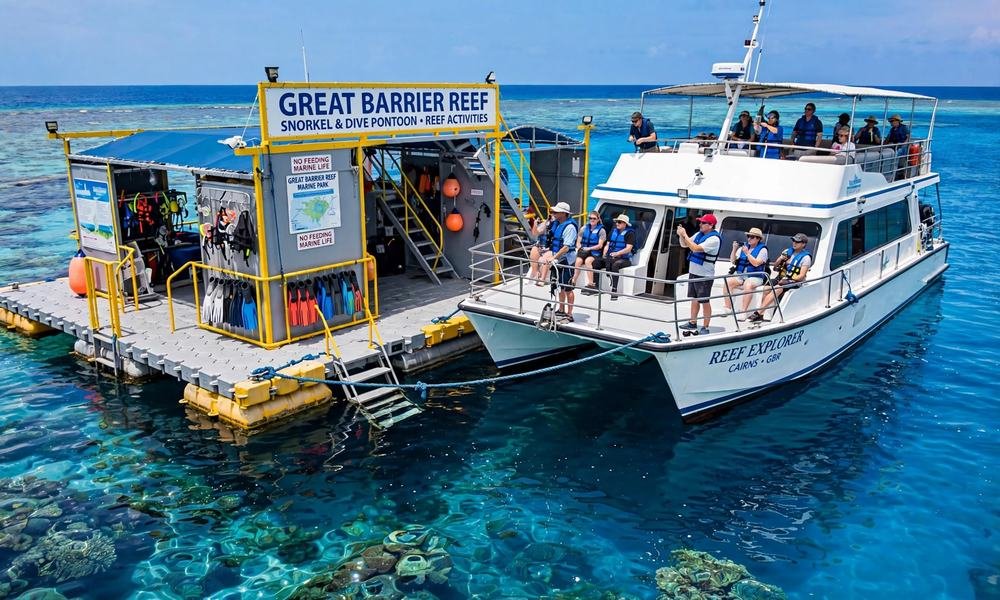
This is the classic option and the best pick for most people. You leave in the morning, visit two outer reef sites, snorkel, eat lunch on board, and return by late afternoon. Boats range from big stable catamarans that carry a hundred people to smaller vessels with a dozen passengers. The smaller the boat, the higher the price, but the better the sites can be.
Overnight Liveaboard Trips
Liveaboards sleep on the reef. You get two or three days out there, more dive sites, and night snorkelling under the floodlights. If you are a keen diver this is the way to go. For snorkellers, the extra cost is worth it if the reef is the main reason you came to Queensland.
Pontoon Days and Helicopter Combos
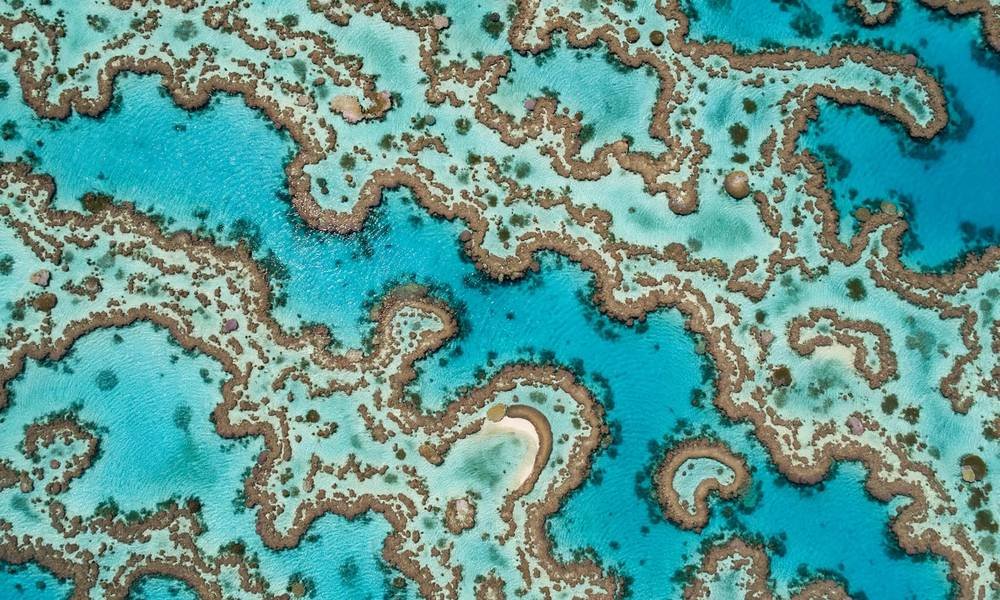
Some operators run floating pontoons moored on the reef. You get an underwater observatory, a semi-submersible ride, and easy ladder access to the water, which suits nervous swimmers and families. Helicopter add-ons fly you over the reef for the aerial view and land you at a sand cay. These are the priciest day options, but the helicopter view of the reef patterns is something else.
Cairns, Port Douglas or the Whitsundays: Where to Start
Three departure points dominate, and they give you different reefs. Pick the one that fits your itinerary, not just the cheapest ticket.
Leaving from Cairns
Cairns has the most operators and the most competition, which keeps standards high and prices keen. Trips head to the outer reef off Cairns, and the boat ride takes around an hour to ninety minutes depending on the vessel. Cairns is also the easiest to reach, with an international airport and plenty of backpacker-friendly accommodation. If you are driving up the coast, our Brisbane to Cairns road trip itinerary finishes right here.
Leaving from Port Douglas
Port Douglas sits about an hour north of Cairns and is closer to the reef. Shorter boat rides mean more time in the water. The Agincourt ribbon reefs offshore from Port Douglas are some of the clearest, healthiest reef sites on the day-trip menu. The town itself is more upmarket, so expect to pay a bit more for everything around the tour too.
Leaving from the Whitsundays
Airlie Beach and Hamilton Island run trips to the southern reef and the fringing reefs around the islands. The coral here can be just as good, and you get island scenery thrown in. This is the best pick if you are sailing the Whitsundays anyway and want a reef day without backtracking to Cairns.
Best Time of Year for a Reef Tour
You can visit the reef all year, but the seasons matter. The dry season, roughly June to October, brings calm seas, clear water, and mild air temperatures. This is the sweet spot and the busiest time.
The wet season, roughly November to March, is hotter and can be choppy, with a chance of cyclones between January and March. Visibility can still be excellent, and this is when coral spawning happens, usually in late spring. Marine stingers are present from about November to May, which is why operators hand out stinger suits. The suit also stops sunburn, so it is no drama.
Shoulder months like April, May, and October often give you the best of both: warm water, smaller crowds, and calm days.
How Many Days to Allow for the Reef
One full day is the minimum and it is enough to see what the fuss is about. But the reef deserves two days if you can manage it. Book your tour for early in your stay, and keep a spare day after it. If your first trip gets cancelled for weather, and it happens more often than brochures admit, you have a backup. Bad weather cancellations come with a full refund or a rebooking, but only if you are still in town.
Divers should allow two or three days so they can do an intro dive on day one and certified dives on day two. Non-swimmers should not skip the reef either. Pontoon tours with underwater observatories and glass-bottom boats exist for exactly this reason.
Booking Tips: What to Check Before You Pay
A few details separate a good tour from a frustrating one. Check these before you hand over your card.
- Which reef sites do they visit? Outer reef sites have better coral than inner reef sites. Ask where the boat goes.
- What is included? Snorkel gear, lunch, and a stinger suit are standard on most full-day trips. Prescription masks and wetsuits can cost extra.
- Group size. A boat with 30 people feels very different to one with 120. Smaller boats cost more and visit better sites.
- The environmental charge. Every reef visitor pays a small government reef tax on top of the ticket price. It funds reef management, and it is normal.
- Weather policy. Confirm you get a full refund or free rebooking if the trip is cancelled for weather.
Book direct with the operator or through your accommodation. Avoid booking a reef tour for your first day in town, when you are tired and jet-lagged, and do not book it the morning of a flight. Dive rules mean you cannot fly within 24 hours of scuba diving.
Must-Knows Before You Get on the Boat
Take seasickness tablets before you board if you are even slightly prone. The ride to the outer reef crosses open water and it gets lumpy. Ginger tablets work for some people, prescription patches for others. Take them early, before you feel sick.
Wear the stinger suit. Even in winter it adds warmth, and it means you need less sunscreen, which is better for the coral. Bring a towel, a dry bag or zip-lock for your phone, and cash for the bar on the way home.
Do not touch the coral. It sounds obvious, but fins drift and hands reach out. Coral is fragile and it can take decades to regrow. Stay flat, keep your fins up, and the guides will thank you.
FAQs About Great Barrier Reef Tours
Can I visit the Great Barrier Reef without diving?
Yes. Most reef visitors snorkel, and plenty just ride along. Pontoon tours have underwater observatories and semi-submersible boats with big windows, so non-swimmers see the reef too.
How long is the boat ride to the reef?
From Cairns or Port Douglas, the fast catamarans take around an hour to ninety minutes to reach the outer reef. Whitsunday trips vary more depending on the island and site.
Will I see turtles and sharks?
Turtles are very likely. Reef sharks are common too, but they are small, shy, and far more scared of you. Neither is dangerous on a reef tour.
Is the Great Barrier Reef dying? Is it still worth visiting?
The reef has taken hits from bleaching events and cyclones, and scientists are honest about the pressure it is under. But it is enormous, and huge areas are in excellent condition. The outer reef sites the day boats visit are generally the healthiest. Going, and choosing a good operator, puts money into reef tourism and research. It is absolutely still worth it.
What should I bring on a reef tour?
Swimmers, towel, sunscreen, hat, sunglasses, seasickness tablets, and a waterproof bag for your phone and camera. Everything else, including snorkel gear and lunch, is usually provided.
Final Thoughts on Great Barrier Reef Tours
The reef lives up to the hype. Not because of any one coral or fish, but because of the scale of it: you float over a living system that stretches further than you can see, and it is right there under your mask. A well-chosen tour makes all the difference, so pick your departure point, book early in your stay, and give yourself a weather backup day.
If you only do one big-ticket experience in Queensland, make it this one. Our things to do in Brisbane guide is worth a read too if your trip starts further south. You will not regret the reef day. Most people come home and book another one.