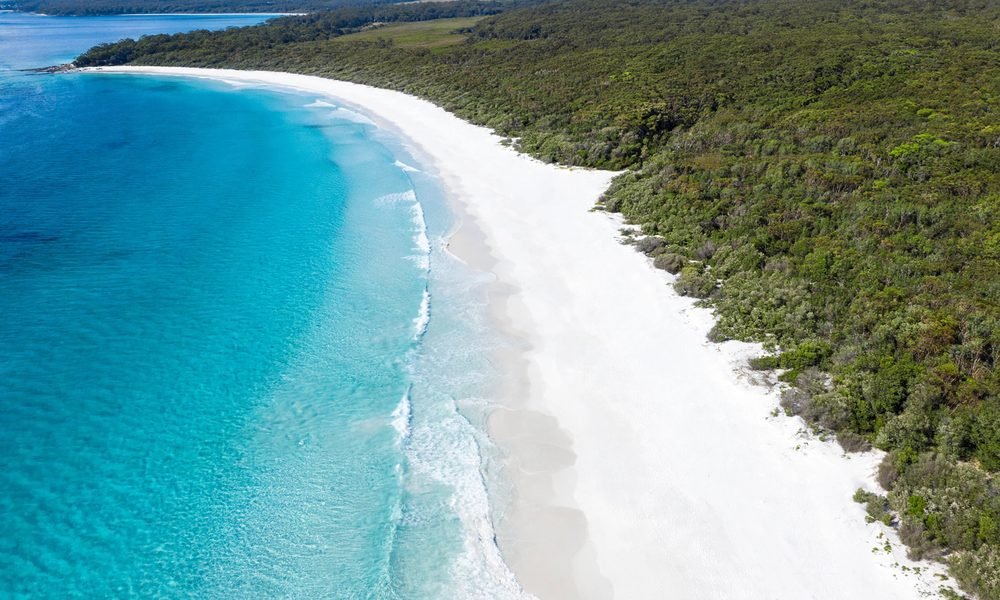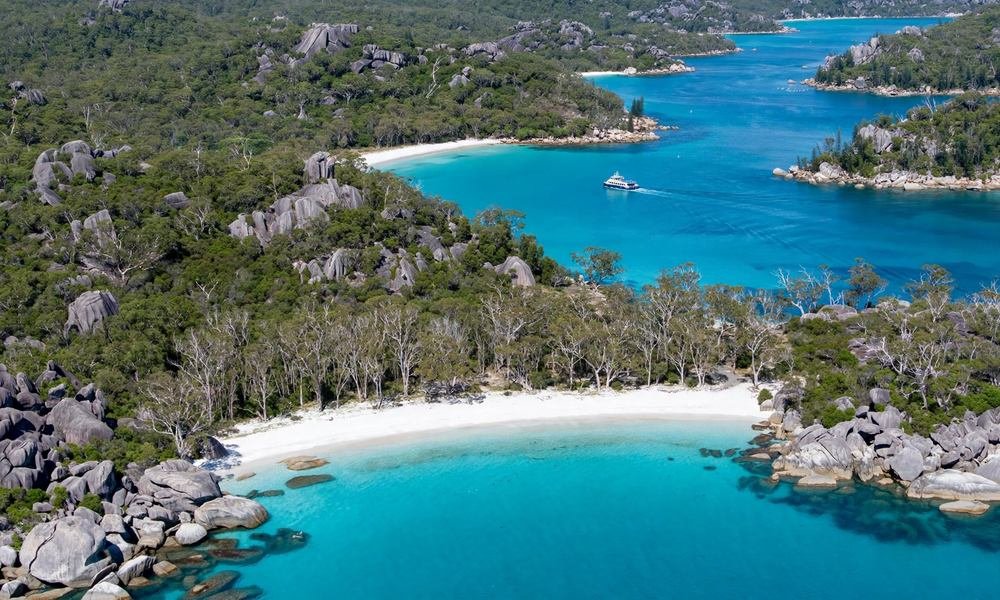
Fraser Island, officially renamed K’gari in 2023, is the largest sand island in the world. And it is like nowhere else in Australia. Rainforest grows straight out of the sand. Lakes sit on top of the dunes with water so clear it looks edited. A beach doubles as a highway. Dingoes wander the shore. The Butchulla people, the Traditional Owners, have lived here for thousands of years, and K’gari means “paradise” in their language. UNESCO agreed and listed the island as World Heritage in 1992.
So what are the best things to do on Fraser Island? Swim in Lake McKenzie’s clear blue water. Drive the 75 Mile Beach highway past the rusted Maheno shipwreck. Float down Eli Creek. Walk through rainforest growing on sand. Watch whales from the calm west coast. This guide from Australia City Guide covers all of it, plus how to plan the trip, get there, and stay safe.
Swim in Lake McKenzie’s Clear Blue Water
Lake McKenzie is the postcard shot of Fraser Island, and it lives up to the photos. The water is a bright, clear blue. The sand is white silica, soft and squeaky under your feet. You can stand chest deep and still see the sand ripples below you.
What makes it strange is that the lake is “perched”. Rainwater sits on top of a layer of compacted sand and organic matter, so the lake floats above the water table like a bathtub on a dune. It is fresh, clean, and safe to swim in, which is more than you can say for the ocean on the island’s east coast.
Get here early in the morning. Tour buses arrive by mid-morning and the lake gets busy. There is no shade at the water’s edge, so bring sunscreen and a hat.

Drive 75 Mile Beach, the Island’s Sandy Highway
75 Mile Beach is the island’s main road, and it is an actual gazetted highway. Speed limits apply, police patrol it, and you drive on the sand. It runs the length of the east coast, and driving it at low tide with the ocean on one side and dunes on the other is one of the great Australian road experiences.
You can only drive it in a 4WD, and you should only drive it around low tide. Soft sand near the dunes bogs vehicles, and the hard-packed sand near the water is the lane. Check the tide times before you set out.
The Maheno Shipwreck
The rusted hulk of the Maheno sits on the beach about 10 km north of Eli Creek. It was once a luxury liner, then a World War I hospital ship, and a 1935 cyclone pushed it ashore. It is one of the most photographed spots on the island. You cannot go inside it anymore, the structure is too fragile, but it makes a great photo stop.

Eli Creek’s Freshwater Float
Eli Creek pours millions of litres of fresh water into the ocean every day. The classic move is to walk the boardwalk upstream, then float back down the creek on your back to the beach. The water is cool and clear, and the float takes about 20 minutes. It is free, fun, and one of the most relaxing things to do on Fraser Island.
Indian Head Lookout and Champagne Pools
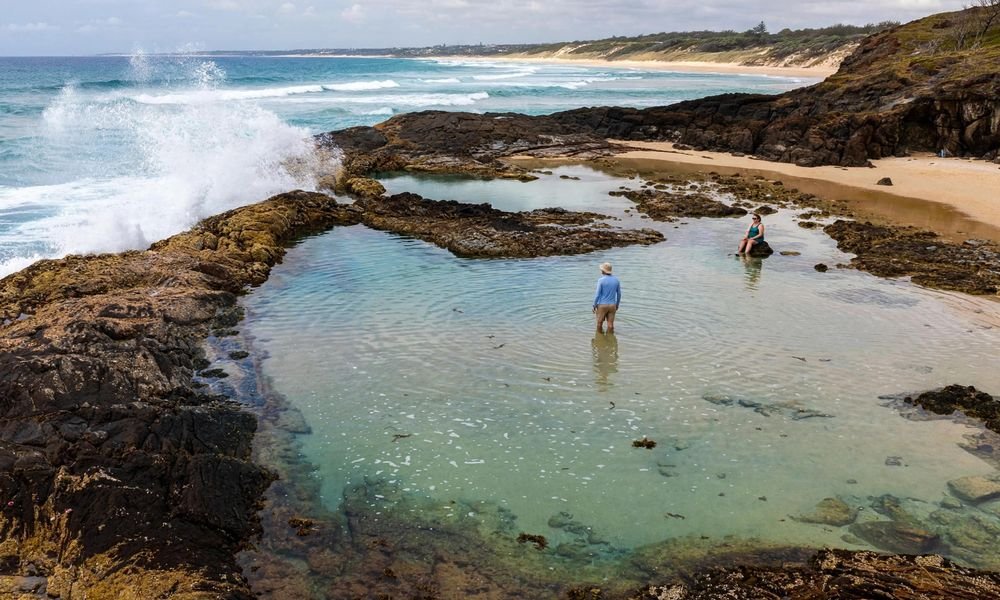
Indian Head is a rocky headland at the northern end of 75 Mile Beach with one of the best views on the island. From the lookout you can spot sharks, turtles, rays, and whales in season. Just below it, the Champagne Pools are natural rock pools where waves crash in and turn the water to foam. They are one of the few safe places to swim in the ocean on the east coast.
Walk Through Rainforest Growing on Sand
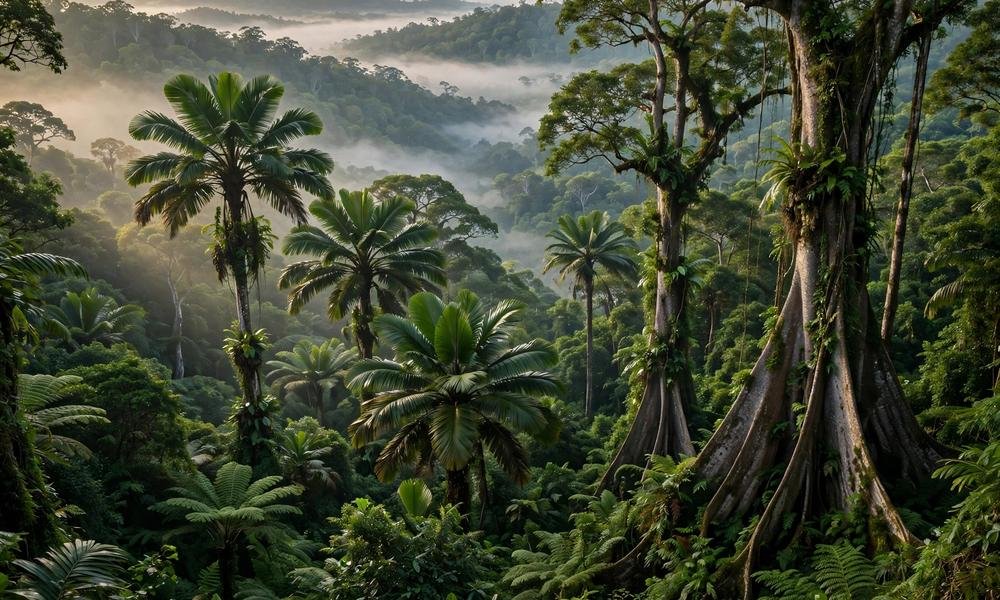
This is the part of Fraser Island that surprises people most. Tall rainforest, with satinay trees and ferns, growing directly out of sand dunes. It should not work, but it does. The trees get their nutrients from a layer of decaying leaves and fungi just under the surface.
The best walks are easy and short. The Wanggoolba Creek boardwalk at Central Station is a flat, shaded loop through the forest with a creek running under it. Pile Valley is home to some of the tallest satinay trees on the island. Both are cool, quiet, and a welcome break from the sun. Allow 30 minutes to an hour for each.
Meet the Fraser Island Dingoes (From a Distance)
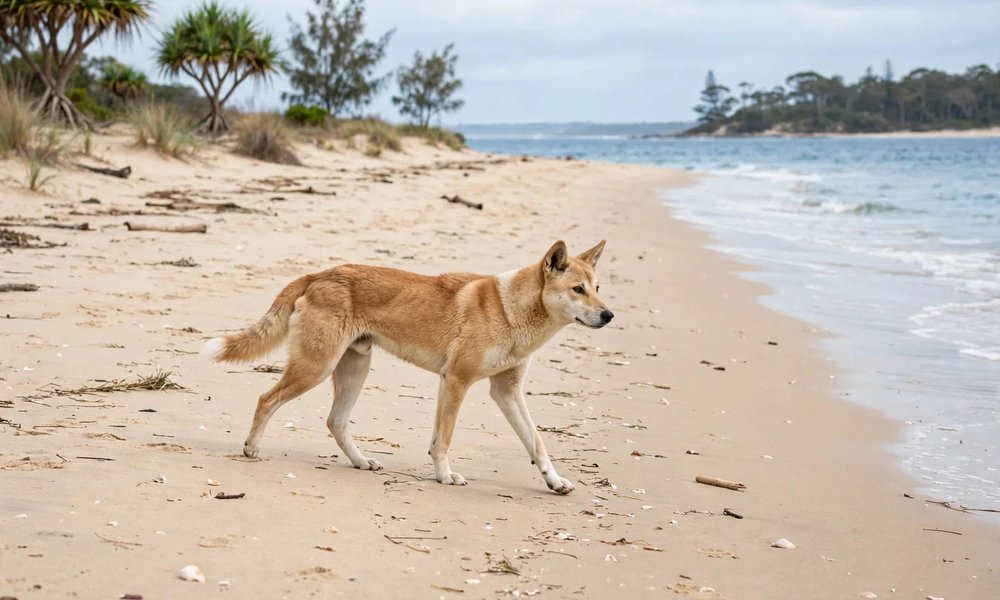
Fraser Island’s dingoes are among the purest strain in Australia, and seeing one lope along the beach is a highlight. But they are wild animals, not dogs. Keep your distance, never feed them, and lock all food away at camp. Feeding a dingo teaches it to approach people, and that ends badly for the dingo.
You are most likely to see them on 75 Mile Beach early in the morning or late in the afternoon. If one comes close, stay calm, face it, and back away slowly. Do not run.
Watch Whales from the Calm West Coast
The island’s west coast faces the mainland and the water is calm and shallow, which makes it a resting stop for humpback whales on their migration. From about July to November, whales pause here on their way south, and mothers nurse their calves in the sheltered bay.
You can join a whale watching cruise from Kingfisher Bay Resort or from Hervey Bay on the mainland. Hervey Bay is one of the best whale watching spots in Australia, so many visitors pair the two. On a good day you will see breaches, tail slaps, and calves playing near the boat.
How Many Days Do You Need on Fraser Island?
Two to three days is the sweet spot. Two full days covers the headline sights: Lake McKenzie, 75 Mile Beach, the Maheno, Eli Creek, the rainforest walks, and Indian Head. A third day lets you slow down, add whale watching, and explore the northern end of the island without rushing.
One-day tours run from Hervey Bay and Rainbow Beach, and they do hit the main sights. But the island is big, the days are long, and you spend a lot of time in the vehicle. If you can, stay at least one night. The island feels completely different once the day-trippers leave.
The Best Time to Visit Fraser Island
The dry season, roughly May to October, is the most comfortable time. Days are mild, nights are cool, and the sand is firm for driving. This is also whale season, so it is the pick for most visitors.
Summer, from November to March, is hotter and wetter. Afternoon storms are common and the sand gets soft, which makes driving harder. It is also marine stinger season along the Queensland coast, though the lakes and creeks are always safe to swim in. Spring and autumn sit in between: warm, quiet, and good value.
Getting to Fraser Island: Ferries and 4WD Access
There are two ferry crossings. From River Heads near Hervey Bay, the barge runs to Wanggoolba Creek and Kingfisher Bay on the island’s west coast. From Inskip Point near Rainbow Beach, the barge crosses to Hook Point at the island’s southern tip. Both crossings take under an hour, and you book ahead in the busy months.
Only 4WD vehicles can go on the island. There are no sealed roads. If you bring your own vehicle, you need a vehicle access permit, and you will deflate your tyres before hitting the sand. Rental 4WDs set up for the island are available in Hervey Bay and Rainbow Beach if you do not own one.
Most visitors reach the island through Hervey Bay or Rainbow Beach, and many slot it into a longer drive up the Queensland coast. If that sounds like your trip, our Brisbane to Cairns road trip itinerary shows how the island fits into the bigger journey.
Where to Stay on Fraser Island
Kingfisher Bay Resort on the west coast is the main hotel-style option, with rooms, restaurants, and tour desks. Eurong Beach Resort on the east coast puts you right on 75 Mile Beach. Both are comfortable bases with pools and dining.
Campers have plenty of choice, from fenced campgrounds to beach camping zones. You need a camping permit, and you must book ahead in school holidays. If you would rather not sleep on the island, Hervey Bay on the mainland has the widest range of accommodation and runs day tours across.
Flying in? Most visitors arrive via Brisbane. Our guide to where to stay in Brisbane covers the best areas if you need a night in the city before heading north.
Getting Around: Driving on Sand
Driving on Fraser Island is half the adventure, but it takes care. Deflate your tyres to the recommended pressure before you leave the barge. Drive on the hard sand near the waterline on the beach, and only around low tide. Give way to aircraft, yes, planes land on the beach too, and watch for pedestrians and dingoes.
Do not drive at night if you can avoid it. Dingoes, washouts, and oncoming headlights on the beach make it risky. Carry plenty of water and fuel. There are only a few small shops on the island, so bring what you need with you.
Guided Tours vs Driving Yourself
Guided tours suit first-timers and anyone without 4WD experience. The driver knows the tides, the tracks, and the wildlife, and you can relax and enjoy the scenery. Multi-day tours include accommodation and meals, which takes the planning out of it.
Driving yourself gives you freedom. You set the pace, linger at the spots you love, and camp under the stars. But you take on the responsibility: tides, permits, tyre pressures, and getting unbogged. If you are confident on sand and have done some 4WD driving before, self-driving is the more rewarding option.
Fraser Island Must-Knows: Safety, Dingoes and Tides
Do not swim in the ocean on the east coast. The surf has strong rips and sharks, and there are no lifeguards. Swim in the lakes, creeks, and the Champagne Pools instead. This is the single most important safety rule on the island.
Respect the dingoes. Keep your distance, never feed them, secure all food and rubbish, and supervise children closely. Fines apply for feeding or disturbing them.
Drive the tides. Plan beach driving for the two hours either side of low tide. Getting caught by a rising tide against the dunes is dangerous and a common cause of bogged vehicles.
Take your rubbish with you. There are limited bins on the island, and dingoes will tear open anything left out. Pack a rubbish bag and leave your camp cleaner than you found it.
FAQs About Visiting Fraser Island
Do I need a 4WD to visit Fraser Island?
If you want to explore on your own, yes. Only 4WD vehicles are allowed on the island’s sand tracks and beaches. Otherwise, join a guided tour and let someone else drive.
Can you swim on Fraser Island?
Yes, in the lakes, creeks, and Champagne Pools. Do not swim in the ocean on the east coast. It has strong rips and sharks and no lifeguards.
What does K’gari mean?
K’gari is the Butchulla name for the island and means “paradise”. It became the island’s official name in 2023, though Fraser Island is still widely used.
How do I get to Fraser Island from Brisbane?
Drive about four hours north to Hervey Bay or Rainbow Beach, then take the vehicle barge across. Our things to do in Brisbane guide is handy if you are spending time in the city first.
Is Fraser Island a national park?
The island itself is a World Heritage Area, listed by UNESCO in 1992. Parts of it are managed as national park, and vehicle and camping permits apply across the island.
Final Thoughts on Visiting Fraser Island
Fraser Island earns its World Heritage status. Nowhere else can you swim in a perched lake in the morning, drive a beach highway at midday, walk through rainforest on sand in the afternoon, and watch dingoes on the shore at sunset. It is a big, wild island, and it rewards travellers who give it time.
If you are weighing it up, go. Give it two or three days, plan around the tides, respect the dingoes, and swim in every lake you pass. Few places in Australia pack this much variety into one island.