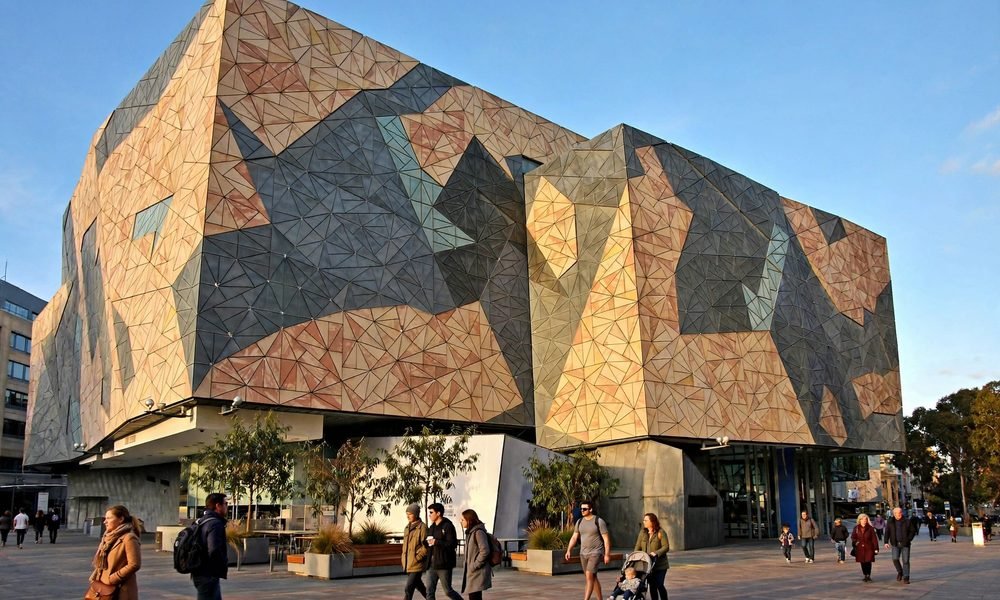

NGV Australia is the home of Australian art in Melbourne. It sits inside Federation Square as The Ian Potter Centre, and it shows only Australian art, from First Nations work through colonial painting to contemporary practice. Entry to the collection is free, and the gallery opens daily from 10am to 5pm.
Last updated: November 2026
Details checked on the official site, November 2026
Quick facts
- Where: The Ian Potter Centre, Federation Square, corner of Flinders and Russell Streets, Melbourne
- Cost: Free entry to the collection; some exhibitions are ticketed
- Hours: Daily 10am to 5pm; 1pm to 5pm on ANZAC Day; closed Christmas Day
- Time needed: About two hours for the highlights; longer with a ticketed exhibition
- How to get there: Flinders Street Station sits across the road; trams stop at Federation Square
Don’t miss at NGV Australia
- Wurrdha Marra — the First Nations display on the ground floor, and the place to start.
- Shearing the Rams by Tom Roberts — the Heidelberg School icon on Level 2.
- Collins Street, 5pm by John Brack — voted the NGV’s most popular work in 2011, in Gallery 12 on Level 2.
- Margaret Preston retrospective — over 200 works on Level 3 until 31 January 2027, ticketed.
- Plant Life: The Nature of Design — a free exhibition in the ground-floor Design Studio until 7 February 2027.
In this guide
- Where Is NGV Australia and What Is It?
- NGV Australia Opening Hours and Entry Prices
- What to See at NGV Australia
- Margaret Preston at NGV Australia
- Free Exhibitions at NGV Australia
- Free Tours at NGV Australia
- NGV Australia for Kids and Families
- A Two-Hour Route Through NGV Australia
- How to Get to NGV Australia
- Accessibility at NGV Australia
- Eating, Shopping and Practical Tips
- What to Combine With NGV Australia
- Frequently Asked Questions About NGV Australia
- Plan Your Visit
Where Is NGV Australia and What Is It?
NGV Australia is one of the two buildings of the National Gallery of Victoria. The other is NGV International on St Kilda Road, which holds the international collection. NGV Australia holds the Australian collection, and it sits inside Federation Square at the eastern end of the city centre. The full name is The Ian Potter Centre: NGV Australia.
The building is named for businessman and philanthropist Sir Ian Potter. When Federation Square opened in 2002, the Australian collection moved here, and the gallery has shown only Australian art ever since. Fed Square describes it as the country’s only public art gallery dedicated to Australian and First Nations art and design.
The First Nations collection holds more than 4,700 works from across mainland Australia and the Torres Strait. The art spans 65,000 years of history to the present day. The National Gallery of Victoria was founded in 1861. That makes the NGV Australia’s oldest public art gallery, and its two buildings now draw visitors from across Australia and overseas.
NGV Australia is the building to choose if you want to understand Australian art in one visit, because nothing here comes from anywhere else.
NGV Australia Opening Hours and Entry Prices
NGV Australia opens daily from 10am to 5pm, and entry to the collection is free. The gallery opens from 1pm to 5pm on ANZAC Day, 25 April, and it closes on Christmas Day, 25 December. Apart from those two days, the gallery keeps normal hours on public holidays. These hours come from the NGV plan your visit page, so check that page before you travel if your visit falls on a public holiday.
Free entry covers the permanent collection on all three floors. You only pay for ticketed exhibitions, and the main one running now is the Margaret Preston retrospective on Level 3. Tickets for that show cost $35 for adults, $17 for children aged 5 to 15, and $87 for a family of two adults and up to three children. Children under 5 go in free and need no ticket. Concession tickets cost $33, and the Seniors Card discount applies on Wednesdays only. Full ticket prices sit on the NGV Margaret Preston access guide. The gallery takes cards and contactless payment only. If you want to ask about a specific work or a ticket, call the NGV on 03 8620 2222 between 9am and 5pm daily.
NGV membership costs $120 a year for an individual, or from $55 a year for digital membership. Members get one free exhibition ticket each year, plus discounted entry to other ticketed shows. Member prices for Margaret Preston are $32 for adults, $14 for children and $77 for a family. See the NGV membership page for the full list.
What to See at NGV Australia
The collection runs across three floors and more than 20 galleries. Start on the ground floor and work your way up, because the story of Australian art makes more sense in that order. First Nations art comes first, then colonial painting, then modern and contemporary work.
Wurrdha Marra: First Nations Art on the Ground Floor
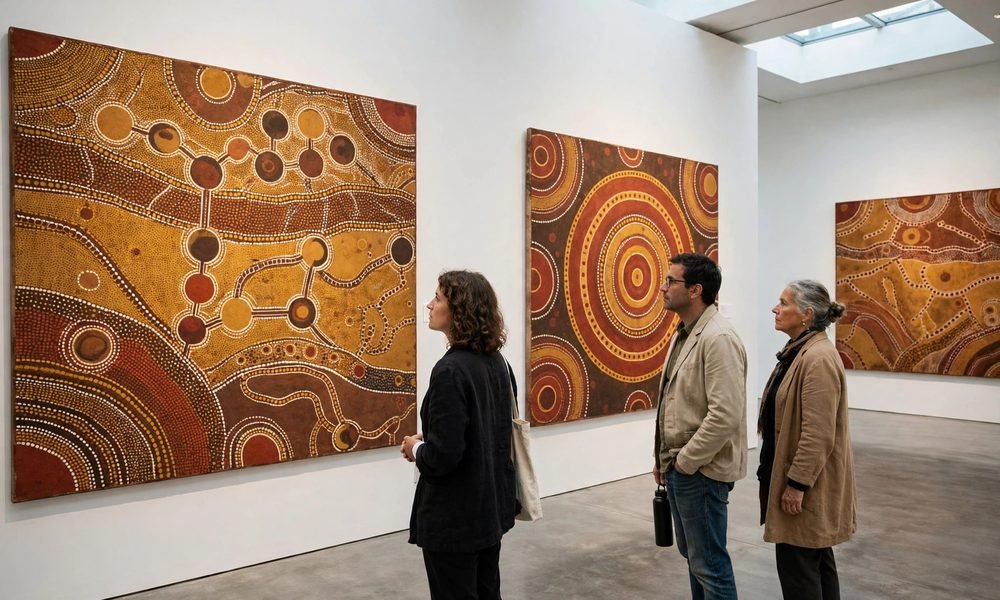
Wurrdha Marra is the First Nations display on the ground floor, and it is the place to start. The name means “Many Mobs” in the Wurundjeri Woi Wurrung language. It brings together Aboriginal and Torres Strait Islander art from the NGV Collection, and it covers work from many communities across Australia. You will see bark paintings from Arnhem Land, ceramics and textiles from the Tiwi Islands, work by the Papunya Tula founders who started the Western Desert dot painting movement, and paintings by Emily Kame Kngwarreye and Rover Thomas.
Look for Ngayartu Kujarra, a large painting made by twelve Martu women artists from three generations. It shows Lake Dora in Western Australia and the country around it, with patterns for plants, rock outcrops and sand dunes, and blue marks for sacred waterholes. The painting makes more sense when you know the story behind it, so take the free tour if you can, or read the label slowly before moving on.
The Bark Salon sits nearby, with 150 bark paintings hung close together so you can compare imagery, surface and composition across works. Some displays may carry a notice that they contain images, names or works of Aboriginal and Torres Strait Islander people who have died, so read the notices as you enter each room.
Colonial Painting and the Heidelberg School
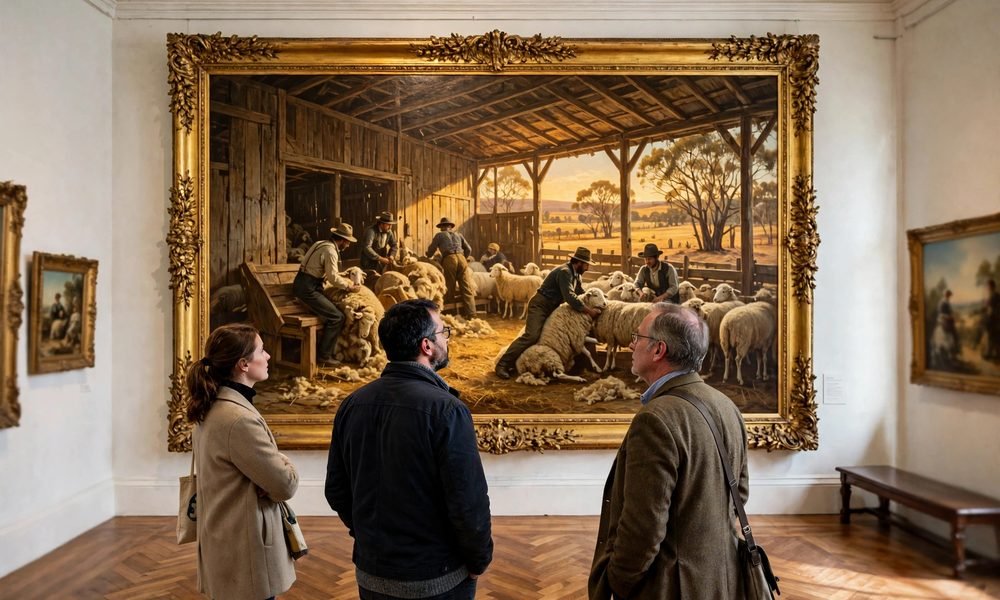
Level 2 holds 19th-century colonial Australian art. This is where you find the paintings most Australians know from school books and calendars. Eugene von Guerard’s grand landscapes sit near John Glover’s early Tasmanian work, and the Heidelberg School painters take up a large part of the floor. Look for Tom Roberts’ Shearing the Rams, Frederick McCubbin’s The Pioneer, and Arthur Streeton’s Golden Summer, Eaglemont. These paintings show how European painting traditions changed when artists worked with Australian light, land and working life.
One thing to know before you go: only part of the collection can hang at once, so a specific painting may not be on display on the day you visit. If you are travelling for one work in particular, check the NGV collection record online first, or call 03 8620 2222 and ask whether it is hanging. That one check can save a wasted trip.
Modern Australian Art
Level 1 holds 20th-century Australian modernism, with painting from the NGV Collection in displays that change over time. Sidney Nolan, Arthur Boyd, Grace Cossington Smith, Fred Williams and Brett Whiteley all appear here, along with Margaret Preston’s prints and still lifes. The displays on this floor rotate, so the exact mix of works changes through the year. That is worth knowing if you visit twice in one year, because the second visit will not look the same as the first.
Look for John Brack’s Collins Street, 5pm (1955) in Gallery 12 on Level 2. It shows tired office workers leaving the city at the end of the day, and in 2011 it was voted the most popular work in the NGV collection. Check the NGV collection record before you travel, as displays rotate.
Contemporary Australian Art, Photography, Fashion and Design
Contemporary Australian art fills changing displays across the building, with recent work by living artists. Photography, decorative arts, fashion and design also have dedicated galleries, and the fashion and design displays rotate through the year. The ground-floor Design Studio holds free exhibitions that change regularly. Plant Life: The Nature of Design runs there now, and it looks at how plants have shaped what people make, from old traditions to new materials. It runs until 7 February 2027 and entry is free. Check the NGV website for the current program before your visit, because these displays change often.
The Joseph Brown Collection
The Joseph Brown Collection is a large group of Australian works that came to the NGV as a gift from Dr Joseph Brown. It covers portraits, landscapes and modern work across several periods, and it gives a useful way to compare artists and styles side by side. The display is ongoing and entry is free, but the exact selection can change, so check ahead if you are coming for one work in particular.
Margaret Preston at NGV Australia
The Margaret Preston retrospective is the main ticketed exhibition at NGV Australia now. It runs from 4 September 2026 to 31 January 2027 on Level 3, and it brings together more than 200 paintings, prints, sculptures and archival items from her seven-decade career. Preston is known for her floral still lifes and bold woodblock prints, and the show follows how her work shaped Australian modernism.
Tickets cost $35 for adults, $17 for children aged 5 to 15, and $87 for a family of two adults and up to three children. Children under 5 enter free. Concession tickets cost $33, with the Seniors Card discount on Wednesdays only. NGV members pay $32 for adults, $14 for children and $77 for a family, and members can use one free exhibition ticket each year. All prices and booking details sit on the NGV Margaret Preston access guide.
Book online, by phone on 03 8620 2222, or in person at the gallery. Exhibition tickets are for a set entry time, and you can stay inside for as long as you like until the gallery closes at 5pm. Enter by 4pm to allow an hour inside. The exhibition follows a set path, and once you enter you cannot come and go again, unless you need a bathroom or a break for disability or health reasons. Children of all ages are warmly welcomed in the exhibition. Gallery areas are air-conditioned to between 20 and 24 degrees, and bench seating sits through the exhibition spaces.
A free exhibition tour runs at 1.30pm on selected days, and it is free with an exhibition ticket. Check the NGV events calendar for the day you visit, because the tour does not run every day.
Free Exhibitions at NGV Australia
Three free exhibitions run alongside the ticketed show. Passage: The Art of Atong Atem runs from 30 October 2026 to 14 June 2027, and it is the first major Australian solo exhibition from Melbourne-based photographer Atong Atem. Her portraits mix family archives, African studio photography and science fiction, with patterned textiles, paint and symbolic objects. Entry is free.
Plant Life: The Nature of Design runs in the ground-floor Design Studio until 7 February 2027. It looks at how plants have shaped design, through objects and materials as well as visual art, and a firefighter’s jacket made from mushroom-based leather is one of the objects on show. Entry is free.
Made to Move: Australian Jewellery 1960–2020 runs until February 2027, and it traces sixty years of Australian jewellery. Entry is free. Check the NGV Australia visitor guide for dates and details before you go, because free exhibitions change through the year.
Free Tours at NGV Australia
The Australian Collections Highlights Tour runs at 11am on selected days and lasts about an hour. It starts at the meeting point in the entrance foyer on the ground floor, and it gives a good introduction to the depth of Australian art in the building. No booking is needed, and the tour is wheelchair friendly. Arrive a few minutes early, because numbers can be limited. Check the NGV events calendar for the day you visit, because the tour does not run every day.
Two more free tours run at NGV Australia. The Women in Art and Design Tour runs at 1pm on selected days, and it looks at the collection through the work of women artists and designers. A ticketed Best of NGV Australia tour runs at midday on selected days for visitors who want a shorter highlights round. Check the NGV events calendar for times and booking.
Connect and Create is a dementia-friendly art chat and make session that runs monthly at 11am. It lasts two hours, from 11am to 1pm. Check the NGV events calendar for dates and booking.
Guided tours make a real difference here, especially in the First Nations galleries, where the story behind a painting is often as important as the painting itself. If the 11am tour does not suit your timing, the NGV also runs talks, lectures and workshops through the year, so check the events calendar on the NGV site when you plan your visit.
NGV Australia for Kids and Families
NGV Australia suits a family visit, because entry to the collection is free and there is no ticket to book. Children of all ages are warmly welcomed in the Margaret Preston exhibition, and baby-change facilities sit on the ground floor.
NGV Kids on Tour runs in the 2027 summer holidays with free entry. It brings hands-on art activities for children to the gallery. Check the NGV events calendar for dates before you plan a school-holiday visit.
A Two-Hour Route Through NGV Australia
If you have two hours, follow this order. It covers the highlights of all three floors without doubling back. Start on the ground floor with Wurrdha Marra and give it 45 minutes. This is the part of the building that sets up everything else you will see. Take time with the bark paintings and the large collaborative works, and read the labels.
Go up to Level 1 for modern Australian art and give it 30 minutes. Look for Nolan, Boyd, Cossington Smith and Williams, and note how the work changes as you move through the century.
Finish on Level 2 with colonial painting and the Heidelberg School, and give it 45 minutes. Shearing the Rams, The Pioneer and Golden Summer, Eaglemont are the three works to find. John Brack’s Collins Street, 5pm hangs in Gallery 12 on the same floor, and the Joseph Brown Collection sits nearby for comparison.
If you also want to see the Margaret Preston retrospective, add another hour and book a timed ticket for after your collection visit. Level 3 holds the exhibition, and the 1.30pm free tour runs on selected days if you hold an exhibition ticket. After the galleries, take a break at the NGV Cafe in the Atrium outside the entrance.
How to Get to NGV Australia
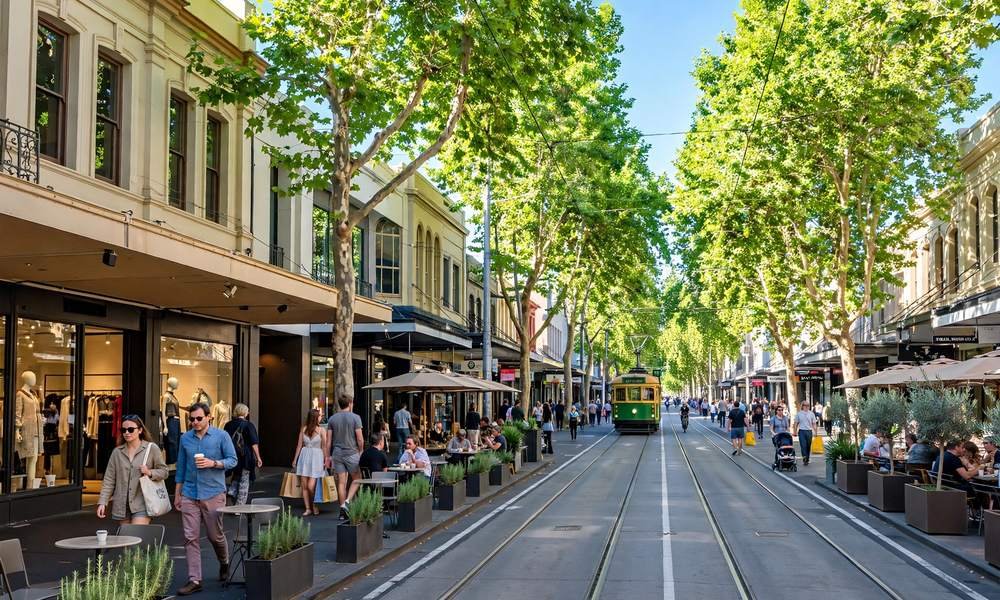
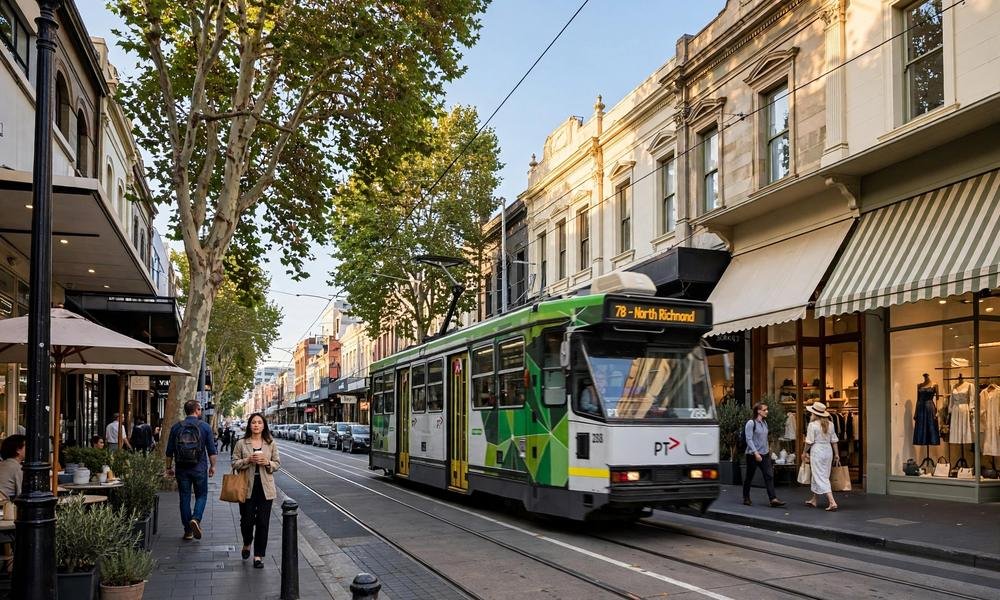
NGV Australia sits at Federation Square, on the corner of Flinders and Russell Streets. Flinders Street Station is directly across the road, and almost every city tram passes through the intersection. Trams 35, 70 and 75 run along Flinders Street, and Swanston Street services stop near Federation Square. The square sits inside Melbourne’s Free Tram Zone, so a tram to the gallery costs nothing. Plan your trip on the Public Transport Victoria website before you travel.
If you drive, paid parking sits beneath Federation Square, with entrances via Russell Street Extension or Batman Avenue. The first hour costs $18. Check clearance and accessible-space arrangements before you drive in. Full transport and parking details sit on the NGV plan your visit page and the Fed Square venue page.
NGV International sits about a 10-minute walk away, across Princes Bridge on St Kilda Road. If you plan to see both buildings in one day, start at NGV Australia in the morning and cross the bridge after lunch. One warning: some spaces at NGV International may close from 7 September to 13 December 2026 while the NGV Triennial is installed, so check the NGV site first if you plan to visit that building too. The Triennial itself opens on 13 December 2026 and runs to 11 April 2027, and entry is free.
Accessibility at NGV Australia
NGV Australia is step-free, with lifts to all public gallery levels, accessible toilets on each level, and accessible entrances on street level with automatic doors. The easiest way in is via the Fed Square Atrium from Flinders Street, or via the Russell Street extension, which also has a car and taxi drop-off point. Avoid the main square if you need a smooth surface, because the paving there slopes and can be uneven.
Wheelchairs and a motorised scooter are free to hire, and it helps to book before your visit. Access aids such as self-regulation fidget devices, disposable earplugs, magnifying sheets and coloured overlays are also free to hire from the Information Desk. Large-print artwork labels are available, and assistance dogs are welcome. Baby-change facilities sit on the ground floor, and all-gender toilets are located through the gallery.
The nearest Changing Places bathroom sits about 600 metres away at Arts Centre Melbourne’s Hamer Hall. The NGV recognises the Companion Card and the Carer Card, and Companion Card holders get concession-priced tickets plus a free ticket for their companion. For full details, see the access section of the NGV Margaret Preston access guide or call 03 8620 2222.
Eating, Shopping and Practical Tips
The NGV Cafe sits in the Atrium just outside the entrance to The Ian Potter Centre. It serves refreshments, light meals and snacks, with Allpress Espresso coffee roasted locally in Melbourne. It opens Monday to Friday from 9am to 5pm, and on weekends from 10am to 5pm. Federation Square has more restaurants, cafes and bars if you want a longer break outside the gallery. Entry to the collection is free, so you can leave for lunch and come back without paying again.
The NGV Design Store sits inside the gallery and sells Australian art books, prints, jewellery and design objects. It is a good place for a gift that is not a generic souvenir.
A few practical rules help your visit run smoothly. Backpacks, large bags and umbrellas must go in the free cloakroom before you enter the galleries, so travel light if you can. Personal photography is welcome in most areas, but flash, tripods and selfie sticks are not allowed, and some exhibitions ban photography outright, so watch the signs. Bench seating sits through the exhibition spaces if you need a rest.
What to Combine With NGV Australia
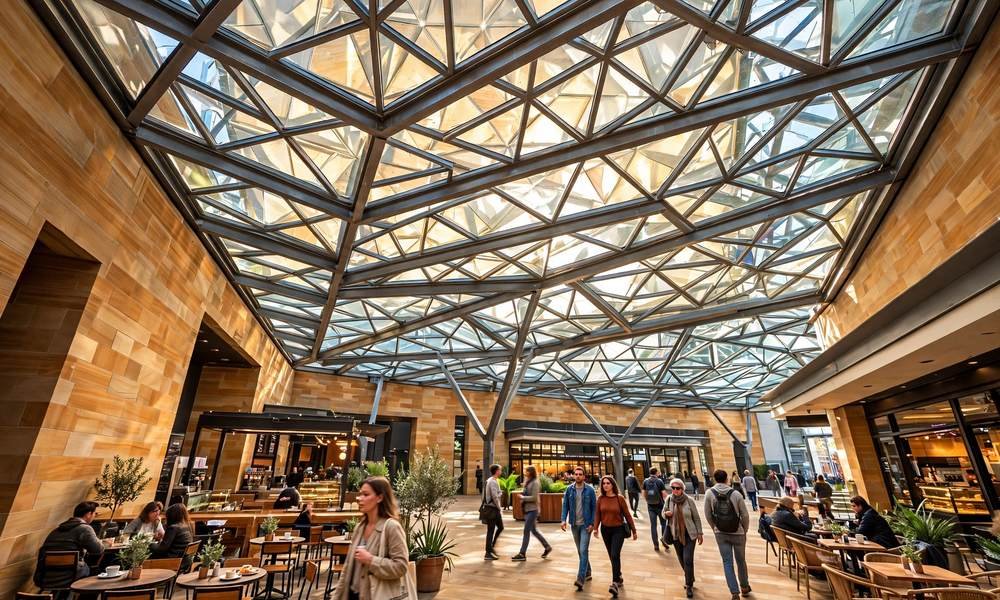
NGV Australia sits in the middle of Federation Square, so it pairs well with the other galleries in the square. ACMI is steps away and covers screen culture, film, television and video games, with free entry to its permanent displays. The Koorie Heritage Trust sits in the square too, and it celebrates south-eastern Aboriginal culture through artefacts, oral history, art and design. After the galleries, walk along the Yarra River or cross to Southbank for dinner.
Flinders Street Station stands across the road, and Hosier Lane sits a short walk away. If you want more art in the same trip, the State Library Victoria and the Royal Exhibition Building both sit a short tram ride away, and each one covers a different part of Melbourne’s story. Across Princes Bridge, NGV International holds the international collection, with the water wall at the entrance and the Great Hall inside. The free NGV Triennial opens there on 13 December 2026.
Victoria has many galleries worth a visit, and NGV Australia is the right place to start.
Frequently Asked Questions About NGV Australia
Is NGV Australia free to visit?
Yes, entry to the permanent collection is free, and you need no ticket. You only pay for ticketed exhibitions such as the Margaret Preston retrospective, which costs $35 for adults. NGV members get one free exhibition ticket each year, and individual membership costs $120 a year. Some talks and workshops also carry a separate charge, so check the event listing before you book.
What are the opening hours for NGV Australia?
NGV Australia opens daily from 10am to 5pm. On ANZAC Day it opens from 1pm to 5pm, and it closes on Christmas Day. Apart from those two days, the gallery keeps normal hours on public holidays. Ticketed exhibitions run within the same hours, but the last entry for Margaret Preston is 4pm, which allows one hour before the 5pm close.
How long should I allow for NGV Australia?
Allow about two hours for the collection highlights across the three floors. Add an hour if you want to see the Margaret Preston retrospective, and more time again if you stop for lunch at the NGV Cafe. A full day covers both NGV buildings with a break in between.
What is the difference between NGV Australia and NGV International?
NGV Australia at Federation Square shows only Australian art, from First Nations work to contemporary practice. NGV International on St Kilda Road shows art from Europe, Asia, the Americas and the Pacific, and it holds the Great Hall and the water wall at the entrance. The two buildings sit about a 10-minute walk apart, across Princes Bridge, and a ticketed exhibition is always tied to the building that hosts it. The free NGV Triennial opens at NGV International on 13 December 2026.
Can I visit NGV Australia with kids?
Yes. Entry is free, children of all ages are warmly welcomed in the Margaret Preston exhibition, and baby-change facilities sit on the ground floor. NGV Kids on Tour runs in the 2027 summer holidays with free entry and hands-on art activities. Check the NGV events calendar for dates before a school-holiday visit.
Plan Your Visit
Start at NGV Australia if Australian art is the reason for the trip. The collection is free, the building sits in the middle of Federation Square, and the free Triennial opens across the bridge at NGV International on 13 December. Australia City Guide covers more of the city in the same way, so use these guides together to plan a full day around Federation Square.