
Esperance sits on the far south coast of Western Australia, about 720 kilometres from Perth, and it might just have the best beaches in the country. The sand at Lucky Bay is so white it squeaks under your feet, kangaroos wander the shoreline at dawn, and the water is that clear, cold blue you only get on the southern coast. It’s remote, it’s windy at times, and it’s absolutely worth the drive. This guide from Australia City Guide covers everything: the headline beaches, the national parks, the weird and wonderful Stonehenge replica, where to stay, when to go, and how to plan your days.
Lucky Bay and the Famous Beach Kangaroos
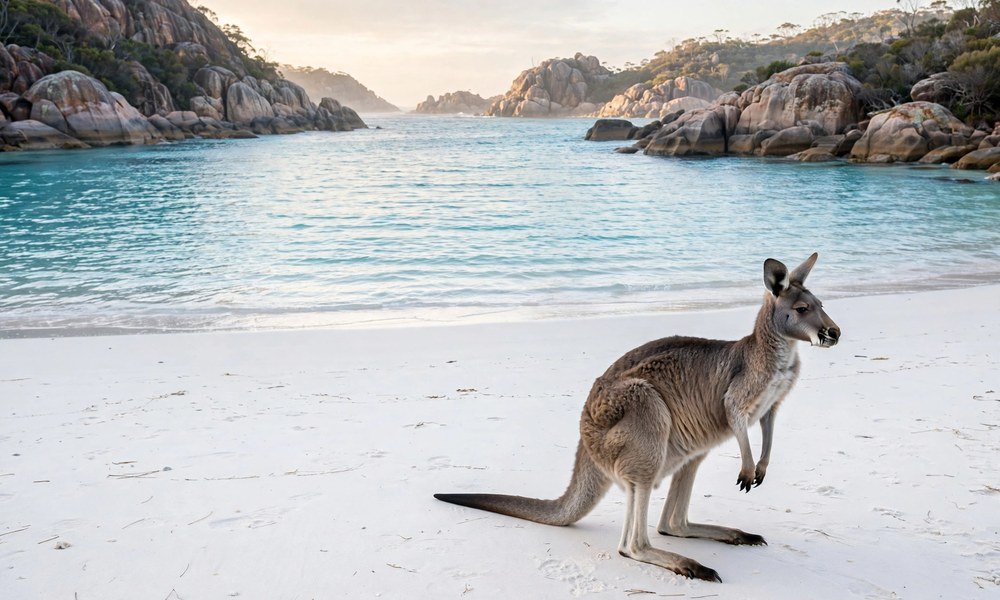
Let’s start with the main event. Lucky Bay sits inside Cape Le Grand National Park, about 45 minutes’ drive east of town, and it’s the reason most people come to Esperance. The beach is long, wide, and backed by granite headlands, and the sand is famously white. Tourism WA calls it Australia’s whitest sand, and when the sun hits it, you’ll believe them. Bring sunglasses.
The kangaroos are the real drawcard. A mob of western grey kangaroos hangs around the beach and the campground behind the dunes, and they’re remarkably relaxed around people. You’ll often see them on the sand early in the morning or late in the afternoon, sometimes right at the water’s edge. It’s one of those sights that sounds made up until you see it.
When to See the Kangaroos
Dawn and dusk are your best bet. The kangaroos graze on the grass near the campground in the cooler parts of the day and wander down to the beach when it suits them. Midday in summer, they’ll be sheltering in the shade and you might not see a single one. If kangaroo photos are the priority, plan a sunrise visit. It’s also when the light on the bay is at its best.
Kangaroo Etiquette
These are wild animals, not pets. Don’t feed them, don’t try to touch them, and give them space, especially if there are joeys around. Human food makes them sick and aggressive over time, and rangers take it seriously. Watch, photograph, and enjoy them from a few metres away.
Driving on the Beach
Yes, you can drive on Lucky Bay’s hard sand, and in a 2WD if you stick to the compacted strip near the water. It’s a novelty for most visitors. That said, conditions change with the tide and the weather, so check with the rangers or other drivers before you commit, and never drive on soft sand or dunes. Wharton Beach, further along the park coast, also allows beach driving on its hard sand.
Cape Le Grand National Park
Cape Le Grand is the big one, the national park that holds Lucky Bay and a string of other beaches, plus some of the best coastal hiking in WA. Entry is per vehicle per day, so check the current fee on the WA parks site before you go. You can buy passes online in advance, which saves mucking around at the gate.
The park has two campgrounds, Lucky Bay and Le Grand Beach, and both book out fast in summer and school holidays. Bookings open around six months ahead, and for peak season you genuinely need to be in early. Camping here means waking up to the sound of the ocean and kangaroos outside your tent, which is hard to beat.
Hellfire Bay and Little Hellfire Bay
Hellfire Bay is the classic picnic stop, a sheltered curve of sand with turquoise water, picnic tables, and a barbecue looking straight out to sea. It’s calm, it’s pretty, and it’s made for a long lunch. From the far end of the beach, a short walking track climbs over the headland to Little Hellfire Bay, a smaller, quieter cove. The walk takes about 15 minutes each way and the coastal views along the way are excellent. In spring, you’ll spot wildflowers along the track.
Thistle Cove and the Whistling Rock
Thistle Cove is smaller and usually quieter than the headline beaches, which is exactly its charm. At one end of the cove you’ll find the Whistling Rock, a granite formation that makes an odd whistling sound when the swell pushes air through it. It doesn’t whistle every day, it depends on the sea conditions, but it’s a fun little detour.
Cape Le Grand Beach
The beach that gave the park its name is a long, open stretch of white sand that seems to go on forever. It cops more wind than the sheltered bays, but on a calm day it’s magnificent, and the second campground sits right behind the dunes here. If Lucky Bay feels busy, walk east along this beach and you’ll have space to yourself within minutes.
Climbing Frenchman’s Peak
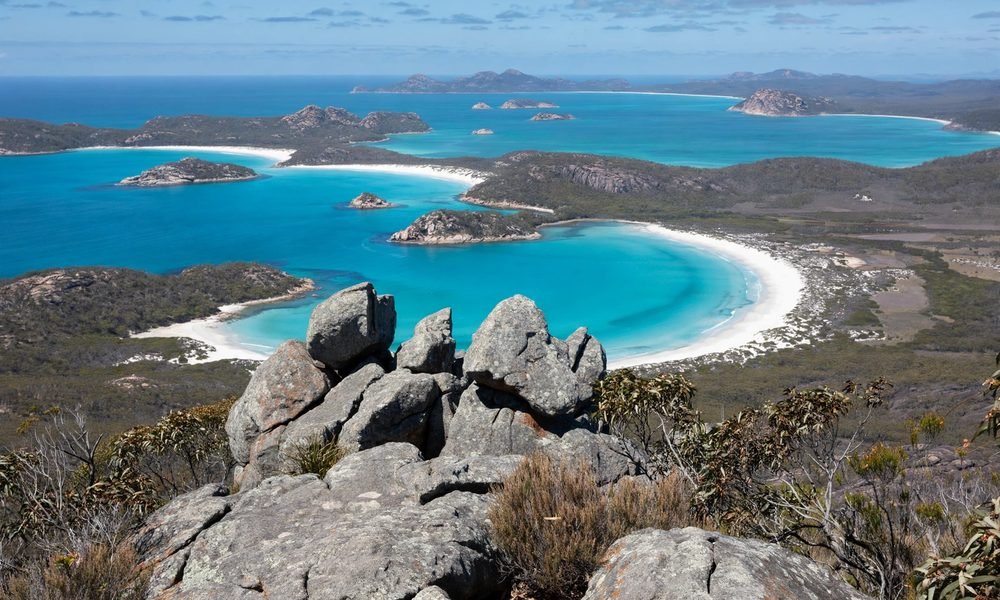
You can’t miss Frenchman’s Peak, a 262-metre granite dome that rises straight out of the flat coastal plain. The climb is short but genuinely steep, part walk and part scramble over bare rock, and it’s graded accordingly, so wear proper shoes and take water. Allow around two hours return at a comfortable pace. The payoff is a 360-degree view over the park, the coastline, and the islands of the Recherche Archipelago scattered offshore. There’s a cave-like overhang near the top that’s worth poking your head into. Do this one in the morning before the rock heats up.
The Le Grand Coastal Trail
If you’d rather walk than drive between the sights, the park’s coastal trail runs about 20 kilometres from Cape Le Grand Beach to Rossiter Bay, linking the beaches, bays, and headlands. You can walk all of it or just tackle a section. It’s a great way to see the coastline at walking pace, and you’ll spot shorebirds, wildflowers, and maybe dolphins from the headlands.
The Great Ocean Drive: Esperance’s Scenic Coastal Loop
Not to be confused with Victoria’s Great Ocean Road, Esperance’s Great Ocean Drive is a 40-kilometre sealed loop that starts and ends in town and strings together the best of the local coastline. Give it half a day at least, longer if you stop at every beach, which you should. Pick up the drive map from the visitor centre, it marks all 23 stops. The loop also passes a coastal wind farm, which makes for an oddly photogenic contrast with the beaches.
Twilight Beach
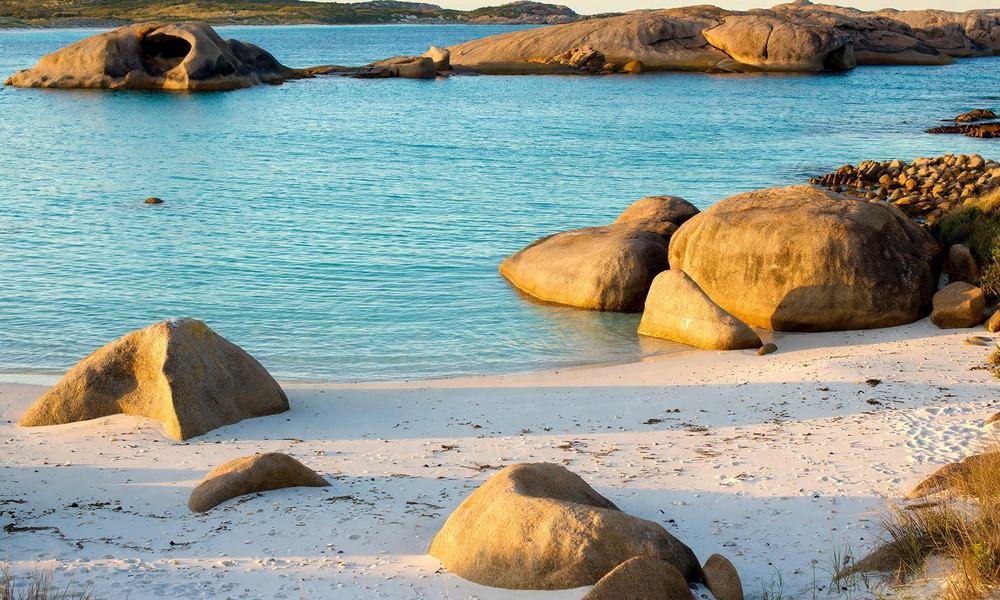
Twilight Beach is the pick of the drive’s beaches, a wide sweep of sand wrapped around granite boulders, with calm, clear water in the middle of the bay. It’s a favourite swimming spot and it’s patrolled by surf lifesavers on summer weekends, which makes it the safest choice for families. You’ll see people jumping off the big rock in the centre of the bay. Come for a swim, stay for the sunset.
Blue Haven Beach
Tucked below the cliffs near the Pink Lake turnoff, Blue Haven is a small, sheltered beach reached by a winding staircase. It’s protected from the swell, so it’s a good swimming pick when the ocean beaches are rough. It gets busy on hot days because locals know about it too, so arrive early.
Observatory Point
This headland has two lookouts. One drops down a long wooden staircase to the point itself, the other sits higher with information about the area’s early explorers. On a clear day the views along the coast are superb, and between June and October you might spot migrating whales from here. Bring a windproof jacket, it’s exposed.
Eleven Mile Lagoon
Don’t let the name fool you, this is a beach, and a beauty. A shallow lagoon sits behind the sand, making it calm and family-friendly, and the colours on a sunny day are ridiculous. Many locals rate it their favourite beach in Esperance, above even the famous ones. It’s free, it’s easy to reach off the drive, and it rarely feels crowded.
Wylie Bay
About 15 minutes from town, Wylie Bay is known for its long sandbar, which you can walk out along at low tide. Check the tide times before you go. There’s a 4WD track onto the beach for those with the right vehicle, otherwise park on the road and walk down. It’s a top spot for aerial-style photos if you have a drone.
The Pink Lake (Managing Expectations)
Here’s something worth knowing before you go: Esperance’s Pink Lake, on the edge of town along the Great Ocean Drive, hasn’t been pink for years. Changes in the lake’s salt balance and water levels dulled the colour, and these days it’s usually a pale, milky blue-grey. It’s still a large, peaceful salt lake in a pretty setting with birdlife, and the lookout is worth a stop on the drive, just don’t arrive expecting a pink Instagram shot. For actual pink water, read on.
Wharton Beach
Further east along the coast, Wharton Beach is a long, quiet stretch backed by dunes, and one of the few beaches where driving on the hard sand is permitted. It’s well off the main tourist trail, so you’ll often share it with just a handful of people. Pack everything you need, there are no facilities.
Lake Hillier and the Recherche Archipelago
Offshore from Esperance lies the Recherche Archipelago, a scatter of more than 100 islands known locally as the Bay of Isles. Most are untouched, uninhabited, and off limits, but you can experience them two ways. Island cruises run from Esperance to the larger islands, with wildlife spotting for seals and dolphins along the way. Or you can take to the air.
The Lake Hillier Scenic Flight
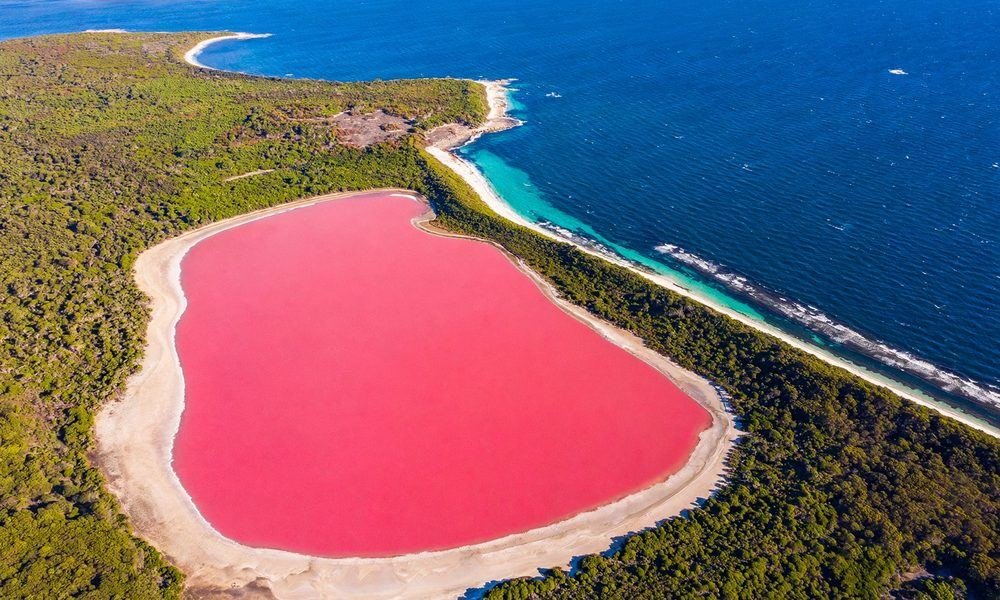
Lake Hillier, on Middle Island, is the bubblegum-pink lake you’ve seen in photos, and the only way to see it is from above. Scenic flights run from Esperance airport and take about an hour, looping over the archipelago and the lake. It’s not cheap, expect a few hundred dollars per person, but it’s a genuine bucket-list experience and one of the most unique things you can do in Western Australia. Book ahead in peak season, flights fill up.
Woody Island
Woody Island sits about 15 kilometres offshore and is the most visitor-friendly of the archipelago. Day cruises run from Esperance, and the island has snorkelling spots, swimming bays, and walking trails through coastal bush. You can even stay overnight, with safari-style glamping tents that let you sleep to the sound of the waves. It’s a completely different pace from the mainland beaches.
Lake Warden: The Pink Lake You Can Actually See for Free
If the scenic flight is out of budget, Lake Warden is your answer. This salt lake sits just off the South Coast Highway on the way into town, and in recent years it has taken on a genuine pink hue at times. The colour comes and goes with the seasons and water levels, so there’s no guarantee, but when it’s on, it’s properly pink, and it costs nothing to see. It’s become the budget alternative to Lake Hillier, and honestly, it’s a lovely stop regardless of the colour.
Esperance Stonehenge: The Outback Oddity
About 15 minutes out of town, on the road toward Cape Le Grand, you’ll find a full-size replica of Stonehenge built from local pink Esperance granite. It’s exactly as strange as it sounds. The stones are aligned with the summer and winter solstices, just like the original, and wandering among them in an open paddock is a surreal experience. There’s a small entry fee. It’s the kind of attraction you’ll either love or find baffling, but you won’t forget it, and it makes a good stop on the way to or from the national park.
In Town: Foreshore, Museum and Markets
Esperance town itself is small, relaxed, and easy to explore on foot. Don’t rush through it, the foreshore is one of the nicest town waterfronts in regional WA.
Esperance Esplanade and Rotary Lookout
The Esplanade runs along the town’s waterfront, with grassed areas, barbecues, playgrounds, and calm bay views. The foreshore has been revamped in recent years and it’s a lovely spot for a morning walk or a fish-and-chips dinner at sunset. Look out for the Whale Tail sculpture by a local artist along the path. At the far end of the Esplanade, Rotary Lookout sits on the hill above town with sweeping views back over Esperance and along the coast. Walk up from the foreshore or drive, either way it’s worth it.
Esperance Museum and the Skylab Story
The Esperance Museum is a classic small-town museum with pioneer buildings, farming gear, and local history, but it has one claim to fame nobody else can match: pieces of Skylab, NASA’s first space station, which fell out of orbit and scattered debris around Esperance in 1979. The town famously fined NASA for littering. It’s a great story and the museum tells it well. Allow an hour.
Local Markets
Esperance has a growers and makers market scene with stalls selling local produce, baked goods, coffee, flowers, and crafts. Markets run on weekends at the Museum Village area, but days vary through the year, so check what’s on before you visit. It’s a good place to stock up on picnic supplies and chat to locals.
Day Trips From Esperance
Cape Arid National Park
East of Esperance, past Cape Le Grand, lies Cape Arid, a wilder, more remote national park that very few visitors reach. The scenery is raw, big beaches, granite headlands, and coastal heath, and you’ll likely have it almost to yourself. The catch is access: you need a 4WD and you need to be self-sufficient. For adventurous travellers with the right vehicle, it’s the perfect next step after Cape Le Grand.
Fitzgerald River National Park
About halfway between Esperance and Albany, Fitzgerald River is one of the most botanically rich national parks in Australia, and in spring the wildflower displays are extraordinary. The terrain is rugged and the roads are mostly unsealed, so a 4WD or at least a high-clearance vehicle is the smart choice. Even as a detour on the drive between Albany and Esperance, it’s worth the stop in wildflower season.
How Many Days Do You Need in Esperance?
Esperance works as a quick stop or a slow base, but more time is better. Here’s a realistic breakdown.
One Day
If you’re passing through on a road trip, spend it well: morning at Lucky Bay and Cape Le Grand, afternoon driving the Great Ocean Drive loop with swims at Twilight Beach and Blue Haven. You’ll see the highlights, but you’ll leave wanting more.
Two to Three Days
This is the sweet spot for most visitors. Day one for Cape Le Grand, day two for the Great Ocean Drive, town, and the Stonehenge, day three for a scenic flight over Lake Hillier or a day trip to Woody Island. You’ll actually relax into the place.
Four Days or More
Stay longer and Esperance opens up. Add Fitzgerald River or Cape Arid, revisit your favourite beaches, take the whale-watching cruise in season, and spend a slow morning at the markets. Campers and hikers could happily fill a week.
The Best Time to Visit Esperance
Esperance is a year-round destination, but the experience changes a lot with the seasons. The south coast weather is famously changeable, even in summer, so always pack a warm layer.
- Summer (December to February): hot, sunny, and made for swimming. This is peak season, beaches are at their best, but accommodation and campgrounds book out and prices are highest.
- Autumn (March to May): mild days, fewer crowds, still pleasant for swimming early in the season. A great time for hiking and the coastal drive.
- Winter (June to August): cool and sometimes wet, with dramatic coastlines and the year’s lowest prices. Whale-watching season runs through these months. Not a beach holiday, but a fine time for walkers and photographers.
- Spring (September to November): many travellers’ favourite. Mild weather, wildflowers everywhere (Fitzgerald River is exceptional), and fewer people than summer. The water is still cool for swimming, but everything else is ideal.
How to Get to Esperance
Esperance sits on the south coast of Western Australia, and getting there is part of the adventure. Most visitors arrive by road or air.
Driving From Perth
The direct inland route from Perth is about 720 kilometres, roughly seven and a half hours of driving on sealed roads. Most people break it up: the inland route passes Wave Rock at Hyden, about halfway, which makes a natural overnight stop. The alternative is the longer southern coastal loop through Margaret River, Denmark, and Albany, around 1,300 to 1,400 kilometres, which needs at least a week but is one of the great WA road trips. Whichever way you come, fill up in the major towns, fuel is dearer in small settlements and some legs are long.
Flying to Esperance
Rex Airlines flies direct from Perth to Esperance in under two hours, which is a huge time saver. Flights are limited and they book out in peak season, so book early. The airport is a short drive from town.
Getting Around: Do You Need a Car?
Yes. Esperance’s best sights are spread out, Cape Le Grand is 50-odd kilometres east, the Great Ocean Drive is a 40-kilometre loop, and the Stonehenge and Lake Warden are out of town. If you fly in, hire a car at the airport. You don’t need a 4WD for the main attractions, everything on the standard itinerary is sealed road. A 4WD only matters if you’re heading to Cape Arid or deep into Fitzgerald River, or want to try the 4WD beach tracks at Wylie Bay.
Where to Stay in Esperance
In Town
The town centre is the most convenient base, walkable to the foreshore, cafes, and shops, and central for day trips in every direction. Options range from holiday parks to motels and apartments. The Comfort Inn Bay of Isles sits right near the jetty and the beach, close to everything. For families, the Jetty Resort gets good reports. Esperance Bay Holiday Park and Acclaim Pine Grove Holiday Park are solid budget-friendly picks with cabins and powered sites.
Near Cape Le Grand
If the national park is your priority, camp inside it. Lucky Bay Campground and Le Grand Beach Campground put you right among the beaches and the kangaroos, but they book out months ahead in peak season, so reserve early through the WA parks booking site. The RAC Esperance Holiday Park, between town and the Great Ocean Drive, is a good middle ground with powered sites and cabins.
Where to Eat and Drink
Esperance punches above its weight for a small town. Lucky Bay Brewing, a short drive out of town, brews craft beers with local ingredients and serves woodfired pizzas, with live music on weekends. It’s named after the famous bay and it’s become an institution. For a nicer night out, Taylor St Quarters sits on the foreshore overlooking the bay in a refurbished old house, great for sunset drinks and dinner, with live music over summer. Coffee lovers should try Downtown Espresso, which locals rate as the best coffee in town. And for something different, Esperance Distillery Co, run by a father-and-son team, makes small-batch gins with native botanicals, including a gin inspired by Blue Haven and a pink gin nodding to Middle Island. Tastings and a gin-making school run on site.
Sample Itineraries
Three Days in Esperance
Day 1: Drive the Great Ocean Drive loop. Swim at Twilight Beach and Blue Haven, stop at the Pink Lake lookout and Observatory Point, watch the sunset from Rotary Lookout. Dinner at Taylor St Quarters.
Day 2: Cape Le Grand National Park. Sunrise at Lucky Bay with the kangaroos, swim at Hellfire Bay, lunch at the BBQ, walk to Little Hellfire Bay, climb Frenchman’s Peak in the late afternoon. Stop at the Stonehenge on the way back.
Day 3: Scenic flight over Lake Hillier and the Recherche Archipelago in the morning, then a slow afternoon: the museum, the foreshore walk, and the markets if they’re on.
Seven Days: Perth to Esperance Road Trip
Days 1-2: Perth to Esperance via Wave Rock, overnight at Hyden.
Days 3-4: Esperance and Cape Le Grand, following the three-day itinerary above at a relaxed pace.
Day 5: Esperance to Albany via Fitzgerald River National Park.
Day 6: Albany and Denmark, the Gap, Natural Bridge, Greens Pool.
Day 7: Denmark back to Perth via the Margaret River region. If you have more time, stretch this to ten days and give every stop its due.
Bookable Tours and Experiences
You don’t need a tour for most of Esperance, a car covers it, but a few experiences are only possible with an operator. Scenic flights over Lake Hillier and the archipelago run from Esperance airport. Island cruises visit Woody Island and other islands in the Recherche Archipelago, with seal and dolphin spotting. Full-day 4WD tours cover Cape Le Grand and Lucky Bay for travellers without a car. Wildlife cruises target dolphins and seals, and between June and October, whale-watching tours run along the coast for the southern migration. Book the flights and the Woody Island trips ahead in peak season.
Practical Tips for Visiting Esperance
A few things that will make your trip smoother. Book accommodation and campgrounds early for summer and school holidays, Esperance is small and it fills up. Stock up on fuel and food before heading into the national parks, there are no shops out there. Buy your national park passes online in advance. Don’t drive at dawn or dusk if you can avoid it, kangaroos on the roads are the biggest real driving hazard in the region, and never swerve hard for wildlife. Wild camping is not permitted around Esperance and it’s enforced, so book a proper site. Phone coverage drops out between towns, so download maps offline. And whatever the season, pack a warm layer and a windproof jacket, the south coast can turn cold and blowy even in summer.
FAQs About Visiting Esperance
Is Esperance worth the long drive from Perth?
For most travellers, yes. The beaches are genuinely world-class, the kangaroos-on-the-beach experience is found almost nowhere else, and the whole region feels wild and uncrowded. If you only have a day, it’s a lot of driving, but with two or three days it’s one of the best short trips in WA.
Can you swim at Esperance beaches?
Yes, and the water is beautiful, but it’s the Southern Ocean, so it’s cooler than the beaches up north. Twilight Beach is the safest bet, patrolled on summer weekends. Sheltered spots like Blue Haven Beach and Eleven Mile Lagoon are calmer. Surf beaches like West Beach have reef breaks and rips, so they’re for confident swimmers and surfers.
Is the Pink Lake actually pink?
The Pink Lake near town is no longer pink, and hasn’t been for years. If pink water is the goal, take the scenic flight to Lake Hillier or visit Lake Warden on the highway into town, which does turn pink at times.
Do I need a 4WD in Esperance?
No. All the main attractions are on sealed roads and fine in a 2WD. You only need a 4WD for Cape Arid, parts of Fitzgerald River, and optional beach tracks.
Is Esperance good for families?
Very. The beaches are uncrowded, Twilight Beach is patrolled in summer, the drives are short, and kids love the kangaroos, the Stonehenge, and the Skylab story at the museum. Accommodation suits all budgets.
Esperance or Margaret River?
They’re different trips. Esperance is wilder, more remote, and all about beaches and national parks. Margaret River is about wine, food, forests, and surf. If you have the time, the coastal loop that links them is one of the best road trips in Australia.
Final Thoughts on Visiting Esperance
Esperance is the kind of place that recalibrates your idea of what an Australian beach looks like. The sand really is that white, the water really is that blue, and the kangaroos really do wander the shoreline. It’s a long way from anywhere, the weather can be moody, and you’ll need a car and a bit of planning, but that’s exactly what keeps it special. Give it at least two or three days, do the national park properly, drive the loop slowly, and don’t skip the weird little detours like the Stonehenge. For a town this remote, it delivers far more than you’d expect.