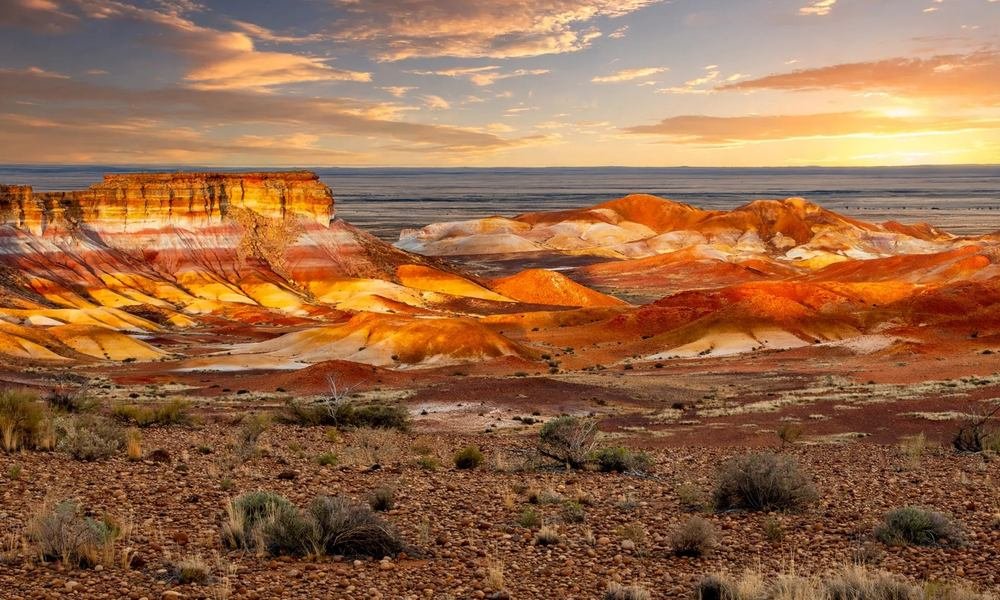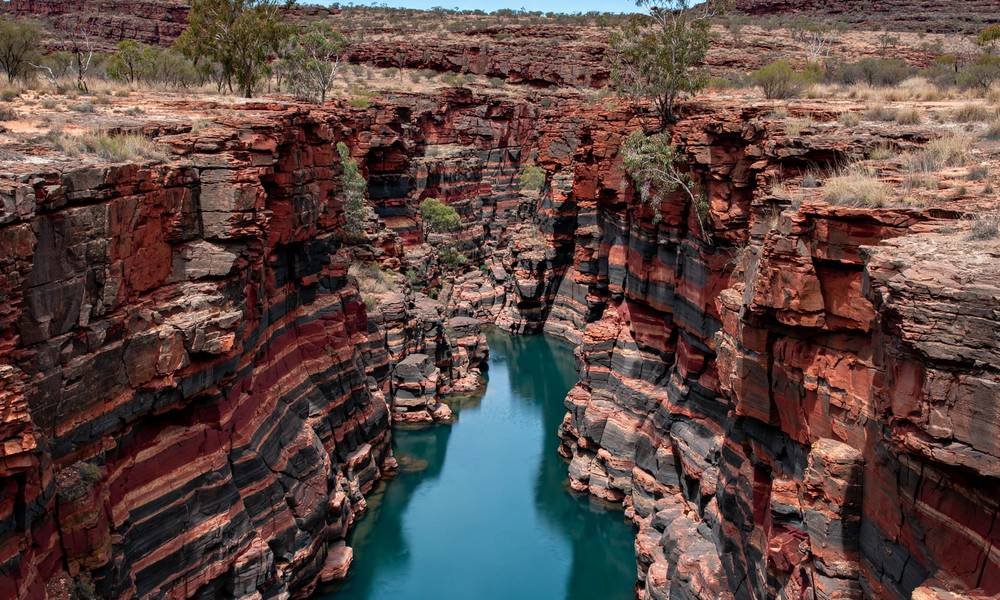

Karijini National Park is the place people talk about for years after they visit. Deep in the Pilbara region of Western Australia, ancient red gorges drop into cold, clear pools that look too good to be real. It is remote, it is rugged, and it takes real planning to reach. This guide covers every gorge, walk and lookout worth your time, plus where to stay, how many days you need, and how to stay safe. If you want the full picture before you go, you will find it here, brought to you by Australia City Guide.
Why Karijini Is Worth the Long Trip
Karijini is the second largest national park in Western Australia, covering around 627,000 hectares in the Hamersley Range, north of the Tropic of Capricorn. The rock here is more than 2.5 billion years old, and water has carved it into narrow gorges with walls that change colour through the day. Some pools sit at the bottom of steep scrambles. Others are an easy walk from the car park. That mix is what makes the park special. You can have a hard adventure in the morning and a gentle swim in the afternoon.
The park is also a living cultural landscape. It is Country for the Banjima, Kurrama and Innawonga peoples, whose connection with this land stretches back tens of thousands of years. The park was set aside as a national park in 1969 under the name Hamersley Range National Park, then renamed Karijini in 1991. The name comes from a local Aboriginal word for the area. Fern Pool, known as Jubura, and Circular Pool are sacred sites, so keep voices low, stay on marked paths, and leave nothing behind.
Be honest with yourself about the distance. Karijini sits about 1,400 kilometres north of Perth, which is a 14 to 16 hour drive, and the nearest town is Tom Price, around 80 kilometres away. There is no fuel, no shop and no phone signal you can rely on inside the park. But for travellers who make the effort, the reward is a park that still feels wild. The gorges are quiet, the night sky is packed with stars, and the swimming holes are cold enough to make you gasp even on a hot day.
The Gorges and Pools You Should Not Miss
Most visitors base their trip on the gorges. Each one has its own character, and it helps to know what you are walking into before you start down the steps. Here is each major gorge in turn, starting with the easiest area and moving to the harder ones.
Dales Gorge: Fortescue Falls, Fern Pool and Circular Pool
Dales Gorge is the easiest part of the park to explore, and it should be your first stop. The walk down to Fortescue Falls takes around 30 minutes return, with steps most of the way. Fortescue Falls is the park’s best-known waterfall, and the pool below it is a great place for a first swim. Just beyond the falls, Fern Pool (Jubura) sits in a leafy pocket with a gentle entry into the water. It is one of the best swimming spots in the park, and it suits families well.
If you have the energy, keep going to Circular Pool, further up the gorge. It is quieter than Fern Pool and a favourite with photographers. The full Dales Gorge loop runs about 4.2 kilometres and links the falls, Fern Pool and the gorge rim. Allow half a day for the loop if you plan to swim along the way. The Dales Campground sits right beside this gorge, which is why so many visitors base themselves here.
Weano Gorge and Handrail Pool
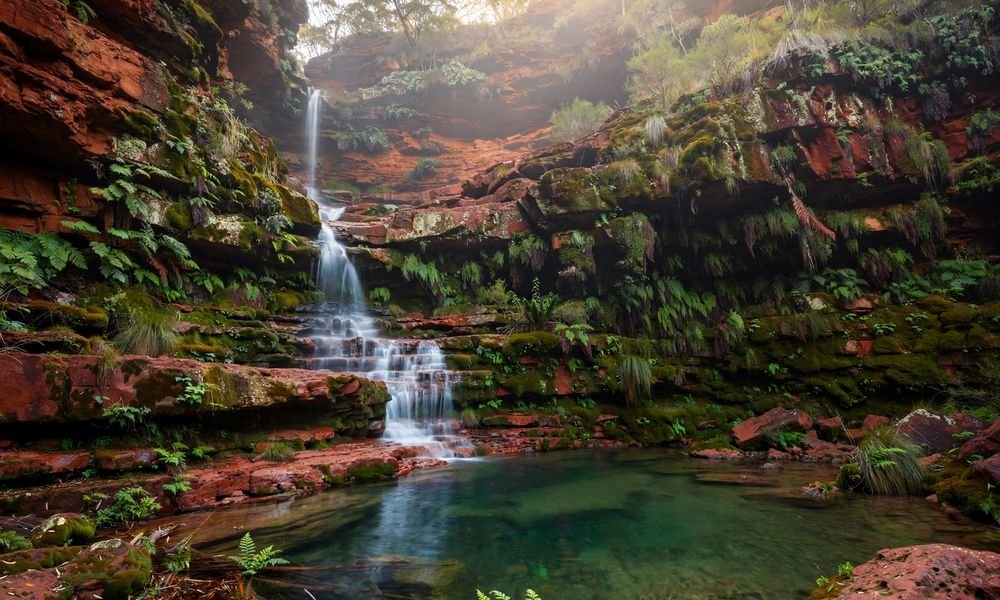
Weano Gorge is where Karijini starts to feel like an adventure. The upper gorge walk is a class 4 trail of about 1 kilometre return, and it takes around 45 minutes. The real prize is Handrail Pool, further down the gorge. The Handrail Pool trail is class 5 and runs about 1.5 kilometres return. It involves wading, scrambling over boulders and squeezing through a narrow gap before you reach the top of a small waterfall.
A single handrail and a set of foot holes help you climb down about 3 metres to the pool itself. Take your time on this section, and only go down if you feel steady on your feet. The pool is small and sheltered, with red walls rising on both sides. Check the signs before you swim, since the water here can sit still in dry times. If the water looks stagnant, give the swim a miss and enjoy the view instead.
Hancock Gorge and Kermit’s Pool
Hancock Gorge is the hardest walk most visitors attempt, and it is also the one people remember most. The trail is class 5 and leads to Kermit’s Pool, a green pool tucked into a narrow section of gorge. To get there you will wade through cold water, climb over rocks, and tackle the famous Spider Walk, where you brace yourself between two rock walls and shuffle along above the water.
This is not a walk to rush. Allow around 2 hours return, wear shoes with strong grip, and carry a waterproof bag for your phone and keys. Water levels change with the season, so the wading sections can be knee deep or deeper after rain. If you are not sure-footed, or if you are travelling with young kids, skip this one and enjoy the lookouts instead. There is no shame in that. Hancock Gorge will still be there on your next trip.
Joffre Gorge
Joffre Gorge starts with an easy win. The lookout near the car park is only a short walk and gives you a clear view over the gorge and the falls. The gorge itself is a natural amphitheatre, with curved walls that catch the light in the late afternoon. From the lookout, a steeper trail drops into the gorge to the first pool below the falls.
Allow about 2 hours return for the gorge floor walk. The descent uses a series of steep steps and ladders, so it suits walkers with reasonable fitness and good shoes. The falls do not always flow, since they depend on recent rain, but the rock shapes and the pool are worth the walk even in a dry spell. The Karijini Eco Retreat sits near Joffre Gorge, which makes this a handy gorge to visit at the start or end of your day.
Knox Gorge
Knox Gorge is all about the view. The lookout is only about 150 metres from the car park on an easy grade 2 path, and it looks straight down sheer red walls. Come here at sunset if you can. The low light warms the rock and the lookout platform gives you a wide sweep over the gorge.
The gorge trail itself is class 5 and runs about 2 kilometres return. It drops steeply into a dramatic chasm with loose rocks underfoot, so you need hands free and shoes with grip. Allow 2 to 3 hours return, and take plenty of water. The trail ends at a marked stopping point where the gorge narrows. Turn back there, even if you feel tempted to push on. The track is closed beyond that point for a reason.
Kalamina Gorge: The Easy One
Kalamina Gorge is the quiet achiever of the park. It sits about 17 kilometres east of Knox Gorge, and the walk down to the pool takes only about 5 minutes on a steep but short rocky track. At the bottom you will find a small permanent pool with a waterfall and ferns hanging over the water. It is one of the best spots in the park for a relaxed swim without a big walk.
If you want more, a longer walk follows the gorge downstream past rock pools toward Rock Arch Pool. That walk runs about 3 kilometres return and takes around 3 hours. It is rougher than the short walk, with stepping stones and shallow crossings, so wear shoes you do not mind getting wet. Kalamina is a good pick for families and for anyone who wants a gorge experience without the scrambling.
Hamersley Gorge and the Spa Pool
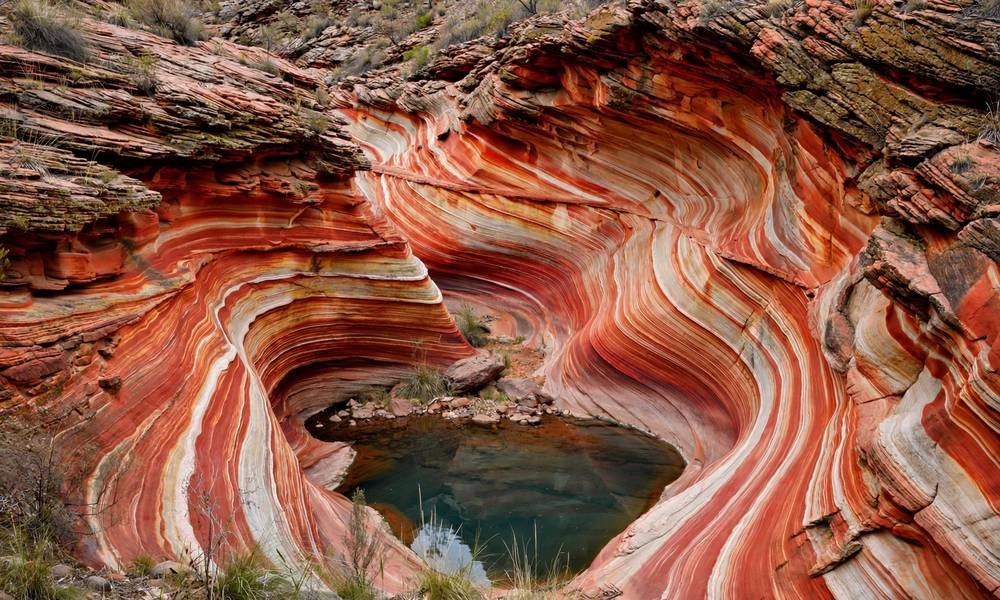
Hamersley Gorge sits in the north-west corner of the park, well away from the other gorges. It is famous for its swirling rock walls and the Spa Pool, a curved natural pool that looks like it was carved on purpose. From the car park, the lookout is only about 65 metres away. The Waterfall Walk is a class 4 trail of about 400 metres return and takes around 30 minutes to the pool below the waterfall. The Gorge Walk is also class 4, about 1 kilometre return, and takes around an hour.
Reaching the Spa Pool itself is harder. It involves clambering over rocks and a swim, and it is graded class 5. Only attempt it if you are a strong swimmer with good shoes and plenty of time. The drive to Hamersley Gorge is the other thing to plan for. The road is about 40 kilometres of dirt, and most visitors reach it by driving out of the park through Tom Price and back in again. Treat Hamersley as a half-day trip on its own, not a quick add-on after other gorges.
Lookouts Worth Stopping For
You do not need to climb into a gorge to enjoy Karijini. Some of the best views in the park come from lookouts a short walk from the car park, and they suit anyone who cannot manage steep scrambles.
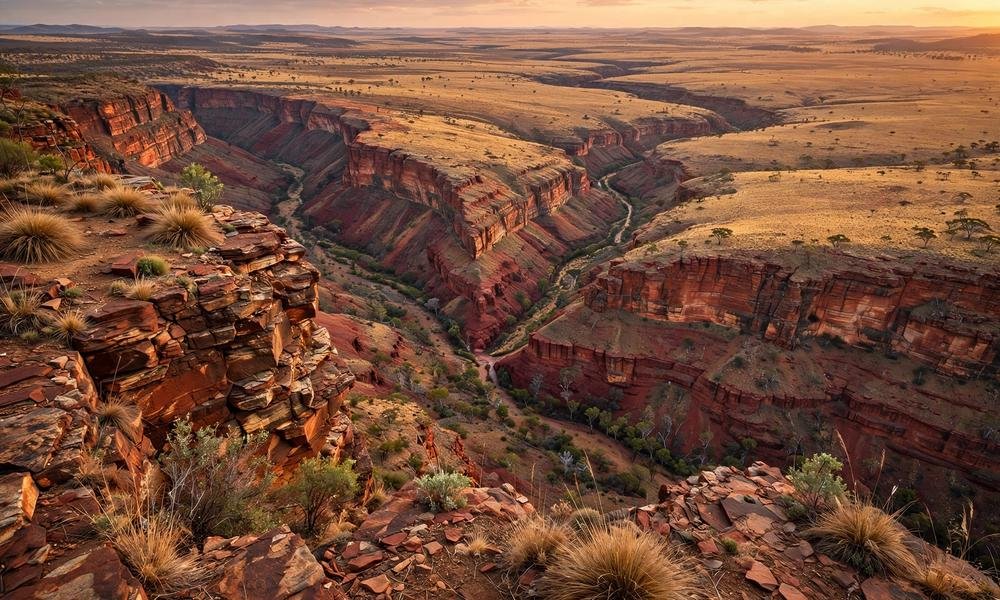
Oxer Lookout is the pick of them. It sits at the junction of four gorges, Weano, Red, Hancock and Joffre, and the view from the platform takes in all of them at once. The walk from the Weano day use area is about 800 metres return and graded class 3. Sunset is the best time to visit, when the light drops across the gorge walls. The nearby Junction Pool lookout is another short walk and gives a different angle over the same country.
Knox Gorge Lookout and Joffre Lookout are both short, easy walks with big payoffs, and the Dales Gorge rim walk links a string of lookouts above Dales Gorge, including Three Ways Lookout and Circular Pool Lookout. If you are short on time or travelling with older family members, a lookout tour of the park still gives you a full day of views without a single scramble.
Climbing Mount Bruce (Punurrunha)
Mount Bruce, known as Punurrunha, is the second highest peak in Western Australia at 1,234 metres above sea level. It sits just outside the main gorge areas and gives you a completely different view of the park, with the Hamersley Range rolling away in every direction.
There are three walks to choose from. The Marandoo View walk is 500 metres return and takes about 30 minutes, and it suits most visitors. The Honey Hakea track runs 4.6 kilometres return and takes around 3 hours. The summit walk is 9 kilometres return, graded class 5, and takes 5 to 6 hours. Only fit and experienced walkers should attempt the summit, and you should start in the morning before the heat builds. Carry far more water than you think you need, since there is no shade and no water on the track.
Walks by Difficulty: Pick Your Level
Karijini uses the Australian Walking Track Grading System, which runs from class 1 (easiest) to class 5 (hardest). Knowing your level before you start saves you from turning back halfway down a gorge. Here is how the main walks stack up.
Easy Walks (Class 2)
These walks suit most visitors, including families with kids and older travellers. Try the Kalamina Gorge pool walk (5 minutes down to the pool), the Knox Gorge Lookout (about 150 metres), the Joffre Lookout (a short walk from the car park), and the Hamersley Gorge lookout (about 65 metres). The Fortescue Falls walk in Dales Gorge is also gentle, at around 30 minutes return with steps.
Moderate Walks (Class 3 and 4)
These walks need reasonable fitness and shoes with grip. The Dales Gorge loop (about 4.2 kilometres) is class 3 to 4 and takes half a day with swims. The Upper Weano Gorge trail is class 4, about 1 kilometre return. The Hamersley Gorge Waterfall Walk and Gorge Walk are both class 4. The Oxer Lookout walk is class 3. Expect steps, uneven ground and some rock hopping on all of these.
Hard Walks (Class 5)
These walks are for fit, sure-footed walkers only. They involve steep descents, loose rock, wading, swimming and climbing with your hands. The list includes Hancock Gorge to Kermit’s Pool, the Handrail Pool trail in Weano Gorge, the Knox Gorge trail, the Joffre Gorge floor walk, the Mount Bruce summit walk, and the Spa Pool access at Hamersley Gorge. Do not attempt a class 5 walk alone, and check conditions at the visitor centre first. If a track is closed, it stays closed.
Where to Stay in and Around Karijini
There are only two places to stay inside the park, so book well ahead, especially for June to September and the July school holidays. Both fill fast, and there are no other in-park options.
Dales Campground is run by the WA parks service and sits beside Dales Gorge. It has unpowered sites, picnic tables, gas barbecues and pit toilets. There are no showers here and no powered sites, but you wake up inside the park and you can walk to Fortescue Falls before the day heats up. Bookings are essential, and an overflow camping area runs in peak times for self-sufficient campers.
Karijini Eco Retreat sits near Joffre Gorge in the western part of the park. It offers unpowered campsites, eco tents and cabins, plus a restaurant and burger bar serving breakfast, lunch and dinner. It is the only place in the park where you can buy a cooked meal, which matters when the nearest supermarket is an hour away. The retreat is Aboriginal owned and operated, and staying here puts you close to Weano, Hancock, Joffre and Knox gorges.
Tom Price is the nearest town, about an hour from the park, and it has a tourist park with powered sites and cabins, plus a supermarket, fuel and medical services. It is a good base if you want a hot shower and a proper shop at the end of the day. Newman, on the inland route from Perth, works as an overnight stop on the way in or out. If you are heading to Hamersley Gorge, there is also a free camp just outside the park nearby, with basic facilities only, so you need to be fully self-sufficient.
How Many Days Do You Need?
Two days will show you the highlights, but three days is a better plan, and four days lets you slow down and enjoy the park properly. Here is how to split your time.
Two Days: The Highlights
Day one: Dales Gorge in the morning (Fortescue Falls and Fern Pool), then the visitor centre and Knox Gorge Lookout at sunset. Day two: Weano Gorge and Handrail Pool in the morning, then Joffre Gorge in the afternoon. You will miss Hamersley Gorge and Mount Bruce, but you will see the best of the park.
Three Days: The Full Experience
Follow the two-day plan, then add a third day for Hancock Gorge in the morning and Kalamina Gorge in the afternoon. If you still have energy, finish with Oxer Lookout at sunset. Three days also gives you a buffer if a gorge is closed or the weather turns on one of your days.
Four Days: Slow and Complete
Day one: arrive, visit the visitor centre, and watch sunset from Knox Gorge Lookout. Day two: the western gorges (Weano, Hancock and Joffre). Day three: Knox Gorge trail and Kalamina Gorge. Day four: Dales Gorge loop, then Hamersley Gorge as a half-day trip. Four days is the plan to pick if you want to climb Mount Bruce as well, since the summit walk deserves a morning of its own.
Getting There and Getting Around
Most visitors reach Karijini by road from Perth, and the drive takes 14 to 16 hours. Break it over two days, with an overnight stop in Geraldton, then Newman or Tom Price. The other common option is to fly to Karratha or Port Hedland and drive 4 to 5 hours to the park. Paraburdoo, near Tom Price, is another airport option, and some tour operators run transfers from Paraburdoo to Tom Price. On the drive in, Millstream-Chichester National Park makes a good stop between Karratha and Karijini.
Once you are in the park, expect long drives between gorges. The two main camping areas sit about 45 kilometres apart, and some gorge roads add much more. Karijini Drive, the visitor centre and the Dales Gorge area are sealed. The other gorge roads are unsealed gravel, and they corrugate badly and wash out after rain. In dry conditions, many visitors reach the main western gorges in a 2WD by taking the gravel slowly. Kalamina Gorge and the free camps are properly 4WD only. Whatever you drive, check current road and gorge conditions at the Karijini or Tom Price visitor centre before you set out, since gorges also close for track upgrades from time to time.
There is no fuel inside the park, so fill up in Tom Price before you enter. Distances inside the park are easy to underestimate, and a return trip to Tom Price for fuel will eat half your day. The same goes for food and water. Stock up in Tom Price, since the only cooked meals in the park are at the Karijini Eco Retreat.
The Best Time to Visit Karijini
The best time to visit Karijini is April to October. Days sit around 20 to 30 degrees, nights drop to single figures, and the skies stay clear. That clear sky is part of the appeal, since the park has almost no light pollution and the stars at night are superb. Early in the dry season, the waterfalls often run stronger after the wet, which makes April and May a great window for photographers.
November to March is a different story. Daytime temperatures regularly pass 40 degrees, and summer storms can send flash floods through a gorge within minutes. Most visitors avoid the park in summer, and some facilities close over that period. The July school holidays are the busiest weeks of the year, so book campsites well ahead if you plan to travel then. If you want quieter tracks, aim for April, May, September or October.
One surprise catches many visitors at any time of year. The gorge pools stay cold, roughly 15 to 20 degrees, even on a hot day. The first plunge bites, and long swims can chill you fast. A rash vest helps for longer swims, and you should get out and warm up in the sun between dips.
Fees and Practical Tips
A day-use entry fee applies per vehicle, and park passes are available if you plan to visit several WA national parks. Pass options include a holiday pass covering 5 days, 14 days or 4 weeks, an annual all-parks pass, and a local pass for WA residents. Fees change from time to time, so check the current fee and buy your pass online through the WA parks service before you travel.
Start your trip at the Karijini Visitor Centre, in the centre of the park off Banjima Drive. You can pick up walking maps, check which gorges are open, and learn about the park’s environment and culture from the staff. Opening hours change with the season, so check before you visit rather than assuming it will be open.
For food, the Eco Retreat restaurant and burger bar serve breakfast, lunch and dinner, and the retreat has a small kiosk. Everywhere else, you are on your own supplies. Tom Price has the nearest supermarket, and there is a service station and tourist village at the corner of Munjina Road and the Great Northern Highway, on the north-east edge of the park. If you want to go deeper into the gorges with a guide, local operators run canyoning tours into Hancock, Weano and Red gorges, and night astronomy hikes under some of the darkest skies in the country. The Karijini Experience cultural festival runs in the park each year as well, so check the dates if your trip lines up.
Staying Safe in the Gorges
Karijini is a place where safety planning matters more than usual, because help is a long way off. Flash flooding is the biggest risk. Rain falling hundreds of kilometres away can send a surge of water through a gorge, so never enter a gorge when rain is forecast anywhere in the region, and get out fast if the weather changes while you are down there.
Carry at least 4 litres of water per person per day, and more in warm weather. There are no refill stations in most gorge areas, and the walks back up are steep. Wear shoes with strong grip or reef shoes, since wet rock is slippery and exits can be hard to spot. Take a hat, sunscreen and long sleeves for the heat, and a warm layer for cold mornings and nights.
Mobile reception is patchy across the park, and some areas have none at all. Download offline maps before you arrive, tell someone your walking plans, and carry a personal locator beacon or satellite communicator on the harder walks. The nearest hospital is in Tom Price, and serious cases are flown to Perth, so a first aid kit is not optional.
A few more rules keep you and the park safe. Dingoes are common around Dales Campground, so never feed them, store food in your vehicle, and watch kids closely. There is a year-round fire ban, so cook on gas only. Pack out everything you bring in, since there is no rubbish collection in the park. And stay away from Wittenoom and Yampire gorges, which are closed because of asbestos. There are no showers at the campgrounds, though the visitor centre has showers for a small fee.
What to Pack for a Gorge Day
Packing right makes the difference between a great gorge day and a miserable one. Use this checklist before you leave camp each morning.
- At least 4 litres of water per person, plus snacks
- Shoes with strong grip, or reef shoes for wet gorge walks
- Swimwear, a towel and a change of dry clothes
- A waterproof bag for your phone, keys and camera
- A hat, sunscreen and a warm layer for the evening
- A first aid kit and a personal locator beacon on hard walks
- A rash vest if you plan long swims in the cold pools
- A portable charger, since there is nowhere to charge in the gorges
- A camera, with a dry bag to protect it on water crossings
Photography and Stargazing Tips
Karijini rewards photographers who plan around the light. Midday sun lights up Knox Gorge in a way that morning and evening light does not, so time your Knox visit for the middle of the day. Sunset is the moment for Oxer Lookout and Knox Gorge Lookout, when the low sun warms the red walls. Early morning is best at Dales Gorge, when the light is soft and the pools are quiet.
For gorge photos, a waterproof bag or dry pouch matters more than a fancy lens, since you will wade and scramble to reach the best angles. Wipe your lens often, since spray and dust get everywhere. At night, step away from camp lights and look up. With almost no light pollution, the Milky Way shows clearly on moonless nights, and a simple tripod is enough for long-exposure shots of the stars over the gorge rim.
Common Mistakes to Avoid
First timers tend to make the same few mistakes at Karijini. Avoid these and your trip will run much more smoothly.
Do not treat Hamersley Gorge as a quick stop. It needs a half-day trip of its own, with a long dirt drive each way. Do not underestimate the drives between gorges either. The park is huge, and backtracking eats hours. Group your days by area instead: Dales in the east, the western gorges together, and Hamersley on its own day.
Do not enter a gorge when rain is forecast, even if the sky above you looks clear. Do not rely on phone signal for maps or help. Do not try a class 5 walk in thongs or with a single small water bottle. And do not leave food out at camp. Dingoes will find it fast, and a fed dingo becomes a problem for every camper after you.
Visiting Karijini With Kids
Karijini works well with kids if you pick the right gorges. Dales Gorge is the best family area, with Fortescue Falls and Fern Pool both easy to reach and great for swimming. Kalamina Gorge is another good pick, with a short walk to a calm pool. The lookouts at Oxer, Knox and Joffre give kids big views without any scrambling.
Skip Hancock Gorge, Handrail Pool and the class 5 trails with young kids. The wading, climbing and narrow passages are not suited to small legs, and the cold water tires kids fast. Keep walks short, carry extra water and snacks, and plan a swim in the middle of the day when the sun is warm. Watch kids closely around unfenced lookout edges and gorge steps, and store all food in the vehicle at camp because of dingoes.
FAQs About Karijini National Park
Are there crocodiles in Karijini?
No. The gorge pools are inland freshwater pools, and crocodiles do not live here. The real hazards are cold water, slippery rock and flash flooding, not wildlife in the water.
What was Karijini called before?
The park was first set aside as Hamersley Range National Park in 1969, then renamed Karijini in 1991. The new name comes from a local Aboriginal word for the area and recognises the Banjima, Kurrama and Innawonga peoples as the Traditional Owners.
When is the best time to visit Karijini?
April to October is the best window. Days are warm, nights are cool, and the risk of flash flooding is much lower than in summer. Avoid November to March, when temperatures pass 40 degrees and storms can close the gorges.
Do I need a 4WD to visit Karijini?
Not for the main areas. The visitor centre and Dales Gorge are on sealed road, and in dry conditions many visitors reach the western gorges in a 2WD by driving the gravel slowly. Kalamina Gorge and the free camps are 4WD only, and gravel roads can wash out after rain, so check conditions before you go.
How many days do I need at Karijini?
Two days covers the highlights, three days is a comfortable trip, and four days lets you add Hamersley Gorge and Mount Bruce without rushing. If you can only spare a weekend, focus on Dales Gorge and the western gorges.
Do I need to book campsites in advance?
Yes. Bookings are essential for Dales Campground and the Karijini Eco Retreat, especially from June to September and during the July school holidays. Both fill fast, and there are no other in-park options to fall back on.
Can kids enjoy Karijini?
Yes, if you pick the right walks. Dales Gorge and Kalamina Gorge suit families well, and the lookouts give kids big views without scrambling. Skip the class 5 trails with young kids, carry extra water and snacks, and plan swims for the warm middle of the day.
Is there phone reception in Karijini?
Reception is patchy, and many gorge areas have no signal at all. Download offline maps before you arrive, tell someone your walking plans, and carry a personal locator beacon on the harder walks.
How cold is the water in the gorge pools?
The pools stay cold all year, roughly 15 to 20 degrees, even on a hot day. Short swims are fine for most people, but long swims can chill you. A rash vest helps, and you should warm up in the sun between dips.
Final Thoughts on Karijini National Park
Karijini asks more of you than most national parks. The drive is long, the roads are rough, the water is cold, and the hardest walks demand real effort. But that effort is exactly why the park stays special. The gorges are quiet, the pools are clean, and the views from Oxer Lookout at sunset are hard to beat anywhere in Australia.
If you plan well, the trip is straightforward. Travel between April and October, book your camp early, stock up in Tom Price, group your days by area, and respect the closure signs and the cultural sites. Start with Dales Gorge, work through the western gorges, and save Hamersley Gorge for its own day. Do that, and Karijini will give you one of the best outdoor trips in the country. For more ideas across the state, check the guides below and keep planning from there.