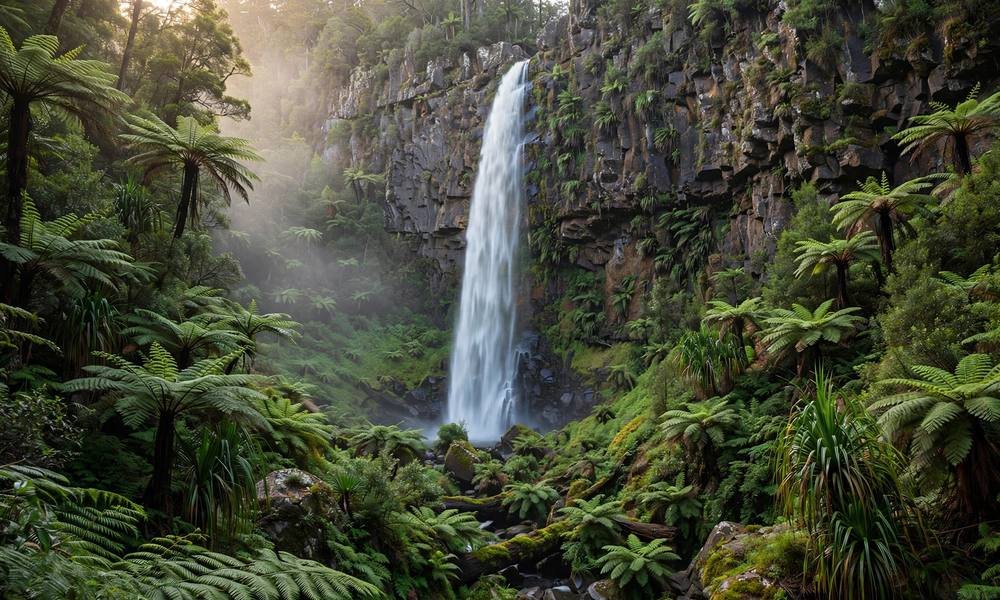

Lamington National Park is the kind of place that makes you slow down without trying. Ancient rainforest covers the plateau, waterfalls drop into fern lined gorges, and the bird calls start before you have even had breakfast. It sits in the Gold Coast hinterland, about 110 kilometres south of Brisbane, and it holds more than 160 kilometres of walking tracks through forest that dates back to the ancient supercontinent of Gondwana. This guide covers the walks, waterfalls, lookouts, stays and planning tips you need before you go, brought to you by Australia City Guide.
The park sits in Queensland, on the McPherson Range along the New South Wales border. It is split into two sections, Green Mountains in the west and Binna Burra in the east, and the two are not linked by road. That split shapes every trip here, so this guide starts by explaining it, then works through what to see, how long to stay, and how to plan around the weather and the winding mountain roads.
Why Lamington Is Worth the Trip
Lamington protects around 20,000 hectares of subtropical and temperate rainforest, and it is part of the Gondwana Rainforests of Australia World Heritage Area. That listing recognises forest types that have survived, in some form, since Australia was joined to a much older supercontinent. Walking here feels different from walking in younger bush. The trees are taller, the air is cooler and damper, and ferns and mosses cover almost every surface.
The park is also Yugambeh Country. The Yugambeh peoples are the Traditional Custodians of the Lamington Plateau, which they call Woonoongoora. Their connection with this country stretches back thousands of years, and interpretive signs around the park explain some of the traditional uses of plants and places. Respect that history as you walk. Stay on marked tracks, do not remove plants or rocks, and leave cultural sites alone.
Lamington was declared a national park in 1915, after a long campaign by Robert Collins and Romeo Lahey to protect the area from logging. That makes it one of the oldest national parks in the state. The O’Reilly family opened their guesthouse at Green Mountains in 1926, and Binna Burra Lodge followed in the 1930s. Both places still anchor a visit today, and both give you a base right at the trailheads.
One more thing shapes the park you see now. Bushfires in 2019 burned roughly a third of Lamington, mostly around Binna Burra, and destroyed the historic Binna Burra Lodge buildings. Rebuilding has been steady since then, including a rebuilt tea house, and regrowth is visible along many tracks. If you read older trip reports that describe closures or ruins, check current park alerts before you travel, because much has reopened since.
The Two Sections: Green Mountains and Binna Burra
Every Lamington trip starts with one choice: Green Mountains or Binna Burra. The two sections sit on parallel plateaus, only a few kilometres apart as the crow flies, but there is no road between them. Driving from one trailhead to the other takes around 1.5 hours, down one side of the range and up the other. On foot, the Border Track links them, but that is a full day walk of 21.4 kilometres one way.
The practical answer is simple. Pick one section per day, and pick one section for a weekend if you want a relaxed trip. Trying to cover both in a single day means most of your time goes to driving, not walking.
Green Mountains (O’Reilly’s Side)
Green Mountains is the western section, reached through Canungra on Lamington National Park Road. This is the busier side, and it holds the park’s most famous attraction, the Tree Top Walk, plus the Morans Falls track and the Box Forest Circuit. O’Reilly’s Rainforest Retreat sits right at the trailhead, with rooms, villas, a campground, a restaurant and a bar. If you want the classic first visit, with easy access to the headline sights and a comfortable place to sleep, start here.
The road up to Green Mountains is 36 kilometres of narrow, winding sealed road from Canungra, and it climbs steadily. It suits a normal car, but it is not suitable for caravans or large camper trailers. Allow a good hour from Canungra, and plan to arrive before dark, because the road is slow in fog and rain.
Binna Burra Side
Binna Burra is the eastern section, reached through Beechmont on Binna Burra Road. It feels quieter and wilder than Green Mountains, and its walks tend to be longer. The Coomera Circuit, the Ships Stern Circuit, the Caves Circuit and the Daves Creek Circuit all start here, along with the Tullawallal Circuit through ancient beech forest. Binna Burra Lodge sits at the trailhead, with Sky Lodges, safari tents, a rainforest campsite and a tea house.
The road to Binna Burra is wider than the Green Mountains road for most of its length, with only the final stretch getting tight and winding. Towing a small camper trailer is more realistic here than at Green Mountains, but check current road advice first. From Nerang, allow around 45 minutes to an hour to reach the trailhead.
Which Section Should You Pick?
Pick Green Mountains if it is your first visit, if you are travelling with kids, or if you want the Tree Top Walk and shorter waterfall walks close to your room. Pick Binna Burra if you have walked here before, if you want longer and quieter circuits, or if you are chasing the Coomera Falls lookout and the beech forest at Tullawallal. If you have three days, do both, one section per day, with a night at each side or a base in Canungra between them.
O’Reilly’s Tree Top Walk
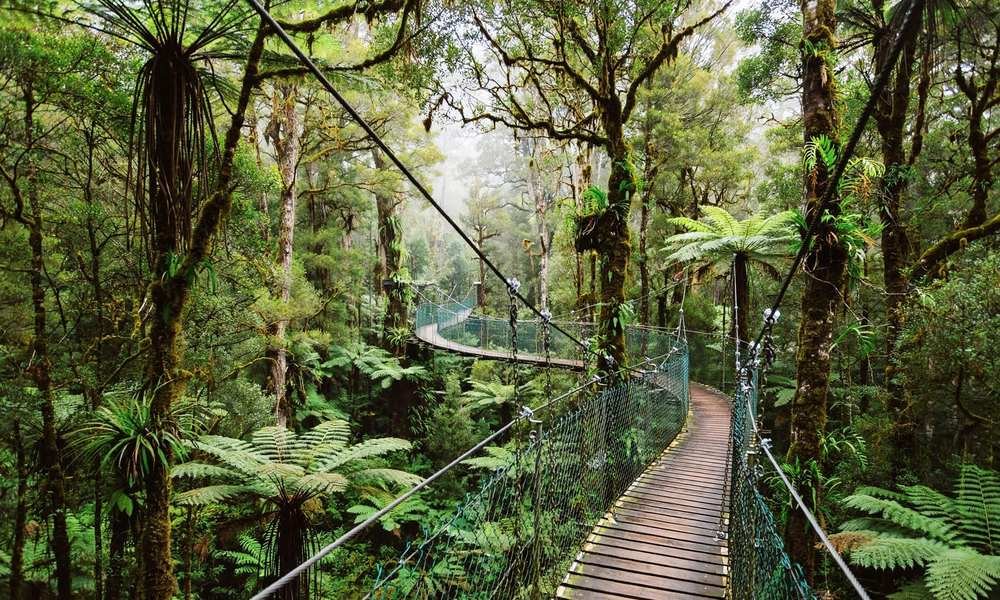
The Tree Top Walk is the one attraction almost every visitor does, and it is free. A 180 metre long elevated walkway runs through the rainforest canopy, about 15 metres above the forest floor, and it is an easy 800 metre return walk from O’Reilly’s. You walk at canopy level, past flowers, fruit and birds you would never see from the ground, and the walkway is gentle enough for kids and older visitors.
If you want more height, climb the ladder to the observation deck in a fig tree, another 15 metres up. The deck gives you a wide view over the canopy and the valley beyond. It is not for everyone, since the climb is steep and the platform moves slightly in the wind, but the view is worth it if you are steady on your feet.
Go early if you can. The walkway is quietest in the first hour after sunrise, and the birds are most active then. O’Reilly’s also runs a free guided bird walk each morning for guests, which is a good way to learn the calls before you head out on your own.
Waterfalls Worth Walking To
Lamington holds more than 500 waterfalls, though most are small and seasonal. A handful are worth building your day around. The tracks below are the ones visitors return to again and again, and they range from an easy lookout walk to a full day circuit with creek crossings.
Morans Falls
Morans Falls is the classic Lamington waterfall walk. From the Green Mountains car park, the track runs about 4 kilometres return through subtropical rainforest to a lookout over the falls, which drop around 80 metres into the gorge below. The lookout also gives you a wide view over the Albert River Valley, and it is a fine spot at sunset.
The walk is graded easy to moderate, with some steps and a steady climb on the way back. Allow around 1.5 hours return, and carry water even though it is short. After heavy rain the falls run hard and the track can be muddy, so wear shoes with grip.
Elabana Falls and the Box Forest Circuit
If you want more than one waterfall in a single walk, take the Box Forest Circuit from Green Mountains. The full loop runs about 11 kilometres and takes around 4 hours, and it passes Elabana Falls, a multi tiered cascade in a palm and fern filled gully, plus Box Log Falls further along. The circuit also runs through stands of ancient brush box trees, some of the oldest in the park.
This is a moderate walk with creek crossings and uneven ground. It suits walkers with reasonable fitness and a morning start. In summer, start early, because the humidity builds fast and the crossings can rise after rain.
Coomera Falls and the Coomera Circuit
On the Binna Burra side, the Coomera Circuit is the signature waterfall walk. The full loop runs about 17 kilometres and takes 6 to 7 hours, with multiple creek crossings and a cantilevered lookout platform over Coomera Falls. The falls drop into a deep gorge, and the lookout is one of the best waterfall views in the park.
Do not underestimate this walk. It is long, the crossings can be knee deep after rain, and there is no drinking water on the track. Only take it on if you are fit, you have a full day, and you have checked track conditions first. If the creeks are up, turn back. The gorge will still be there on your next visit.
More Falls Worth Knowing
Box Log Falls sits on the Box Forest Circuit, surrounded by palms and ferns, and it is an easy add on if you are already doing that loop. Chalahn Falls is a highlight of the Toolona Creek Circuit, a 17 kilometre waterfall heavy track on the Green Mountains side that also passes ancient Antarctic beech trees. Mirror Falls is a smaller cascade near the Border Track that walkers often pass without realising. If you are chasing waterfalls, plan your walk around one circuit rather than trying to tick off falls across both sections in one day.
Lookouts With the Best Views
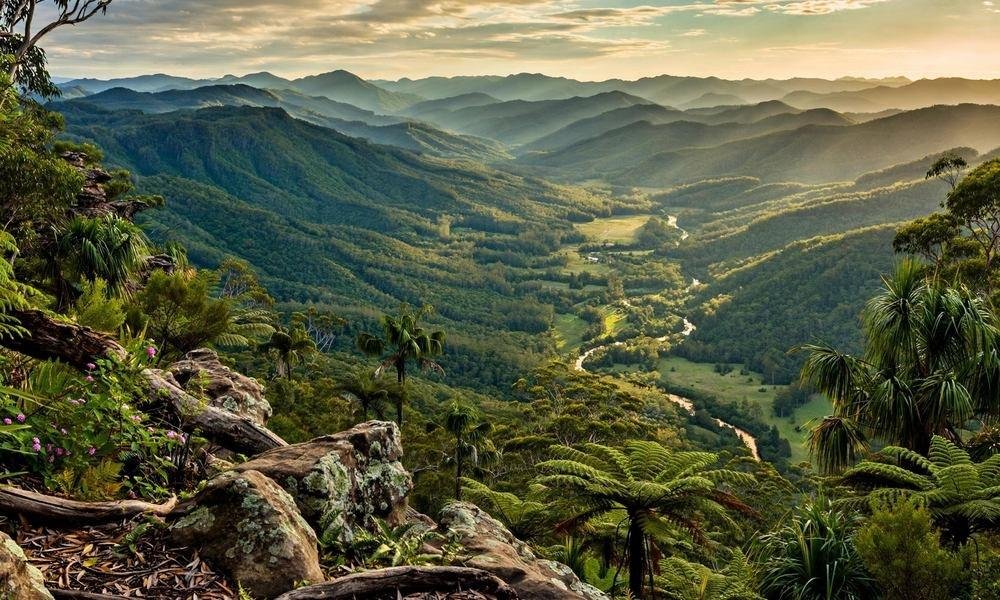
Lamington sits high, so the lookouts here are proper viewpoints, not afterthoughts. The plateau sits around 900 metres above sea level, which means the air is cooler than the coast and the views run a long way on a clear day.
Python Rock Lookout
Python Rock is the easiest great lookout in the park. From the Green Mountains car park, the track runs about 3.4 kilometres return, and the Centenary Track connects with it for a gentle start. The lookout gives you a wide view over the Numinbah Valley, and it is a popular sunset spot. Go late in the day if you want the light, but carry a torch for the walk back, since the track darkens fast under the canopy.
Ships Stern and Kamarun Lookouts
On the Binna Burra side, the Ships Stern Circuit runs about 21 kilometres and takes 6 to 8 hours, but you do not need the full loop for the views. A shorter return walk of about 8 kilometres reaches the Ships Stern lookout area, with views across the Numinbah Valley towards the coast. Kamarun lookout, on the same side of the park, gives a very wide sweep of the valleys, and photographers rate it highly for morning light.
If a full day circuit is too much, the Daves Creek Circuit offers a good middle ground. The 12 kilometre loop runs through rainforest, then opens into drier eucalypt country with valley views, and the climb up Surprise Rock is worth the detour for the outlook alone.
Tullawallal and the Ancient Beech Forest
Tullawallal is less a lookout and more a place to stand still. The circuit from Binna Burra runs about 5 kilometres return and leads into a grove of Antarctic beech trees, some of them thousands of years old. On a misty morning the forest feels older than anywhere else in the park, and the track is moderate rather than hard. It is a good pick for a half day walk when you want something quieter than the waterfall circuits.
Walks by Difficulty: Pick Your Level
With more than 160 kilometres of tracks, Lamington suits every level, but the grades matter. Tracks are graded from 1 (easiest) to 5 (hardest), and the longer circuits involve creek crossings, mud and steep climbs. Pick honestly, and remember that a wet track is a grade harder than the same track dry.
Easy Walks
For a gentle start, try the Centenary Track at Green Mountains, a 1.8 kilometre return walk through ancient trees that connects with the Python Rock Track. At Binna Burra, the Rainforest Circuit is a 1.2 kilometre loop and a good first taste of subtropical rainforest for kids and older visitors. The Tree Top Walk, at 800 metres return, is the easiest headline experience in the park.
Moderate Walks
Moderate walks need reasonable fitness and shoes with grip. The Morans Falls track (about 4 kilometres return) and the Python Rock track (about 3.4 kilometres return) are the best moderate picks at Green Mountains. At Binna Burra, try the Caves Circuit (about 7 kilometres return, grade 4, with valley views and the large Kweebani Cave), the Tullawallal Circuit (about 5 kilometres return), or the Daves Creek Circuit (about 12 kilometres, 2.5 to 3 hours). The Box Forest Circuit (about 11 kilometres, 4 hours) sits at the upper end of moderate.
Hard Walks
Hard walks are full day efforts. The Coomera Circuit (about 17 kilometres, 6 to 7 hours) and the Ships Stern Circuit (about 21 kilometres, 6 to 8 hours) are the two big Binna Burra challenges, both with creek crossings and long climbs. The Toolona Creek Circuit (about 17 kilometres) and the West Canungra Circuit (about 14 kilometres, with rugged crossings and the quiet Blue Pool) are the Green Mountains equivalents. The Border Track (21.4 kilometres one way, 7 to 8 hours) links the two sections, and O’Reilly’s runs a Saturday shuttle to Binna Burra so you can walk it one way back to Green Mountains. The Gold Coast Hinterland Great Walk runs 54 kilometres over three days from Lamington to Springbrook through the Numinbah Valley, and it is the trip to pick if you want a multi day walk with campsites booked ahead.
Wildlife and Birdwatching
Lamington is one of the best birdwatching spots in the country, with more than 160 bird species recorded. Dawn and dusk are the best times, and the areas around O’Reilly’s and Binna Burra are productive even for casual watchers, because the birds there are used to people.
Birds to Listen For
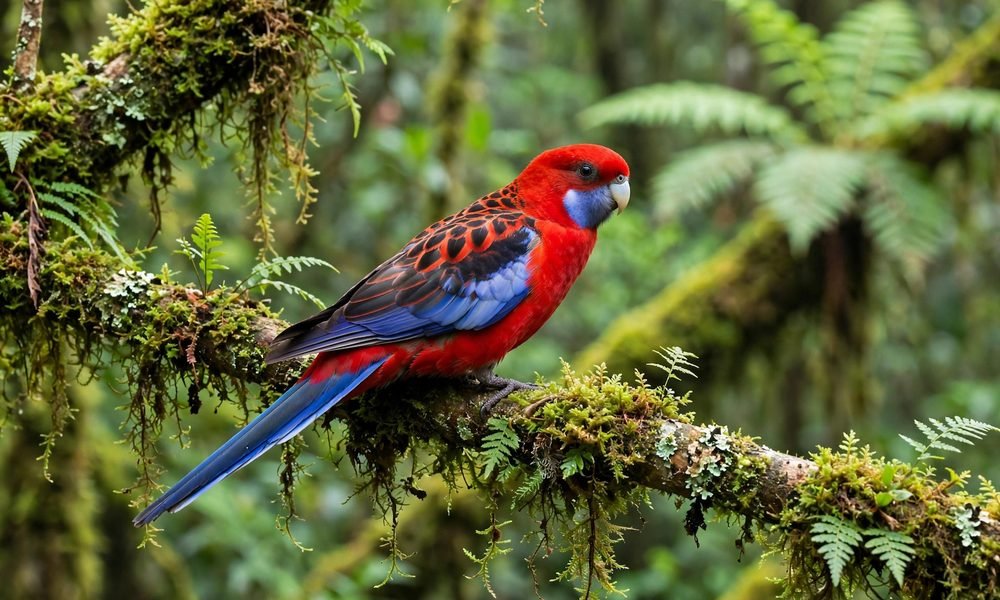
Start with the eastern whipbird, whose whip crack call carries through the forest all day. Then listen for the Albert’s lyrebird, a rare ground dwelling bird that mimics other birds and even mechanical sounds. It is shy and much easier to hear than to see, so count a hearing as a win. Regent and satin bowerbirds build display areas decorated with blue objects, and you may spot their bowers near the tracks. Crimson rosellas and king parrots are the friendly ones. At O’Reilly’s, you can buy birdseed, and the parrots will often land on your head and shoulders while they wait for a snack.
If you are keen, join the free morning bird walk at O’Reilly’s, or time your visit for the annual bird week, when enthusiasts gather for talks, walks and a friendly count of species seen. Bring binoculars either way. Many of the best birds sit high in the canopy or deep in the undergrowth, and you will miss them without a pair.
Pademelons, Platypus and Night Wildlife
Red necked pademelons, small wallaby like marsupials, graze around O’Reilly’s and Binna Burra at dawn and dusk, and they are the easiest mammal to spot in the park. Mountain brushtail possums visit accommodation areas after dark, and guided night walks at both lodges can show you gliders and possums in the canopy. Platypus are the hard one. They live in the creeks, including the pools known as Platypus Pools, but they are shy and mostly active at dawn and dusk. If you see one, you have had a lucky morning. Never feed wildlife except at the designated bird feeding area at O’Reilly’s, and keep your distance from pademelons and possums, even when they come close.
A Note on Natural Bridge
Many visitors ask about Natural Bridge, the rock arch over a waterfall with glow worms at night. It is not in Lamington National Park. It sits in nearby Springbrook National Park, about an hour’s drive away through the Numinbah Valley. It makes a good side trip if you are staying in the hinterland for a few days, especially for an evening glow worm visit, but do not plan your Lamington day around it. Keep your Lamington walks inside Lamington, and save Natural Bridge for its own evening.
How Many Days Do You Need?
One day gives you a taste, two days gives you one section properly, and three days lets you cover both sections without rushing. Here is how to split your time.
One Day: The Highlights
Pick Green Mountains for a first day trip. Start with the Tree Top Walk, then walk to Morans Falls lookout, and finish with Python Rock at sunset if you have time. That is a full but relaxed day, and you will have seen the canopy, a major waterfall and a valley lookout. If you are based at Binna Burra instead, swap in the Tullawallal Circuit and the Caves Circuit for a similar length day.
Two Days: One Section Properly
Stay overnight at O’Reilly’s or Binna Burra and give one section two days. Day one: the headline walks (Tree Top Walk and Morans Falls at Green Mountains, or Tullawallal and Caves Circuit at Binna Burra). Day two: a longer circuit (Box Forest at Green Mountains, or Daves Creek at Binna Burra), plus a night walk or a slow morning of birdwatching. Two days also gives you a buffer if rain closes a track or the mist hides the lookouts on day one.
Three Days: Both Sections
Day one: Green Mountains highlights. Day two: drive to Binna Burra (allow 1.5 hours) and walk the Tullawallal Circuit and the Caves Circuit. Day three: a big circuit on the Binna Burra side, such as Coomera or Ships Stern, or walk the Border Track one way with the Saturday shuttle if your dates line up. Three days is also the plan to pick if you want to add the Gold Coast Hinterland Great Walk as a future trip, since you will have walked parts of its route already.
Best Time to Visit Lamington
Lamington is a year round park, but the seasons change the walking a lot. The plateau sits high, so temperatures run 5 to 10 degrees cooler than the coast, and mist and rain can arrive fast at any time of year.
Autumn to spring is the sweet spot for most visitors. From March to May, the weather is cooler and more settled, and the waterfalls often run well after the summer rains. Winter brings crisp days around 20 degrees, cold nights that can drop close to freezing at higher elevations, and the driest tracks of the year, though waterfalls can slow to a trickle by late winter. Spring brings wildflowers and nesting birds, and the tracks are less crowded than in summer.
Summer is the wet season. Days run warm and humid, afternoon storms are common, and the rainforest is at its lushest, but leeches are plentiful after rain and creek crossings can rise quickly. If you walk in summer, start early, aim to be on the track by 6:30 in the morning, and carry a rain jacket even if the sky looks clear. September to October is orchid season, and February to March brings out the frogs in noisy numbers, so nature lovers may want to time a visit around those windows.
Where to Stay in and Around Lamington
Staying inside the park area puts you at the trailheads for dawn birdwatching and early starts, and both sections have good options. Book ahead in school holidays and from June to August, when the park is at its busiest.
At Green Mountains, O’Reilly’s Rainforest Retreat offers hotel style rooms, self contained villas and a campground with tent sites, campervan sites and safari tents, plus a restaurant, a bar, a pool and a day spa. The campground here was once managed by the parks service and is now run by O’Reilly’s, with camp kitchen facilities, hot showers and a fire pit area. At Binna Burra, the lodge offers Sky Lodges with valley views, safari tents, a rainforest campsite and the tea house for meals. The lodge was rebuilt after the 2019 fires, so check what is open before you book, since facilities have changed in recent years.
If the in park options are full or beyond your budget, base yourself in the valley and drive up for day walks. Canungra, at the base of the Green Mountains road, has cottages, motels and cafes, and it is a good base for either section. Beechmont, closer to the Binna Burra side, has a smaller set of stays and cafes. For a longer Gold Coast hinterland trip, check our guide to where to stay on the Gold Coast and our guide to things to do in Brisbane if you are pairing the park with a city stay.
Camping permits are required for park campsites and for remote walk in bush camps along the longer tracks, and remote sites must be booked online ahead of time, especially for weekends and school holidays. Fees change from time to time, so check the current fee and booking rules on the parks service website before you travel, and do not assume you can turn up and get a site in peak season.
Getting There and Getting Around
From Brisbane, allow around 90 minutes to two hours depending on which section you visit. Take the Pacific Motorway south, then follow the signs through Nerang and Beechmont for Binna Burra, or through Canungra for Green Mountains. From the Gold Coast, Binna Burra is around 45 minutes from Surfers Paradise through Nerang and Beechmont, and Green Mountains is around an hour through Canungra. Both final approaches are sealed but narrow and winding, so take them slowly, especially in fog or wet weather.
There is no public transport to the park, but coach transfers run from the Gold Coast and Brisbane to O’Reilly’s, and Binna Burra Lodge runs transfers from Nerang station and the Gold Coast and Brisbane airports with advance booking. If you are not driving, a guided day tour from the Gold Coast or Brisbane is the simplest way in, since it covers transport, a guided walk and the Tree Top Walk in one day.
Once you are in the park, you explore on foot. Car parks sit near the trailheads at both sections, and the tracks are well signed. Between sections, your options are the 1.5 hour drive or the Border Track on foot, with the Saturday shuttle from O’Reilly’s to Binna Burra if you want to walk the Border Track one way. Plan your fuel too. Binna Burra sells fuel, but O’Reilly’s has emergency supplies only, so fill up in Canungra or Nerang before you climb.
Guided Tours Worth Considering
You can walk Lamington on your own, but a guided tour adds a lot, especially for the history and the wildlife. O’Reilly’s and Binna Burra both run guided walks, and day tours from the Gold Coast and Brisbane cover the highlights for visitors without a car.
The most famous guided walk is the Stinson walk, which follows the story of the 1937 Stinson airliner crash and Bernard O’Reilly’s rescue of the two survivors. The full Bernard’s Footsteps route runs about 37 kilometres and needs a high level of fitness and a fast pace, while the shorter Rescue Route runs about 14 kilometres return with a steep climb to the wreck site. Both are guided only, and you should check the fitness requirements before you sign up.
For something gentler, the Billy Tea history tour is a 4WD trip to a lookout where guides prepare billy tea and damper over a fire while sharing stories from the early years on the mountain. It suits families and visitors who want the history without a long walk. Night walks at both lodges are worth adding too, since they show you possums, gliders and pademelons you would miss in daylight. For more rainforest ideas after Lamington, see our guide to the Daintree Rainforest and our guide to the best national parks in Australia.
Visiting Lamington With Kids
Lamington works well with kids if you pick the right walks. The Tree Top Walk is the star for young children, with its suspension bridges high in the canopy, and the Centenary Track and Rainforest Circuit are short and gentle enough for small legs. Morans Falls lookout is achievable for older kids who can handle a 4 kilometre return walk with steps.
Skip the long circuits with young kids. Coomera, Ships Stern and Toolona Creek involve creek crossings, mud and long distances that tire children fast. Keep walks short, carry extra water and snacks, and plan a picnic at one of the day use areas between walks. Prams will not cope with most tracks beyond the Tree Top Walk area and the short paved sections, so bring a carrier for toddlers. And keep kids close at lookouts, since the drops are unfenced in places.
Photography Tips for Lamington
Lamington rewards photographers who plan around the light. For Morans Falls, go in the morning, when soft light fills the gorge and the lookout is quiet. For Python Rock, go late in the day, when the low sun warms the valley view. For the beech forest at Tullawallal, go on a misty morning, when the fog sits between the trunks and the forest looks its oldest.
For waterfalls, a tripod helps, since the gorge light is low even at midday. Protect your gear from rain and mist, which can arrive fast on the plateau, and carry spare batteries, because there is nowhere to charge on the tracks. For birds, a zoom lens and patience matter more than anything else. Sit still near a fruiting tree or a water source at dawn, and the birds will come to you.
Must-Knows Before You Go
Lamington is an easy park to visit and a hard park to walk badly prepared. Run through this list before you leave, and you will avoid the common problems.
Packing Checklist
Pack water first. There is no drinking water on the tracks, so carry enough for the whole walk plus a margin, and more in summer. Pack snacks, a first aid kit, insect repellent, sunscreen, a rain jacket and a warm layer, since the plateau is cooler than the coast and the weather changes fast. Wear shoes with strong grip, not sandals, because the tracks are muddy and slippery after rain. Pack a torch for late finishes, a map or downloaded offline maps, and binoculars if you want to enjoy the birds. A small towel helps if you wade a creek crossing, and a dry bag protects your phone and camera.
Safety Basics
Start early, especially for the long circuits, and tell someone your walking plans. Mobile signal is patchy on the tracks and mostly absent in the gorges, so download maps before you arrive and do not rely on your phone for navigation. Check track conditions and park alerts before you set out, since tracks close after storms and for maintenance. Do not bring dogs into the park, since they are not allowed on the tracks or in any other part of the park. Do not feed wildlife except at the designated bird feeding area. And do not swim in creeks unless rangers advise it is safe, since water levels and quality change fast after rain.
Common Mistakes to Avoid
The most common mistake is trying to cover both sections in one day. The 1.5 hour drive between them eats your walking time, so pick one section per day. The second is taking a caravan up the Green Mountains road, which is too narrow and winding for large trailers. The third is walking at midday in summer without enough water. The fourth is skipping the track condition check and finding your circuit closed or a creek too high to cross. The fifth is expecting phone signal, shops or fuel at the trailheads. Plan for none of those, and you will have a far better trip.
Fees and Bookings
Day entry to the park walks is free, but camping permits and fees apply, and guided tours, lodges and transfers are booked separately. Fees and booking rules change from time to time, so check the current details on the parks service website before you travel. Book campsites, lodges and popular tours ahead of time in school holidays and from June to August, when the park is at its busiest.
FAQs About Visiting Lamington National Park
Can I visit both sections in one day?
You can drive between them, but it takes around 1.5 hours each way, so you will spend most of the day in the car. A better plan is one section per day, or one section for a weekend trip. The only walking link is the Border Track, a 21.4 kilometre one way walk that takes most fit walkers 7 to 8 hours.
Do I need a four-wheel drive to visit Lamington?
No. Both access roads are sealed, and a normal car can reach both sections. Take the winding roads slowly, especially in fog or wet weather, and do not take a caravan or large camper trailer up the Green Mountains road. Check current road advice before you travel.
When is the best time to visit Lamington?
Autumn to spring suits most visitors, with cooler and more settled weather from March to May and crisp winter days from June to August. Summer is lush but wet, with storms, leeches and high creek crossings. The park is open year round, but always check track conditions, since tracks close after storms.
Is the Tree Top Walk free?
Yes. The Tree Top Walk at O’Reilly’s is free to walk, and it is an easy 800 metre return walk from the retreat. The climb to the fig tree observation deck is part of the same experience, though it is steep and not suited to everyone.
Can I bring my dog to Lamington?
No. Dogs and other domestic animals are not allowed on the walking tracks or in any other part of the national park. This protects the wildlife and the World Heritage values of the park.
How many days should I spend in Lamington?
One day covers the highlights of one section, two days covers one section properly with an overnight stay, and three days covers both sections without rushing. If you want the Gold Coast Hinterland Great Walk, allow three days for that walk alone.
Is Lamington suitable for kids?
Yes, with the right walks. The Tree Top Walk, the Centenary Track and the Rainforest Circuit suit young kids, and Morans Falls lookout suits older kids. Skip the long circuits with young children, carry extra water and snacks, and keep kids close at lookouts.
Is there phone signal in Lamington?
Signal is patchy at the trailheads and mostly absent on the tracks and in the gorges. Download maps before you arrive, tell someone your walking plans, and do not rely on your phone for navigation or help.
Do I need to book camping in advance?
Yes, especially from June to August and in school holidays. Campsites at both sections are privately managed, remote bush camps need online booking ahead of time, and peak season fills up. Book before you travel.
What is Natural Bridge, and is it in Lamington?
Natural Bridge is a rock arch over a waterfall with glow worms at night, but it sits in nearby Springbrook National Park, not in Lamington. It makes a good evening side trip if you are staying in the hinterland for a few days, but plan it separately from your Lamington walks.
Final Thoughts on Visiting Lamington National Park
Lamington earns its reputation the quiet way. It does not shout for attention. It gives you cool air after a hot coastal drive, a canopy walkway above ferns older than most countries, waterfalls that reward a muddy walk, and birdsong that starts before breakfast. The two sections make planning simple once you accept the split, and the walks reward every level, from an 800 metre canopy stroll to a three day Great Walk.
If you go, give it at least two days. Pick one section, stay overnight, walk early, carry more water than you think you need, and check the track conditions before you set out. Respect the Country you are walking on, stay on the tracks, and leave the forest as you found it. Do that, and Lamington will give you one of the best rainforest trips in Queensland. For more ideas across the state, check the guides below and keep planning from there.