
Canberra has plenty of big national attractions, but only one lets you pat a cheetah in the morning and walk through a shark tunnel in the afternoon. The National Zoo Canberra is Australia’s only combined zoo and aquarium, and it sits on the western shore of Lake Burley Griffin, about five minutes by car from the city centre. You get two attractions in one ticket: a zoo with big cats, giraffes and native animals, and an aquarium with sharks, rays and coral reef fish.
It is privately owned and run by one family, the Tindales, and it gets no government funding. That matters, because your ticket money goes straight back into the animals, the breeding programs and the conservation work. This guide from Australia City Guide covers everything you need for a visit: the animals to see, the tours and encounters worth booking, ticket prices, opening hours, how to get there, where to eat, and how to plan your day.
Why the National Zoo & Aquarium Is Different
Most zoos are just zoos. This one started life as an aquarium. The original National Aquarium opened on 31 May 1990 with a 1.5 million litre tank and a walk-through underwater tunnel. It was the first of its kind in the world. The zoo grew around it over the next decade, and the two have been one attraction ever since.
Today the site covers around 25 hectares. That includes the original zoo grounds and a large open-range section that opened in May 2017. The open range tripled the size of the zoo and gave the giraffes, zebras and rhinos wide grassy paddocks to roam in. There are around 200 animals here across 75 species, not counting the fish in the aquarium.
What sets this place apart is how close you can get. The zoo was one of the first in Australia to build its whole visit around hands-on animal experiences. You can feed a giraffe, meet a cheetah, pat a sun bear or let a barking owl land on your arm. The keepers run talks and feeding sessions through the day, and the animals live in open enclosures with low fences and wide viewing areas, so you see them properly instead of through bars and glass.
The Big Cats
The zoo holds the largest collection of big cats in Australia. That is the first thing most visitors come for, and it does not disappoint. The big cat enclosures sit in the upper part of the zoo, and the cats are most active in the morning, so head there first if you arrive at opening time.
White Lions
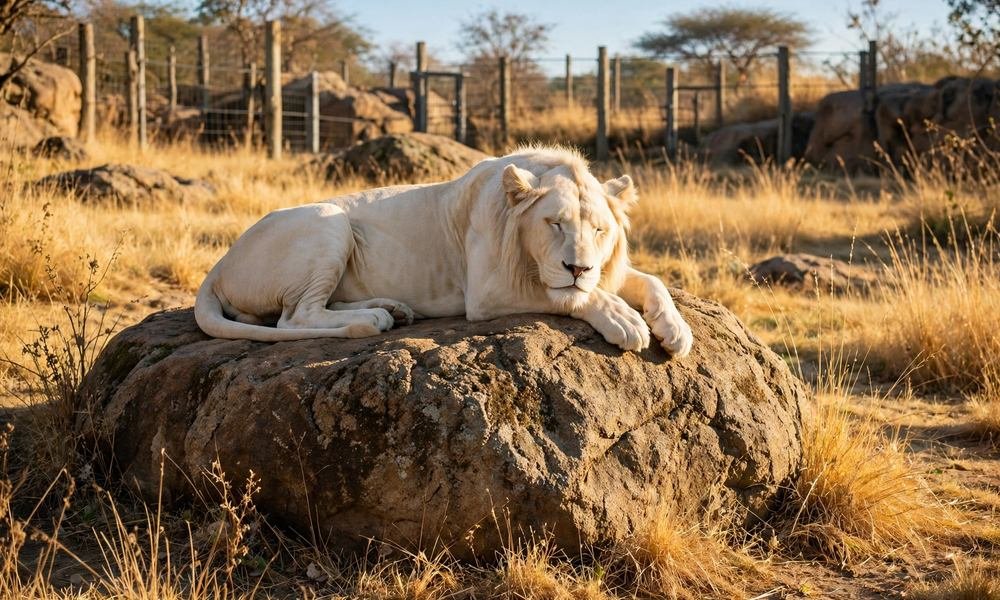
The white lions are the stars of the zoo. They are African lions with a rare pale coat, and the zoo has a whole pride of them. You will often find them lying together in the sun on a flat rock, and on a good morning you might hear the males roar. It is a deep sound that carries right across the zoo. Come back later in the day and you will usually find them asleep in the shade, so morning is the best time to see them awake and moving.
Tigers and Leopards
The zoo keeps Sumatran tigers, Bengal tigers and Sri Lankan leopards. The Sumatran tigers are part of an international breeding program, because very few of them are left in the wild. Their enclosure has a pool, and on hot days you may see a tiger cooling off in the water. The leopards are quieter and harder to spot. Look up into the trees and along the high platforms. They like to rest where they can watch the whole enclosure below them.
Cheetahs
The cheetahs live near the open-range section, and they are the most popular animal for encounters. A cheetah encounter lets you sit with one of these cats while a keeper talks you through how they hunt and how fast they can run. The zoo also runs a Meet a Cheetah experience most days. If big cats are the reason you came, plan your route so you reach the cheetahs before the midday heat, when they tend to sleep.

The Open Range: Giraffes, Zebras and Rhinos
The open-range section opened in 2017 and it changed the feel of the zoo completely. Instead of small enclosures, the animals here live in big grassy paddocks that look more like the African savanna. A wide path loops through the area, and you can take your time walking it.
Giraffes
The giraffes are the first animals you will spot in the open range. They move slowly across the paddock in a small herd, bending their long necks down to graze. A giraffe feeding encounter lets you hand them food from a raised platform, which puts you at eye level with an animal that stands over five metres tall. It is one of the best photo moments in the zoo, and it books out fast on weekends and school holidays.
Rhinos and Zebras
Southern white rhinos share the open range with plains zebras, eland and blackbuck. The rhinos are huge and calm, and they spend most of the day grazing or resting in the sun. The zebras stay in a group and are easy to spot with their bold black and white stripes. The Rhino Bistro sits right next to this section, so you can eat lunch while you watch the rhinos. It is one of the few places in Australia where you can do that.
Australian Animals Up Close
The zoo is not only about animals from overseas. The Australian section is one of the best parts of a visit, and it is the part many overseas visitors enjoy most.
You will see western grey kangaroos and wallabies grazing in open grassy areas, and you can often get quite close to them. The koalas sleep in their gum trees for most of the day, so look for a curled grey ball in the fork of a branch. Tasmanian devils are here too, and they are far smaller than most people expect. They are most active at feeding time, so check the keeper talk board near the entrance for times.
Dingoes, bare-nosed wombats and swamp wallabies round out the native collection. The dingoes look a lot like a sandy coloured dog, but they are wild animals, so admire them from the path. If you have kids, this is a good section to take slowly. The animals are calm, the paths are flat, and there is plenty of shade.
Primates, Meerkats and Small Favourites
Some of the best moments at the zoo come from the smaller animals. The primate enclosures sit near the centre of the grounds, and they are always busy.
Red Pandas and Sun Bears
The red pandas live in a cool, leafy enclosure with climbing branches. They are rusty red with a striped tail, and they spend a lot of time asleep in the trees. Look carefully, because they blend in with the branches. The sun bears are easier to find. They are small bears with a pale crescent mark on their chest, and they love to climb and dig. The zoo supports sun bear rescue work overseas, and your ticket helps fund it. A sun bear encounter lets you help the keepers hide food for them, which is a great one for kids to watch.
Meerkats and Otters
The meerkats are the comedians of the zoo. They stand on their back legs, scan the sky, and dart in and out of their burrows all day. A meerkat encounter lets you feed them, and it is one of the cheapest encounters on offer. The oriental small-clawed otters live nearby in a stream enclosure. They swim, slide and wrestle with each other, and they are at their liveliest in the morning. An otter encounter is a good pick if you want something playful rather than big and dramatic.

Lemurs and Monkeys
Ring-tailed lemurs with their striped tails sun themselves on the rocks in the morning. Black-and-white ruffed lemurs, siamangs, capuchins and tiny marmosets fill the primate area. The siamangs are the loud ones. They are gibbons with a throat pouch that lets them call right across the zoo, and you will hear them long before you see them. Give yourself time here. The primates are always doing something, and it is easy to lose half an hour just watching them.

Inside the Aquarium
After the open zoo, the aquarium feels like a different world. It is cool, dim and quiet inside, and it is a good place to slow down in the middle of the day. The building holds the largest inland saltwater tank in Australia, and it is the part of the zoo that started it all back in 1990.
The Shark Tunnel
The walk-through tunnel runs under the big saltwater tank, and sharks and rays glide over your head as you walk through. Blacktip reef sharks, leopard sharks, zebra sharks and epaulette sharks all live in this tank, along with stingrays and a Queensland groper. Stand still for a minute and let the sharks come to you. It is the single best moment in the aquarium, and it is never crowded for long.
Coral Reef and Tropical Fish
The Barrier Reef section is full of colour. Live corals grow in the tanks, and clownfish, tangs and other reef fish dart in and out of them. The seahorses have their own quiet tank, and they are worth a close look. They hold onto the coral with their tails and drift with the water. Kids love the little wooden boats in this area, where they can climb in and pretend to sail while the adults look at the tanks.
Freshwater: Murray Cod and Barramundi
The tropical rainforest area holds Australian freshwater fish. You will see Murray cod, barramundi, silver perch and rainbow trout swimming in dark, slow water. The Murray cod is one of the biggest freshwater fish in Australia, and the ones here are huge. This section is easy to rush past, but take a minute. These are the fish that live in the rivers around Canberra, and the keepers can tell you how they survive in the wild.
Reptiles and Frogs Downstairs
Downstairs you will find the reptiles and frogs. There are pythons, iguanas and other lizards, plus a Komodo dragon. The Komodo dragon is the biggest lizard in the world, and it is an impressive animal to see up close. The frog tanks hold tree frogs and other small species. It is a good spot on a hot day, because it is cool down here and you can take your time.
The Extinction Trail and AdventureLand
If you are visiting with kids, two areas will make their day. The Extinction Trail has life-sized dinosaurs along a bush path, and it is a fun walk even for adults. The models are big and detailed, and the trail gives kids a reason to keep walking when their legs get tired.
AdventureLand is the big playground near the centre of the zoo. It has climbing structures and activities for a range of ages, and it is one of the best playgrounds in Canberra. It is the perfect stop halfway through your visit. Let the kids burn off energy while the adults rest in the shade. There are picnic tables nearby, so it works well as a lunch stop too.
Tours Worth Booking
General admission gets you into the zoo and the aquarium, but the tours are where the real magic happens. They are run by keepers who know the animals by name, and they take you into areas the public cannot go. Book ahead online, because the popular tours sell out, especially on weekends and in school holidays.
ZooVenture Tour
The ZooVenture Tour is the zoo’s award-winning signature tour. It takes a small group around the zoo with a keeper, and you get hands-on time with a range of animals. You might feed a giraffe, touch rhino skin, meet a meerkat or sit with a lemur. It runs daily and it is the best single tour to book if you only pick one. It takes a few hours, so plan your day around it.
Walk on the Wild Side
This is the full-day tour, and it takes about seven hours. It is for ages 14 and over only. You spend the whole day with a keeper, moving from animal to animal, and you get into enclosures that other tours do not reach. You will enter the cheetah enclosure, feed giraffes, meet rhinos and spend time with the meerkats and lemurs. It is a big day and it costs more than the other tours, but it is the closest thing to being a keeper for a day.
Family Tour
The Family Tour is made for parents with kids. It is shorter and gentler than the ZooVenture Tour, and it focuses on the animals kids love most. The keepers keep it fun and hands-on, with plenty of chances to touch, feed and ask questions. If you are visiting with children under 14, this is the tour to pick.
Wild Night ZooVenture
The Wild Night ZooVenture runs after dark, and it shows you a side of the zoo most visitors never see. You ride around the grounds in a vehicle with a keeper as the animals settle down for the night. You might see yawning cheetahs, dingoes, zebras and ostriches. The tour includes a picnic near the rhinos while they have their dinner, and adults get a beer or wine from Jamala Lodge. Kids get a tractor ride. It is a lovely way to end a day in Canberra.
Enrichment Tour
The Enrichment Tour shows you what it is like to be a zookeeper for a day. It starts with a talk about why enrichment matters for animals in care. Then you get materials to build toys for the animals, and you go out to deliver your own creations and watch how the animals react. It runs for about two hours, and it is a great pick if your kids like making things and want to see how the zoo works behind the scenes.
Focus on Wildlife Tour
If you love photography, this tour is for you. It is led by a zoo photographer, and small groups are taken to the best vantage points at feeding and enrichment times, when the animals are relaxed and active. You will learn how to set up your camera for the best shots. It runs for a full day, so bring spare batteries and a hat.
Animal Encounters: Meet a Cheetah, Feed a Giraffe
Close encounters are short, personal sessions with one animal. They run for 10 to 15 minutes, and only two people can join each session, so it feels private. You need to book ahead online. Walk-in spots are rare, and the popular animals sell out.
The animals you can meet include cheetahs, lions, tigers, white lions, sun bears, giraffes, tree kangaroos, meerkats, owls, otters, red pandas and sharks. A cheetah encounter lets you sit close to one of the fastest land animals on earth. A giraffe encounter lets you feed them by hand. A shark encounter takes you behind the scenes of the aquarium. A barking owl encounter ends with the owl landing on your arm, which is a moment you will not forget.
Each encounter has its own price on top of general admission, and prices change with the season. Check the official website for the current list and book the animal you want most as soon as you know your travel dates. If you are buying an encounter as a gift, the zoo sells gift vouchers too.
Jamala Wildlife Lodge: Sleep with the Animals
Jamala Wildlife Lodge sits inside the zoo grounds, and it is one of the most unusual places to stay in Australia. It opened in December 2014, and it has won national awards for luxury accommodation. There are three types of stay, and each one puts animals right outside your room.
The Giraffe Treehouses have floor-to-ceiling windows with giraffes grazing just outside. The Jungle Bungalows open onto a garden where deer wander past your door in the morning. The uShaka Lodge is built around a huge shark tank, so you can watch sharks swim past while you eat dinner. All three are five-star rooms with fine dining included.
A stay at Jamala includes guided zoo tours, animal encounters, a morning safari and an African-inspired dinner. You also get to walk around the zoo before it opens and after it closes, when the animals are at their most active. It is not cheap, but it is a once-in-a-lifetime stay, and the money goes back into the zoo and its conservation work. If you want to stay here, book well ahead. It is popular for anniversaries, birthdays and honeymoons. Read our full guide to where to stay in Canberra for other options near the zoo.
Tickets and Opening Hours
Tickets for the National Zoo Canberra are priced by age, and tours and encounters cost extra on top of general admission. Recent guides list adults at $58, children aged 3 to 15 at $35, and students and seniors at $51. A family ticket for two adults and up to three children is listed at $159. These prices change, so check the official website at nationalzoo.com.au before you go. Booking online in advance is the best way to lock in your entry and your tour times.
The zoo is open every day from 9.30am to 5pm, and it is closed on Christmas Day. Hours can change on public holidays, so check before you travel. Try to arrive at opening time. The animals are most active in the morning, the light is better for photos, and you will have the big cat enclosures mostly to yourself.
How Long to Allow and the Best Time to Visit
How Long Do You Need?
Allow at least three hours to see the zoo and the aquarium at a relaxed pace. That covers the big cats, the open range, the Australian animals, the aquarium and a stop at the playground. If you book a tour or an encounter, add another hour or two. If you book the Walk on the Wild Side tour, that is your whole day. Most families find a full morning or a full afternoon works well, with lunch at the Rhino Bistro in the middle.
The Best Time to Visit
Spring and autumn are the best seasons. The weather is mild, the animals are active, and the crowds are smaller than in summer. Summer can be hot, and the animals sleep through the middle of the day. Winter mornings are cold but clear, and the zoo is quiet. Weekdays are always better than weekends, and school holidays are the busiest time of all. Arrive at 9.30am, see the big cats first, then work your way through the open range while the animals are still moving. Save the aquarium for the middle of the day, when it is hot outside and cool inside.
A Simple Half-Day Plan
Here is a plan that works well for a first visit. Arrive at 9.30am and head straight to the big cats. Spend an hour with the lions, tigers and cheetahs. Walk through the open range to see the giraffes, zebras and rhinos, then stop for morning tea at the Meerkat Snack Shack. Visit the Australian animals and the primates, then let the kids run wild at AdventureLand. Have lunch at the Rhino Bistro, then cool off in the aquarium and walk the shark tunnel. Finish with the Extinction Trail on your way out. That is a full morning, and you will have seen the best of the zoo without rushing.
Getting There and Parking
By Car
The zoo is at 999 Lady Denman Drive, Yarralumla, at the western end of Lake Burley Griffin, next to Scrivener Dam. It is about five minutes by car from the city centre. Take the Tuggeranong Parkway and follow the brown tourist signs to the turn-off. The entry road is sealed and suits all vehicles, including coaches and caravans.
By Bus
Public transport to the zoo is limited, and most visitors drive. Buses run from the city centre towards Yarralumla, but the zoo is a walk from the nearest stop, and services are not frequent. If you do not have a car, a taxi or rideshare from Civic takes about five minutes and is the easiest option. Our guide to Canberra Airport covers car hire if you are flying in and want your own wheels for the trip.
Parking
Parking is free, and there is plenty of it. There are car parks near the main entrance and near the Rhino Bistro, with disabled bays in both. The main paths through the zoo are sealed bitumen or concrete, so prams and wheelchairs move easily. Some areas have steeper slopes, and the zoo has an Adventure Trail map that shows the easiest routes for wheelchairs and prams. Mobility scooters and manual wheelchairs are available to hire, but book ahead because numbers are limited.
Where to Eat
Rhino Bistro
The Rhino Bistro is a fully licensed bistro with indoor and outdoor seating that looks out over the rhino enclosure. It serves hot meals, salads and drinks, and it is the best place in the zoo for a proper lunch. Sit outside if the weather is good. Watching rhinos graze while you eat is not something you get to do every day.
Jungle Vines Cafe
The Jungle Vines Cafe sits near the aquarium entrance. It serves coffee, cakes and light snacks, and it is a good stop before or after the aquarium. The coffee is decent, and it is a quiet spot to sit for a few minutes.
Meerkat Snack Shack
The Meerkat Snack Shack is a small kiosk in the open-range section. It sells quick snacks and cold drinks, which is handy when you are halfway around the zoo and the kids are hungry. Grab something here rather than walking all the way back to the entrance.
Picnics and BBQs
You can bring your own food, and the zoo has picnic areas with tables and free electric barbecues. This is a good option for families, because it keeps costs down and the kids can eat when they are hungry. The picnic lawns near AdventureLand are the best spot, with shade and room to run around. If you want a proper meal after your visit, nearby Braddon and Manuka have some of the best restaurants in Canberra.
A Short History of the Zoo
The story starts in 1990, when the National Aquarium opened on this site with its huge saltwater tank and walk-through tunnel. It was the largest private tourism project in the ACT at the time, but it ran into money trouble within a year and went into receivership. A local grazier bought it in 1992 and added native wildlife exhibits, and in 1998 the Tindale family took over. They spent two years repairing the run-down site, and in 2001 the wildlife park was in full swing. That is when it became the National Zoo & Aquarium.
The zoo has kept growing since then. Jamala Wildlife Lodge opened in 2014, and the open-range section opened in 2017. The zoo now belongs to the Zoo and Aquarium Association of Australasia, and it runs breeding programs for endangered species. It is still privately owned and family run, and it still receives no government funding.
One fun piece of history: the Linux penguin mascot, Tux, was inspired by a visit to this zoo. Linux creator Linus Torvalds was bitten by a small penguin here, and that bite led to the penguin becoming the face of Linux. The zoo still keeps little penguins, and they are a favourite with visitors.
Conservation: Where Your Ticket Money Goes
Because the zoo gets no government funding, every ticket helps. The zoo runs breeding programs for endangered species, including sun bears and red pandas, and it supports conservation work in Australia and overseas. The lodge and the zoo have donated over $1,000,000 to worthy causes, and your visit helps fund programs like Free the Bears, the Komodo Survival Program, the Grassland Earless Dragon Alliance and the Namadgi Dingo Research Project. That last one is close to home: it studies the dingoes of Namadgi National Park, just south of Canberra.
The keepers also run education programs for schools and a junior zookeeper club for kids aged 8 to 16 on weekends during term. If your child loves animals, the club is worth a look. It teaches them how keepers care for the animals and why conservation matters.
Visiting with Kids
The zoo is one of the best family days out in Canberra, and our full Canberra with kids guide rates it as a top pick. A few tips will make the day easier. Bring a pram for little ones, because the site is big and the walk is long. Pack hats, sunscreen and water, and wear comfy shoes. The paths are sealed, but there is a lot of ground to cover.
Plan your visit around the keeper talks, which run on weekends and in school holidays. The talks are short, fun and full of facts kids remember. Let the kids pick one encounter to book. A meerkat or giraffe encounter costs less than the big cat sessions and it gives them a story to tell at school. And build in a proper break at AdventureLand. Kids who have run around the playground come back to the animals with fresh energy.
Accessibility and What to Bring
Most of the zoo is wheelchair and pram friendly. The main paths are flat and sealed, the aquarium has level floors and ramp access, and there are accessible toilets at several points around the grounds. The zoo provides an Adventure Trail map that marks the easiest routes and avoids steep slopes. Mobility scooters and wheelchairs are available to hire, and it is best to book them in advance.
What to bring: comfy walking shoes, a hat, sunscreen and a water bottle. Grab a guide map at the entrance so you do not miss an exhibit. Bring a camera with a spare battery if you plan to take photos, and a light jacket in the cooler months. Mornings can be cold in Canberra even in spring. Leave the food for the animals at home: feeding them is only allowed on keeper-led encounters.
Things to Do Nearby
The zoo sits at the western end of Lake Burley Griffin, so it pairs well with other attractions. After your visit, drive along the lake to Scrivener Dam and the Lake Burley Griffin walking paths. Yarralumla is a quiet suburb with cafes and a village feel, and it is a nice stop for afternoon tea.
If you have a full weekend, pair the zoo with Questacon for the kids, the Australian War Memorial for the adults, and the National Gallery of Australia for art lovers. Our guide to the best things to do in Canberra pulls all of these together, and the best time to visit Canberra will help you pick your dates. For a bigger trip, day trips from Canberra include Tidbinbilla Nature Reserve, which is a great place to see native animals in the wild.
FAQs About the National Zoo & Aquarium
How much are tickets for the National Zoo & Aquarium?
General admission is priced by age. Recent guides list adults at $58, children aged 3 to 15 at $35, and students and seniors at $51. A family ticket for two adults and up to three children is listed at $159. Tours and encounters cost extra. Prices change, so check the official website before you go.
How long should I plan to spend at the zoo?
Allow at least three hours to see the zoo and the aquarium. If you book a tour or an encounter, add another hour or two. A full day is easy to fill if you take the Walk on the Wild Side tour or stay for lunch and the playground.
What are the opening hours?
The zoo is open every day from 9.30am to 5pm, and it is closed on Christmas Day. Check the official website for public holiday hours.
Can I book animal encounters on the day?
Sometimes, but it is risky. Encounters run daily and only take two people per session, so the popular animals sell out. Book online in advance to be sure of a spot.
Is the zoo wheelchair and pram accessible?
Yes, for the most part. The main paths are sealed and flat, the aquarium has level floors and ramps, and there are accessible toilets around the grounds. The zoo has an Adventure Trail map for the easiest routes, and mobility scooters and wheelchairs are available to hire if you book ahead.
Can I bring my own food?
Yes. There are picnic areas with tables and free electric barbecues. You can also eat at the Rhino Bistro, the Jungle Vines Cafe or the Meerkat Snack Shack.
Is the zoo good for young kids?
Yes, it is one of the best family attractions in Canberra. The AdventureLand playground, the Extinction Trail dinosaurs, the aquarium and the hands-on encounters are all made for kids. Bring a pram, because the site is large.
What is Jamala Wildlife Lodge?
Jamala is a five-star lodge inside the zoo grounds. Guests sleep in Giraffe Treehouses, Jungle Bungalows or the uShaka Lodge, with animals right outside their rooms. Stays include guided tours, encounters, a morning safari and dinner.
Final Thoughts: Is the National Zoo Canberra Worth Visiting?
Yes, without a doubt. The National Zoo & Aquarium is the only place in Australia where you can see big cats, feed a giraffe and walk through a shark tunnel in a single day. It is not the biggest zoo in the country, but it is the most hands-on, and that is what makes it special. The keepers are friendly, the animals are close, and the open-range section feels more like a safari park than a city zoo.
It is also the best value family day out in the capital. One ticket covers the zoo and the aquarium, the playground and the picnic areas are free, and parking costs nothing. Book one tour or one encounter, arrive at opening time, and take it slow. The zoo rewards visitors who linger. The animals reward them too. For a full trip plan, start with our guide to things to do in Canberra, and if you want to stay near the action, read our guide to where to stay in Canberra. The zoo sits in the Australian Capital Territory, and it is one of the best reasons to visit the capital.