
Melbourne keeps its best secrets in narrow lanes you could walk straight past. The melbourne laneways are a maze of painted walls, tiny cafes, old arcades and small bars, all tucked between the big streets of the city centre. You can spend a whole morning here and still miss half of it. This guide shows you which lanes are worth your time, what you will find in each one, and how to walk them in a sensible order. It also covers the coffee lanes, the old shopping arcades, the bars that open after dark, and the practical details that make the day run well. If you are planning your first days in the city, start with our guide to things to do in Melbourne, then use this page to plan your laneway walk. For the wider picture, Australia City Guide covers the city and the rest of Victoria in the same plain style.
Melbourne sits on the traditional lands of the Wurundjeri Woi-wurrung and Bunurong peoples of the Kulin Nation. The lanes you walk today sit within Country that has been cared for by these communities for tens of thousands of years. The City of Melbourne notes this on its official walk pages, and it is worth knowing before you set out.
What Is a Melbourne Laneway?
A laneway is a narrow street that runs between the big streets of the city centre. Melbourne’s city centre was laid out on a grid in 1837, and the grid came with a network of small service lanes behind the main streets. These lanes were work spaces. They gave access to factories, warehouses, stables and back doors, and they kept delivery carts and rubbish off the main streets.
For most of the 1900s the lanes were ignored. Many fell into poor shape. They were dark, dirty and unsafe, and most people had no reason to walk down them. That changed from the 1980s on. Small businesses began to lease the tiny spaces along the lanes. Espresso bars, sandwich shops and small studios moved in. The council backed the change with a plan to bring the lanes back to life.
By the 2000s the change was complete. The lanes had become the part of Melbourne people talk about most. Street art played a big part. In 2005 the council adopted a Graffiti Management Plan that let building owners apply for permits to keep murals on their walls. Artists got legal walls to paint, and the lanes turned into open-air galleries that change all the time. Today central Melbourne has hundreds of named lanes and small streets, plus plenty of unnamed alleys. A couple of dozen are the ones every visitor should know.
It helps to know that the lanes fall into a few clear types. Some are art lanes, where the walls are the main event. Some are coffee lanes, where small cafes fill every spare metre. Some are dining lanes, where tables spill out onto the paving. And some are covered arcades, which are old shopping passages under glass roofs. This guide takes each type in turn, so you can pick the lanes that suit your day.
The Street Art Lanes
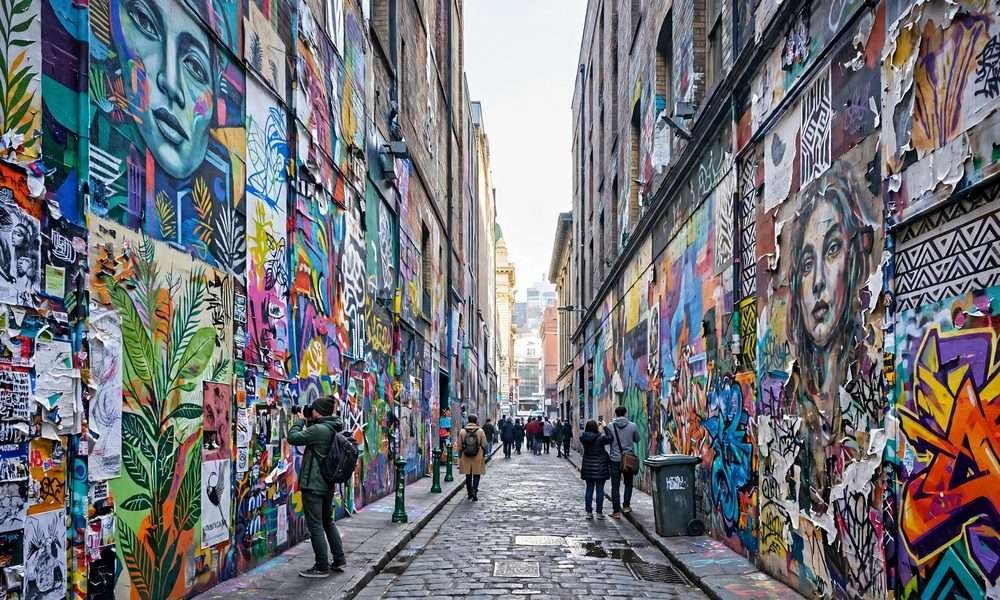
The art lanes are the reason most visitors come. The work on the walls is free to look at, and it changes so fast that no photo stays true for long. Artists paint over old work all the time, so the lane you see today will look different next month. That is part of the fun. Go early, take your time, and do not plan your visit around one mural you saw online. It may already be gone.
One thing to know before you start: the art in these lanes is commissioned work or painted with permission. It is not the same as illegal graffiti, though both exist in the city. Do not bring spray paint as a tourist. Only a few lanes allow painting, and even there, painting over someone else’s work is frowned on. Take photos, enjoy the walls, and leave the paint to the artists.
Hosier Lane
Hosier Lane is the most famous lane in Melbourne, and the best place to start. It runs between Flinders Street and Flinders Lane, directly across the road from Federation Square. The lane is only about 100 metres long, but every surface is painted. The walls, the bins and even the cobbles carry layers of colour. It is probably the most photographed laneway in Australia.
Come early if you can. By mid-morning the lane fills with tour groups and tripods, and on weekends it can be shoulder to shoulder. Before 9am on a weekday you will often have the walls to yourself, and the light is clean for photos. The cobbles are uneven, so wear flat shoes and watch your step after rain.
Hosier Lane is free and open at all hours. There is no ticket and no opening time. You can walk through in ten minutes, or you can stay for half an hour and look at every wall. Come back a second time if you can. The art turns over so fast that a return visit a few days later will show you new work. MoVida, the Spanish restaurant at the southern end of the lane, is a good stop if you want lunch after the art. Cumulus Inc., a popular dining room one block north on Flinders Lane, is another easy option.
Rutledge Lane
Rutledge Lane branches off Hosier Lane halfway down, in a crescent shape that loops back onto Hosier. It is smaller and rawer than its famous neighbour, and locals often say the more interesting work goes up here first. The walls climb high, and the art runs all the way up to heights that make you wonder how the artists reached them. Even the bins are painted.
A few years ago the council covered the walls here to give artists a blank canvas. It did not take long for the walls to fill up again. Rutledge Lane is a good second stop after Hosier, and it takes only a few minutes to walk. If Hosier feels too busy, step into Rutledge and you will often find it much quieter.
Union Lane
Union Lane runs between Bourke Street Mall and Little Collins Street, right in the middle of the main shopping area. It is a long, narrow lane, and the whole length is covered in art. Because it sits between two busy streets, shoppers pass through it all day, so it never feels empty or cut off.
This is the easiest art lane to find while you are shopping, and it is also one of the most accessible. The surface is flat, and the lane is a straight walk-through with no steps. The work here is dense and layered, and the length of the lane means you can spend a good while walking slowly and taking it all in. It is a natural break from the crowds of Bourke Street Mall.
AC/DC Lane and Duckboard Place
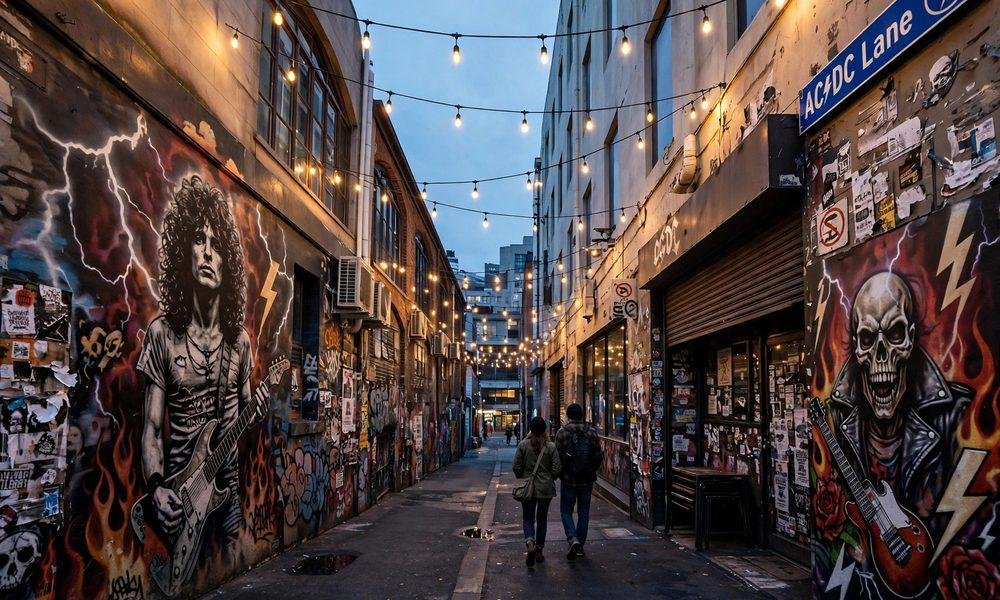
AC/DC Lane sits off Flinders Lane, near the Russell Street end. The lane was renamed in 2004 to honour the Australian rock band, and the street sign carries a lightning bolt. The art here leans toward rock and music themes, and the lane feels smaller, darker and grittier than Hosier. It draws a different crowd, and it is quieter, which suits visitors who want to look at the walls without a crowd around them.
Look for the sculpture of Bon Scott bursting out of a brick wall. It is one of the most photographed details in the lane. Cherry Bar, the rock bar long linked with this lane, has moved to 68 Little Collins Street, a short walk away. It is still worth a visit if you like live rock rooms.
AC/DC Lane turns into Duckboard Place, which loops around the corner and joins back onto Flinders Lane. The walls of Duckboard Place carry more strong work, and the lane holds several small bars and restaurants. Lee Ho Fook serves Asian fusion food here, and Rose Garden is a good spot for a cocktail. Together, AC/DC Lane and Duckboard Place make a neat loop you can walk in ten minutes.
Croft Alley
Croft Alley runs off Little Bourke Street through the middle of Chinatown. It mixes graffiti with the steam and smells of the Sichuan kitchens nearby. The alley is small and easy to miss, but it rewards the short detour. The art here is strong, and the lane feels more local than the big-name lanes.
Croft Alley also hides a few small bars and restaurants behind unmarked doors. The old Croft Institute, a former dental clinic turned hidden bar, has closed, and the space is now Solace, a late-night club that opened in January 2025. The lane still holds other small venues, and it is worth a look on your way through Chinatown.
Caledonian Lane and Drewery Lane
Caledonian Lane sits between Little Bourke Street and Lonsdale Street. It may be the narrowest lane in the city, but it is worth seeking out. The art here is less polished than Hosier, and that is its charm. You will see graffiti and raw painted work, and the lane is often much quieter than the famous spots, even though it sits right in the middle of the grid.
Drewery Lane runs between Lonsdale Street and Little Lonsdale Street. It does not look like much at first, and you could walk straight past it. Look closer and you will find something different: a long-running mosaic project by the artist Sankar Nadeson, who has been slowly covering the walls in tiled artwork. It is a quiet, thoughtful contrast to the spray paint elsewhere, and it shows how wide the lane art scene really is.
Cocker Alley and Finlay Alley
Cocker Alley is a tiny lane off Flinders Lane, just west of Swanston Street. It is one of the smallest lanes in the city, and it is easy to miss. The graffiti here changes often, and the lane is worth a quick look if you are nearby. If Hosier Lane feels too busy, Cocker Alley often sits empty, and you can look at the walls in peace.
Finlay Alley runs off Little Lonsdale Street and turns right to join Queen Street. It is another lane you could walk past without a second look. Step in and you will find strong murals and painted walls that most visitors never see. Both lanes are quick stops, five minutes each, and they suit visitors who like finding the quiet corners.
Blender Lane
Blender Lane sits near Queen Victoria Market, at the northern edge of the grid. Its street art is rawer and less polished than the work in the better-known lanes. That is the point. The lane feels like a working part of the city rather than a photo stop, and the art reflects that. It pairs well with a morning at the market, and it is a good lane to visit if you want to see the art scene away from the tourist crowds.
Presgrave Place
Presgrave Place is the odd one out, and that is why it is worth a visit. It sits off Howey Place, near Little Collins Street. Instead of spray paint, its walls carry framed pictures, small oddities and gallery-style pieces hung as if the lane were a corridor in someone’s house. It is narrow and close, and it suits two or three people at a time rather than a big group.
The lane also holds one of the city’s smallest bars at its end, Bar Americano. It is a standing-room-only room built around the classic Italian aperitivo, and it holds about ten people. Go for the ritual of one good drink, not for a long night out. If there is a queue, there is genuinely no room, so come early or be ready to wait.
The Coffee Lanes
Melbourne’s coffee culture grew up in these lanes, and the lanes still do it best. The coffee lanes are narrow, busy and full of small counters. Most have no big signs and no fuss. You order at the counter, you stand or perch on a stool, and you drink some of the best coffee in the country. The lanes below are the ones to know.
Degraves Street
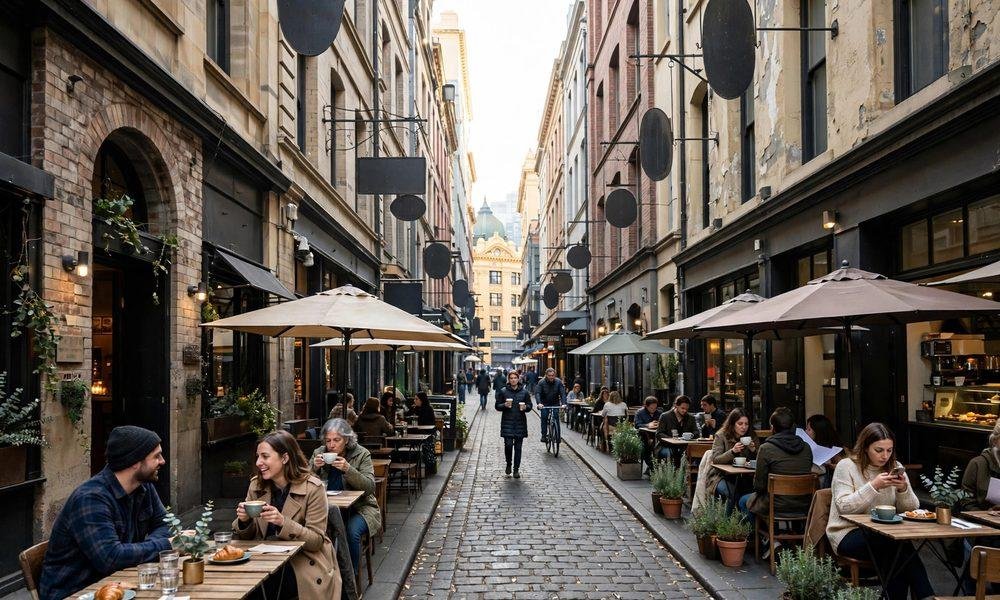
Degraves Street is the most photographed cafe lane in the city, and it earns the attention. It runs between Flinders Street and Flinders Lane, directly across the road from Flinders Street Station. Cafe tables fill both sides of the lane, and the smell of coffee and fresh pastry drifts down the whole street.
Degraves Espresso Bar is the long-running institution here, and it is a good first stop off the train. The northern end of the street holds most of the cafes, while the southern end has several murals worth a look after your coffee. The lane is busy from mid-morning, so come between 8am and 11am for the best seat, or come in the evening when the wine bars open and the pace slows.
Centre Place
Centre Place runs off Flinders Lane and links it to Collins Street. It is one of the narrowest lanes in the city, and it is packed with small cafes, sandwich bars and espresso counters. This is the lane you see in tourism photos: a thin run of counters, black stools, striped awnings and painted walls above.
Centre Place is built for grazing. Grab a coffee here, a bite there, and keep walking. It suits a quick stop better than a long sit-down meal, because most spots are standing room or a single stool. Pellegrini’s, the old espresso bar on Bourke Street, is a short walk away and worth a visit if you want a taste of old Melbourne coffee culture.
Hardware Lane
Hardware Lane crosses Little Bourke Street and works more as an outdoor dining lane than a morning coffee stop. It is wider and more polished than the other lanes, with long tables under the open sky. Italian and bistro-style restaurants take over for dinner, and the lane is one of the best places in the city for a long lunch outside.
The range of food here is wide. Khao Man Gai at the north end serves Thai food, Claypots Barbarossa is the pick for seafood, and Mjolner leans into a big, hearty feast style. Hardware Société, on Hardware Street just off the lane, is a popular brunch spot. Book ahead in summer, when the outdoor tables go first. The lane is also a good evening stop, when the bars and cocktail spots come to life and live jazz sometimes plays.
Block Place and Howey Place
Block Place connects the Block Arcade to Little Collins Street. It holds boutique shops, small cafes and the long-running Manchester Project, a tailoring house that has dressed Melbourne for years. The lane has a heritage feel, with old shopfronts and a slower pace than the cafe lanes.
Howey Place runs between Collins Street and Little Collins Street, and it is one of the prettiest small lanes in the city. Heritage shopfronts, jewellers and leather goods line both sides. The lane also holds what is said to be Melbourne’s last Victorian-era barber shop. One arm leads off to the Manchester Unity building, a fine old tower in Art Deco style. Howey Place is a good lane for shopping and slow browsing rather than eating or drinking.
Guildford Lane
Guildford Lane sits toward the northern end of the grid, near the Queen Victoria Market side. It is leafy and calm, with plants, brick walls and warehouse conversions rather than crowds. The cafe inside a converted warehouse seats groups in comfort, without the queue and crush of Degraves Street.
If the art lanes have left you wanting somewhere to sit down and talk, this is the walk to make. Brunch here is relaxed and unhurried. It is a slightly longer stroll from the station end of the grid, but the trams up Elizabeth Street put you close. Guildford Lane suits families and groups who want space to spread out.
The Heritage Arcades
The arcades are the grand old rooms of the laneway network. They are covered shopping passages from the gold-rush city, built when Melbourne was rich and keen to show it. Two of them are worth your time above all others. Both are free to enter, and both are still working shops and cafes rather than museums. They also make fine shelter when it rains.
Block Arcade
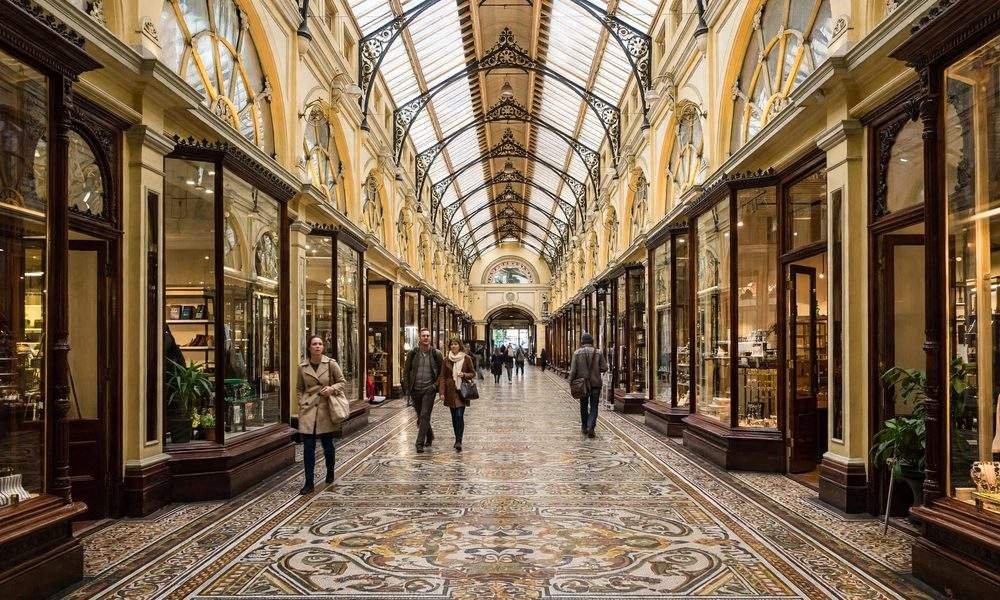
The Block Arcade opened in 1893, and it is the showpiece. Enter from Collins Street and look up at once. The vaulted glass canopy and the Italian mosaic floor are the main event, and they still stop people in their tracks. The arcade runs through to Little Collins Street and Elizabeth Street, so it works as a useful shortcut on a wet day as well as a sight in its own right.
Inside you will find boutique chocolate shops, jewellers, tailors and small cafes. The Hopetoun Tea Rooms is the Melbourne institution here, and queues on weekends can stretch out into the arcade itself. Come before 10am on a weekday if you want the interior mostly to yourself. The morning light through the glass roof is at its best then, and the tea rooms queue has not yet formed.
The arcade is open seven days a week. Hours are usually Monday to Thursday 8am to 6pm, Friday 8am to 8pm, Saturday 8am to 5pm, and Sunday 9am to 5pm, but check the arcade’s site before you go, as hours can change. Individual shop hours vary.
Royal Arcade
The Royal Arcade opened in 1870, and it is the oldest surviving shopping arcade in Australia. It runs between Bourke Street Mall and Little Collins Street. The black and white tiled floor, the soaring ceilings and the shopfronts give it a feel quite different from the Block Arcade, and it is worth visiting both to see the contrast.
The signature feature is Gaunt’s Clock, where two figures named Gog and Magog strike the hours. Children love watching the figures move, and it is a good stop if you are visiting with kids. The shops suit both big budgets and small ones, so you can browse without feeling you have to spend. Hours are usually Monday to Thursday 7am to 7pm, Friday 7am to 8:30pm, Saturday 8am to 7pm, and Sunday 9am to 7pm. Check the arcade’s site for current hours before you go.
Campbell Arcade
Campbell Arcade is the odd one out, and locals know it well. It is the underpass beneath Flinders Street, running from Flinders Street Station to Degraves Street. The arcade has a 1950s retro feel, with low ceilings and quirky alternative shops. It is a handy shortcut, and it drops you right onto Degraves Street at the far end. Look for the small, unusual shops as you pass through rather than rushing the underpass.
Laneway Bars After Dark
The lanes change character once the shops close. The art fades into the background, the cafe tables clear, and the bars take over. The best of the bar scene sits around Chinatown, a compact cluster you can walk between in a few minutes. The lanes below are the ones to know, and each one suits a different kind of night.
Tattersalls Lane and Section 8
Tattersalls Lane links Lonsdale Street with Chinatown, and it is the lane for a casual night out. Section 8 is the city’s original outdoor container bar, open since 2006. It is a fenced open-air yard with crates for seats and no strict door policy. Drinks are casual and the mood is relaxed early in the evening, then busy and loud once the weekend DJs start.
Section 8 is the easiest bar in the lanes for a large group. A big party can just turn up and land, with no booking and no fuss. Come early if you want to talk, and come late if you want the buzz. The same lane also holds Aster Cocktail and Wine, which opened in 2024 in the old Ferdydurke space. It is a grown-up cocktail and wine bar with DJs, and it suits a small group out for drinks or a date night rather than a big loud crowd. Use the current name, Aster, when you book. Old signs and old listings can still cause confusion.
Meyers Place
Meyers Place is one of the most polished lanes in the city, and it is a strong evening stop. Loop Roof, the rooftop bar, Bar Margaux and Mamasita, the Mexican restaurant, all sit on or off Meyers Place. The lane has a great evening atmosphere, with outdoor seating and a steady hum of people coming and going. It suits a night that mixes dinner and drinks without moving far.
More Small Bars Worth Knowing
Waratah Place sits off Little Bourke Street and holds Manchuria, a small bar with a loyal local crowd. It is a good stop if you want a quiet drink away from the main lanes. Croft Alley, in Chinatown, still holds small bars behind unmarked doors, and it is worth a look on a bar crawl through the area.
Bar Ampère sits off Little Bourke Street in a genuine old electrical substation. It leans French, with wine by the glass and a late-night feel. It suits a slow finish to the night rather than a loud start. A small group fits well here for drinks and aperitivo, but a party of a dozen will feel like it has taken the place over.
For the actual end of the night, Solace sits down one of Chinatown’s alleys in the old Croft Institute space. It opened in January 2025 as a techno and house club with a 3am licence. Big nights are ticketed, and the door slows when the line-up is good, so check what is on and buy ahead. Use the current name, Solace, when you search. The old name still shows up in older guides.
Shopping in the Laneways
The lanes are also good for shopping, if you know where to look. Block Place is the pick for boutiques, with small shops and the Manchester Project tailoring house. Howey Place suits jewellers and leather goods, and Carson Place, off Bourke Street near Russell Street, holds tailors and small bars in a lane that looks its best at twilight.
The two heritage arcades are the main shopping stops. The Block Arcade holds high-end fashion, gifts and chocolate shops, while the Royal Arcade mixes posh and budget shops under one old roof. Hardware Lane runs outdoor markets in summer, which adds another reason to visit in the warm months.
Keep your expectations right. The lanes are not a shopping mall. The shops are small, and many are one of a kind. That is the charm. Come to browse, not to tick off a list, and you will find the good stuff.
Best Laneways by Interest
If you are short on time, pick the lanes that match what you want most. The lists below pull the best picks together so you can plan fast.
Best for street art
- Hosier Lane, the icon and the best place to start.
- Rutledge Lane, edgier and quieter than Hosier.
- AC/DC Lane, rock themed and full of character.
- Croft Alley, the Chinatown back alley.
- Drewery Lane and Caledonian Lane, quieter and less touristy.
- Blender Lane, near Queen Victoria Market, raw and unpolished.
Best for cafes and coffee
- Degraves Street, the icon, best between 8am and 11am.
- Centre Place, narrow, busy and full of espresso counters.
- Hardware Lane, better for lunch than for morning coffee.
- Block Place, quieter, with heritage shopfronts.
- Guildford Lane, calm and good for groups.
Best for hidden bars
- Tattersalls Lane, home of Section 8.
- Meyers Place, with Loop Roof and Bar Margaux.
- Waratah Place, off Little Bourke Street.
- Croft Alley, small bars behind unmarked doors.
- Presgrave Place, home of Bar Americano.
- Little Collins Street, where Cherry Bar now trades at number 68.
Best for shopping
- Block Place, for boutiques.
- Howey Place, for jewellers and leather goods.
- Carson Place, for tailors.
- The Block Arcade and Royal Arcade, the heritage shopping arcades.
Best for outdoor dining
- Hardware Lane, the pick for a long lunch outside.
- Degraves Street, cafe tables on the paving.
- Tattersalls Lane, outdoor seating at Section 8.
- Meyers Place, outdoor seating in the evening.
Best for photography
- Hosier Lane, early in the morning before the crowds arrive.
- Rutledge Lane, off Hosier, for tighter, rawer shots.
- AC/DC Lane, for the lightning bolt sign and the murals below it.
- Croft Alley, for Chinatown colour and steam.
- Block Arcade, for the glass canopy and mosaic floor.
A Self-Guided Laneway Walk
You do not need a tour to walk the lanes. The City of Melbourne offers free self-guided walks, and the routes are easy to follow on your own. The Street Art walk covers about 3 kilometres and takes around two hours at a relaxed pace. The Iconic Laneways and Arcades walk covers about 2.4 kilometres and takes around two hours. Both are free, and both come with a downloadable map from the City of Melbourne’s What’s On website. Download the map before you go rather than relying on mobile data in the narrower lanes.
If you would rather follow one clear route, the walk below hits the best lanes in a sensible order. It takes about two and a half to three hours at a relaxed pace, with stops for coffee and lunch. Start at Flinders Street Station and work north, so you finish near Bourke Street with trams close by.
Stop 1: Hosier Lane (30 minutes)
Start at Federation Square and cross Flinders Street to Hosier Lane. Give yourself half an hour for photos and a slow walk down the lane. Step into Rutledge Lane on the way back. Go before 9am if you want the walls to yourself.
Stop 2: Degraves Street and Centre Place (45 minutes)
Walk up Flinders Lane to Degraves Street for coffee and brunch. Degraves Espresso Bar is the classic stop. Then cross Flinders Lane into Centre Place for a second coffee or a quick bite. The two lanes sit side by side, so this stop is easy.
Stop 3: AC/DC Lane and Duckboard Place (20 minutes)
Walk east along Flinders Lane, then up Russell Street to AC/DC Lane. Look for the Bon Scott sculpture and the lightning bolt sign. Loop through Duckboard Place and back onto Flinders Lane.
Stop 4: Block Arcade and Royal Arcade (40 minutes)
Walk north to Collins Street and step into the Block Arcade. Look up at the glass canopy, browse the shops, and stop at the Hopetoun Tea Rooms if the queue is short. Then walk to the Royal Arcade on Bourke Street Mall and watch Gaunt’s Clock strike the hour.
Stop 5: Union Lane and Presgrave Place (20 minutes)
Union Lane runs off Bourke Street Mall, so it is on your way. Walk its full length, then slip into Presgrave Place off Howey Place for the framed pictures and curios. Stop at Bar Americano only if it is open and the queue is short.
Stop 6: Hardware Lane for lunch (45 minutes)
Finish at Hardware Lane for lunch at one of the outdoor tables. The lane sits a short walk north, and it is a good place to rest after the walk. From here you are close to the Bourke Street Mall trams and the Free Tram Zone.
If you still have energy, add Croft Alley and Tattersalls Lane in Chinatown in the late afternoon, when Section 8 opens and the bars start to fill. That turns the walk into a full day, starting with art in the morning and ending with drinks at night.
Guided Laneway Tours
A guided tour is not needed, but it can add a lot if you want stories and history with your walk. A local guide can explain the art, point out work you would walk past, and take you into lanes you would not find alone. These are the main options.
Hidden Secrets Tours
Hidden Secrets Tours runs a laneways and arcades tour that lasts about three hours, with a four-hour option that adds lunch. Prices start from around A$139. The tour combines the main lanes, the arcades and lesser-known spots, and it suits first-time visitors who want the full picture in one morning. Check the operator’s site for current prices and times.
Melbourne Street Art Tours
Melbourne Street Art Tours runs a three-hour tour focused on street art, led by a working artist. This is the pick if you care about the art itself rather than the cafes and bars. The guide can talk about technique, artists and the scene in a way a general tour cannot. Check the operator’s site for the current price and meeting point.
Free Walking Tours and the Greeter Service
I’m Free Walking Tours runs a Lanes and Arcades tour on a tip-only basis. You pay what you think the tour was worth at the end. Current tours and times are on the operator’s site. The City of Melbourne also runs a Greeter Service, a free volunteer guide who shows you the city. Booking is essential, and you book by email or phone. It suits visitors who want a local’s view without paying for a tour.
How Long Do You Need?
A quick visit takes about 90 minutes. That covers Hosier Lane, Degraves Street, Centre Place and AC/DC Lane, which are the four lanes most first-time visitors want. It is a good option if you are passing through the city for a day.
A half day is better. Two and a half to three hours covers the full self-guided walk above, with time for coffee and a look inside both arcades. This is the right amount of time for most visitors, and it leaves the afternoon free for the rest of the city.
A full day suits visitors who want to do it properly. Art in the morning, coffee mid-morning, the arcades before lunch, a long lunch on Hardware Lane, and the Chinatown bars in the evening. Add a visit to the Melbourne Museum or NGV International if you want to mix the lanes with a museum, or read our guide to the best museums in Melbourne to pick one. For more free ideas in the same area, see our guide to free things to do in Melbourne.
Best Time to Visit the Laneways
There is no bad season for the lanes. They work in any weather, and the covered arcades give you shelter when it rains. Still, the time of day matters more than the time of year.
For street art, go before 9am. The walls are yours, the light is clean, and the crowds have not yet arrived. Mid-afternoon on a Saturday is the worst time for photos at Hosier Lane. For coffee, the lanes peak between 9am and 11am. Arrive either side of that window for a table without a wait.
For bars, the lanes build through the evening. Section 8 and the wine rooms are good early, and the club end of Chinatown picks up after midnight. Weekends bring DJs, crowds and door queues. A weeknight is quieter across the board.
By season, summer (December to February) brings hot days and the biggest crowds, and Hosier Lane can be shoulder to shoulder. Winter (June to August) is cool, but the lanes are at their most atmospheric on overcast mornings, and the arcades are warm and dry. Spring (September to November) brings milder weather, though rain is common. If you are planning the wider trip, our guide to the best time to visit Melbourne covers the seasons in detail.
Where to Stay Near the Laneways
Staying in the city centre puts the lanes on your doorstep. Most of the lanes sit within a ten-minute walk of Flinders Street Station, so any central hotel works. If you want to compare named hotels by budget and area, read our guide to the best hotels in Melbourne. For the best areas and suburbs to base yourself in, see our guide to where to stay in Melbourne.
Staying central also means you can walk back to the lanes in the evening for the bar scene, and walk out again early the next morning for the art, without worrying about transport. If you are staying further out, the trams bring you in fast. Our guide to Melbourne trams explains the Free Tram Zone and the routes that serve the city centre.
Getting There and Getting Around
The laneway network sits entirely within Melbourne’s city centre, and it is best explored on foot. The closest train station is Flinders Street Station, and the closest tram stops for the Hosier Lane and Federation Square area are on Swanston Street. If you are flying in, our Melbourne Airport guide covers the trip from the airport to the city.
Tram travel within the Free Tram Zone is free, and the zone covers the whole central grid. You do not need a myki card inside the zone. Beyond the zone you need a myki, tapped on and off. Our guide to Melbourne trams has the full detail on fares, zones and the City Circle route.
Honestly, this whole route is better walked. The lanes sit two to ten minutes apart on foot, and half of them do not touch a tram line. Wear comfortable flat shoes. The cobbles in Hosier Lane are uneven and get slippery in the rain, and the narrow lanes are no place for large bags at busy times.
Street Art Beyond the CBD
The city centre holds the famous lanes, but the street art scene does not stop there. Fitzroy has the highest concentration of independently commissioned murals outside the city centre, and its streets carry strong work with far fewer tourist crowds. Collingwood has a long mural tradition of its own, and Brunswick has a deep history of political and community street art.
These suburbs suit a second day of art hunting, once you have seen the city centre lanes. They are easy to reach by tram from the city, and they pair well with the cafes, shops and bars in each suburb. We will cover them in detail in their own guides. For now, the best suburbs in Melbourne guide is a good starting point for planning a trip out of the centre. If you are travelling with children, our Melbourne with kids guide covers family-friendly options across the city, and our day trips from Melbourne guide covers longer trips out of town, including the Great Ocean Road and the beaches in Melbourne.
Practical Tips for the Laneways
A few small details make the day run better. Most of the lanes are in the city centre core, and you can walk them in sequence over a half day. Saturday morning is busy with weekend cafe crowds, so weekday mornings are quieter for photos. Many laneway bars do not open until late afternoon, so plan your evening stops for after 4pm.
Public toilets are at Federation Square, Flinders Street Station and most large cafes. Photography is welcome in the lanes. For commercial shoots, City of Melbourne permits may apply, so check first if you are shooting for business use.
Cards work almost everywhere, including the smallest coffee counters, and contactless payment is the norm. Carry a little cash only as a backup for a busy bar or a market stall. You will rarely need it.
One honest caveat: the lanes are public and unstaged, which is their appeal and their unpredictability. Walls get painted over, a bar changes its name, and a good night at a club can be a slow night at the door. Treat any route as a frame, not a timetable, and let each lane be whatever it is on the day you walk it.
FAQs About Melbourne Laneways
What is the most famous laneway in Melbourne?
Hosier Lane is the most famous laneway in Melbourne. It sits across Flinders Street from Federation Square, and its walls are covered in art that changes all the time. It is the first lane most visitors see, and the right place to start any laneway walk.
Are the laneways free to visit?
Yes. The lanes are public streets, and there is no charge to walk them. The street art costs nothing to look at, and the arcades are free to enter. You will only spend money on coffee, food, drinks or shopping.
Can anyone paint in Hosier Lane?
Not quite. Hosier Lane has a de facto free-to-paint attitude, and the city allows painting there without a permit in practice. But the city can remove work it finds inappropriate or commercial, and painting over someone else’s work is frowned on. As a visitor, do not bring paint. Take photos and leave the walls to the artists.
How long does it take to walk the laneways?
A quick visit takes about 90 minutes and covers the four best-known lanes. A half day of two and a half to three hours covers the full self-guided walk, with coffee and the arcades included. A full day lets you add lunch on Hardware Lane and the Chinatown bars in the evening.
What is the best time to visit the laneways?
Go before 9am for the street art, when the walls are yours and the light is clean. Go between 9am and 11am for the coffee lanes. Go after 4pm for the bars. Weekday mornings are quieter than weekends across the board.
Are the laneways safe at night?
The main lanes are busy public spaces in the central city, and they are generally safe during daylight hours and into the evening when the bars are open. As with any city centre, stay aware of your surroundings, especially in the quieter lanes late at night. Emergency services in Australia are reached by calling 000.
Which laneway is best for coffee?
Degraves Street is the pick for the classic laneway cafe experience, with Degraves Espresso Bar as the long-running favourite. Centre Place is the best second stop, with a dense run of small espresso counters in the narrowest lane in the city.
Do I need to book a guided tour to see the laneways?
No. The City of Melbourne provides free self-guided walk maps, and the lanes are easy to walk on your own. Guided tours are available if you prefer a structured walk with stories and history, but they are not needed.
Will the street art I saw in photos still be there?
Maybe, but not certainly. The art changes often, and a specific mural from a travel photo may already be painted over. The overall quality stays high, so you will not be disappointed, but do not plan your visit around seeing one piece.
Can I visit with kids or a pram?
Yes, with some care. The lanes are flat for the most part, and Union Lane is the easiest to manage. Hosier Lane has uneven cobbles, and the narrow lanes can be tight with a pram at busy times. Go early in the morning when the lanes are quiet, and the kids will have room to look at the walls.
Final Thoughts on Visiting the Laneways
The melbourne laneways are the part of the city that stays with you after you leave. The big sights are easy to list, but the lanes are where Melbourne shows its real character. Painted walls that change every week, coffee poured by people who care about it, old arcades full of small shops, and bars tucked behind doors you would never notice on your own.
Do it in the right order and the day builds well. Art first, while the light is good and the lanes are quiet. Coffee next, when the lanes fill with locals. The arcades before lunch, when the glass roofs catch the light. A long lunch outside on Hardware Lane. Then the bars as the evening turns over. That is the day, and it costs little more than a few coffees and a meal.
Come back more than once if you can. The art will have changed, a new bar will have opened, and a lane you walked past the first time will show you something new. That is the point of the lanes. They are never finished, and that is why people keep coming back to them. Start with the walk in this guide, then make it your own.