
Aboriginal heritage in Canberra runs far deeper than most visitors expect. Long before the capital was planned, before the lake was built and before a single parliament sat, Ngunnawal people lived on this land, cared for it and passed down knowledge of it for more than 25,000 years. That story is still here. You can walk it on a mountain track, see it in rock art, hear it from a Ngunnawal guide and stand in front of it in the national galleries. This guide brings it all together, so you can plan a visit that does the story justice.
Canberra is the capital of the Australian Capital Territory, and it sits on Ngunnawal Country. The city itself is young, but the Country it stands on is ancient. The best way to understand the place is to learn whose land you are on first, then go and see the sites with that in mind.
Who Are the Ngunnawal People?
The Ngunnawal people are the Traditional Custodians of the Canberra region. They have lived here for tens of thousands of years, and their connection to this land has never been broken. Today, Ngunnawal people still care for Country, share their culture with visitors and lead the tours and talks that bring this guide to life.
More Than 25,000 Years on This Country
The oldest proof of Ngunnawal life in the region sits in the Birrigai Rock Shelter at Tidbinbilla. People sheltered there during the last Ice Age, more than 25,000 years ago, when the ground was covered in snow for much of the year and the days were far colder than they are now. It is one of the oldest known inhabited rock shelters in the world. That single fact changes how you see Canberra. The city feels new, but people have called this place home since long before the first farm or the first road.
Across the region, the signs of that long occupation are everywhere once you know what to look for. There are rock art sites in Namadgi National Park, axe-grinding grooves worn into river rocks, stone tool scatters, ochre quarries and scar trees in the suburbs. Old campsites have been found on the Black Mountain Peninsula, on the lower slopes of Mount Ainslie, near the Botanic Gardens on Sullivan’s Creek and on the sand hills beneath Pialligo. Test pits near Coppins Crossing show a site used as a short-term camp over the last 5,000 years. The land holds the history. You just need someone to help you read it.
What “Country” Means to Ngunnawal People
When Ngunnawal people talk about Country, they mean much more than land. Country is a bounded place with its own identity, its own stories and its own value. It covers the mountains, the waterholes, the rivers, the caves, the plants, the animals, the wind and the air. All of it is linked. Knowledge of Country is held in stories, songs, dance, memory and ceremony, as well as in the physical signs left on the land.
Caring for Country is a big part of the culture. It means looking after the land so it stays healthy, taking only what is needed and keeping the balance between people and place. Ngunnawal knowledge covers fire management, water care and the seasons. It covers when to harvest and when to leave things alone. Foods gathered on Country include Daisy Yam, wattle seed, Murray Cod and Yellow Belly from the rivers, yabbies, platypus, water fowl and bogong moths in the summer months. The rivers themselves matter deeply. Ngunnawal kinship and songlines follow the Murrumbidgee, Molonglo and Cotter rivers, and these waterways hold the people’s Dreaming, their roots and their sense of belonging.
A Hard Chapter: Dispossession and Survival
The story is not all ancient history. When Europeans set up farms and settlements in the early 1800s, life for Ngunnawal people changed fast and hard. Many Aboriginal people in the region, including the Ngunnawal, were forced from their land and placed in missions and reserves, such as those at Brungle and Edgerton, where the Aboriginal Protection Board ran daily life. Foreign language, customs and religions were pushed in place of Dreaming and Aboriginal Lore.
Ngunnawal culture survived that. The language is being brought back through community programs, and you can hear it today. The Welcome to Country at major Canberra events is now given in Ngunnawal. Elders share knowledge on tours, in schools and in land management work. Knowing this chapter matters, because it explains why the places in this guide are not just old sites. They are living culture, looked after by living people.
The Ancient Places: Tidbinbilla and Namadgi
The two most powerful Aboriginal heritage sites near Canberra sit outside the city, in the bush to the south and south-west. Both are worth a full day each if you can manage it, and both reward a slow visit with a guide.
Tidbinbilla Nature Reserve and Birrigai Rock Shelter
Tidbinbilla is a place of deep and ongoing meaning for Ngunnawal people. The name comes from the Ngunnawal word Jedbinbilla, which means “where boys become men”. The valley was used for ceremonies and for passing on men’s lore, and groups from nearby areas came through key entry points such as Gibraltar Peak, where an elder would light a fire to guide people in.
The valley worked well as a home base. It had a central river fed by high peaks, wide grasslands for hunting and rock shelters dotted through the hills. In spring, the mountains filled with bogong moths, which Ngunnawal people gathered as food. Men and women carried out their business in separate places. Men’s sites sat in the higher peaks, and one rock shelter near the path to Gibraltar Peak holds ancient rock art. Women’s sites sat closer to the river, and grinding grooves can still be seen on the river’s edge in some women’s places.
The Birrigai Rock Shelter is the highlight. It shows people used this shelter during the last Ice Age, more than 25,000 years ago. When you stand there, try to picture the valley under snow, with a small group keeping warm and dry in the same shelter you are looking at. It is a humbling thing. Join an Aboriginal ranger walk if one is running, because a guide can point out things you would walk straight past on your own.

Namadgi National Park and Yankee Hat Rock Art
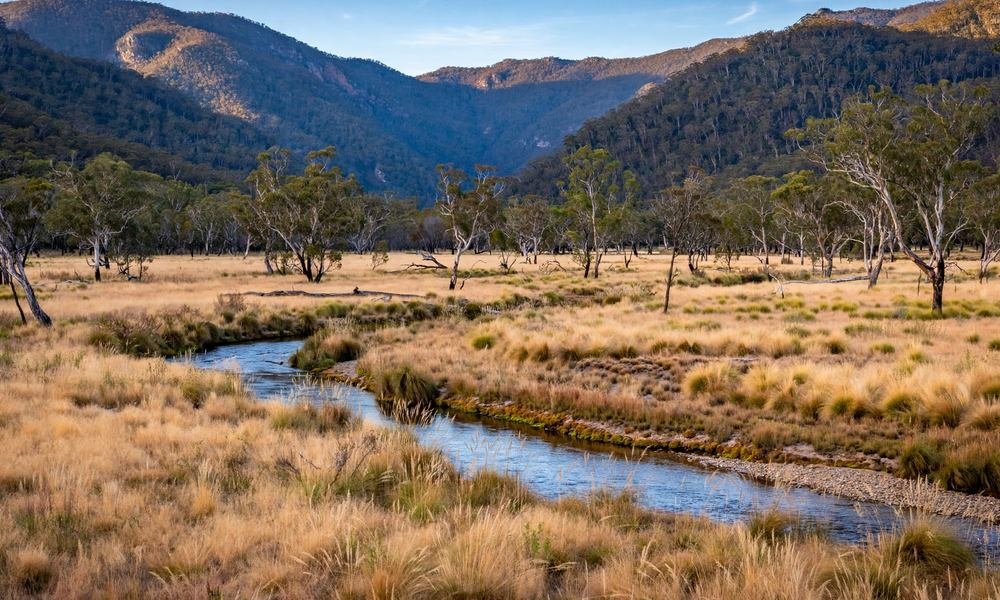
Namadgi National Park covers 106,095 hectares of alpine and mountain bushland and makes up almost half of the whole Australian Capital Territory. Aboriginal occupation here has been dated to at least 21,000 years, and the park holds many cultural sites, both Aboriginal and European. The name Namadgi itself is a local Aboriginal name for the mountains south-west of Canberra.
The best-known Aboriginal site in the park is the Yankee Hat rock art shelter. You reach it on a walk through wide grasslands, and the art on the rock face is the reward at the end. A guide makes a real difference here, because the art and the land around it carry stories that are easy to miss. Dhawura Tours runs a full-day 4WD tour through Namadgi from September to March, and it includes the Yankee Hat walk, bush foods and a detailed Aboriginal reading of the landscape. If you go on your own, take water, sun protection and good shoes, and treat the art with care. Never touch rock art, and never take photos of it if signs ask you not to.
Namadgi is also a good place to see how Caring for Country works today. Ngunnawal people work on land management in the park, and that work helps keep the culture strong. If you want a fuller picture of the park before you go, read our day trips from Canberra guide, which covers the drive out and what to pair it with.
Cultural Sites Inside the City
You do not need to leave Canberra to find Aboriginal heritage. It is in the hills around the suburbs, in the river rocks and in the trees along the streets. Here are the places to look.
Mount Majura, Black Mountain and Mount Taylor
Mount Majura is the highest peak in suburban Canberra at 888 metres, and it holds 12 known culturally and archaeologically important Aboriginal sites. Dhawura Tours runs a two-hour guided walk here, and it is the best first step if you are short on time. Your guide will show you bush foods, a scar tree and stone tools, and explain what the mountain meant to the people who lived on and around it. The views across the Majura valley are a bonus at the end of the climb.
Black Mountain and Mount Taylor offer similar two-hour guided walks. On Black Mountain, an Aboriginal guide reads the changing landscape as you follow the tracks and service trails, pointing out bush foods and stone tools and their old uses. Mount Taylor, at 856 metres in the south of the city, gives wide views across the Tuggeranong and Woden valleys, and the walk covers the same mix of bush foods, tools and stories. All three walks are gentle enough for most people, but wear proper shoes and bring water.
Grinding Grooves, Scar Trees and Ochre
Some of the clearest signs of Ngunnawal life are small and easy to miss. Axe-grinding grooves are oval hollows worn into rock where people shaped and sharpened stone axe heads over many years. You can see them in Theodore, in the south of Canberra, and on river rocks around the region. They are simple marks, but they tell you that people stood in that exact spot, doing everyday work, for centuries.
Scar trees are another sign. When bark was cut away to make a shield, a container or a canoe, the tree kept growing around the scar. Scar trees can still be found across the city, from Wanniassa to Bonner, and they often mark old water courses. You can see shield and canoe trees near Lanyon Homestead, which is also worth a visit for its own history. Ochre quarries, which held great ceremonial and trading value, have been protected inside the city at Red Hill and Gungahlin. Red Hill is also a bush food site, and the half-day Dhawura tour stops there.
If you spot a scar tree or a groove while you are out walking, take a photo and enjoy the moment, but do not carve, climb or damage it. These are protected heritage, and they belong to the Ngunnawal community.
Namarag Reserve
Namarag Reserve is a newer place with an old story. It sits beside the Molonglo River, which Ngunnawal people once used as a pathway to move through the landscape, and it is where their ancestors would gather. The reserve was designed with Ngunnawal culture at its centre, with Ngunnawal people involved from the start. Walking tracks lead in from nearby suburbs, and the reserve is a good example of what the future can look like: a place where everyone can gather and learn, and where the link to Ngunnawal Country is clear. It is free, easy to reach and a good stop if you are exploring the Molonglo Valley area.
Aboriginal Art in Canberra
Canberra holds some of the best Aboriginal art in Australia, and most of it is free to see. Start here if the weather turns or if you want a slower, indoor day.
National Gallery of Australia
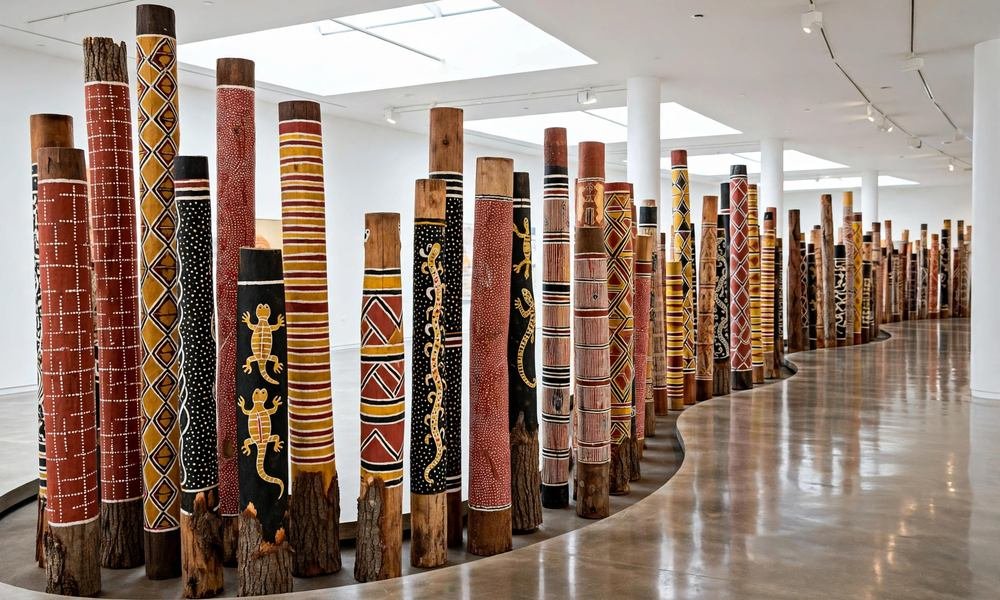
The National Gallery of Australia holds the world’s largest collection of Aboriginal and Torres Strait Islander art, with more than 7,500 works. It is one of the best places in the country to see the depth and range of First Nations art. Old bark paintings sit beside bold modern works, and the collection covers the whole story of Aboriginal and Torres Strait Islander art. The Aboriginal Memorial is a must-see inside the gallery: 200 hollow log coffins made by artists from Ramingining in Arnhem Land, set out as a forest of painted poles to honour Aboriginal people who lost their lives defending their land. Give it time. It is quiet, powerful and unlike anything else in the building.
The gallery sits on the lake in the Parliamentary Triangle, and most of the collection is free to explore. For more detail on what to see and how to plan a visit, read our National Gallery of Australia visitor guide.
National Museum of Australia
The National Museum of Australia on Acton Peninsula holds the First Australians gallery across two floors, and it is the museum’s largest exhibition. It shares the stories of Aboriginal and Torres Strait Islander peoples through objects, art, craft and digital displays, and it does not shy away from the hard parts of the story. The museum runs a daily tour focused on First Nations peoples, their history and their connection to Country, and the Aboriginal-guided version is popular, so book it when you arrive. There is also a seasonal Tasting Australia Forecourt Tour, a guided walk through the museum’s garden that shows First Nations food and medicine plants, with a chance to taste flavours from the garden.
Entry to the permanent galleries is free. See our National Museum of Australia visitor guide for opening hours and what else to see in the building.
AIATSIS
Right next door to the museum sits the Australian Institute of Aboriginal and Torres Strait Islander Studies, known as AIATSIS. It holds more than a million items, including early field recordings, language maps and photos, and it is the national home of Aboriginal and Torres Strait Islander research. The free ground-floor exhibition rotates items from the collection, and it is worth a look before you walk the city. Check the Map of Indigenous Australia on the wall. It shows where Ngunnawal Country sits among the many language groups across the continent, and it puts everything else in this guide into context.
Burrunju Art Gallery and Aboriginal Dreamings Gallery
If you want to buy Aboriginal art or try making some yourself, head to Burrunju Art Gallery. It is a not-for-profit gallery that shows established and emerging independent Aboriginal artists, and it runs workshops where you can try your hand at Aboriginal painting or making artefacts. The Aboriginal Dreamings Gallery at Gold Creek Village is a commercial gallery with a wide range of Indigenous art, gifts and jewellery, and it has a sister gallery, Artworld ADG, in the city centre. Buying from a gallery like Burrunju means your money goes to real artists, so ask who made the work before you buy.
Places That Tell the Modern Story
The heritage here is not only ancient. Some of the most important sites in the city tell the story of the last 50 years, and they are all within a short walk of each other around the lake.
Aboriginal Tent Embassy
Across the road from Old Parliament House stands the Aboriginal Tent Embassy. It was first set up in 1972 to protest the government’s approach to Indigenous land rights, and it remains as a permanent protest site today. It is one of the most important political sites in Australia, and it represents the ongoing fight for the land rights of First Nations peoples. You can walk up, read the signs and, if the activists are there, take the chance to talk with them. Be polite, listen more than you speak and remember that this is a working protest, not a tourist attraction.
While you are in the area, Old Parliament House itself is worth a visit. Our Old Parliament House visitor guide covers what to see inside.
Reconciliation Place
Reconciliation Place sits between the National Library of Australia and the High Court, and it is a self-guided walk of just over one kilometre. Seventeen stone, steel and glass artworks, called slivers, run along the path, each carrying photos and text about the journey towards reconciliation. They cover the Stolen Generations, Aboriginal servicemen and the 1967 referendum, among other stories. Start at the Wiradjuri-carved sliver on the eastern end and walk west, because the pieces read in order that way. The site is open ground and always accessible, and it is free. It is a quiet, thoughtful walk, and it pairs well with a visit to the lake.

Parliament House and the Yeribee Tour
At Parliament House, the daily Yeribee Indigenous experiences tour gives a rare look at how First Nations people have shaped the nation’s democracy from the inside. The tour tells the stories of Indigenous parliamentarians and the changes they pushed for, and it is free, but you need to book ahead. Parliament House sits at the top of Capital Hill, and the tour is a good reason to go inside even if politics is not your thing. See our Parliament House visitor guide for how to get there and what else to see in the building.
The Aboriginal Plant Use Walk at the Botanic Gardens
The Australian National Botanic Gardens on Black Mountain holds a signposted Aboriginal Plant Use Walk. It shows how Ngunnawal people used local plants for food, fibre and medicine, with examples such as kurrajong bark for cordage, native raspberry and cherry ballart. The gardens are open from 8:30 am to 5:00 pm, and the walk is free with entry. It is a gentle, easy walk, and it is a good one for kids, because the signs are clear and the plants are right there in front of you. Our Australian National Botanic Gardens visitor guide covers the rest of the gardens, including the rainforest gully and the lookout.
Guided Tours with Ngunnawal Guides
The single best tip in this guide is simple: take a tour with a Ngunnawal guide. The sites are good on their own, but a guide turns them into stories, and the stories are the point.
Dhawura Tours
Dhawura Tours is the main Aboriginal tour operator in Canberra, and its guides are Ngunnawal people. The short tours run for two hours and cover one mountain each: Mount Majura, Black Mountain or Mount Taylor. They include bush foods, scar trees, stone tools and their old uses, and wide views over the city. As of the 2026 public prices, a short tour costs $60 for an adult, $50 for a child aged 6 to 16, and $180 for a family of two adults and two children. Kids under six go free. Check the Dhawura Tours site before you book, as prices can change.
The half-day tour runs for three and a half hours in a 4WD, and it visits Red Hill, the Theodore grinding grooves and the shield and canoe trees at Lanyon. It costs $100 for an adult and $90 for a child aged 12 to 16, and it suits families with older kids. The full-day tours run from September to March and cover Namadgi National Park, Tidbinbilla Nature Reserve or Flea Creek, with an adult price of $190. All tours have a minimum group size, so book ahead, especially in the busy months.
Canberra Tracks: A Self-Drive Option
If you would rather go at your own pace, Canberra Tracks is a network of eight self-drive heritage routes with signs at each stop. The Ngunnawal Country Track is the one to follow for this topic. It takes you to the Cotter Reserve, Tidbinbilla, Tharwa, Namadgi, Tuggeranong and the Theodore Grinding Grooves, and each sign tells part of the Aboriginal story of the capital. You will need a car, and you should allow a full day if you want to do the whole track properly. The tracks are free, and they suit families who like to stop, read and explore without a timetable.
How to Plan Your Visit
A little planning goes a long way with this topic, because the sites are spread out. The city sites cluster around the lake, but Tidbinbilla and Namadgi need a car and a full day each.
How Many Days Do You Need?
Two days is the sweet spot. Day one covers the city: the galleries, the museum, Reconciliation Place, the Tent Embassy and a Dhawura short tour. Day two is for Tidbinbilla or Namadgi, with a guided tour if you can book one. If you only have one day, stick to the city and pick three or four stops from the list above. If you have three days, add the second out-of-town day and a self-drive on the Canberra Tracks. For a full Canberra plan that fits this topic into a wider trip, see our things to do in Canberra guide.
Best Time to Visit
Canberra is a year-round city, but autumn (March to May) and spring (September to November) are the nicest times to be outside. The full-day Dhawura tours only run from September to March, so if Namadgi or Tidbinbilla with a guide is on your list, plan for those months. Summer can be hot on the mountain walks, so start early and carry plenty of water. Winter mornings are cold and clear, and the galleries and museums are a good warm option. The key dates to know are National Reconciliation Week, from 27 May to 3 June each year, which includes Canberra’s own Reconciliation Day public holiday, and NAIDOC Week in the first week of July, when events run across the city.
Where to Stay
Stay central if you can. The city centre, Braddon and Barton all put you close to the lake, the galleries and the museum, and they are a good base for day trips out to Tidbinbilla and Namadgi. Barton is the closest to Parliament House and the Parliamentary Triangle, and Braddon has the best food and cafe scene for an evening after a day of walking. Our where to stay in Canberra guide breaks down the best areas and hotels for every budget.
Getting Around
You can walk, bus or ride around the central city without much trouble. The lake path links the galleries, the museum, Reconciliation Place and the Tent Embassy, and the light rail runs from the city centre to Gungahlin. But Tidbinbilla and Namadgi need a car, and so does the Canberra Tracks self-drive route. Hire a car for at least one day of your trip. Our getting around Canberra guide covers buses, light rail, bikes and car hire in detail.
A Simple Two-Day Plan
Day one: start at the National Gallery of Australia, then walk to the National Museum of Australia and AIATSIS. After lunch, walk Reconciliation Place, then visit the Aboriginal Tent Embassy and Old Parliament House. Finish with a Dhawura short tour on Mount Majura in the late afternoon, when the light is good and the city looks its best.
Day two: drive to Tidbinbilla Nature Reserve in the morning and join an Aboriginal ranger walk if one is running. Spend time at the Birrigai Rock Shelter, then have lunch in the reserve. If you have energy left, drive on to Namadgi and walk to the Yankee Hat rock art, or save Namadgi for a third day. If you are travelling with kids, swap the second day for Cockington Green Gardens or Questacon and keep the heritage stops to the morning. Our Canberra with kids guide has more ideas for family days.
Visiting with Respect
A few simple rules will keep your visit respectful and will help protect places that matter deeply to Ngunnawal people.
First, remember that many of these sites are sacred or sensitive. Do not touch rock art, do not climb on rock shelters and do not move stones or artefacts. If a sign says no photos, put the camera away. Some places hold men’s or women’s business, and parts of a site may be closed to some visitors. Respect that without question.
Second, listen when a guide speaks, and ask questions rather than making guesses. If you are not sure about something, ask. Guides would rather answer a question than watch a visitor get it wrong.
Third, take part in a Welcome to Country when one is offered. It is a formal welcome onto Ngunnawal land, and it is an honour to receive one. Stand, listen and take it in. Do not talk through it or treat it as background noise.
Fourth, buy art from the artist or from a gallery that works directly with artists. Fake or mass-made “Aboriginal-style” souvenirs do nothing for the community. If a shop cannot tell you who made the work, walk away.
Finally, leave every site as you found it. Take your rubbish with you, stay on the tracks and do not pick plants. Caring for Country is not only a Ngunnawal value. It is a good rule for every visitor.
FAQs About Visiting Aboriginal Sites in Canberra
Who are the Traditional Custodians of Canberra?
The Ngunnawal people are the Traditional Custodians of the Canberra region. They have lived on this land for tens of thousands of years, and their connection to Country continues today through culture, language and land management.
What is the oldest Aboriginal site in Canberra?
The Birrigai Rock Shelter in Tidbinbilla Nature Reserve is the oldest known site, with evidence of people sheltering there more than 25,000 years ago during the last Ice Age. It is one of the oldest known inhabited rock shelters in the world.
Can I visit Aboriginal heritage sites in Canberra for free?
Yes, many of them. The National Gallery of Australia, the National Museum of Australia, AIATSIS, Reconciliation Place, the Aboriginal Tent Embassy, the Botanic Gardens plant walk and the Canberra Tracks are all free. Guided Dhawura Tours are paid, and Tidbinbilla and Namadgi charge a small vehicle entry fee. Our free things to do in Canberra guide lists more no-cost stops.
Do I need a guide to see these sites?
No, but a guide makes a big difference. You can visit the galleries, Reconciliation Place and the Tent Embassy on your own, and the Canberra Tracks signs explain the self-drive route. But rock art, grinding grooves and scar trees are easy to miss without someone who knows what to look for. A Dhawura tour is the best money you will spend on this topic.
What is the best Aboriginal tour in Canberra?
Dhawura Tours is the main choice, and it is run by Ngunnawal guides. The two-hour Mount Majura walk is the best first tour if you are short on time. The half-day cultural sites tour is the best option for seeing grinding grooves, scar trees and bush food sites in one trip. The full-day Namadgi tour, which runs from September to March, is the best choice for rock art.
Can kids enjoy these heritage sites?
Yes. Kids love the hands-on parts: the Botanic Gardens plant walk, the Burrunju art workshops, the First Australians gallery at the museum and the Canberra Tracks drive. The short Dhawura tours suit older kids, and the half-day and full-day tours are best for ages 12 and up. Keep the days short, bring snacks and let them ask the guide questions.
Final Thoughts on Aboriginal Heritage in Canberra
Canberra is often sold as a city of politics and monuments. That misses the point. The real story of this place starts more than 25,000 years ago, and it is still being told by the people whose land this is. A weekend here can give you the rock shelter where people waited out the Ice Age, the largest collection of Aboriginal art in the world, a walk through a place built for reconciliation and a tour with a guide whose family has known these hills for thousands of years.
Do it properly. Book a Dhawura tour, spend a slow morning in the galleries and set aside a full day for Tidbinbilla or Namadgi. Listen more than you talk, and leave the sites as you found them. You will come away with a much richer sense of the capital than most visitors ever get, and you will understand why Ngunnawal people say that Country is not just land. It is home, history and identity, all in one place.
For more ideas on what to see around the city, the team at Australia City Guide has covered the lake, the suburbs and the day trips in detail, so you can build a full Canberra trip around the heritage stops in this guide.
Keep exploring:
- Things to Do in Canberra: Complete Guide
- National Gallery of Australia: Visitor Guide
- National Museum of Australia: Visitor Guide
- Parliament House Canberra: Visitor Guide
- Old Parliament House Canberra: Visitor Guide
- Australian National Botanic Gardens: Visitor Guide
- Where to Stay in Canberra: Best Areas and Hotels
- Getting Around Canberra: Transport Guide
- Best Day Trips from Canberra
- Canberra with Kids: Family Guide
- Free Things to Do in Canberra
- Lake Burley Griffin: Complete Guide